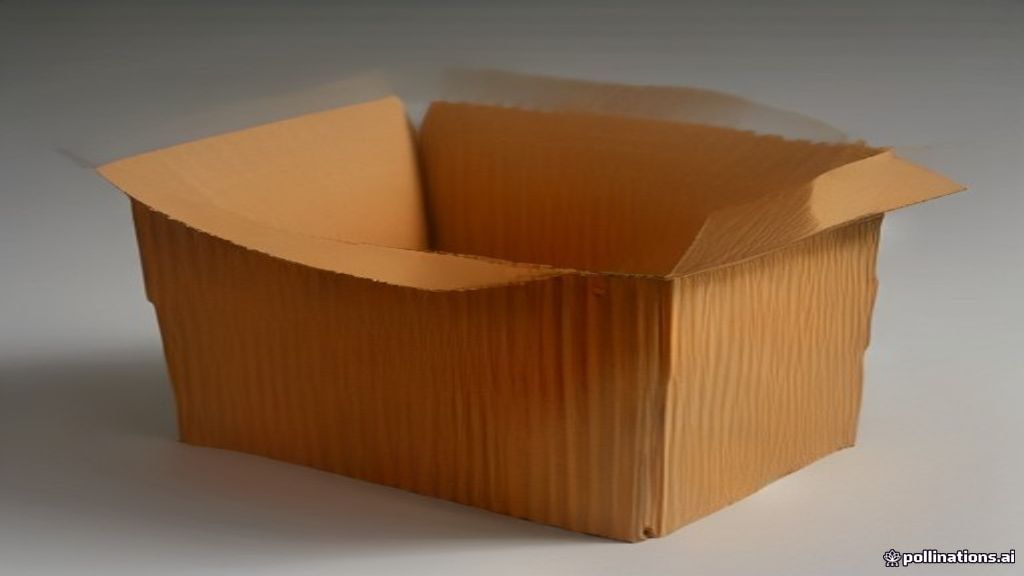

1. Board Grade Fundamentals: ECT, Burst, and Flute Architecture
Corrugated fiberboard is a composite sandwich structure: two linerboards bonded to a fluted corrugating medium via a starch adhesive system. Its compressive performance is governed primarily by two laboratory metrics: the Edge Crush Test (ECT, per TAPPI T811 / ISO 3037) and the Mullen Burst Test (TAPPI T810). Since the industry-wide migration from burst-based grading (e.g., 200# test) to ECT-based grading in the 1990s, ECT has become the procurement benchmark because it correlates directly — though not linearly — with box compression strength (BCT).
The McKee formula remains the governing engineering relationship: BCT = 5.874 × ECT × √(caliper × perimeter). A single-wall box with ECT-32, 0.19 in (4.8 mm) caliper, and 60 in perimeter yields a predicted BCT of approximately 5.874 × 32 × √(0.19 × 60) ≈ 630 lbf. This is the calculation your manufacturer should be able to perform — and defend with lot-level test data — before quoting.
Flute selection is the first structural decision. Standard calipers at 23°C/50% RH conditioning:
- A-flute (~4.7 mm): highest vertical cushioning and compression per single wall; obsolete in most DTC e-commerce due to freight cube inefficiency, still used in bulk agriculture.
- C-flute (~4.0 mm): the US workhorse; ECT-32 C-flute is the default shipping carton grade for gross weights up to ~18 kg.
- B-flute (~3.2 mm): flatter crush resistance and better die-cutting definition; preferred for litho-laminated and print-heavy retail cartons.
- E-flute (~1.5 mm): 90 flutes/ft; delivers a premium unboxing surface with rigidity approaching C-flute at one-third the thickness. Standard for subscription boxes and cosmetic secondary packaging.
- F- and N-flute (0.8–1.2 mm): microflutes replacing folding carton board where sustainability narratives demand 100% paper construction.
- BC double-wall (~7.0 mm): ECT-44 to ECT-48; mandatory for stacked pallet loads exceeding ~25 kg per carton or warehouse stack heights above 2.5 m.
Linerboard matters as much as flute. A common cost trap: two ECT-32 boards can use drastically different fiber furnish. A lightweight combination (e.g., 33/26/33 lb/MSF) achieves ECT-32 through high-performance medium, while a heavyweight construction uses more fiber. The lightweight board is cheaper and lighter but has lower stacking endurance under cyclic humidity — a decisive factor for trans-oceanic shipments.
2. Manufacturer Capability Audit: Tolerances, Equipment, and Process Control
Distinguish a true structural manufacturer from a broker converting commodity stock by auditing measurable process capabilities. Acceptable incoming tolerances for a competent flexo folder-gluer (FFG) operation are:
- Dieline dimensional tolerance: ±1.0 mm on panel dimensions up to 600 mm; ±1.5 mm above. Rotry die-cutting holds ±1.5–2.0 mm; flatbed die-cutting holds ±0.5 mm and is required for E-flute cosmetic packaging with tight print-to-cut registration.
- Slot depth: ±0.5 mm relative to crease score line. Incorrect slot depth is the leading cause of snagged flaps on automated case packers.
- Score/crease alignment: crease must fall within ±0.5 mm of score-line center; off-center scores crack liners during erection.
- Warp: ≤5 mm bow per 600 mm panel for boards destined for automated case erectors. Excess warp from asymmetric moisture (one-side printing with water-based ink over-saturation) jams vacuum-belt feeders at rates above 25 cartons/minute.
- Glue lap width: minimum 32 mm stitch or glue lap; lap skew tolerance ±1.5 mm. Insufficient lap area is the #1 root cause of carton opening failures in drop tests.
Request the manufacturer’s process capability indices (Cpk) for caliper and internal dimensions. A Cpk ≥ 1.33 on finished-box inside dimensions signals statistical process control; anything below 1.0 means you should expect 3+ sigma of out-of-tolerance units per thousand in each run. Also verify corrugator width utilization: a manufacturer running your 350 mm box on a 2.5 m corrugator wastes 60%+ of web, a cost they will pass to you. Competent estimators nest dielines on-sheet to achieve 82–88% material utilization.
Conditioning: 23°C ± 1°C, 50% ± 2% RH for 24 h prior to test (ASTM D685).
Instruments: Mitutoyo 547-400S digital caliper (caliper per TAPPI T411); Lansmont Model 1220 compression tester (BCT per TAPPI T804); TAPPI T810 Mullen burst tester; TMI 84-58 ECT fixture per TAPPI T811.
Sample: Lot #TP-2026-B4, 350 gsm CCNB-lined E-flute, 10-specimen statistical average, tolerance ±0.15 mm caliper. Measured ECT 9.8 kN/m (spec ≥ 9.2); BCT 1,412 N on 250 × 200 × 100 mm box; burst 1,180 kPa. All values met spec; caliper CV 1.9%.

3. Testing Protocols: ASTM D4169, ISTA, and Distribution Cycle Simulation
A manufacturer’s quotation should specify which distribution test regime the design is validated against. For US domestic parcel, ISTA 3A (generalized simulation for parcel delivery, including randomized vibration) and ASTM D4169 DC-13 (single parcel) are the reference standards. For LTL freight, ASTM D4169 Distribution Cycle 12 with Schedule B vibration (random, truck spectral profile at 0.52 Grms composite) applies.
Key test parameters procurement should demand in writing:
- Compression with machine direction load (ASTM D642): pass criterion typically the McKee-predicted BCT × a safety factor of 1.4–1.8, depending on warehouse stack duration and humidity exposure.
- Random vibration: 60 minutes per vertical axis on ISTA 3A; top-load applied during vibration at 60% of design stack load.
- Drop sequence: 10 drops (ISTA 3A) from heights scaled to gross weight — e.g., 460 mm for >34 kg, 910 mm for 9–18 kg. Pass = no product damage and no carton separation.
- Cyclic humidity conditioning (ASTM D4332): 48 h at 38°C/85% RH pre-conditioning reduces ECT by 25–40% on standard liners; if your supply chain crosses tropical routes, specify high-humidity-resistant (HHR) starch adhesive and wet-strength medium.
Insist that the manufacturer supplies certified test reports with raw specimen data, not just pass/fail certificates. Facilities without in-house Lansmont or comparable compression rigs are outsourcing validation — acceptable, but it adds 5–10 days and a traceability gap to your development cycle.
4. Comparative Grade Matrix: Matching Board to Application
| Grade / Construction | Caliper (mm) | ECT (kN/m) | Typical BCT (60×40×40 cm box) | Print Surface | Best-Fit Application | Relative Cost Index |
|---|---|---|---|---|---|---|
| E-flute, 350 gsm CCNB / kraft liner | 1.5 | 6.5–7.5 | ~750 N | Excellent (offset/litho-lam) | Subscription, cosmetics, electronics retail | 1.0 |
| B-flute, 175 gsm kraft both sides | 3.2 | 6.0–7.0 | ~700 N | Very good (flatbed die-cut) | Printed mailers, shelf-ready packs | 0.95 |
| C-flute, 150/135/150 kraft (ECT-32) | 4.0 | 5.6 (32 lbf/in) | ~2,800 N | Good (flexo post-print) | Standard e-commerce shipper ≤18 kg | 1.05 |
| C-flute, HHR heavy-duty (ECT-44) | 4.4 | 7.7 (44 lbf/in) | ~3,900 N | Good | Heavy parts, high-stack warehouse loads | 1.35 |
| BC double-wall (ECT-48) | 7.0 | 8.4 (48 lbf/in) | ~5,600 N | Fair (coarse flexo) | Palletized export, >25 kg cartons | 1.7 |
| E/B double-wall micro-combo | 4.7 | 8.0 | ~4,200 N | Very good | Premium heavy retail, litho-lam base | 1.6 |
Note that BCT values assume 50% RH conditioning and uniform top-load application; real pallet corner-loading concentrates stress at flap hinge regions, so validated stack ratings are typically 30–40% below lab BCT. This is why packaging engineers derate ECT-32 constructions to ~2,000 N effective stack column load in warehouse modeling.
5. Sustainability and Regulatory Compliance: PPWR, PFAS, and Fiber Certification
For EU-market brands, the Packaging and Packaging Waste Regulation (PPWR, EU 2025/40) imposes binding design requirements effective from 2026 onward: all packaging must be recyclable-design-graded, empty-space ratios in grouped/transport packaging are capped (maximum 50% void per the regulation’s e-commerce provisions), and the Design-for-Recycling (DFR) criteria reward mono-material corrugated construction with minimal non-fiber content.
Engineering implications:
- Adhesive and coating discipline: full-area lamination of plastic films to corrugated can downgrade recyclability classification. Specify water-dispersible barrier coatings instead.
- PFAS-free grease barriers: for food-contact secondary packaging, legacy fluorochemical barriers are banned; specify PFAS-free options such as aqueous dispersion coatings (AKD/alkyl ketene dimer systems) achieving Kit ratings of 6–8 without fluorinated chemistry.
- Fiber traceability: FSC or PEFC chain-of-custody certification is now a de facto retailer requirement in both the EU and among top-quartile US DTC brands. Verify the manufacturer’s certificate scope covers the converting plant, not just the mill.
- Recycled content: PPWR sets minimum recycled content targets for plastic packaging; for fiber-based corrugated, EU average recycled content already exceeds 82%, but you should still request furnish declarations because high-test-liner grades for premium print may carry virgin fiber premiums.
In the US, California’s SB 54 (EPR law) requires covered producers to source recyclable or compostable packaging by 2032; corrugated’s established repulping infrastructure keeps compliant boxes low-risk, but printed inserts, foam, and plastic windows inside your corrugated system will drag down the claim.

6. Cost Engineering and Supplier Selection Framework
Corrugated pricing is driven by four variables in rough order of magnitude: linerboard index (containerboard commodity price, ~45–55% of cost), order quantity and corrugator run efficiency (~15–25%), print process and tooling (~10–20%), and caliper/combine specification (~10%). Digital printing (single-pass inkjet corrugators) has collapsed the economic minimum order quantity from ~5,000 units (flexo plates) to as low as 50–100 units, at a 30–60% per-unit premium but near-zero tooling cost — decisive for DTC brands in product-launch phases.
Freight optimization is often overlooked in board selection: dimensional weight (DIM ÷ 139 for US domestic) means a 5 mm caliper reduction on a 400 × 300 × 250 mm mailer can save ~0.4 billable lb per parcel. At 50,000 annual parcels, E-flute versus C-flute mailer conversion frequently pays back the per-unit board premium within one quarter.
When auditing candidate manufacturers, score them against this framework:
- Structural design support: do they deliver dielines in ArtiosCAD/DXF with tolerances, not just PDF mockups?
- Validation in-house: ECT, BCT, drop, and vibration capability with certified reporting?
- Material traceability: lot-level board certificates (like the TP-2026-B4 record above) and fiber certification scope?
- Automation compatibility: documented warp limits, dimension Cpk data for your case-packing line?
- Sustainability documentation: PFAS-free declarations, PPWR DFR readiness, FSC/PEFC COC?
TadaPack operates an integrated structural engineering and prototyping workflow that addresses these criteria directly: in-house dieline engineering with CAD deliverables, rapid physical prototyping in production-intent board grades (typically 5–8 business days from approved artwork), lot-level lab testing to the TAPPI/ASTM protocols described above, and PFAS-free, PPWR-ready material systems certified under FSC chain of custody. For procurement teams running multi-supplier qualification, requesting a TadaPack prototype run alongside incumbent quotes — with matched ECT and caliper specifications — is the fastest way to generate an apples-to-apples cost-and-performance comparison.
The final selection principle: a manufacturer who cannot articulate the McKee relationship, quote Cpk on inside dimensions, or produce a raw-data compression report is selling you board, not engineered packaging. Weight your award decision toward suppliers who demonstrate measurement discipline at every stage of this guide — the premium of 3–6% per unit is trivial against the cost of a single damaged-freight claim wave or a compliance failure in the EU market.
Recommended Engineering Reading
