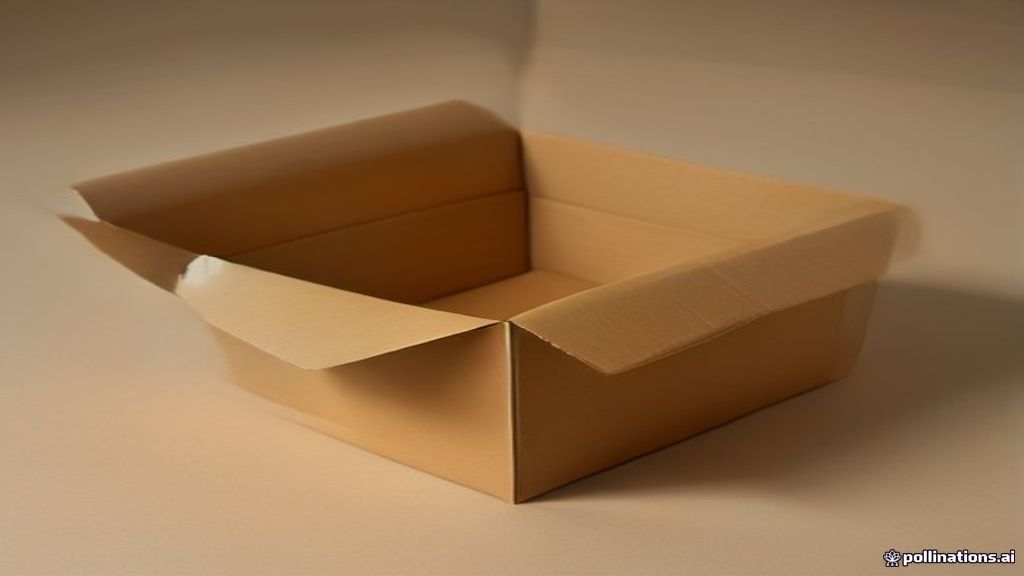
.%20Clean%20composition%2C%20Hasselblad%20?width=1200&height=675&model=flux&nologo=true&seed=659179 "Sourcing Custom Corrugated Boxes in Jakarta: ECT Specs That Matter")
TL;DR: The Jakarta Corrugated Sourcing Decision in 60 Seconds
- Jakarta’s corrugated cluster offers 20–35% unit cost advantages over US/EU converters at comparable board quality, provided you specify by performance (ECT, burst) rather than by GSM alone.
- ECT-32 (C-flute) is the baseline for ≤15 lb e-commerce parcels; ECT-44 double-wall (BC-flute) for >30 lb or palletized freight.
- Demand written compliance to ASTM D4169 DC-13, EU PPWR recyclability (Grade A per EN 13430 analogues), and PFAS-free barrier declarations if packaging food or cosmetics.
- Typical lead times: 10–15 days for litho-laminated custom runs, 5–7 days for flexo-printed RSC/FOL from a Jakarta converter with in-house corrugator.
- Freight math: consolidate on 40’HC; corrugated ships at ~8–12 lb/ft³ density, so dimensional weight—not actual weight—dominates ocean LCL and air costing.
1. Why Jakarta Is a Strategic Corrugated Sourcing Node — and What Changes When You Buy There
Jakarta and its surrounding industrial corridors (Cikarang, Bekasi, Tangerang, Karawang) host one of Southeast Asia’s densest concentrations of integrated corrugated converters. The structural advantage is vertical integration: many plants operate their own 2.5m-wide corrugators, producing single-face, single-wall, and double-wall board in-house rather than buying sheet from a third party. For a procurement director, this translates into three measurable outcomes: tighter control over ECT lot consistency, 15–25% lower cost on flexo-printed runs versus sheet-feed converters, and compressed lead times because die-cutting and gluing are not gated by upstream sheet delivery.
However, buying from Jakarta changes your engineering due diligence burden. Indonesian board grades are frequently quoted in GSM (grams per square meter) and Korean KLB (Kraft Liner Board) origin classifications, which do not map one-to-one onto US combination-board specs (e.g., ’42/42/26 lb/1000 ft²’). A 200/175/200 GSM C-flute board may test anywhere from ECT-29 to ECT-37 depending on liner furnish and flute take-up factor. The correct move is to mandate performance-based acceptance: specify minimum ECT and burst values measured per TAPPI T811/T810, not just grammage. Every competent Jakarta converter can run these tests in-house; if a supplier cannot produce a current ECT certificate, disqualify them regardless of price.
The second structural reality is moisture. Jakarta’s ambient climate averages 75–85% RH annually. Board manufactured and stored in this environment equilibrates at 9–12% moisture content versus the 6–8% typical of US Southwest production. This is not inherently a defect—ASTM D685 conditioning normalizes it for testing—but it compresses your margin on stacking strength. A box conditioned at 50% RH that tests ECT-32 may deliver only ~75–80% of that compression resistance at 85% RH tropical storage. Section 3 quantifies this derating.
2. Flute Architecture and Board Selection: Matching Structure to Load Path
Corrugated mechanical performance is governed by flute geometry, which determines caliper (thickness), bending stiffness (EI), and flat crush resistance. The dominant flutes available from Jakarta corrugators are:
- A-flute (~4.7mm caliper): Highest cushioning and vertical compression per unit weight; declining in use for export cartons but still specified for fragile glassware and ceramics.
- C-flute (~4.0mm caliper): The global e-commerce workhorse. Best stiffness-to-cost ratio; pairs with 90–105 FPM printer-slotter lines. Default for ECT-32/ECT-44 single-wall.
- B-flute (~3.2mm caliper): Superior flat crush and die-cut detail fidelity; the choice for litho-laminated retail-ready packaging and die-cut inserts.
- E-flute (~1.5mm caliper): Premium direct-print substrate with a surface approaching solid board; standard for cosmetics, electronics accessory boxes, and subscription packaging where print quality drives brand perception.
- BC double-wall (~7.0mm caliper): Combines B-flute flat-crush resistance with C-flute compression. Specify ECT-44 to ECT-48 for 30–60 lb contents, palletized distribution, or export containers facing 3–4 stack-high warehouse storage.
- EB and F microflutes (1.1–1.2mm): Increasingly available in Jakarta’s high-end converters for luxury-adjacent DTC formats replacing 350gsm CCNB folding cartons.
A critical spec decision: never substitute 350gsm CCNB (Clay-Coated News Back) solid board for E-flute on load-bearing structures. CCNB has negligible edge compression capacity—its stacking value comes almost entirely from box geometry. If your dieline requires a printed, small-format box that must also stack four-high in a retail DC, E-flute at 140–175 GSM liner weights outperforms CCNB by 3–5x on ECT while accepting comparable offset-quality litho lamination.
3. The Engineering Bench: ECT, Burst, and the Moisture Derating You Must Budget For
Edge Crush Test (TAPPI T811 / ISO 3037) measures the edgewise compressive strength of a 100×25mm board column and is the primary input to the McKee formula for box compression strength (BCT):
BCT ≈ 5.87 × ECT × √(caliper × perimeter)
For a C-flute box with 4.0mm caliper and 1,500mm perimeter at ECT-32: BCT ≈ 5.87 × 32 × √(0.157 × 59.1) ≈ 5.87 × 32 × 3.04 ≈ 571 lb. Apply a 5:1 safety factor for 30-day warehouse storage with humidity exposure, and your safe stacking load is roughly 114 lb of superimposed weight—before tropical derating. At 85% RH, multiply BCT by 0.75–0.80, bringing the safe stack load to ~86–91 lb. This single calculation is why ECT-32 in a temperate market and ECT-32 manufactured in Jakarta are not equivalent propositions for stacked export pallets; disciplined buyers moving Indonesia-origin goods into hot, humid warehouse environments step up one board grade (ECT-40 C-flute or ECT-44 BC double-wall) to preserve the same effective safety factor.
- Conditioning: 23°C ± 1°C, 50% RH, 24-hour minimum dwell per ASTM D685
- Instruments: Mitutoyo 547-400S digital caliper (caliper verification, ±0.01mm); Lansmont Model 1220 computer-controlled compression tester (BCT/ECT platens, 89 N/s ramp); TAPPI T810 Mullen burst tester
- Sample: Lot #TP-2026-B4, C-flute 175/150/175 GSM KLB/KLB combination board; 10-specimen statistical average, ECT tolerance ±0.15mm caliper variance
- Result: ECT 33.4 lb/in mean (σ = 0.9); burst 231 kPa; caliper 4.08mm ± 0.11mm. All values within procurement spec band.
Require this level of documentation as a contractual deliverable. A converter that maintains a conditioned-room testing protocol and reports standard deviation, not just mean values, is a converter whose production lots will hold tolerance.
2 (Cont’d). Comparative Board Specification Matrix for Jakarta-Sourced Custom Boxes
| Board Construction | Caliper (mm) | Typical ECT (lb/in) | Burst (kPa) | Best-Fit Application | Relative Unit Cost (Index) |
|---|---|---|---|---|---|
| E-flute, 140 GSM liners | 1.5 | 18–24 | 140–180 | Cosmetics, e-flute mailers, litho-lam retail | 1.15 |
| B-flute, 175 GSM liners | 3.2 | 26–32 | 190–240 | Die-cut inserts, display shippers | 1.00 |
| C-flute, 175/150/175 KLB | 4.0 | 32–36 | 210–260 | E-commerce RSC ≤ 15 lb contents | 1.05 |
| C-flute heavy-duty, 200/175/200 | 4.3 | 40–44 | 280–330 | Fragile/heavy single-wall, 20–30 lb | 1.30 |
| BC double-wall, ECT-44 | 7.0 | 44–48 | 350–410 | Palletized export, 30–60 lb, stack-critical | 1.65 |
| 350gsm CCNB (reference) | 0.45 | n/a (non-structural) | ~90 | Folding cartons, sleeve wraps only | 0.95 |
Note the cost index: stepping from ECT-32 C-flute to ECT-44 BC double-wall raises board cost ~57%, but for palletized export it frequently lowers total landed cost by eliminating damage claims and double-wall secondary cartons. Run the full distribution-cost model, not the unit-price model.
4. Distribution Validation: ASTM D4169 and the Jakarta Export Chain
Any corrugated spec destined for US or EU retail distribution should be validated against ASTM D4169, selecting the Distribution Cycle (DC) that matches your actual supply chain. For Indonesia-origin freight, the realistic chain is: converter pallet → ocean container (30–45 days, 85% RH, vibration-rich environment) → US/EU port cross-dock → LTL parcel or DC conveyor. That profile corresponds most closely to DC-13 (non-specific truck LTL) combined with elevated humidity conditioning; for Amazon FBA inbound, align with ISTA 6-Amazon.com SIOC requirements instead.
Minimum validation sequence we recommend specifying in the PO:
- Conditioning: ASTM D4169 Schedule I, atmosphere 3 (38°C/85% RH, 72h) pre-test — this is the step most Jakarta converters skip, and it is the step that finds tropical moisture failures.
- Vibration: Repetitive-shock sine sweep, 3–100 Hz, per ASTM D999, or random PSD per ASTM D4728 for containerized freight.
- Drop: ASTM D5276 free-fall sequence scaled to gross package weight (e.g., 460mm drop for 18–27 kg units).
- Compression: Machine compression to 1.4× the McKee-predicted stack load or load-span machine compression per ASTM D642.
Budget USD 800–2,500 per full test series at an accredited lab (or confirm your converter runs a simplified in-house protocol with calibrated Lansmont-class equipment). One failed D4169 cycle costs more in chargebacks and rejected containers than a decade of testing fees.
5. Compliance Terrain: EU PPWR, PFAS-Free Barriers, and Print Substrate Chemistry
For EU-bound packaging, the Packaging and Packaging Waste Regulation (PPWR, Regulation (EU) 2025/40) is now the binding framework, not the old Directive. Two provisions materially affect Jakarta sourcing decisions:
- Recyclability grading: Corrugated board with standard starch-based adhesive and kraft/testliner furnish grades as Design-for-Recycling Category A. Problems arise with heavy plastic laminations, wet-strength chemical additives, and non-repulpable barrier coatings. If your Jakarta converter proposes film-laminated litho labels or PE extrusion coatings for moisture barrier, demand repulpability verification (e.g.,Ingede Method 12 screening) or pivot to PFAS-free water-based barrier coatings and aqueous dispersion barriers, which preserve fiber recyclability.
- PFAS restriction: PPWR restricts per- and polyfluoroalkyl substances above defined thresholds regardless of application. Any grease/moisture-resistant corrugated (food-adjacent DTC meal kits, cosmetics) must carry a written PFAS-free declaration. Fluorine screening at <50 ppm total organic fluorine is the emerging de facto audit standard.
- Empty-space ratio: PPWR caps void ratio at 50% for transport and e-commerce packaging from 2030. This directly affects your dieline: right-size the box to product + protective inserts, which also reduces dimensional-weight freight. US buyers face the parallel commercial pressure of carrier DIM pricing (divisor 139 for UPS/Federal Express retail), making oversized corrugated a double penalty.
For US food-contact adjacency, confirm the converter’s substrates carry FDA 21 CFR 176.170/176.180 conformity for indirect food contact, and that inks used on interior flutes are low-migration. Reputable Jakarta converters serving multinational FMCG accounts already maintain these declarations; smaller trade shops may not—verify in writing.
6. Cost and Freight Teardown: Where Jakarta Economics Actually Land
A representative teardown for a 400×300×250mm ECT-32 C-flute RSC, 2-color flexo print, 10,000-unit run, FOB Jakarta:
- Board consumption: ~0.72 m²/box net yield after die-cut waste; at current KLB pricing this is 55–65% of unit cost.
- Die-cutting: Rotary tooling amortized over 10k units adds 6–9% per unit; flatbed die-cutting with E-flute detail adds 12–18%.
- Printing: 2-color flexo on a 90–105 FPM line adds 4–7%; 4-color high-graphic flexo with anilox-coated plates adds 15–25%; litho-laminated offset adds 40–70%.
- Tooling: USD 150–450 rotary die (one-time), USD 300–800 for high-graphic plate sets. TadaPack includes structural prototyping on CAD sample tables before committing tooling—always request a physical proof, not a dieline PDF approval, for any new structure.
Logistics: a 40’HC container accommodates roughly 55–60 m³ of knocked-down (flat) corrugated. At FOB pricing 20–35% below US Midwest equivalents, ocean freight of USD 2,500–4,500 to US West Coast typically leaves a 15–25% landed-cost advantage on full-container programs; LCL shipments surrender most of that advantage to consolidation fees and dimensional pricing. Order in full-container or half-container increments, plan 25–35 days ocean transit, and carry 6–8 weeks of safety stock. For speed-sensitive SKUs, hybrid programs—domestic supply for launch velocity, Jakarta supply for the steady-state tail—capture most of the cost benefit without the lead-time exposure.
Final engineering checklist before releasing any Jakarta PO: (1) performance-based spec with minimum ECT/burst and standard deviation limits; (2) ASTM D685-conditioned test certificate per lot; (3) physical prototype approval, tolerance ±1.5mm on external dimensions and ±0.5mm on slot/score placement; (4) PPWR recyclability grade and PFAS-free declarations for EU/US food-adjacent SKUs; (5) D4169 DC-13 (or ISTA 6-SIOC) validation report for new structures. Suppliers who meet all five are rare and worth retaining. TadaPack’s custom structural packaging program in Jakarta is built around exactly this documentation standard—from CAD dieline through prototyping, certified lot testing, and container-optimized export packaging.
Recommended Engineering Reading
