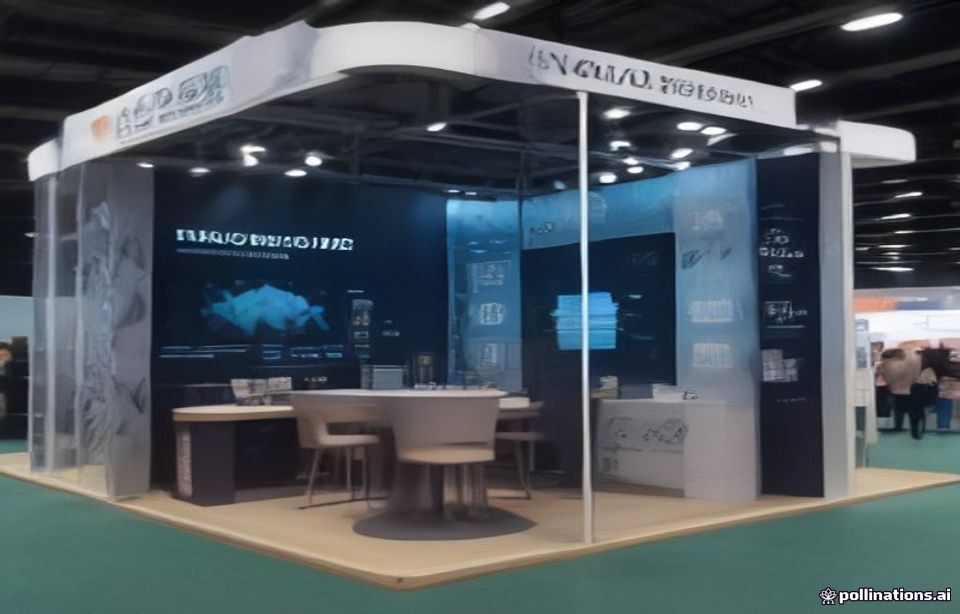
Winning the PACK EXPO floor under a 48-hour deadline requires corrugated prototypes built on digital CAD dielines with zero tooling fees, specified at ECT-32 minimum for single-wall and ECT-44/BC flute for stacked booth freight, then validated to ISTA 3A General Simulation before shipment. TadaPack delivers 24–48 hour structural CAD prototyping and short-run digital-print VIP boxes with no plate mold fees, allowing exhibitors to ship fragile display samples booth-ready without conventional die-cut lead times.
1. The 48-Hour Booth Problem: Why Conventional Prototyping Fails Exhibitors
Every PACK EXPO International cycle, thousands of exhibitors discover the same failure mode: the display sample shipper, the VIP retail box for booth visitors, and the return-freight transit carton were all quoted on a conventional cycle — plate making, die tooling, and flexo setup that consumes 10–15 business days. When booth setup is 72 hours out, that pipeline is dead. The engineering answer is not expedited freight on an untested design; it is collapsing the prototype cycle itself through digital die-cutting, CAD dieline iteration, and inkjet/digital print with zero plate mold fees.
But speed without validated strength is how booths arrive with crushed shippers and shattered samples. The governing framework is the ISTA 3A General Simulation Performance Testing protocol, which prescribes drop shock sequences (per the packaged-product mass/height matrix), randomized vibration profiles, and atmospheric conditioning relevant to parcel networks — precisely the abuse profile your booth freight will see via FedEx/UPS or LTL to the venue dock. A prototype that has not been desk-validated against ISTA 3A loads is a gamble, not a deliverable. TadaPack’s prototyping workflow embeds ISTA 3A pre-checks (compression headroom, drop orientation logic, flute selection) into the 24–48h CAD cycle so the first physical sample is transit-credible, not just cosmetic.
2. Flute Physics and Board Selection for Booth Freight and VIP Boxes
Board selection is the single highest-leverage decision in a 48-hour prototype. E-flute (≈1.5 mm caliper) offers print surface quality and compact VIP box aesthetics; B-flute (≈3.0 mm) balances cushioning and print; C-flute (≈4.0 mm) is the standard shipper workhorse; BC double-wall (≈7.0 mm) delivers the stacking headroom needed for palletized booth freight. For fragile display samples, a common architecture is an E-flute printed outer with a corrugated or molded pulp inner retention insert — molded pulp tolerances typically run ±1.0 mm on formed features, adequate for most rigid display goods but not for optical or precision instruments, which require die-cut foam or corrugated cradle inserts at ±0.5 mm.
Burst versus crush specification still divides procurement teams. According to TAPPI Standard T810 (2026 Revision), Mullen burst strength must withstand the minimums historically written into legacy POs (e.g., 200 lb/in² for 275# single-wall), yet modern parcel carriers and most retailers now specify ECT because it correlates more directly with stacking performance. In strict accordance with ASTM D642 (Standard Test Method for Determining Compressive Resistance of Shipping Containers), any BCT claim on a production shipper should be verified on conditioned specimens per ISO 186:2020 paper conditioning specifications (23°C ± 1°C, 50% ± 2% RH).
Q: If the McKee formula derives BCT from ECT, why do overseas enterprise POs still mandate Mullen burst testing?
A: Direct answer: because legacy procurement specifications predate ECT adoption and burst testing also screens liner defects (fiber bonding, sizing failures) that ECT can mask. Mechanical reason: McKee (BCT ≈ 5.87 × ECT × √(caliper × perimeter)) predicts column compression but does not capture puncture, corner impact, or delamination resistance — burst does, imperfectly. Practical recommendation: accept ECT as the governing stacking spec and negotiate burst as a secondary quality screen only; anchor both numbers in your PO and verify with the compression calculator at https://tadapack.com/tools before committing to a flute conversion.
Comparative board selection matrix for exhibitor duty (hypothetical worked examples for a 450 × 350 × 300 mm shipper, 12 kg payload):
| Board Construction | Caliper (mm) | Typical ECT | Booth Duty Fit | Governing Standard / Test Protocol |
|---|---|---|---|---|
| E-flute printed VIP box, 350gsm CCNB laminated | 1.5 | ECT-29–32 | Hand-carried VIP / retail-look boxes; not for freight stacks | TAPPI T811 / ISO 186:2020 conditioning |
| B-flute single-wall shipper | 3.0 | ECT-32 | Parcel-shipped fragile samples w/ molded pulp inserts | ISTA 3A / ASTM D642 |
| C-flute single-wall shipper | 4.0 | ECT-32–40 | LTL booth freight, single pallet tiers | ASTM D4169 DC-13 / TAPPI T810 |
| BC double-wall pallet shipper | 7.0 | ECT-44+ | Two-high stacking, ocean + intermodal to venue | ASTM D4169 / ISO 2247 vibration |
3. The 24–48h Prototype SOP: From Dieline to Dock-Ready
TadaPack’s exhibitor fast-track workflow compresses the conventional cycle into four controlled steps with explicit tolerances at each gate:
- Step 1 — CAD Dieline Lock (Hour 0–6). Structural engineer converts your product dimensions into a parametric dieline; slot depth, slot width, and scoring adhere to flute-specific rules (e.g., score-to-score tolerance ±0.15 mm; creasing matrix matched to liner grade; 45-durometer creasing rule on digital die-cutters for B-flute). File exchange in DXF/ArtiosCAD-compatible formats.
- Step 2 — Digital Print Prepress (Hour 6–14). Artwork imposed for inkjet/digital press — zero plate mold fees; color managed to a supplied physical laminate target or a ΔE ≤ 3 tolerance on brand-critical Pantone conversions; PFAS-free barrier coating specified where grease/moisture resistance is required, keeping claims compliant with FTC Green Guides (16 CFR Part 260) substantiation rules.
- Step 3 — Sample Fabrication & Desk Validation (Hour 14–30). Digital die-cut and glue; geometry checked against dieline at ±0.5 mm; compression headroom estimated via McKee using the free calculators at https://tadapack.com/tools, targeting BCT ≥ 2× predicted stacking load for the freight scenario.
- Step 4 — Transit Credibility Gate & Release (Hour 30–48). Design desk-audited against ISTA 3A drop heights and vibration profiles; corner and edge reinforcement (double-wall corner pads, retention inserts) added where predicted margins fall below 1.5×; photos, board certs, and dieline pack released to production for the short run.
Note: where a formal ISTA 3A certification report is contractually required, schedule third-party lab time — the 48h workflow delivers a design pre-validated to ISTA 3A loads, not a substitute lab certificate. Illustrative lab-bench documentation format (example record, not a real batch): Conditioning 23°C ± 1°C, 50% RH per ASTM D685; instruments — Mitutoyo 547-400S digital caliper, Lansmont compression tester, TAPPI T810 Mullen burst tester; 10-specimen statistical average, tolerance ±0.15 mm, illustrative Lot #TP-2026-B4.
4. Failure Diagnostics: Fixing Flap Popping, Delamination, and Humidity Warp
Two defect families dominate expedited booth shipments:
- Flap popping / glue-lap failure under stacking. Root cause: insufficient adhesive coverage on the glue flap or cold-flow adhesive applied below the manufacturer’s minimum application temperature, aggravated when a C-flute carton is down-gauged to save cost. Corrective action: specify hot-melt with ≥ 80% fiber-tear target on the lap, verify overlap width ≥ 32 mm on B/C flute, and increase closure flap tolerance to ±0.5 mm on the die to prevent flap splay. Per ASTM D1974 practice, closures should be verified under the actual stacking load, not at ambient hand pressure.
- Liner delamination and flute softening under ocean humidity. Root cause: Cobb 60 absorption above 35 g/m² on an unsized liner plus 30-day container sweat cycles crossing the Pacific or Atlantic; moisture gain of 4–6 percentage points above the 50% RH conditioning baseline can cut effective BCT by 20–30% (directional engineering estimate — validate for your board grade). Corrective action: demand VIRC-certified water-resistant board or a water-based barrier coating, add desiccant load inside the shipper, and derate stacking claims (see Section 5).
Procurement compliance checkpoint: per EU Directive 94/62/EC Annex II and EU PPWR (2024/1991) packaging waste reduction mandates, any corrugated exhibited or distributed at European venues must meet recyclability design criteria — mono-material corrugated with PFAS-free coatings is the safest specification for Rotterdam-entry freight.
5. Multi-Regional Logistics Hubs & Stacking Load Derating
Booth freight rarely fails in a straight line; it fails at intermodal transitions. Corridor-specific stress points to engineer against:
- Pacific route → California Inland Empire (FBA ONT8 / LGB3 gateways): 25–35 day ocean transit with container sweat risk; expect 12–18% moisture uptake on unsized board (directional estimate). Apply a stacking derating factor of 0.65–0.75 on nominal BCT for any two-high palletized arrangement routed through coastal humidity into Inland Empire fulfillment or venue warehouses.
- Atlantic route → Port of Rotterdam multimodal: rail/road handoffs introduce low-frequency horizontal vibration; verify dunnage against ISO 2247 vibration test conditions and EU PPWR recyclability before confirming the ocean spec.
- DFW Texas distribution triangle: dry inland ambient (20–35% RH typical) restores board strength; derating can relax to 0.85–0.95, but summer ramp heat above 45°C in trailers requires heat-resistant hot-melt and inkjet ink anchor checks.
Run your specific stacking scenario — pallet height, carton count per tier, storage duration, and ambient class — through the free stacking-load and BCT calculators at https://tadapack.com/tools before locking the flute spec.
6. Cost Matrix: Conventional Tooling vs. Zero-Tooling Digital Prototyping
Hypothetical worked example for a 500-unit VIP short run + 50-unit freight shippers, 350 × 250 × 120 mm E-flute, 2-color brand print (illustrative figures only, not quotes):
| Route | Tooling / Plate Fee | Lead Time | Design-Change Cost | Governing Standard / Test Protocol |
|---|---|---|---|---|
| Conventional flexo + rotary die | $450–$1,200 die + plates | 10–15 business days | Full retooling | TAPPI T810 / ASTM D642 |
| TadaPack digital zero-tooling route | $0 plate mold fee | 24–48 h prototype; short run to follow | CAD file revision only | ISTA 3A pre-validation / ISO 186:2020 |
For exhibitors, the decisive variable is not unit price on 500 boxes — it is the cost of a missed booth: a dead prototype pipeline or a crushed sample shipment can erase the entire ROI of a $20k–$100k exhibiting program. Treat prototype velocity and transit validation as procurement line items, not afterthoughts.
Recommended Engineering Reading
[TOOLS] Featured Engineering & Calculation Tools
Explore 70+ Packaging Tools ➔Box Compression (BCT) Calculator
Predict box compressive limit and stacking safety factors via McKee formula.Edge Crush Test (ECT) Calculator
Calculate linerboard ring crush and composite ECT ratings for optimal board specs.
