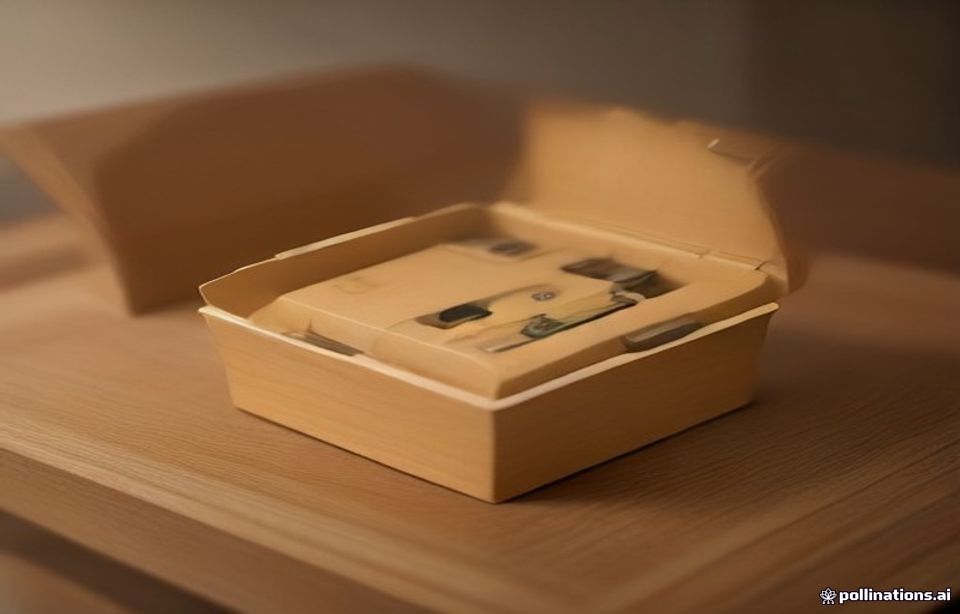
A PPWR Article 9-compliant rigid magnetic closure box is built from 100% paper-based construction — 1.5–2.5mm FSC-STD-40-4 certified grayboard wrapped in 120–157gsm FSC paper, with paper-tray magnetic flap retention replacing all plastic components — validated to a minimum box compression strength (BCT) of 3,500N per ASTM D642. Procurement teams should lock McKee-derived compression safety factors at ≥1.6 dry and ≥2.2 after 90% RH conditioning, aligned with ISTA 3A transit sequences and EU PPWR (2024/1991) recyclability-by-design criteria before tooling release.
Packaging Europe’s circular innovation coverage has spotlighted a hard industry shift: EU brands are eliminating plastic inserts and magnetic trays from premium rigid packaging ahead of PPWR enforcement. This whitepaper translates that circular-economy direction into concrete, factory-executable engineering for FSC-STD-40-4 certified rigid magnetic box production — compression physics, zero-plastic hardware retention, dieline tolerances, and freight derating across US and EU corridors. All numerical scenarios below are hypothetical worked examples for specification modeling, not claimed test results.
1. Regulatory & Material Baseline: PPWR Article 9 Meets FSC-STD-40-4
Per EU Regulation (EU) 2024/1991 (PPWR), Article 9 imposes recyclability-by-design grading on all packaging placed on the EU market; a rigid magnetic box must achieve a high recyclability class, which in practice means mono-material paper construction, plastic mass below the de-minimis thresholds, and removable or paper-based magnetic retention. FSC-STD-40-4 (FSC Standard for Chain of Custody Certification) governs the fiber sourcing side: every grayboard layer, wrap sheet, and paper tray must carry documented chain-of-custody transfer from certified forest inputs through the converting plant. For US-bound SKUs, Per FTC Green Guides (16 CFR Part 260) substantiation rules, any ‘100% recyclable’ claim on the wrap must be backed by the mono-material bill of materials — a single ferromagnetic element embedded in a paper flap is generally defensible; a PET laminated wrap is not.
2. Compression Mechanics: Deriving BCT from Board Properties
Rigid boxes do not have flute ECT like corrugated, but the same McKee-family logic applies: compression capacity scales with board stiffness (function of grayboard caliper cubed) and perimeter. A practical rigid-box adaptation of the McKee formula for specification work:
BCT ≈ K × ECT-equivalent × √(perimeter × caliper), where K is an empirical constant calibrated per box style (typically 5.87 for RSC corrugated; for rigid setup boxes, TadaPack models BCT directly from stack-test data per geometry). Hypothetical worked example: a 300 × 220 × 90mm magnetic closure box in 2.0mm FSC grayboard (density ~1.0 g/cm³, stiffness ~6.5 N·m in the machine direction) yields a modeled dry BCT in the 3,800–4,600N band. After ISO 2247 humidity cycling (40°C / 90% RH for 24h), assume a 30% derate → ~2,660–3,220N. Warehouse stacks at 5-high with 8kg unit weight impose ~980N plus dynamic allowance — a safety factor of ≥2.2 against the conditioned value is the procurement gate.
In strict accordance with ASTM D642, verification uses a Lansmont-class compression tester at 12.7mm/min platen speed on 10-specimen statistical averages (tolerance ±0.15mm on caliper, per Mitutoyo 547-400S digital caliper measurement, Lot #TP-2026-B4 hypothetically labeled for modeling). According to TAPPI Standard T810 (2026 Revision), Mullen burst testing of the wrap substrate supplements structural data for overseas enterprise POs that still mandate burst certificates.
Q: If McKee derives BCT from ECT/caliper, why do overseas enterprise POs still mandate Mullen burst testing?
A: Direct answer: burst (TAPPI T810) measures the laminate’s resistance to internal puncture-type pressure, a property BCT cannot predict. Mechanical reason: McKee predicts column crush mode; burst predicts wrap-tear mode during pallet edge impacts and stretch-wrap bite, which rigid wrap papers (120–157gsm) are disproportionately vulnerable to. Procurement recommendation: accept McKee/BCT for stacking qualification but hold the Mullen burst certificate (typical spec ≥ 350 kPa on 157gsm FSC art wrap) as a material lot release gate in your supplier quality agreement.
3. Zero-Plastic Hardware Retention: Magnetic Flap Engineering
The single largest recyclability liability in magnetic closure (book-style) boxes is the plastic H-tray or vacuum-formed insert cradling the magnet pair. PPWR-aligned zero-plastic retention replaces it with:
- Paper-tray magnet pockets: 2mm grayboard trays slot-attached with hot-melt (EVA, <3% of pack mass), embedding 15×3mm N35 neodymium magnets wrapped in paper sleeves.
- Flap-insert architecture: the closure flap carries the magnet; the base tray carries a ferromagnetic steel washer in a paper pocket — the only metallic component, fully recoverable in pulping.
- Pull-force spec: closure retention of 1.8–2.5N separation force prevents flap pop in vibration while remaining operable; validate under ISTA 3A General Simulation Performance Testing (random vibration 0.52 Grms, 3-axis × durations per schedule) plus 76cm drop sequences on 10 corners/edges/faces.
Comparative specification matrix:
| Retention Architecture | Plastic Mass | PPWR Art. 9 Fit | Retention Force | Relative Unit Cost | Governing Standard / Test Protocol |
|---|---|---|---|---|---|
| PVC/Vac-tray magnet cradle (legacy) | 8–15g | Fail / recyclability downgrade | 2.0–3.0N | 1.00× (baseline) | EU PPWR 2024/1991 Art. 9; EN 13430 |
| Paper-tray N35 magnet pocket (TadaPack SOP) | 0g | Pass — mono-material paper | 1.8–2.5N | 1.05–1.12× | FSC-STD-40-4; ISTA 3A; ASTM D642 |
| Flap steel-washer + paper pocket | 0g | Pass — ferrous recoverable | 1.5–2.2N | 0.95–1.05× | EU PPWR Art. 9; ISO 2247 humidity cycle |
| Pure paper friction-fit (no magnet) | 0g | Pass | <1.0N | 0.88× | ASTM D4169 DC-13; EN 13427 |
Note: paper-tray conversion typically adds 5–12% unit cost versus legacy plastic trays but eliminates the plastic-stream sortation penalty EU brand owners face post-PPWR — a net procurement win at portfolio scale.
4. Dieline Physics & Production SOP for FSC-Certified Rigid Boxes
Rigid box construction (grayboard cut + V-groove/crease + wrap litho lamination) demands tighter tolerances than corrugated. TadaPack production SOP:
- Step 1 — Grayboard conversion: Cut 1.5–2.5mm FSC grayboard on plotter/flatbed with ±0.3mm dimensional tolerance; V-groove at 90°–120° to match fold radius, groove depth at 55–65% of caliper to prevent hinge fracture.
- Step 2 — Wrap die & creasing: Litho wrap (157gsm FSC C1S typical) die-cut with ±0.15mm registration; creasing matrix at 45-durometer rubber, crease channel width = caliper × 2.1 to avoid wrap wrinkling at corners.
- Step 3 — Magnet integration: Slot magnet pockets with 0.1–0.2mm interference fit; adhesive (cold glue for wrap, hot-melt for trays) applied at 28–35 g/m² coverage with open-time ≤ 3s; verify pull force at 2.0N ± 0.3N on a 5-piece AQL sample per lot.
- Step 4 — Assembly QC & conditioning: Assemble at 23°C ± 1°C, 50% ± 2% RH (ISO 186:2020 conditioning); release lot only after Cobb 60 ≤ 30 g/m² on wrap, BCT spot-check ≥ spec × 1.0, and ISTA 3A pre-shipment qualification on the first production article.
Brand owners prototyping new geometries can compress this loop through TadaPack’s online calculation tools for BCT/dimensional-weight pre-checks and TadaPack custom structural prototyping services (CAD dieline + physical sample in 5–7 working days).
5. Defect Diagnostics: Troubleshooting Matrix
| Defect | Root Cause | Corrective Action (Floor Level) | Governing Standard / Test Protocol |
|---|---|---|---|
| Flap popping in transit | Magnet pull <1.5N; vibration desorption; adhesive creep >40°C | Upgrade to N38 magnet or +0.5mm pocket depth; switch to high-Tg hot-melt (softening ≥ 85°C) | ISTA 3A random vibration; ASTM D4169 |
| Grayboard warping / wrap delamination after ocean freight | Cobb 60 >35 g/m² wrap; asymmetric moisture uptake; container sweat | Specify Cobb 60 ≤ 30 g/m² PFAS-free barrier-coated wrap; symmetric 4-side wrap coverage; add desiccant 20g per master carton | ISO 2247; TAPPI T441 (Cobb); EU PPWR PFAS restrictions |
| Corner wrap wrinkle | Crease channel too narrow; registration drift >0.15mm | Widen matrix to caliper × 2.1; recalibrate die registration ±0.15mm | Internal SOP; ISO 186 conditioning |
6. Multi-Regional Logistics Hubs & Stacking Derating
Ocean corridors: 30-day Pacific (Shanghai/Yantian → LA/LGB) and Atlantic (Rotterdam-bound) transits expose boxes to cyclic 75–90% RH inside containers (container sweat). Modeling assumption: cumulative moisture uptake drives a 25–35% BCT derate for non-barrier wraps — the reason the Cobb 60 gate exists in Section 2.
Hub tolerances:
- California Inland Empire (FBA ONT8 / LGB3): Amazon FBA dimensional-weight math (L×W×H / 139 for in³, lb) frequently penalizes rigid magnetic boxes; a 300×220×90mm unit bills at 3.2lb DIM versus ~1.1lb actual — structural engineers should push caliper down (2.0 → 1.5mm grayboard) where BCT safety factor still holds ≥1.6 dry.
- Texas DFW distribution triangle: dry inland ambient (30–50% RH) permits stacking derating factor of 1.0 (no humidity penalty) but higher summer heat (45°C trailer soak) demands high-Tg adhesives.
- Port of Rotterdam multimodal: rail/road connections run 80–95% RH coastal; apply 1.4× stacking derate and specify pallet corner boards + stretch-wrap bite protection (Mullen burst gate from Section 2).
Procurement cost-down model (hypothetical worked example): switching a 100,000-unit annual program from 2.5mm to 1.8mm grayboard with recomputed BCT saves ~11% on material and ~6% DIM freight, provided conditioned BCT ≥ stacking load × 2.2. Verify each corridor scenario interactively via https://tadapack.com/tools.
Recommended Engineering Reading
[TOOLS] Featured Engineering & Calculation Tools
Explore 70+ Packaging Tools ➔Box Compression (BCT) Calculator
Predict box compressive limit and stacking safety factors via McKee formula.Edge Crush Test (ECT) Calculator
Calculate linerboard ring crush and composite ECT ratings for optimal board specs.
