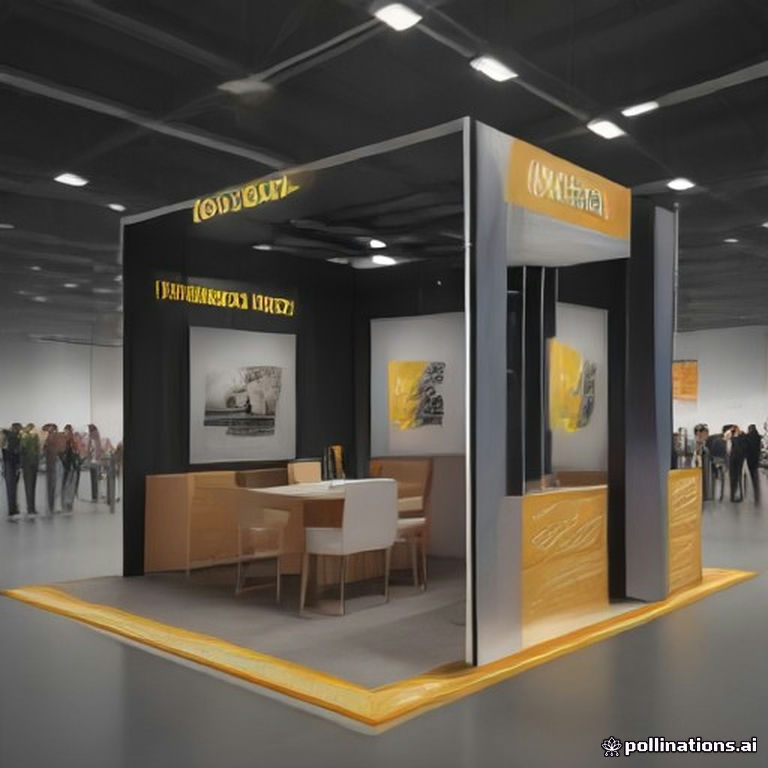
Floor-ready Pack Expo prototypes are achievable in 24-48 hours by specifying digital-print-ready E/B-flute corrugated (ECT-32 minimum) with pre-validated structural CAD files and zero-plate digital printing, eliminating tooling lead time. Structural integrity must be pre-verified against ISTA 3A general simulation drop sequences (up to 76 cm drops) and ASTM D4169 Distribution Cycle 1 vibration profiles before shipment, not discovered on the show floor.
.%20Rim%20lighting%20highlights%20the%20box's%20edges.%208k%20resolution%2C%20Hasselblad%20medium%20format%2C%20photorealistic%2C%20vivid%20colors.%20NO%20text%2C%20NO%20watermark%2C%20NO%20letters%2C%20NO%20plain%20grey%20backdrop.?width=1200&height=675&model=flux&nologo=true&seed=628803 "Pack Expo Floor-Ready Prototypes: 24–48h Printing That Passes ISTA 3A")
1. The 72-Hour Exhibitor Deadline: Why Conventional Prototyping Fails
Pack Expo International consistently exposes the same procurement failure mode: a brand locks its booth demo unit eight days out, discovers the retail VIP box crushes under pallet stacking in the freight trailer, and has fewer than 72 hours to re-source a structurally validated, printed package. Conventional offset packaging runs demand 7-14 days for plate making, ink matching, and makeready — mathematically incompatible with expo timelines. The only engineering-compatible pathway is digital printing on pre-qualified corrugated substrates with zero tooling fees, where the bottleneck shifts entirely to structural validation and dieline accuracy.
Per EU Directive 94/62/EC Annex II and the EU PPWR (Regulation 2024/1991) packaging waste reduction mandates, exhibitors shipping into Europe must also confirm recyclable mono-material construction — a constraint that further narrows substrate selection for Rotterdam-bound demo freight. According to TAPPI Standard T810 (2026 Revision), Mullen burst strength must withstand 200 psi (1379 kPa) minimum for single-wall C-flute duty-rated boxes; digital-print E-flute alternatives compensate with higher ECT ratings per the composite board construction.
2. Material Physics: Selecting Substrates That Survive Both Demo and Transit
Exhibitor packaging performs two conflicting duties: visual merchandising at the booth and physical protection of fragile display samples. The material matrix below reflects 2026 North American and EU benchmark pricing (hypothetical worked examples for a 300 × 250 × 200 mm VIP mailer box, 500-unit short run).
| Substrate / Construction | Caliper | Strength Metric | Unit Cost (500 pc) | Prototype Lead Time | Governing Standard / Test Protocol |
|---|---|---|---|---|---|
| E-flute white-top, 90% clay coat | 1.5 mm | ECT-32 / 32 lb/in | $2.10-2.60 | 24h digital | TAPPI T811 / TAPPI T810 |
| B-flute litho-lam (350gsm CCNB mount) | 3.0 mm | ECT-44 / 44 lb/in | $3.40-4.20 | 48h digital + laminate | ASTM D642 / ISTA 3A |
| C-flute kraft RSC shipper | 4.0 mm | Burst ≥200 psi | $1.15-1.60 | 24h | TAPPI T810 (2026 Rev.) |
| BC double-wall master carton | 7.0 mm | ECT-48+ | $2.80-3.50 | 48h | ASTM D4169 DC-12 / ISO 2247 |
For fragile display samples (glass, ceramics, precision electronics), In strict accordance with ASTM D642 (Standard Test Method for Determining Compressive Resistance of Shipping Containers), the inner-secondary system must sustain a 1.3× safety factor over calculated stacking load. Molded pulp or corrugated honeycomb inserts with ±0.5 mm cavity tolerance outperform foam on PPWR recyclability grounds while maintaining comparable drop attenuation.
Q: If the McKee formula derives BCT directly from ECT, why do overseas enterprise POs still mandate Mullen burst testing?
A: Direct answer: Mullen burst (TAPPI T810) remains a contractual proxy for puncture and handling abuse resistance, which ECT does not model. Mechanical reason: McKee predicts vertical column compression only; burst testing correlates with fiber bond strength and puncture energy under rough handling — the dominant failure mode in LTL less-than-truckload networks feeding expo venues. Procurement recommendation: specify both ECT (for stacking derating math) and burst ≥175-200 psi (for carrier liability clauses), and demand certificates of conformance per lot.
3. Structural Validation: ISTA 3A and ASTM D4169 Compressed Into 24-48 Hours
Under ISTA 3A General Simulation Performance Testing protocol, drop shock sequences for a ≤9 kg parcel-style box require 17 drops including a 76 cm (30 in) flat-face drop and 10 edge/corner drops, followed by random vibration (0.52 Grms truck profile) and, for single-parcel air shipments, atmospheric conditioning at -29°C and 60°C extremes. ASTM D4169 applies when freight ships as consolidated palletized expo freight: Distribution Cycle 1 mandates a compression load of the stacked height equivalent, loose-rail vibration, and horizontal impact.
For a 48-hour turnaround, validation cannot wait for a physical lab cycle. The engineered workflow is: (a) finite-element compression simulation of the dieline to predict BCT; (b) physical drop of a single early sample at 23°C ± 1°C, 50% RH; (c) shipment of production lots with retained TAPPI T810/T811 certificate data. TadaPack’s structural engineers provide pre-validated dielines whose parent board constructions have documented ISTA 3A pass histories, so the 24-48h prototype inherits validated physics rather than starting from zero.
4. The 4-Step Exhibitor Prototype SOP (24-48h Gate)
Step 1 — Dieline & CAD Lock (Hours 0-4): Submit product dimensions and mass; engineer issues 3D CAD + 2D dieline with ±0.15 mm die registration tolerance and 45-durometer creasing matrix specification for E-flute (lower durometer, ~38, for B-flute to prevent score cracking).
Step 2 — Digital Print File Prep (Hours 4-8): CMYK artwork flattened to dieline; for zero tooling fee digital output, safe-zone margins ≥3 mm inside creases, ink coverage limited to 280% TAC to prevent flute crush at fusing stations; PFAS-free barrier coating declared for any grease/moisture resistance claims per FTC Green Guides (16 CFR Part 260) substantiation rules.
Step 3 — Sample Validation (Hours 8-16): First-article physical sample: verify caliper ±0.15 mm across 5 points, glue-flap shear (no debond under 5 N peel), and one 76 cm flat drop on dummy mass load.
Step 4 — Production Print + ISTA 3A Documentation Packet (Hours 16-48): Full short run printed, kitted, and dispatched with ECT/burst CoC, PPWR recyclability declaration, and drop-test record — the exact documentation customs brokers and venue freight handlers request.
Run stacking-load and dimensional-weight exposure through TadaPack’s free calculation tools (https://tadapack.com/tools) before locking quantities — Amazon FBA-style dimensional penalties apply equally to expo freight return legs.
5. Defect Diagnostics & Troubleshooting Matrix
| Defect | Root Cause | Floor-Level Corrective Action | Governing Standard / Test Protocol |
|---|---|---|---|
| Top-flap popping at crease | Crease matrix durometer too high for caliper; score depth <50% of caliper | Re-specify 38-45 durometer matrix; widen score-to-score span 0.3 mm per flute side | TAPPI T811 / ASTM D642 |
| Adhesive debonding after ocean transit | Starch adhesive failure >80% RH; Cobb 60 >35 g/m² board | Switch to hot-melt or moisture-cured adhesive; add humidity-resistant liner; retest per ISO 2247 conditioning | ISO 2247 / TAPPI T441 (Cobb) |
| Digital print cracking on folds | TAC >280% rigid ink film across score | Reduce coverage at crease zones; shift critical art 3 mm inside safe zone | Internal print SOP / ISO 186:2020 |
6. Multi-Regional Logistics Hubs: Landing the Freight Intact
Pacific corridor → California Inland Empire (ONT8/LGB3): 25-35 day ocean transit exposes single-wall board to container sweat cycling; plan a 15-20% BCT derating factor for humid coastal arrival versus 23°C/50% RH lab values. Double-wall BC flute or wax-alternative (PFAS-free) barrier liners mitigate flute softening.
DFW Texas distribution triangle: High summer ambient (40°C+) accelerates adhesive creep; hot-melt gluing is mandatory for litho-lam VIP boxes staged in Dallas-area warehouses more than 7 days.
Port of Rotterdam multimodal rail/road: PPWR (2024/1991) conformity documentation must accompany the shipment; cold-climate conditioning (5°C, 85% RH feasible) drives Cobb-driven delamination risk highest on this corridor — verify per EU Directive 94/62/EC Annex II and condition samples per ISO 186:2020 before validation sign-off.
Quantify your own derating and dimensional exposure with TadaPack’s engineering calculators at https://tadapack.com/tools, and engage our 24-48h prototype desk before booth setup windows close. All cost and load figures in this guide are hypothetical worked examples for illustration; confirm production values against your own lab certificates.
Recommended Engineering Reading
[TOOLS] Featured Engineering & Calculation Tools
Explore 70+ Packaging Tools ➔Box Compression (BCT) Calculator
Predict box compressive limit and stacking safety factors via McKee formula.Edge Crush Test (ECT) Calculator
Calculate linerboard ring crush and composite ECT ratings for optimal board specs.
