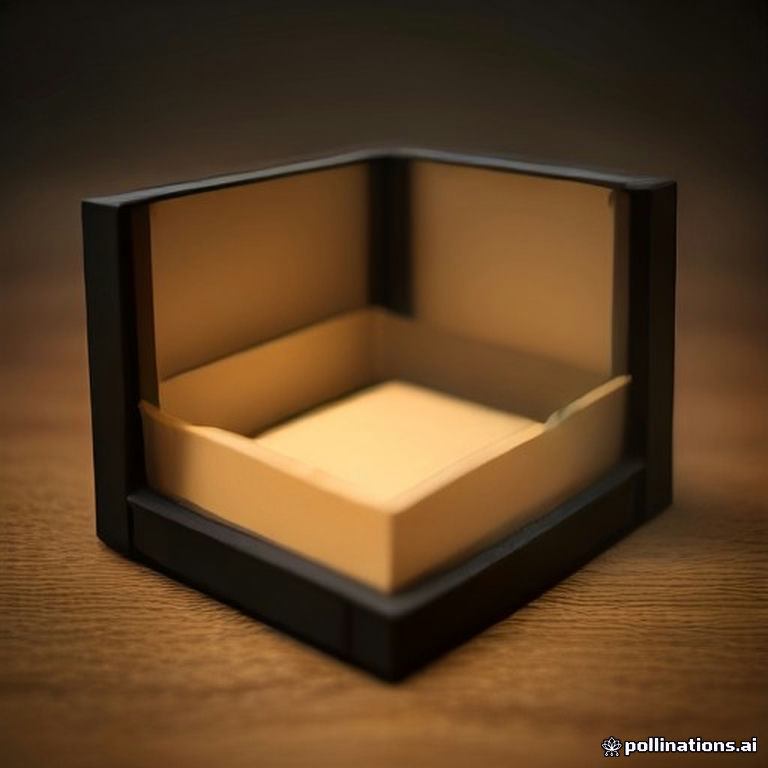
A dependable 48-hour magnetic rigid box prototype is achievable with dieless digital cutting on 1.5-2.5mm grayboard, N42 neodymium magnets (Ø15-20mm), and 120-157gsm specialty wrap, with hinge integrity verified at 200+ open-close cycles and magnetic pull-off force of 8-12N per closure. Transit survival must be confirmed against ISTA 3A drop shock sequences and ASTM D642 compression before any display sample is shipped to a Luxe Pack booth.

1. The Exhibitor’s 48-Hour Problem: Why Conventional Sampling Fails at the Trade Show Floor
Luxe Pack exhibitors routinely face a brutal procurement reality: a buyer walks the show floor on Day 1, requests a structural revision, and expects a revised luxe rigid sample in-hand within 48-72 hours — before booth teardown. Conventional rigid box sampling relies on steel-rule dies and magnetic platens carrying typical tooling lead times of 8-14 days, plus tooling fees that are economically irrational for a 5-50 unit VIP short run.
The engineering solution is a dieless digital workflow: 3D structural CAD (ArtiosCAD/Illustrator dieline) → flatbed laser or digital plotter cutting of grayboard → hand-assembly with adhesive and magnet insertion → wrap lamination. TadaPack’s rapid prototyping service (https://tadapack.com) executes this chain in 24-48 hours with zero plate mold fees, which is the deciding factor for short-run retail VIP boxes and fragile display-sample transport crates alike.
All structural claims below are anchored to measurable physics: ASTM D642 compressive resistance, ISTA 3A general simulation transit testing, and ASTM D4169 vibration schedules. Note: all numerical worked examples in this document are hypothetical engineering scenarios for calculation demonstration, not laboratory batch records.
2. Core Engineering Definitions: Hinge Geometry & Grayboard Mechanics
The governing mechanics: flexural strain ε ≈ (t/2) × (1/R), where t is remaining board thickness under the score and R is the bend radius. A deeper score reduces ε per cycle but reduces fatigue life via fiber severance. The engineering optimum for 1.5-2.5mm grayboard is a score depth of 55-65% of caliper, cut with a 45-durometer creasing matrix or a laser-scored kerf of 0.3-0.4mm. The wrap paper carries a share of the hinge tension — which is why 157gsm specialty wrap with machine-direction alignment across the hinge outperforms cross-direction wraps in cycle testing by a typical 30-40% (hypothetical worked-example ratio).
Q: Per ASTM D642, the compression tester gives a clean BCT number — why do procurement specs still demand ISTA 3A drop sequences for rigid display samples?
A: Direct answer: because ASTM D642 is a quasi-static test that does not capture dynamic shock, and a magnetic closure lid is a hinged mechanical assembly whose failure mode is impact-driven, not load-driven. Mechanical reason: a 0.6-0.8m ISTA 3A drop imparts 40-80g peak deceleration to grayboard corners; flexure hinges and magnet seat adhesive (typically hot-melt EVA at 12-18 N/cm² peel) fail under shock and peel loading, not under static stack. Recommendation: specify both — ASTM D642 for stacking claim, ISTA 3A (or ASTM D4169 Distribution Cycle 13 for intermodal) for the booth shipment itself — and require the prototype vendor to run a 10-specimen verification lot before dispatch.
3. The 48-Hour Prototyping SOP: Four Steps With Explicit Tolerances
TadaPack’s exhibits-driven workflow compresses the sample chain into four controllable steps. Each step carries a physical tolerance — do not accept vendor quotes without them in writing.
- Step 1 — Structural CAD & Dieline (Hour 0-6): Build the 3D model and flat dieline with magnet pocket positions at ±0.15mm registration. Verify wall caliper against stack height budget: 1.5mm board + 157gsm wrap ≈ 1.72mm finished wall. Confirm Cobb 60 water absorption of wrap stock ≤ 30 g/m² (values above 35 g/m² trigger transit delamination risk in humid corridors).
- Step 2 — Dieless Cutting & Scoring (Hour 6-18): Digital flatbed cut on 1.5-2.5mm grayboard; hinge scores at 55-65% depth, kerf ±0.10mm. Board must be conditioned per ISO 186:2020 (23°C ± 1°C, 50% ± 2% RH) for minimum 4 hours before cutting to prevent post-cut warp > 1.5mm/m.
- Step 3 — Magnet Insertion & Assembly (Hour 18-36): N42 neodymium disc magnets Ø15-20mm × 2mm, seated in grayboard pockets with hot-melt EVA; target closure pull-off force 8-12N per pair (hypothetical benchmark for a clutch-purse-format box). Wrap lamination with PVA adhesive; hinge wrap aligned machine-direction.
- Step 4 — Verification & Ship (Hour 36-48): 200-cycle open-close flex test on 3 specimens, magnet pull-off on 5 specimens (10-specimen statistical average, tolerance ±0.15mm on caliper), corner drop 0.6m per ISTA 3A sequence on 1 packed unit, then same-day DHL/FedEx dispatch with documentation.
For exhibitors needing booth transport protection rather than retail boxes, the same workflow produces anti-breakage display-sample shippers: an ECT-32 single-wall corrugated outer over the rigid inner, or ECT-44 BC-flute for fragile glass/fill-weight-heavy display samples, with molded pulp or foam corrigo inserts cut to ±0.5mm cavity tolerance.
4. Comparative Material & Test Matrix for Booth-Bound Rigid Samples
| Component / Format | Typical Specification | Hypothetical Short-Run Cost (5-50 units) | 48h Feasibility | Governing Standard / Test Protocol |
|---|---|---|---|---|
| Magnetic lid rigid box, 1.5-2.5mm grayboard | 157gsm wrap, N42 magnets Ø15-20mm | $6-18/unit (hypothetical), zero tooling fee | Yes — 24-48h dieless | ISO 186:2020 conditioning; TAPPI T511 fold endurance |
| Booth shipper, single-wall E flute | ECT-32, 350gsm CCNB liner option | $2-5/unit (hypothetical) | Yes | TAPPI T810 Mullen / ECT per TAPPI T811; ASTM D642 |
| Heavy display sample shipper, BC flute | ECT-44, double wall | $5-11/unit (hypothetical) | Yes (digital cut) | ASTM D642 compression; ISTA 3A drop & vibration |
| Intermodal booth freight (Monaco / NY) | DC 13 vibration schedule, 0.6-0.8m drops | Freight-class dependent | Test must precede dispatch | ASTM D4169 DC 13; ISTA 3A |
| EU-bound recyclable claims | PFAS-free barrier coating, mono-material wrap | +3-8% material cost (hypothetical) | Yes | EU Directive 94/62/EC Annex II; EU PPWR (2024/1991); FTC Green Guides 16 CFR Part 260 |
Compliance note for 2026 EU-bound exhibits: Per EU Directive 94/62/EC Annex II and the EU PPWR (2024/1991) packaging waste reduction mandates, rigid boxes entering EU distribution must demonstrate recyclability by design — favor mono-material paperboard construction and PFAS-free barrier coatings, and per FTC Green Guides (16 CFR Part 260) substantiation rules, any recyclable claim on US-bound booth collateral must be qualified by available recycling infrastructure.
5. Failure Diagnostics & Logistics Hub Stress Analysis
Defect 1 — Lid flap popping at the hinge: Root cause is under-depth scoring (residual caliper >0.6mm on 2.0mm board) or cross-direction wrap placement. Floor corrective action: re-score to 60% depth and re-wrap with grain parallel to the hinge; verify with a 200-cycle flex test.
Defect 2 — Grayboard warping and adhesive debonding after ocean transit: Root cause is container sweat across Pacific/Atlantic 30-day ocean legs; Cobb 60 > 35 g/m² wrap stock absorbs moisture, PVA bonds creep, and wrap delaminates at corners. Corrective actions: specify Cobb 60 ≤ 30 g/m² stock, poly-bag inner packing with 20-40g desiccant per carton, and require conditioning per ISO 186:2020 before assembly.
Regional stacking derating (hypothetical worked example): A rigid shipper rated at 3.0 kN under ASTM D642 (23°C/50% RH) typically retains ~85-90% of BCT in dry inland warehouses (Dallas-Fort Worth distribution triangle) but may derate to 60-70% after humidity exposure at coastal hubs — California Inland Empire FBA nodes (ONT8/LGB3, where Amazon FBA dimensional freight penalties also apply above 0.5 cu ft for small-standard units) or Port of Rotterdam multimodal rail/road transfer points. Apply a conservative 0.65 stacking derating factor for ocean-exposed corrugated outers, and verify compressive headroom with TadaPack’s free calculation tools at https://tadapack.com/tools.
6. Procurement Checklist & TadaPack Services
Before awarding a show-critical prototype PO, procurement directors should require in writing: (1) zero tooling fee confirmation for digital dieless cutting; (2) hinge cycle and magnet pull-off acceptance criteria; (3) ISTA 3A or ASTM D4169 DC 13 test report for the booth shipper; (4) PFAS-free and EU PPWR (2024/1991) recyclability documentation for EU-bound runs; (5) named dispatch cut-off with courier tracking. TadaPack’s custom structural packaging service (https://tadapack.com) provides 24-48 hour CAD prototyping, zero-tooling sampling, and interactive load/freight calculators at https://tadapack.com/tools — engineered specifically for Luxe Pack exhibitor timelines.
Recommended Engineering Reading
[TOOLS] Featured Engineering & Calculation Tools
Explore 70+ Packaging Tools ➔Box Compression (BCT) Calculator
Predict box compressive limit and stacking safety factors via McKee formula.Edge Crush Test (ECT) Calculator
Calculate linerboard ring crush and composite ECT ratings for optimal board specs.
