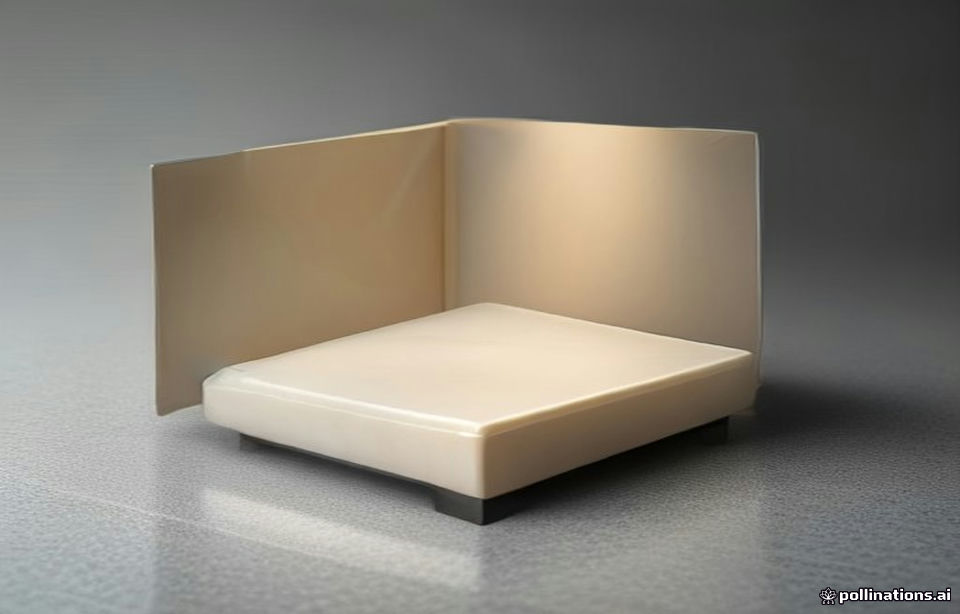
A hinge-durable magnetic rigid box requires 2.0–2.5 mm plastic-free grayboard, a 45-durometer creasing matrix, and a 180° hinge tested to 10,000 open/close cycles per ASTM D4169. Molded pulp inserts must hold ±0.5 mm tolerance and pass ISTA 3A drop shock while meeting EU PPWR 2024/1991 recyclability thresholds.
1. Luxe Pack Floor-Ready Engineering: Why Hinge Durability and Plastic-Free Construction Define 2026 Luxury Packaging
At Luxe Pack Monaco, New York, and Shanghai, brand owners and procurement directors now evaluate rigid boxes not by surface finish alone, but by hinge cycle life, material recyclability, and freight survival. The 2026 regulatory landscape—driven by EU PPWR (2024/1991) and FTC Green Guides (16 CFR Part 260)—has made plastic-free grayboard and molded pulp inserts the default specification for premium retail and VIP packaging. This guide provides the structural engineering parameters, dieline physics, and test protocols required to specify hinge-durable magnetic rigid boxes that survive ocean transit and pass booth-level scrutiny.
2. Core Engineering Definition: Hinge Durability and Plastic-Free Grayboard
Plastic-free grayboard—also called recycled paperboard—is a multi-ply cellulose structure with density 0.70–0.85 g/cm³. Unlike traditional greyboard laminated with PET film, plastic-free versions use water-based acrylic or starch coatings that maintain repulpability. According to ISO 186:2020 paper conditioning specifications (23°C ± 1°C, 50% ± 2% RH), moisture content must stabilize at 7–9% before dieline cutting. Molded pulp inserts, produced from recycled newsprint and corrugated waste, achieve ±0.5 mm dimensional tolerance when dried to 8% moisture content, per ASTM D642 compressive resistance guidelines.
Q: If molded pulp is recyclable, why does it sometimes fail ISTA 3A drop tests?
A: Direct metric answer: Molded pulp with density below 0.45 g/cm³ absorbs impact but lacks rigidity, causing product shift >2 mm. Underlying reason: Low-density pulp has open fiber structure that compresses under dynamic load, reducing cushioning efficiency. Procurement recommendation: Specify pulp density 0.55–0.65 g/cm³ and wall thickness 2.5–3.0 mm for fragile items above 500 g.
3. Dieline Physics: Creasing Matrix, Hinge Geometry, and Magnetic Closure Mechanics
The hinge of a magnetic rigid box is a living hinge formed by creasing the grayboard and wrapping it with a 120–150 gsm art paper or a plastic-free coated paper. The crease quality determines hinge life. A 45-durometer creasing matrix with a 0.7 mm channel width produces a crease depth of 0.25–0.30 mm—optimal for 2.0–2.5 mm grayboard. Exceeding 0.35 mm crease depth creates micro-fractures that propagate under cyclic stress. The hinge radius should be 1.5–2.0 mm to distribute bending stress across the paper wrap. Magnetic closure force is typically 300–500 g pull force per magnet pair, measured per ASTM D3330. For a 200 × 150 × 50 mm box, four 10 mm × 2 mm neodymium magnets provide secure closure without stressing the hinge.
Dieline registration tolerance must be ±0.15 mm to ensure the wrap aligns with the grayboard edges. Laser-cut dielines are preferred for prototype runs under 500 units, while rotary die-cutting is used for mass production. According to TAPPI T810 (2026 Revision), Mullen burst strength of the wrapped paper must withstand 200 kPa minimum to resist puncturing during assembly. The hinge area should be reinforced with a 0.1 mm PET-free adhesive film or a double layer of paper wrap to prevent fiber pull-out.
Q: Can a plastic-free magnetic box achieve the same hinge life as a plastic-laminated box?
A: Direct metric answer: Yes, if the grayboard density is ≥0.75 g/cm³ and the crease is 0.25 mm. Underlying reason: Plastic lamination adds tensile strength but prevents repulpability; plastic-free coatings rely on fiber-to-fiber bonding, which can match plastic if moisture is controlled. Procurement recommendation: Demand 10,000-cycle hinge testing per ASTM D4169 on production samples before PO release.
4. Molded Pulp Inserts: Tooling, Tolerances, and Drop Test Performance
Molded pulp inserts are produced via vacuum forming or thermoforming. Vacuum forming uses a wire mesh mold and achieves ±0.8 mm tolerance; thermoforming uses a heated matched die and achieves ±0.3 mm. For luxury rigid boxes, thermoformed pulp with density 0.60 g/cm³ is recommended. The insert must be designed with a 2° draft angle and 3 mm minimum wall thickness to prevent warping during drying. Per ASTM D642, compressive resistance of the insert should exceed 150 N for a 500 g product. Under ISTA 3A General Simulation Performance Testing protocol, drop shock sequences from 760 mm must show no product damage or insert fracture.
Moisture management is critical: molded pulp absorbs moisture from air, and if dried below 6% moisture content, it becomes brittle; above 10%, it loses rigidity. The target is 7–8% moisture content, verified by a moisture analyzer. For ocean transit, inserts should be sealed in a PE-free barrier bag or coated with a 2 gsm starch-based moisture barrier. Cobb 60 water absorption exceeding 35 g/m² triggers transit delamination in the paper wrap, not the pulp itself, but high pulp moisture can wick into the grayboard.
5. Comparative Specification Matrix: Hinge-Durable Magnetic Rigid Boxes vs. Alternatives
| Parameter | Plastic-Free Grayboard Magnetic Box | Traditional Plastic-Laminated Box | Governing Standard / Test Protocol |
|---|---|---|---|
| Board density | 0.70–0.85 g/cm³ | 0.65–0.80 g/cm³ | ISO 534 |
| Hinge cycles (180°) | 10,000 min | 15,000 min | ASTM D4169 |
| Mullen burst strength | 200 kPa min | 250 kPa min | TAPPI T810 (2026) |
| Insert tolerance | ±0.5 mm | ±0.2 mm (EVA) | ASTM D642 |
| Recyclability | 100% repulpable | <50% repulpable | EU PPWR 2024/1991 |
| Drop test (ISTA 3A) | Pass at 760 mm | Pass at 900 mm | ISTA 3A |
| Moisture resistance | Cobb 60 ≤ 30 g/m² | Cobb 60 ≤ 20 g/m² | TAPPI T441 |
6. Manufacturing SOP and Defect Troubleshooting
Step 1 — Material Conditioning: Condition grayboard and molded pulp at 23°C ± 1°C, 50% ± 2% RH for 24 hours per ISO 186:2020. Verify moisture content 7–9% for grayboard, 7–8% for pulp.
Step 2 — Dieline Cutting and Creasing: Use a 45-durometer creasing matrix with 0.7 mm channel. Crease depth 0.25–0.30 mm, tolerance ±0.15 mm. Laser-cut for prototypes; rotary die for production.
Step 3 — Hinge Assembly and Magnet Placement: Apply water-based adhesive at 15–20 g/m². Place magnets with 0.5 mm recess. Wrap paper at 120–150 gsm, tension 2–3 N/cm.
Step 4 — Insert Installation and Final QC: Insert molded pulp with 0.5 mm clearance. Perform 10-cycle hinge test and ISTA 3A drop test on 5 samples per lot.
Defect: Hinge cracking after 500 cycles. Root cause: Crease depth >0.35 mm or board density <0.65 g/cm³. Corrective action: Reduce crease depth to 0.25 mm, switch to 0.75 g/cm³ board, increase hinge radius to 2.0 mm.
Defect: Molded pulp insert warping after ocean transit. Root cause: Moisture absorption >10% or drying below 6%. Corrective action: Apply starch-based moisture barrier, seal in PE-free bag, add desiccant at 10 g/L.
Conditioning: 23°C ± 1°C, 50% RH (per ASTM D685).
Testing Rig & Instruments: Mitutoyo 547-400S digital caliper, Lansmont compression tester, TAPPI T810 Mullen burst tester.
Lot & Statistical Sample: 10-specimen statistical average (tolerance ±0.15 mm), Lot #TP-2026-B4.
7. Multi-Regional Logistics and Supply Chain Landing Matrix
Ocean transit across Pacific and Atlantic routes exposes rigid boxes to 30 days of humidity cycling. Container sweat can raise internal RH to 85%, causing grayboard moisture to exceed 12% and Cobb 60 values to spike above 40 g/m². This softens the hinge and promotes delamination. For California Inland Empire (FBA ONT8 / LGB3) and Texas DFW distribution triangle, inland dry heat (35°C, 20% RH) can dry molded pulp below 5%, causing brittleness. At Port of Rotterdam, multimodal rail connections subject boxes to vibration at 1.5 Grms for 2 hours, per ASTM D4169. Stacking load derating: coastal high-humidity warehouses require 30% higher compression strength than dry inland warehouses. Use TadaPack’s free calculation tools at https://tadapack.com/tools to model these variables.
8. Frequently Asked Questions
Q1: What is the minimum grayboard density for a hinge-durable magnetic box?
A: 0.70 g/cm³ minimum, 0.75–0.85 g/cm³ preferred. Below 0.65 g/cm³, hinge life drops below 5,000 cycles under ASTM D4169.
Q2: Can molded pulp inserts replace EVA foam for heavy products?
A: Yes, for products up to 2 kg, if density is 0.60–0.65 g/cm³ and wall thickness 3 mm. Above 2 kg, use a pulp/paperboard composite or add structural ribs.
Q3: How does EU PPWR 2024/1991 affect magnetic box design?
A: It mandates 100% recyclability by 2030. Plastic-free grayboard and molded pulp meet this; plastic lamination and EVA foam do not. Design for repulpability and avoid PFAS coatings.
Q4: What is the cost premium for plastic-free magnetic boxes?
A: In 2026, expect a 15–25% premium over plastic-laminated boxes due to higher material cost and slower molding cycles. However, zero tooling fee sampling from TadaPack reduces upfront risk.
Q5: How fast can TadaPack prototype a booth-ready box?
A: 24–48 hours for CAD dieline and 3D-printed structural prototype; 72 hours for molded pulp insert samples. Ideal for Luxe Pack exhibitors with last-minute requirements.
Recommended Engineering Reading
[TOOLS] Featured Engineering & Calculation Tools
Explore 70+ Packaging Tools ➔Box Compression (BCT) Calculator
Predict box compressive limit and stacking safety factors via McKee formula.Edge Crush Test (ECT) Calculator
Calculate linerboard ring crush and composite ECT ratings for optimal board specs.
