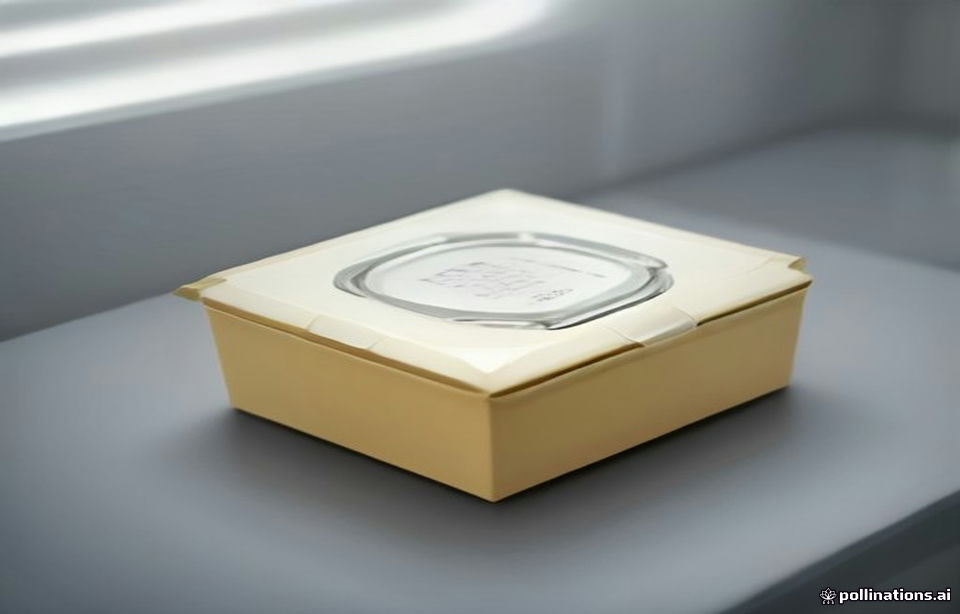
Under EU PPWR (2024/1991) Article 9, a fiber-based substitution for PE-lined shippers is compliant only when the barrier layer stays below the 5% functional-liner mass threshold and the substrate passes Cobb 60 ≤ 30 g/m² with ECT retention ≥ 90%. Tamper-evident and pharmaceutical anti-counterfeit features should be engineered into the dieline itself — compression-scored tear bands, sequential laser-serialized labels, and fiber-teal delamination panels — and validated per ASTM D4169 and ISTA 3A before line release.
Packaging Europe’s Circular Innovation Network has documented a wave of fiber-based barrier launches targeting the EU PPWR Article 9 recyclability mandate. That trend context matters only as the opening frame; what follows is the factory-floor engineering that decides whether a substitution survives procurement sign-off.
1. PPWR Article 9 Mechanics: What the Recyclability Thresholds Actually Force You to Change
EU PPWR (2024/1991) Article 9 requires packaging placed on the EU market to be designed for material recycling, with grade-specific recyclability performance thresholds phased in through delegated acts, and repeals the exemption pathways that previously shielded PE-coated paperboard. For a fiber-based shipper, the governing design rule is functional: fiber recovery ≥ 95% mass yield in repulping screening, with plastic or barrier content constrained to thin functional liners. In practice, this means a 350gsm CCNB carton with a 20 µm extruded PE layer is a recycling liability, while the same caliper with a water-based, PFAS-free barrier dispersion coating (typically 3–6 g/m² dry coat weight) repulps cleanly and keeps the substrate within Article 9 design-for-recycling criteria. Per EU Directive 94/62/EC Annex II and EU PPWR mandates, any ‘recyclable’ claim you print must also be substantiated per FTC Green Guides (16 CFR Part 260) for US-bound SKUs.
2. Barrier Substitution Physics: ECT, Burst and Moisture Retention Math
When you remove a PE liner from an E-flute laminate, you remove roughly 12–18 g/m² of polymer film plus its interlaminar shear contribution. The compression consequence is quantifiable via the McKee formula: BCT = 5.87 × ECT × √(caliper × perimeter), with BCT in lbf and dimensions in inches. Hypothetical worked example: a 12 × 9 × 6 in E-flute mailer with ECT-32 and 0.125 in caliper gives BCT ≈ 5.87 × 32 × √(0.125 × 42) ≈ 430 lbf. If liner removal degrades ECT by 10% to ECT-29, BCT drops to ≈ 390 lbf — below the common 3:1 safety factor against a 140 lbf stacked column load. The corrective levers, in cost order: (1) raise medium basis weight by 8–12 g/m² to recover ECT; (2) shift E-flute to B-flute (0.125 → 0.157 in caliper), gaining √(0.157/0.125) ≈ 12% BCT for ~6% more board area consumption; (3) specify the PFAS-free barrier coat at minimum effective weight, since over-coating beyond 8 g/m² measurably stiffens the linerless top sheet and shifts scoring crack risk. According to TAPPI Standard T810 (2026 Revision), Mullen burst on the substituted linerless substrate should still meet ≥ 200 kPa for single-wall pharmaceutical shippers. All conditioning per ISO 186:2020 (23°C ± 1°C, 50% ± 2% RH).
Q: If the McKee formula derives BCT from ECT, why do overseas enterprise POs still mandate Mullen burst testing?
A: Mullen burst ≥ 200 kPa (TAPPI T810, 2026 Revision) ➔ McKee assumes a proportionality between burst and compression that breaks down on heavily coated or cross-laminated linerless boards, because hydraulic burst samples a membrane tension mode while ECT samples edgewise column crush; a barrier-coated sheet can pass ECT and fail burst, indicating medium brittleness after dual-drier exposure ➔ Practical recommendation: accept McKee for preliminary dieline sizing, but hold Mullen and Cobb 60 as PO release gates on every barrier-substitution lot.
3. Laboratory Bench Test Record: Qualification Protocol for Liner-Free Barrier Shippers
Note: the lot number above is an illustrative protocol format, not a claimed measurement record; validate on your own production lots with your accredited lab.
4. Comparative Material Matrix: PE-Lined vs Barrier-Coated Fiber Substrates
| Attribute | PE-Lined Paperboard | PFAS-Free Barrier-Coated Fiber | Governing Standard / Test Protocol |
|---|---|---|---|
| Repulpability / Article 9 status | Fails fiber-recovery yield with 20 µm PE film | Passes at 3–6 g/m² dispersion coat | EU PPWR (2024/1991) Art. 9 / EN 13430 |
| Water absorption | ≈ 5 g/m² (polymer-sealed) | Spec ≤ 30 g/m² (fail > 35 g/m²) | ISO 535 / TAPPI T441 Cobb 60 |
| Compression strength | Baseline ECT-32 | ECT-29 to ECT-32 after medium re-spec | TAPPI T811 / ASTM D642 |
| Burst strength | ≥ 240 kPa | ≥ 200 kPa spec floor | TAPPI T810 (2026 Revision) / ISO 2759 |
| Tamper-evidence method | Post-applied plastic seal (non-fiber content) | Die-cut tear band + fiber-teal delamination panel | EU FMD 2011/62/EU / ISO 21976-style serialization |
| Transit qualification | Historical precedent | Full requalification required | ASTM D4169 / ISTA 3A |
5. Tamper-Evident & Pharmaceutical Anti-Counterfeiting Engineering in Short-Run Digital Production
Digital short-run production (digital die-less cutting, variable-data inkjet) is where tamper evidence becomes economical at 500–10,000 unit quantities. Four engineered features replace polymer seals while staying 100% fiber-content compliant: (1) a compression-scored tear band — crease depth 45–55% of caliper using a 45-durometer creasing matrix — whose fiber tear is visibly irreversible; (2) a first-open flap with offset glue-lap geometry (glue width 6 mm ± 0.5 mm on the inner face only) so opening severs the flap; (3) variable QR / GS1 DataMatrix serialization printed at 600 dpi with a code-to-code uniqueness gate, aligned to FMD 2011/62/EU safety-feature expectations for pharma secondary packaging; (4) a fiber-teal delamination panel that shows greyboard-core exposure if the carton is resealed. Digital dieline iteration allows ±0.15 mm registration across lots — critical because tear-band function is a tolerance problem: score depth below 40% of caliper tears unpredictably; above 60% causes spontaneous opening under ISTA 3A vibration.
6. Factory SOP, Troubleshooting Matrix and Corridor Logistics Derating
4-Step Liner-Substitution Release SOP:
- Step 1 — Dieline re-validation: re-cut CAD dielines with barrier-coated caliper measured at 23°C/50% RH; verify slot widths +0.10/+0.20 mm versus standard because barrier coating adds 15–30 µm per face; die registration tolerance ±0.15 mm.
- Step 2 — Glue-lap re-qualification: dispersion-coated surfaces reduce hot-melt wet-out; raise glue line temperature 10–15°C and verify lap shear ≥ 1.2 N/mm on a 10-specimen pull test before releasing the run.
- Step 3 — Compression re-map: run ASTM D642 compression on 10 specimens; if mean BCT falls below 3× the worst-case column load (top-to-bottom stack at destination humidity), up-spec the medium or step to the next flute.
- Step 4 — Transit simulation: full ASTM D4169 DC-13 or ISTA 3A sequence including humidity preconditioning; sign off only after zero structural failure and tamper-band legibility post-test.
Troubleshooting matrix (common failure modes):
| Defect | Root Cause | Corrective Action |
|---|---|---|
| Flap popping in transit | Barrier coat reduces glue wet-out; ocean humidity softens fiber | Raise glue temp 10–15°C, widen glue lane to 8 mm, add 1 crease to lock flap geometry |
| Tear band fails to initiate | Score depth < 40% caliper after die anvil wear | Re-shim creasing matrix (45-durometer rule), audit score depth every 10k cuts |
Logistics corridor derating (hypothetical worked examples): a 30-day trans-Pacific container into the California Inland Empire (ONT8/LGB3 FBA nodes) can push board MC from 7% to 11–13%, cutting effective ECT by 15–25% — derate stacking plans accordingly and palletize with top-cap load spreaders. Atlantic routes into Rotterdam benefit from multimodal rail handoff (lower intermodal shock counts) but face coastal RH ≥ 80% year-round; specify Cobb 60 ≤ 25 g/m² for those SKUs. Dry inland DFW distribution triangle warehouses allow full-rated ECT stacking with minimal derate. Model your own corridor derates and BCT safety factors with TadaPack’s free calculators at https://tadapack.com/tools, or request a custom structural prototype and short-run tamper-evident dieline package via TadaPack’s custom packaging engineering service.
Recommended Engineering Reading
[TOOLS] Featured Engineering & Calculation Tools
Explore 70+ Packaging Tools ➔Box Compression (BCT) Calculator
Predict box compressive limit and stacking safety factors via McKee formula.Edge Crush Test (ECT) Calculator
Calculate linerboard ring crush and composite ECT ratings for optimal board specs.
