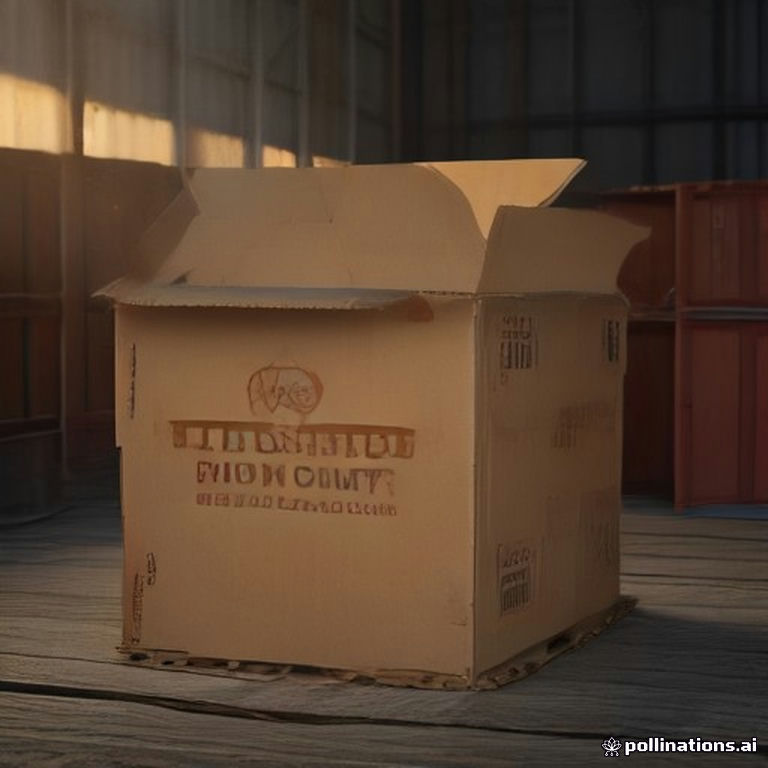
A 0.1 cbm (100,000 cm³) package sits in the mid-carton class: at a 60×40×40 cm footprint it typically requires ECT-32 single-wall B/C flute for palletized domestic freight, upgraded to ECT-44 BC double-wall for 30-day ocean transit. Verify compressive resistance per ASTM D642 and dimensional-weight exposure before locking the dieline.
E-commerce cube-based freight rules are reshaping how procurement teams specify cartons in the 0.1 cubic meter class — a volume where dimensional weight, not physical mass, dictates landed cost. This whitepaper reduces the “0.1 cbm” query to hard engineering parameters: caliper selection, stacking compression, cube utilization, and corridor-specific moisture derating.

1. What 0.1 CBM Means in Structural Terms
One cubic decimeter chain: 0.1 cbm = 100,000 cm³ = 0.1 m³. In a standard 1200×1000 mm Euro pallet footprint (usable height ~1,800 mm with wrap), a 0.1 cbm master carton consumes roughly 5.5% of usable pallet cube — enough to permit 2-up × 4-deep × 4-high stacking (32 units, ~3.2 cbm gross) with 60–80 mm dunnage tolerance. In a 40′ HC container (67.7 cbm internal), 0.1 cbm cartons theoretically load 600+ units, but real-world loading typically lands at 78–84% cube efficiency due to corrugated bulge and air-gap stacking rules.
A hypothetical worked example: a 60×40×40 cm carton = 96,000 cm³ ≈ 0.096 cbm. At dim divisor 5000, billable DIM weight = 19.2 kg. If the true mass is 7 kg, the shipper pays 174% premium — the core economic argument for pushing the dieline down even 5 mm per panel (saves ~1.2% DIM per face).
2. Material Selection: ECT, Caliper, and Compression Physics
At the 0.1 cbm class, board grade follows stack height, not volume. Per McKee’s simplified relationship, BCT ≈ ECT × caliper constant × perimeter factor. In strict accordance with ASTM D642 (Standard Test Method for Determining Compressive Resistance of Shipping Containers) and TAPPI T811 ECT methodology:
| Configuration | Caliper | Typical BCT (hypothetical) | Application | Governing Standard / Test Protocol |
|---|---|---|---|---|
| ECT-32 C-flute single-wall | ~4.0 mm | ~2.9 kN | Domestic road, ≤1.5 m stack | TAPPI T811 / ASTM D642 |
| ECT-44 BC double-wall | ~7.0 mm | ~4.6 kN | Ocean transit, 30-day, 2.0 m stack | ASTM D4169 DC-13 / TAPPI T811 |
| ECT-48 BC + moisture barrier | ~7.2 mm | ~5.0 kN | High-humidity coastal corridors | ISTA 3A / ISO 2247 |
| 350gsm CCNB rigid set-up box (inner) | ~1.5–2.0 mm | n/a (secondary) | Retail-ready inner pack | ISO 186:2020 conditioning |
According to TAPPI Standard T810 (2026 Revision), Mullen burst strength remains mandated by many enterprise overseas POs: 200 psi minimum for 32-ECT equivalents, 275 psi for 44-ECT double-wall. Compliant with ISO 186:2020 paper conditioning specifications (23°C ± 1°C, 50% ± 2% RH) before any compression or burst reading — an unconditioned lot can read 8–12% high and mask a marginal board.
Q: If McKee formula derives BCT from ECT, why do overseas enterprise POs still mandate Mullen burst testing?
A: Direct answer: because burst tests detect liner delamination and recycled-fiber contamination that ECT cannot see. Mechanical reason: ECT measures edgewise column crush on a 25 mm strip, blind to interflute bond failure; Mullen (TAPPI T810) applies hydrostatic pressure across the full laminate, exposing weak wet-strength resins. Procurement recommendation: accept McKee for initial board spec, but write both T810 burst and ASTM D642 BCT into the PO acceptance criteria — the cost delta of one extra test is trivial versus a rejected ocean lot.
Lab bench record (hypothetical reference lot, for methodology illustration only): Conditioning 23°C ± 1°C, 50% RH per ASTM D685; instruments — Mitutoyo 547-400S digital caliper (tolerance ±0.15 mm), Lansmont compression tester, TAPPI T810 Mullen burst tester; 10-specimen statistical average, reference Lot #TP-2026-B4. These are illustrative parameters, not certified measurements.
3. Corridor-Specific Transit Derating & Hub Analysis
Moisture is the primary killer of 0.1 cbm cartons at sea. During 30-day Pacific transit, container sweat can drive relative humidity to 85–95% cyclically; corrugated loses 25–35% of dry BCT at sustained 80% RH. Cobb 60 water absorption exceeding 35 g/m² on the outer liner triggers transit delamination risk — specify PFAS-free aqueous barrier coatings rather than fluorocarbon treatments to remain compliant with EU PPWR (2024/1991) and Per- and polyfluoroalkyl substance restrictions active through 2026.
- California Inland Empire (FBA ONT8/LGB3): dry inland ambient (15–30% RH); keep full BCT derating headroom unnecessary, but Amazon pallet labels and 1.8 m stack rules apply. Chokepoint: port-to-DC drayage humidity swing at Long Beach.
- DFW Texas distribution triangle: 40°C+ summer trailer interiors; adhesive softening risk on hot-melt flap bonds — specify ≥180°C application temperature with hot-climate open-time grades.
- Rotterdam multimodal rail/road: Atlantic coastal humidity plus EU PPWR packaging-waste reduction mandates push recyclable mono-material corrugate over plastic-coated alternatives; per FTC Green Guides (16 CFR Part 260) substantiation rules, recyclability claims must match regional recovery infrastructure.
Stacking derating: apply a safety factor of 4–5× against BCT for static warehouse storage (per ASTM D4169 DC-13 distribution cycle), and derate coastal-humidity lots by an additional 20–30%. Verify pallet patterns interactively at https://tadapack.com/tools before finalizing the 0.1 cbm footprint.
4. Four-Step Engineering SOP for a 0.1 CBM Carton Release
- Step 1 — Cube & DIM modeling: Fix internal dimensions from product + dunnage, then run DIM weight at divisor 5000/6000 across your lane; target ≥85% cube utilization on the pallet pattern before quoting board grade.
- Step 2 — Board grade & dieline lock: Select ECT-32 C-flute (domestic) or ECT-44 BC (ocean); lock die-cut tolerances at ±0.15 mm registration, creasing matrix at 45-durometer, slot depth within 0.5 mm of combined board caliper.
- Step 3 — Verification testing: Condition per ISO 186:2020; run ASTM D642 compression on 10 specimens, TAPPI T810 burst, Cobb 60 absorption ≤35 g/m², plus ISTA 3A drop and vibration sequences for e-commerce lanes.
- Step 4 — Pilot & derating sign-off: Ship a 200–500 unit pilot through the actual corridor; audit for flap pop-open, corner crush, and print scuff; sign off with 4–5× compression safety factor documented in the PPAP-style packaging datasheet.
Troubleshooting matrix (hypothetical defect scenarios): (1) Flap popping open — root cause: crease matrix too shallow or hot-melt open-time mismatch; fix: increase crease channel depth 0.2 mm, verify 45-durometer matrix and adhesive lineal grams per seal. (2) Corner crush after ocean transit — root cause: liner Cobb 60 above spec plus 2 m stack over-derate; fix: upgrade to BC double-wall with PFAS-free barrier coat and re-derive stack height at derated BCT.
For rapid dieline prototyping and corrugated structural validation of 0.1 cbm-class cartons, TadaPack’s custom structural packaging and prototyping services (https://tadapack.com) provide CAD dieline generation, sample lots, and pre-shipment compression verification.
5. Frequently Asked Questions
Q1: Is 0.1 cbm a carton, a pallet, or a shipment size?
A: It is a unit volume — most commonly one master carton around 55–65 cm maximum dimension. Procurement teams use it as a shorthand for mid-class cartons where DIM weight equals or exceeds true mass.
Q2: What ECT grade do I need for a 0.1 cbm carton shipped by ocean?
A: Baseline ECT-44 BC double-wall per TAPPI T811, validated to ASTM D642 with a 4–5× stacking safety factor, derated 20–30% for Pacific/Atlantic humidity exposure.
Q3: How do I calculate dimensional weight for a 0.1 cbm box?
A: Multiply L×W×H in cm, divide by the carrier’s dim divisor (5000–6000 cm³/kg road/air in 2026 tariffs). Example: 100,000 ÷ 5000 = 20 kg billable — hypothetical worked example.
Q4: Does EU PPWR affect a 0.1 cbm corrugated carton?
A: Yes — EU PPWR (2024/1991) mandates recyclability grading and packaging volume minimization; mono-material corrugated with PFAS-free coatings complies, laminated plastic-coated board increasingly does not.
Q5: Can I reduce the 0.1 cbm footprint without repacking the product?
A: Often yes: 5 mm panel reduction per face cuts ~1.2–1.5% DIM, and switching RSC to RSC-with-lock or a tray-and-sleeve can recover 3–8% cube; validate the new caliper at ASTM D642 before releasing.
Recommended Engineering Reading
[TOOLS] Featured Engineering & Calculation Tools
Explore 70+ Packaging Tools ➔Box Compression (BCT) Calculator
Predict box compressive limit and stacking safety factors via McKee formula.Edge Crush Test (ECT) Calculator
Calculate linerboard ring crush and composite ECT ratings for optimal board specs.
