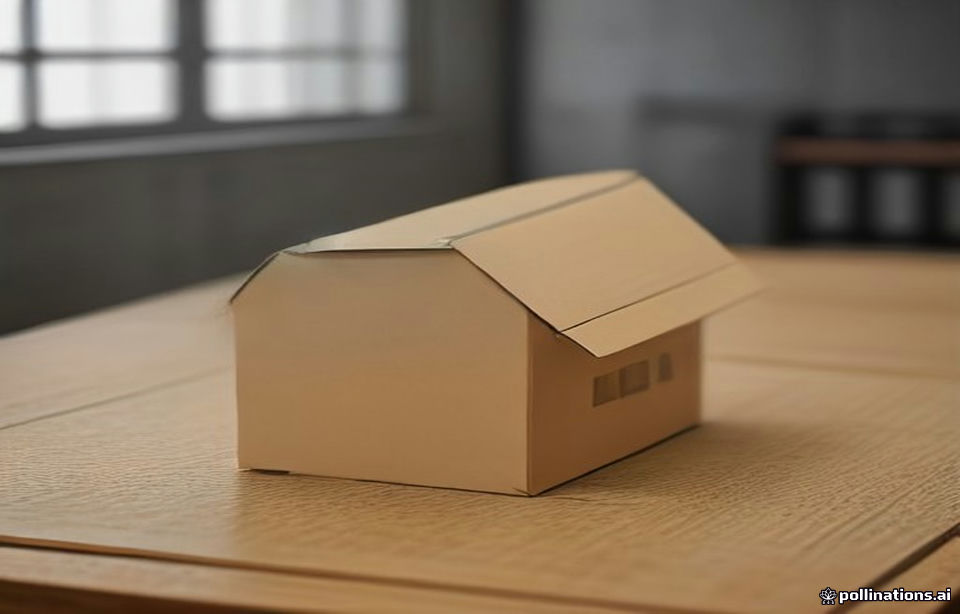
Mono-material folding cartons pass ISTA 3A when engineered with 350-450gsm FBB/SBS or E-flute laminate, achieving ECT-32+ edge crush resistance and Cobb 60 absorption below 30 g/m², while remaining fully curbside-recyclable under EU PPWR (2024/1991) and US state EPR mandates. TadaPack delivers 24-48 hour CAD dieline prototyping and zero-tooling-fee sampling so PACK EXPO exhibitors can move from booth sample to shelf-ready production in under two weeks.
Every PACK EXPO International floor walk in 2026 surfaces the same procurement tension: brands are being forced to strip plastic laminates and multi-material barriers from folding cartons to satisfy Extended Producer Responsibility (EPR) fee schedules, yet retail logistics partners still demand packages that survive ISTA 3A drop, vibration, and compression sequences. This whitepaper resolves that conflict with hard engineering numbers—no marketing fluff.
1. Why Mono-Material Is Now a Structural Problem, Not Just a Sustainability Checkbox
Under EU Regulation (EU) 2024/1991 (PPWR) packaging waste reduction mandates, folding cartons containing plastic laminate barriers or PE-coated liners risk being classified as non-recyclable by design, triggering elevated EPR eco-modulated fees. In the US, state-level EPR programs in Oregon, Colorado, Maine, and California (with fee schedules active through 2026) apply similar recyclability scoring. Per FTC Green Guides (16 CFR Part 260) substantiation rules, any “recyclable” claim on a carton must be provable through a substantial majority of curbside programs—which multi-material laminates routinely fail.
The engineering consequence: when you remove the plastic barrier, the paperboard itself must carry the moisture-resistance, burst, and compression load. That shifts specification burden onto grammage selection, coating chemistry (PFAS-free barrier coatings per growing EU restriction momentum), and flute/caliper geometry.
2. Material Physics: Caliper, ECT, and the Mono-Material Stack
Per ISTA 3A General Simulation Performance Testing protocol, drop shock sequences (up to ~0.9m depending on packaged weight), random vibration profiles, and low-pressure stacking must all be survived by a single-carton system without a corrugated overbox. Achieving this with mono-material construction typically requires one of three stacks:
| Construction | Typical Caliper / Grammage | ECT Range (Hypothetical Bench Scenario) | Best-Fit Application | Governing Standard / Test Protocol |
|---|---|---|---|---|
| Solid bleached sulfate (SBS) folding carton | 0.40-0.55mm, 350-450gsm | Burst-driven; Mullen 55-75 psi class | Cosmetics, premium DTC e-comm (light, fragile) | TAPPI T810 / TAPPI T402 |
| Folding boxboard (FBB) + PFAS-free dispersion barrier | 0.45-0.60mm, 380-450gsm | ECT-32 equivalent class | Food, supplements, humid-climate retail | ISO 535 (Cobb 60) / EU PPWR (2024/1991) |
| E-flute micro-flute carton (mono-fiber) | 1.1-1.5mm caliper | ECT-32 to ECT-44 class | Heavy e-comm shipper-printer combos, ISTA 3A without overbox | TAPPI T811 (ECT) / ASTM D642 / ISTA 3A |
| B-flute single-wall shipper (control baseline) | ~3.0mm caliper | ECT-32 to ECT-44 | Master outers, FBA unit loads | ASTM D4169 / ASTM D642 |
As a hypothetical worked example: a 450gsm E-flute mono-fiber carton sized 250×180×120mm with an ECT-32 rating and box compression requirement derived via the McKee formula (BCT ≈ 5.87 × ECT × √(caliper × perimeter)) yields a BCT near 690N for this geometry—adequate for a 6kg product with a 3:1 safety factor on a single-pallet distribution loop. Verify your own geometry at https://tadapack.com/tools using our free BCT and dimensional-weight calculators.
Q: If the McKee formula derives BCT from ECT, why do overseas enterprise POs still mandate Mullen burst testing?
A (direct): Because burst measures ply-bond integrity and puncture resistance—properties orthogonal to edge crush—so buyers use it as a delamination screen for coated mono-material boards.
Why mechanically: A board can post a strong ECT yet fail in transit if interlayer bonding is weak; under ISTA 3A vibration, weak ply bonds propagate at crease corners first. Per TAPPI Standard T810 (2026 Revision), Mullen burst strength must withstand the class minimum (e.g., 200 lb/in² class equivalents for heavy-duty grades) on conditioned specimens.
Procurement recommendation: Specify both: ECT per TAPPI T811 for stacking design, and a Mullen or ply-bond (Scott internal bond) minimum on your PO to screen coating-induced delamination in barrier-coated mono-material stocks.
3. Lab Bench Reference: Conditioning Before Any Claim
No numerical values above should be read as guaranteed production results—they define the testing discipline your supplier should demonstrate. Any vendor that cannot produce conditioning records per ISO 186:2020 before quoting ECT or burst numbers is quoting paper mill datasheet values, not package-level performance.
4. Four-Step SOP: From Dieline to ISTA 3A-Pass Production Carton
- Step 1 — Geometry & load-path design (Day 0-1): Model stacking axis and drop orientation in CAD; target corner-to-corner load transfer with minimum 12mm glue-flap width; lock die-cut tolerance at ±0.15mm and crease rule depth against board caliper (45-durometer creasing matrix typical for 400-450gsm FBB).
- Step 2 — Material qualification (Day 1-3): Verify Cobb 60 ≤ 30 g/m² for barrier-coated stock, ECT per TAPPI T811, burst per TAPPI T810, and confirm PFAS-free coating chemistry documentation for EPR recyclability scoring.
- Step 3 — Prototype & pre-ship validation (Day 3-7): TadaPack issues zero-tooling-fee CAD-cut samples in 24-48 hours; run a 10-specimen compression screen per ASTM D642 and, if volume justifies, a full ISTA 3A sequence at a certified lab before committing steel dies.
- Step 4 — Production registration & QC gate (Day 7-14): In production, enforce ±0.15mm die registration, adhesive temperature window ±5°C at the glue head, and pull 5-carton/hour caliper + crease-crack checks; reject any carton exhibiting fiber fracture at the 130° fold test.
5. Freight Corridor Stress: Ocean Sweat, Humidity Derating, and Hub Tolerances
Across Pacific and Atlantic ocean routes, 30-day transits expose cartons to container sweat cycles where internal headspace RH can exceed 80% repeatedly. Unbarriered mono-material boards absorb this moisture, softening E-flute walls and derating stacking performance—plan a 15-25% BCT derating factor for coastal-humidity inbound vs. dry inland warehousing as a conservative engineering assumption (verify against your lane data).
At US inbound hubs, the California Inland Empire cluster (FBA ONT8/LGB3) imposes Amazon FBA dimensional-weight penalties and unit-load stacking that punish oversized cartons; the Texas DFW distribution triangle similarly concentrates intermodal rehandling shocks. In Europe, Port of Rotterdam multimodal rail/road connections add repeated horizontal acceleration events per ASTM D4169 vibration spectra. TadaPack’s free tools at https://tadapack.com/tools let you interactively check dimensional-weight thresholds and down-gauge caliper to claw back freight cost without breaching your ECT floor.
6. Defect Diagnostics & Troubleshooting Matrix
| Defect | Root Cause (Mechanics) | Floor-Level Corrective Action |
|---|---|---|
| Top-flap popping open post-glue | Crease memory from insufficient crease depth or excess humidity stiffening the score; glue surface too low in fiber | Increase crease matrix channel width by 0.1-0.2mm; pre-condition board 24h at 50% RH; switch to cold-glue with 2s+ fiber-tear open time |
| Adhesive debonding after ocean transit | Hot-melt embrittlement plus Cobb-driven fiber saturation at the glue line during container sweat cycles | Re-specify to water-based PVA adhesive rated for >80% RH; raise Cobb 60 spec to ≤30 g/m² on glue-flap stock; add silica-desiccant in master case for Atlantic lanes |
| Crease cracking on print-coated face | Heavy UV coating bridging the score; grain direction misaligned 90° to fold axis | Align board grain parallel to primary fold; limit UV coat weight over scores; verify with 130° double-fold QC sample each run |
Pack EXPO Exhibitor Playbook: Booth-to-Shelf in One Sourcing Cycle
For exhibitors at PACK EXPO International, three floor realities dominate: (1) extreme deadlines—replacement display outers needed inside 48-72h before booth setup, solved with CAD-cut, die-free production; (2) anti-breakage transport packaging for fragile acrylic or glass display samples, solved with E-flute inner fits plus ASTM D4169-informed suspension geometry; and (3) short-run high-end retail VIP boxes—magnetic-closure or rigid-look folding constructions—produced digitally with zero plate mold fees in quantities as low as a few hundred units. TadaPack’s structural desk converts your booth sample into a production-qualified dieline, typically within one sourcing cycle. Request your 24-48h prototype review and run your freight math first at https://tadapack.com/tools.
Recommended Engineering Reading
[TOOLS] Featured Engineering & Calculation Tools
Explore 70+ Packaging Tools ➔Box Compression (BCT) Calculator
Predict box compressive limit and stacking safety factors via McKee formula.Edge Crush Test (ECT) Calculator
Calculate linerboard ring crush and composite ECT ratings for optimal board specs.
