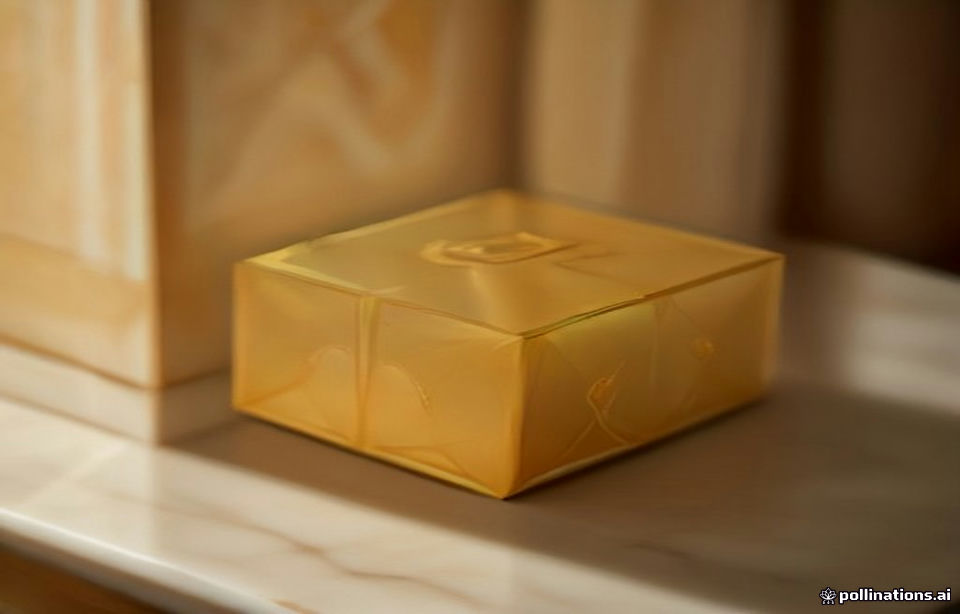
For holiday perfume campaigns, specify 1.5–2.5mm wrapped grayboard (Mottled/CCNB liner) rigid setup boxes with E-flute inner tray inserts, validated per ASTM D642 compression and ISTA 3A transit protocols. Plan a 30–45 day production window plus 25–35 days ocean freight; unit costs typically range $1.80–$6.50 FOB depending on wrap grade, foil coverage, and insert complexity.
Q4 fragrance gifting drives the single highest-margin window in the DTC perfume calendar, and packaging failure in that window is unrecoverable. This guide strips away the lifestyle narrative and anchors holiday perfume rigid box sourcing to measurable engineering parameters: grayboard caliper, wrap adhesion, Cobb 60 moisture limits, compression safety factors, and EU PPWR recyclability mandates effective for 2026 production runs.
1. Structural Specification: Grayboard Caliper & Wrap Construction
A luxury perfume rigid box is a setup box: a pre-formed chipboard (grayboard) chassis overwrapped with printed paper, art paper, or specialty stock, assembled with PVA hot-melt or cold adhesive. Unlike folding cartons (SBS board, glued flat and erected at the fill line), rigid boxes ship pre-assembled — which inflates freight cube by 3–5x and is the dominant hidden cost in Q4 sourcing.
Recommended caliper by box size:
- Single 30–50ml flacon, magnetic-closure lid: 1.5mm grayboard base, 2.0mm lid (lid slightly heavier to prevent hinge-line sag).
- Two-piece coffret (bottle + lotion, 100–150mm span): 2.0–2.5mm throughout.
- Shoulder-neck / hinged cigar-style gift box: 2.0mm body, 1.5mm lid panel, with a 90° V-groove fold instead of a butt joint to preserve the hinge crease integrity.
Wrap stock selection drives both perceived quality and compliance. Standard options: 120–157gsm art paper with matte lamination (soft-touch laminate adds $0.08–$0.15/unit but must be recyclability-screened), 120gsm specialty textured paper (common for uncoated luxury feel), or 350gsm CCNB as an economical liner for litho-laminated variants. Per EU Regulation 1935/2004 for food-contact adjacency and EU Directive 94/62/EC Annex II with the PPWR (Regulation 2024/1991) phase-in, heavy metal content in inks and adhesives must stay within cumulative limits, and the wrap/board laminate must be designed for repulpability — favor water-based adhesives and avoid non-separable plasticized laminates where the EU market is the destination.
Q: Why does the wrapped rigid box warp or telegraph orange-peel texture after lamination, and what caliper-to-wrap ratio prevents it?
A: Direct answer: mismatch of moisture content between wrap paper and grayboard — keep the differential under 1.5 percentage points, with both materials conditioned at 50% ± 2% RH per ISO 187 before wrapping. Mechanically, the wrap shrinks or swells relative to the rigid substrate after adhesive cure, creating tensile skin stress that buckles thin board (below 1.5mm) and telegraphs through art paper above 128gsm. Procurement recommendation: mandate incoming moisture certification on both grayboard and wrap stock, and require 48-hour joint conditioning before decorative finishing (foil, spot UV), not after.
2. Comparative Material & Test Matrix
| Attribute | Wrapped Grayboard Rigid (1.5–2.5mm) | Litho-Laminated E-Flute (350gsm CCNB liner) | Folding Carton (SBS 400gsm + E-flute shipper) | Governing Standard / Test Protocol |
|---|---|---|---|---|
| Typical unit cost (hypothetical FOB, 5,000 pcs) | $2.20–$6.50 | $1.20–$3.00 | $0.55–$1.40 (+$0.40 shipper) | Cost basis: ex-works quotation, not a standard |
| Compression resistance (worked example, 200×90×60mm) | ≥ 1,800 N stack-safe with 1.5mm board | ECT-32 equivalent ≈ 1,400 N | Carton alone < 400 N; relies on shipper | ASTM D642 / ISO 12048 |
| Burst / strength proxy | N/A (rigid); flexural rigidity governs | Mullen ≥ 200 kPa typical | Burst ≥ 350 kPa (400gsm SBS) | TAPPI T810 |
| Moisture sensitivity (Cobb 60 of wrap/board) | Wrap Cobb 60 ≤ 30 g/m² (sized art paper); grayboard Cobb must be < 150 g/m² to avoid edge swell | Flute medium Cobb 60 ≤ 120 g/m² | SBS Cobb 60 ≤ 25 g/m² | ISO 535 (Cobb) / TAPPI T441 |
| Transit validation | ISTA 3A full sim; DDC heights 460–810mm | ISTA 3A / ASTM D4169 DC-12 | ISTA 1A minimum, shipper required | ISTA 3A / ASTM D4169 |
| EU recyclability (PPWR 2024/1991 trajectory) | Pass with water-based adhesive, recyclable mono-material laminate | Pass (full fiber substrate) | Pass | EU PPWR / EN 13430 |
Note: All cost figures are hypothetical worked examples for planning purposes; request live quotations via TadaPack’s custom structural packaging service. Compression values are illustrative engineering targets, not certified lab results.
3. Lab Bench Verification & Insert Engineering
Before releasing a production PO, run incoming verification on the pilot lot. A representative bench protocol (illustrative conditions consistent with industry practice) looks like this:
The following is a template protocol, not a recorded result. Any actual figures must come from your commissioned lab report.
- Conditioning: 23°C ± 1°C, 50% ± 2% RH for 24h minimum per ISO 187 (paper/board conditioning).
- Instruments: Mitutoyo 547-400S (or equivalent) digital caliper for caliper; universal compression tester per ASTM D642 for top-load; Taber stiffness tester per ISO 2493 for lid flexural check.
- Sample plan: 10-specimen statistical average per attribute; reject if any single specimen deviates > 5% from the lot mean on caliper, or > 10% on compression.
Inner insert physics — the most overlooked failure point. A 50ml glass flacon weighs 180–350g; under a 760mm rail-drop or ISTA 3A 460mm drop sequence, deceleration g-forces at the bottle shoulder can exceed 60g without a cushioned cradle. E-flute (1.5mm caliper) molded or die-cut corrugated cradles with 3–5mm clearance and compression-set-controlled foam (30kg/m³ PU) or molded pulp cushioning are the industry default. Molded pulp inserts must be specified to ±0.5mm dimensional tolerance at contact points; anything looser produces rattle (audible quality failure at unboxing) and translation inside the box during vibration. Per ISTA 3A, the random vibration spectrum at 0.52 Grms (truck) and 0.35 Grms (air) will expose rattle within a 60-minute test window.
4. Manufacturing SOP: Four-Step Verification Checklist
- Step 1 — Dieline & CAD prototype: Approve a physical white sample with exact grayboard caliper and wrap grain direction (grain must run parallel to the lid hinge span on hinged styles to resist fiber fatigue). Tolerance target: ±0.3mm on internal dimensions, ±0.15mm on V-groove registration. TadaPack’s CAD prototyping service delivers this sample in 5–7 days.
- Step 2 — Wrap printing & finishing registration: Foil stamping and spot UV must register to the wrap die-cut within ±0.15mm; on soft-touch laminated art paper, demand a tape adhesion pull test (ASTM D3359 crosshatch, rating ≥ 4B) on the laminate-to-ink interface before gold blocking.
- Step 3 — Wrapping & assembly: Adhesive application weight 18–25 g/m² (PVA), wrap tension set so corners are 90.0° ± 0.5°; magnet placement for magnetic closures at ±0.5mm positional tolerance, pull force 2.5–4.0 N for a 60×60mm lid. Randomly pull 5 units per 1,000 for peel-back inspection of corner wrap debonding.
- Step 4 — Finished-goods validation: Compression per ASTM D642 on the fully assembled, filled configuration with a safety factor of 3–4× expected warehouse stack load; ISTA 3A drop and vibration for the master carton (a BC-flute outer, ECT-44 typical, is mandatory for FBA — Amazon’s dimensional and damage policies make an unsupported rigid box a reject risk).
5. Defect Diagnostics: Troubleshooting Matrix
| Defect | Root Cause | Corrective Action |
|---|---|---|
| Wrap corner debonding after 30-day ocean transit | Container sweat cycling (40–85% RH swings across Pacific lanes) plasticizes cold PVA; grayboard edge swell at Cobb 60 > 150 g/m² | Switch to hot-melt EVA adhesive; specify sized or moisture-resistant grayboard; add desiccant (≥ 50g/unit carton) and humidity indicator cards in master cartons |
| Grayboard lid warping / oil-canning | Moisture differential between wrap and board at lamination; caliper below 1.5mm on spans > 120mm | Condition both substrates to 50% RH before wrap; increase lid caliper one step (e.g., 1.5→2.0mm); balance single-side wrap with a liner on the reverse face |
| Flacon rattle detected at ISTA 3A vibration | Insert contact tolerance > 1mm; pulp shrinkage after drying | Tighten insert contact dimensions to +0.5/−0.2mm; add 30kg/m³ foam pinch pad at bottle shoulder |
6. Freight, Hub Landing & Cost Optimization
Setup boxes ship fully assembled, so freight is cube-driven, not weight-driven. A hypothetical worked example: 10,000 units of a 200×90×60mm two-piece box nest only partially — assume 60% nesting efficiency, yielding ~8 CBM versus ~3 CBM for knock-down equivalents, i.e., roughly $1,200–$2,400 in excess ocean freight on a Pacific corridor. Model this with TadaPack’s freight cube and unit-cost calculators at https://tadapack.com/tools before finalizing the structure.
Hub-specific stress points:
- California Inland Empire (FBA ONT8/LGB3): Long-haul drayage plus FBA cross-dock means 3–4 additional handling cycles; require a BC-flute ECT-44 master carton and verify Amazon’s box-content accuracy — unbranded plain shippers reduce mis-scan risk.
- DFW distribution triangle: Dry inland ambient (30–40% RH summer) desorbs residual adhesive moisture; no structural risk, but confirm label adhesive rating for low humidity.
- Port of Rotterdam multimodal: Rail/road transfer adds vibration and 60–90% RH coastal exposure; ISO 2247 vibration testing plus PPWR-ready mono-material specification avoids both transit damage and EU customs recyclability friction.
Stacking derating: A rigid box validated at 1,800 N in a 50% RH lab loses 15–25% effective strength at 80–90% RH coastal warehouse conditions due to fiber moisture uptake; apply a 0.75 derating factor for Rotterdam or Gulf Coast storage and size the safety factor accordingly. Per FTC Green Guides (16 CFR Part 260), any recyclability claim printed on the wrap must be substantiated for the destination market — a mono-fiber wrap with water-based adhesive is the safest substantiated claim.
For Q4 launch timing, work backward: 7 days dieline/prototype + 10 days pre-production sample + 30–45 days production + 25–35 days ocean = commit artwork by early June for a November shelf date. TadaPack’s custom structural packaging team can compress the prototype and pre-production stages to ~14 days combined.
Recommended Engineering Reading
[TOOLS] Featured Engineering & Calculation Tools
Explore 70+ Packaging Tools ➔Box Compression (BCT) Calculator
Predict box compressive limit and stacking safety factors via McKee formula.Edge Crush Test (ECT) Calculator
Calculate linerboard ring crush and composite ECT ratings for optimal board specs.
