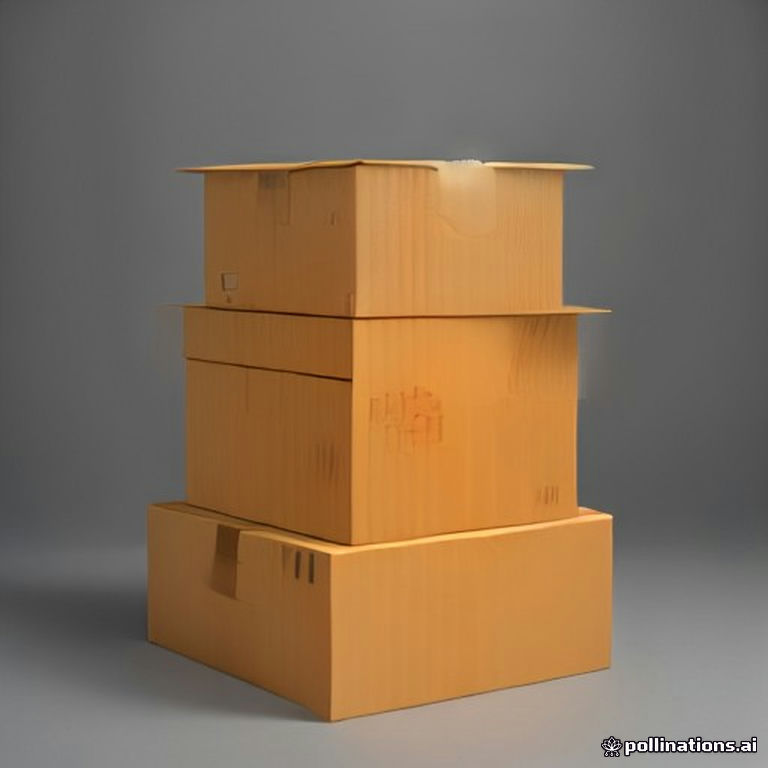
Use the McKee formula (BCT = 5.87 × ECT × √(t × Z)) to derive nominal box compression strength, then validate against ASTM D642 and apply an ASTM D4169-validated safety factor of 3–5× for ocean freight stacking. Because 30-day container transit with container-sweat humidity can derate BCT by 30–50%, specify ECT-44 on BC-flute (double-wall, ~7.0mm caliper) with Cobb 60 absorption under 35 g/m² for transpacific and transatlantic lanes.
As global ocean freight rates and carrier consolidation reshape 2026 distribution networks, procurement directors are re-auditing whether their corrugated specs survive the actual compression stack inside a 40′ HC container—not the lab. This whitepaper translates published compression-testing research from Packaging World (PMMI Media Group) into shopfloor math: McKee-derived BCT targets, ASTM D642 validation protocol, and humidity-derated stacking setpoints for ASTM D4169-validated ocean freight distribution lanes to US West Coast and EU Port of Rotterdam hubs.

1. The McKee Formula: From ECT Data to Predicted BCT
The McKee formula remains the industry’s primary predictive bridge between material-level Edge Crush Test (ECT) data and box-level compression performance:
BCT (N) = 5.87 × ECT (N/mm) × t (mm) ^ 0.49 × Z (mm) ^ 0.51
Simplified shopfloor form: BCT ≈ 5.87 × ECT × √(t × Z)
Where t = combined board caliper and Z = box perimeter. For a hypothetical worked example: an ECT-32 (32 lb/in² ≈ 5.6 N/mm) C-flute box, caliper 4.2mm, perimeter 1,600mm yields a predicted BCT of roughly 5.87 × 5.6 × √(4.2 × 1600) ≈ 3,200 N. This is a design estimate only—actual BCT must be verified on an ASTM D642-compliant compression tester, because converted-box factors (slot quality, manufacturer’s joint, warp) routinely swing results ±10–15%.
All specimens must be conditioned per ISO 186:2020 paper conditioning specifications and ASTM D685 standard atmosphere (23°C ± 1°C, 50% ± 2% RH) for a minimum of 24 hours before test—unconditioned kraft can read 8–12% optimistic on ECT.
Q: If the McKee formula derives BCT directly from ECT, why do overseas enterprise POs still mandate Mullen burst testing?
A (direct answer): Mullen burst (per TAPPI Standard T810, 2026 Revision) survives in legacy procurement because it empirically correlates with rough-handling puncture and blowout resistance—failure modes ECT does not capture. (Mechanical reason): ECT is an edge-column crush metric; it is blind to multi-directional puncture from forklift tines, pallet stringers, and conveyor chutes, which burst testing (hydraulic diaphragm, kPa/psi) models. (Procurement recommendation): Dual-spec only when lanes involve rough intermodal handling; for clean palletized ocean freight, negotiate ECT-only specs (ASTM D4169 acceptance) and reserve TAPPI T810 minimums for single-wall boxes under 1.0mm caliper where puncture risk dominates.
2. ASTM D642 Validation Protocol and ASTM D4169 Distribution Cycle Coupling
In strict accordance with ASTM D642, compression testing requires: (a) conditioning per ASTM D685, (b) top-load-to-failure at standard platen rate of 12.7mm/min (0.5 in/min), (c) minimum five-specimen sample with mean and standard deviation reported. The D642 mean becomes your validated BCT baseline for stacking math.
ASTM D4169 then ties that baseline to a real distribution cycle. For ocean freight, DC-13 (single palletized loads) or DC-3 (LTL/intermodal) with Schedule elements including compression, vibration (random spectrum on ISTA-style shaker tables), and drop sequences govern. Under ISTA 3A General Simulation Performance Testing protocol, drop shock sequences and randomized vibration further stress converted boxes for parcel-DTC channels—useful when one SKU ships both FBA parcel and palletized ocean freight.
Compression Setpoint Calculation: Hypothetical Worked Example
Stack of 5 pallet layers, 8 boxes/pallet layer, box dead load 1.2 kg, unit load 9.6 kg/layer above the bottom box:
Static load on bottom box = 4 layers × 9.6 kg × 9.81 ≈ 377 N
Required BCT = static load × Safety Factor (SF)
Warehouse-only: SF = 4.0 → 1,508 N
30-day ocean freight (container sweat): SF = 5.0 → 1,885 N
Humidity derate check: required lab BCT = 1,885 / (1 − 0.35) ≈ 2,900 N
Conclusion: the ECT-32 C-flute box from Section 1 (predicted 3,200 N) is marginal; an ECT-44 BC-flute (double-wall, ~7.0mm caliper, predicted BCT ≈ 5,200 N) provides compliant margin. Verify your own SKU at TadaPack’s free BCT/stacking calculators.
3. Material Selection Matrix: Flute, ECT, and Moisture Barrier vs. Freight Lane
| Corrugated Spec | Typical Caliper (±0.15mm) | Typical BCT Range (1,600mm perim.) | Cobb 60 Target (g/m²) | Best-Fit Freight Lane | Governing Standard / Test Protocol |
|---|---|---|---|---|---|
| ECT-32, C-flute single wall | 4.0–4.3mm | 2,800–3,600 N | ≤ 35 | Dry inland, ≤3 stacked layers | ASTM D642 / TAPPI T811 ECT |
| ECT-44, BC-flute double wall | 6.8–7.2mm | 4,800–5,800 N | ≤ 30 | Ocean freight, 5-layer stacks | ASTM D642 / ASTM D4169 DC-13 |
| ECT-48, BC-flute + water-resistant coating | 7.0–7.4mm | 5,300–6,200 N | ≤ 20 (PFAS-free barrier) | Tropical lanes, monsoon ports | TAPPI T441 Cobb / ISO 2247 conditioning |
| Burst-40 (200 lb) single wall, legacy spec | 4.1–4.4mm | 2,600–3,400 N | ≤ 35 | Rough LTL/parcel handling | TAPPI T810 (2026 Revision) Mullen |
| ECT-32 E-flute inner shipper (DTC) | 1.4–1.6mm | 700–1,100 N | ≤ 35 | Parcel: ISTA 3A sequence | ISTA 3A / ASTM D4169 |
Moisture control: Per TAPPI Cobb sizing tests and ISO 2247 accelerated humidity conditioning, corrugated stacked at 90% RH for 72 hours (simulating container sweat) typically retains only 55–70% of dry BCT. PFAS-free fluorochemical-free barrier coatings maintain recyclability—compliant with EU Directive 94/62/EC Annex II, EU PPWR (Regulation 2024/1991) recyclability mandates, and FTC Green Guides (16 CFR Part 260) substantiation rules on recyclable corrugated claims.
4. Four-Step Factory SOP: Locking BCT Setpoints into Production
- Step 1 — Incoming board qualification: Verify ECT on five random board samples per roll lot (TAPPI T811), caliper via digital micrometer per TAPPI T411 (acceptance ±0.15mm), and Cobb 60 per TAPPI T441. Reject lots below 95% of nominal ECT or above 35 g/m² Cobb for ocean-freight specs. Condition all specimens 24h at 23°C ± 1°C, 50% ± 2% RH per ASTM D685 / ISO 186:2020.
- Step 2 — Die-cut and crease control: Maintain die registration ±0.15mm on CAD/CAM flatbed or rotary tooling; creasing matrix (45-durometer rubber counter-plate or steel matrix channel) width set to flute pitch so crease fold-over does not crush the flutes—crushed creases at the manufacturer’s joint reduce BCT 8–18%. Slot depth tolerance ±0.5mm to prevent flap interference.
- Step 3 — Converted-box BCT audit: Pull 5 finished boxes per production shift on an ASTM D642-compliant compression tester at 12.7mm/min. Accept if mean ≥ 1.05 × McKee-predicted BCT and coefficient of variation ≤ 8%. Log warp (≤ 5mm/m diagonal) and joint tab pull-off.
- Step 4 — Distribution cycle sign-off: Run ASTM D4169 DC-13 compression + random vibration + drop on the validated shipper, or ISTA 3A for parcel SKUs. Freeze the spec sheet (ECT grade, flute, caliper, Cobb, SF) and re-verify on every board-supplier change or lane change.
5. Failure Diagnostics: Troubleshooting Matrix for Transit Compression Failures
| Observed Failure | Root Cause (Physics) | Floor-Level Corrective Action | Governing Standard / Test Protocol |
|---|---|---|---|
| Panel bulge / flute collapse mid-panel | Humidity derate: liner loses stiffness at >80% RH; buckling load of liner columns falls with moisture-saturated stiffness modulus | Upgrade one ECT grade; add PFAS-free Cobb barrier; insert moisture scavenger or stretch-wrap pallet with breathable top cap; re-run ASTM D642 after ISO 2247 conditioning | TAPPI T441 / ISO 2247 / ASTM D642 |
| Flap popping at slot corners | Slot depth under-tolerance leaves flap interference; crease-to-slot offset exceeds ±0.5mm, concentrating fold stress | Re-cut CAD dieline with slot depth +0.5mm; verify 45-durometer creasing matrix contact; audit die registration to ±0.15mm | Internal dieline tolerance per TAPPI T411 caliper checks |
| Adhesive debonding at manufacturer’s joint | Cold-container-sweat cycle re-liquefies under-bonded starch joint; bond penetration insufficient on 2-side CCNB liners | Raise glue application to minimum 0.9 g/m dry starch; switch hot-melt or double tab on ocean-lane SKUs; joint pull test each shift | ASTM D1781 climb-drum peel (adapted) / ASTM D642 joint audit |
6. Multi-Regional Logistics Hub Landing Matrix & Stacking Derating
Ocean transit stress concentrates at two stages: 30 days of container-sweat cycling at sea, then inland hub handling. Per ISO 2247-style humidity conditioning principles, 10 alternating 90%/30% RH cycles approximate one transpacific voyage for board performance modeling.
- Pacific corridor → California Inland Empire (FBA ONT8 / LGB3): 18–25 day transit; coastal RH 75–90% at LA/Long Beach, dropping to 35–50% RH inland. Coastal-port stacking derate factor 0.65 on lab BCT; apply again inland recovery lag of 48–72h before warehouse stacking. Dimensional-weight audits at FBA inbound (Amazon FBA dimensional freight penalties) additionally punish over-caliper BC-flute—model the cost trade at tadapack.com/tools.
- Gulf/Texas DFW distribution triangle: 30–45 day total transit via Gulf ports; summer ambient 35°C+ / 70% RH. Use 0.60 derate and verify adhesive joints, since heat accelerates starch creep under static load.
- Port of Rotterdam European multimodal rail/road: North Atlantic winter crossings add vibration-heavy rail legs into Germany/Poland; RH 80–90% at quay. Apply 0.62 derate plus ASTM D4169 rail vibration schedule; EU PPWR (2024/1991) recyclability and Packaging Essentials Requirements (94/62/EC Annex II) must be documented on the spec sheet for customs-market compliance.
For high-humidity coastal warehouses (Singapore, Rotterdam, Houston), stack height limits should be recalculated quarterly against seasonal RH data; dry inland DCs (Phoenix, Nevada Inland Empire) can safely run SF 3.5 on the same spec. TadaPack’s structural prototyping service produces CAD dielines and physical prototypes in 5–7 days so SKUs can be BCT-audited before PO commitment—request a lane-specific setpoint review through our engineering desk.
Recommended Engineering Reading
[TOOLS] Featured Engineering & Calculation Tools
Explore 70+ Packaging Tools ➔Box Compression (BCT) Calculator
Predict box compressive limit and stacking safety factors via McKee formula.Edge Crush Test (ECT) Calculator
Calculate linerboard ring crush and composite ECT ratings for optimal board specs.
