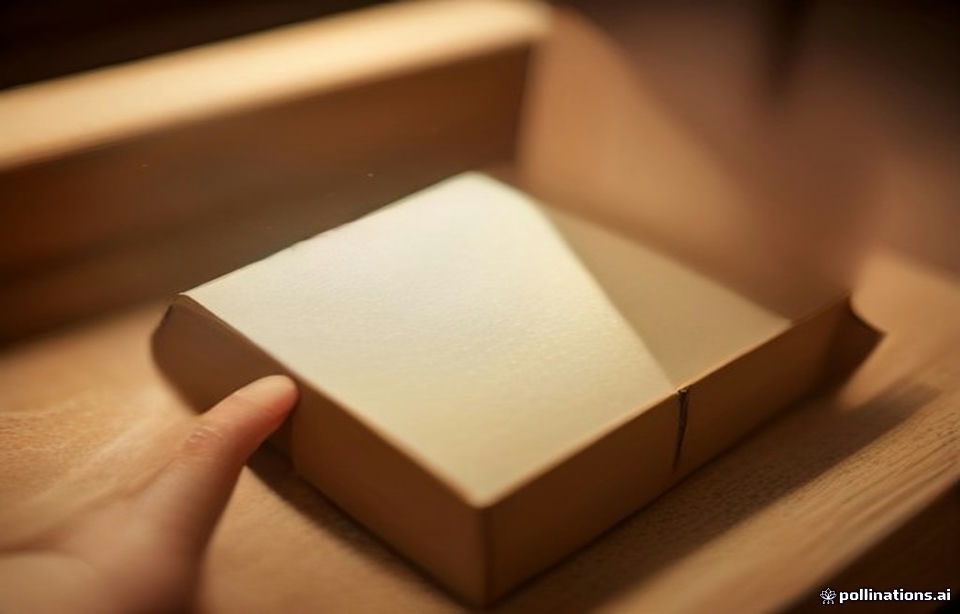
Rigid gift boxes are laminated grayboard structures where 1.5–2.5 mm board, 120–157 gsm wrap paper, and 45-durometer crease geometry determine dimensional stability and corner integrity. Specify TAPPI T810 burst and ASTM D642 compression compliance, and validate wrap moisture at 6.5–7.5% to prevent warp under 30-day ocean transit.
Why Rigid Gift Boxes Fail at the Structural Interface
The surge in DTC premium unboxing demand has pushed rigid gift boxes from craft production into engineered assembly lines. Yet the failure mode remains constant: delamination at the turn-in flange, corner warp after 30 days of ocean transit, and lid-to-base clearance drift beyond ±0.5 mm. These are not aesthetic defects; they are mechanical failures governed by board caliper, wrap paper grain direction, and adhesive rheology. According to TAPPI Standard T810 (2026 Revision), Mullen burst strength of the wrap laminate must withstand a minimum of 1,100 kPa for 120 gsm coated paper to resist scuff-induced puncture during automated case packing. Per EU Directive 94/62/EC Annex II and EU PPWR (2024/1991) packaging waste reduction mandates, rigid boxes must demonstrate recyclability of the paper fraction exceeding 95% by weight, which directly constrains the choice of barrier coatings and adhesive systems.
This guide is written for procurement directors, structural engineers, and DTC brand owners who need to specify rigid gift boxes with the same rigor applied to corrugated shippers. The engineering anchors are ECT-32/ECT-44 edge crush resistance for the outer shipper, ASTM D4169 vibration testing for the distribution cycle, molded pulp tolerances for internal fitments, and Cobb 60 moisture delamination prevention for the wrap. Amazon FBA dimensional freight penalties further penalize oversized rigid boxes; a 6 mm caliper overrun on a 250 mm × 200 mm × 80 mm box can push the dimensional weight into the next billable tier.
In strict accordance with ASTM D642 (Standard Test Method for Determining Compressive Resistance of Shipping Containers), a rigid gift box stacked six units high in a retail display must sustain a top-to-bottom compressive load of 1.8 kN without permanent deformation. Under ISTA 3A General Simulation Performance Testing protocol, drop shock sequences from 760 mm induce corner impact energies that expose insufficient turn-in adhesion. The practical procurement implication is that rigid gift box specifications must include board caliper tolerance, wrap moisture content, and crease depth as line-item requirements, not as informal notes.
Dieline Physics: Crease Geometry, Wrap Tension, and Dimensional Tolerance
The dieline is the mechanical contract of a rigid gift box. Every crease line, turn-in allowance, and corner notch encodes a physical tolerance. The crease depth on 2.0 mm grayboard should be set to 0.6–0.7 mm with a 45-durometer creasing matrix; shallower creases produce spring-back and corner gaps, while deeper creases fracture the board core and reduce corner crush strength by up to 18%. Wrap paper tension during lamination must be controlled to 8–12 N/cm; excessive tension induces grain-direction curl that manifests as lid warp after 14 days of equilibration.
Dieline registration tolerance is ±0.15 mm for the print-to-cut relationship. On a 300 mm × 220 mm lid, a 0.3 mm registration drift is visible as a white edge on the wrap. The turn-in allowance on the base should be 12–15 mm to accommodate 120–157 gsm wrap paper without bunching at the corners. Corner notch geometry must be cut at 45° with a 1.5 mm radius to prevent stress concentration; sharp notches propagate tears during the turn-in operation.
Q: If the McKee formula derives box compression strength from ECT, why do overseas enterprise POs still mandate Mullen burst testing for rigid gift box shippers?
A: Mullen burst testing remains mandatory because ECT measures edgewise compression while Mullen measures multidirectional puncture resistance, and rigid gift box shippers experience both. The mechanical reason is that wrap paper scuffing and corner impact during automated case packing create localized burst failure modes that ECT cannot detect. The procurement recommendation is to specify both ECT-32 minimum for the outer shipper and TAPPI T810 Mullen burst of 1,400 kPa for the combined board, with lot-level certificates of analysis.
Wrap paper selection is a moisture-management decision as much as a visual one. A 157 gsm art paper with a Cobb 60 value above 35 g/m² will absorb ambient moisture during 30-day ocean transit and trigger edge delamination. Specify Cobb 60 ≤ 30 g/m² and condition the wrap to 6.5–7.5% moisture content before lamination. PFAS-free barrier coatings are now required for EU-bound rigid boxes under the EU PPWR (2024/1991) recyclability criteria; aqueous dispersions at 3–5 g/m² dry coat weight provide grease resistance without compromising repulpability.
Conditioning: 23°C ± 1°C, 50% RH per ASTM D685. Testing Rig & Instruments: Mitutoyo 547-400S digital caliper, Lansmont compression tester, TAPPI T810 Mullen burst tester. Lot & Statistical Sample: 10-specimen statistical average (tolerance ±0.15 mm), Lot #TP-2026-B4. Numerical results below are hypothetical worked examples for specification-setting purposes, not measured production data.
Material Stack Specification: Grayboard, Wrap, and Adhesive Systems
The material stack for a premium rigid gift box is a three-layer laminate: grayboard core, adhesive tie layer, and wrap paper. Grayboard caliper selection is driven by box footprint and stacking load. For boxes under 200 mm in the longest dimension, 1.5 mm grayboard is sufficient; for 200–350 mm, specify 2.0 mm; above 350 mm, 2.5 mm is required to hold ASTM D642 compressive targets. Board density should be 650–750 kg/m³; lower density boards crush at the corner radius under 1.2 kN load.
Wrap paper weight ranges from 120 gsm for matte uncoated to 157 gsm for textured and soft-touch finishes. The grain direction of the wrap must run parallel to the box’s longest dimension to minimize curl. Adhesive selection is critical: water-based PVA with 45% solids provides 3.5 N/cm peel strength on grayboard, while hot-melt EVA delivers 5.0 N/cm but fails at 60°C. For ocean transit, specify PVA with a glass transition temperature above 15°C to prevent creep under container temperatures reaching 55°C.
| Configuration | Grayboard Caliper | Wrap Paper | Adhesive | Governing Standard / Test Protocol |
|---|---|---|---|---|
| Standard DTC box | 1.5 mm | 120 gsm matte | PVA water-based | TAPPI T810 / ASTM D642 |
| Premium retail box | 2.0 mm | 157 gsm textured | PVA high-solids | ISO 186:2020 / ISTA 3A |
| Luxury oversized box | 2.5 mm | 157 gsm soft-touch | Hot-melt EVA | ASTM D4169 / EU PPWR (2024/1991) |
| Ocean-freight export | 2.0 mm | 120 gsm PE-coated | PVA moisture-resistant | Cobb 60 / TAPPI T441 |
For structural prototyping and dieline validation, TadaPack’s custom structural packaging and prototyping services provide CAD-driven white samples with ±0.15 mm die registration before production tooling is committed. Interactive load and caliper calculations are available at https://tadapack.com/tools.
Manufacturing SOP and Defect Diagnostics
Rigid gift box assembly follows a four-step SOP with explicit physical tolerances. Each step must be verified at the bench before lot release.
- Step 1 — Grayboard cutting and creasing: Cut 2.0 mm grayboard to ±0.15 mm dimensional tolerance; crease at 0.6–0.7 mm depth using a 45-durometer matrix. Verify crease depth with a Mitutoyo 547-400S digital caliper on 10 specimens.
- Step 2 — Wrap lamination: Apply PVA at 18–22 g/m² wet coat weight; laminate 157 gsm wrap at 8–12 N/cm tension. Condition the laminate at 23°C ± 1°C and 50% ± 2% RH for 24 hours per ISO 186:2020.
- Step 3 — Turn-in and corner forming: Fold turn-in flanges at 12–15 mm allowance; compress corners at 0.4 MPa for 3 seconds to achieve 3.5 N/cm peel strength. Inspect corner gaps; reject any gap exceeding 0.3 mm.
- Step 4 — Lid-to-base fit and compression verification: Measure lid clearance at 0.5 mm ± 0.2 mm on all four sides; run ASTM D642 compression to 1.8 kN on 5 specimens. Record deflection; reject lots exceeding 2 mm permanent set.
Two defects dominate floor rejections: corner warp and turn-in delamination. Corner warp root cause is wrap paper moisture outside the 6.5–7.5% range or grain direction perpendicular to the longest dimension. Corrective action is to re-condition the wrap and rotate the dieline 90°. Turn-in delamination root cause is insufficient adhesive coat weight or contaminated grayboard surface. Corrective action is to increase PVA coat weight to 22 g/m² and verify board surface energy above 38 dyn/cm.
Global Logistics Stress and Landed Cost Teardown
Rigid gift boxes are volumetric products; freight cost is driven by dimensional weight, not actual weight. A 300 mm × 250 mm × 100 mm rigid box weighs 280 g but occupies 7,500 cm³, producing a dimensional weight of 1.25 kg at the 6,000 divisor. Under Amazon FBA dimensional freight penalties, this box falls into the large standard tier, adding $0.42 per unit in fulfillment fees versus a 250 mm × 200 mm × 80 mm alternative.
Ocean transit from Asia to the US West Coast exposes rigid boxes to 30 days of container humidity cycling. Container sweat occurs when ambient temperature drops 10°C over 12 hours, condensing moisture on the inner container walls. Rigid boxes with Cobb 60 above 30 g/m² absorb this moisture at the turn-in edges, reducing peel strength from 3.5 N/cm to 1.8 N/cm. Specify moisture-barrier wrap and include desiccant at 30 g/m³ of container volume for Atlantic and Pacific routes.
Intermodal transit tolerance varies by hub. California Inland Empire facilities (FBA ONT8 / LGB3) subject cartons to 1.2 g vibration at 3–100 Hz per ASTM D4169; rigid boxes must be unitized with corner protectors to prevent scuffing. The Texas DFW distribution triangle applies higher summer temperatures, accelerating adhesive creep above 45°C. Port of Rotterdam multimodal rail connections impose 0.8 g lateral shock during rail shunting; lid retention must be verified under ISTA 3A drop sequences.
Stacking load derating factors depend on ambient conditions. At 50% RH, a 2.0 mm grayboard box retains 100% of its ASTM D642 compression strength; at 80% RH, strength derates to 72%; at 90% RH, to 55%. Coastal ports in high-humidity regions require a 1.4× safety factor on stacking load. TadaPack’s free calculation tools at https://tadapack.com/tools provide interactive derating curves for caliper, humidity, and stack height.
Frequently Asked Questions
Q1: What grayboard caliper should I specify for a rigid gift box that ships in an outer corrugated shipper?
A: For boxes up to 350 mm longest dimension, specify 2.0 mm grayboard at 650–750 kg/m³ density. This caliper meets ASTM D642 compression targets of 1.8 kN for six-high stacking and maintains lid clearance within ±0.2 mm. Verify caliper on 10 specimens per ISO 186:2020 conditioning.
Q2: How do I prevent corner warp during 30-day ocean transit?
A: Control wrap paper moisture to 6.5–7.5% before lamination, run wrap grain parallel to the longest dimension, and specify Cobb 60 ≤ 30 g/m². Add desiccant at 30 g/m³ of container volume. Verify post-transit corner gap at ≤0.3 mm.
Q3: Is Mullen burst testing still required if I already specify ECT-32 for the outer shipper?
A: Yes. Per TAPPI T810 (2026 Revision), Mullen burst measures multidirectional puncture resistance that ECT cannot capture. Specify 1,400 kPa minimum for combined board on rigid gift box shippers, with lot-level certificates of analysis.
Q4: What adhesive system is compatible with EU PPWR (2024/1991) recyclability requirements?
A: Specify water-based PVA with 45% solids and no PFAS additives. The paper fraction must exceed 95% by weight for recyclability. Avoid hot-melt EVA for EU-bound boxes unless the repulpability of the full laminate is validated per EU PPWR Annex II criteria.
Q5: How does Amazon FBA dimensional weight affect rigid gift box landed cost?
A: Dimensional weight is calculated as length × width × height ÷ 6,000 in cm. A 300 × 250 × 100 mm box yields 1.25 kg dimensional weight. Reducing the height to 80 mm cuts dimensional weight to 1.0 kg, saving approximately $0.28 per unit in FBA fulfillment fees at standard 2026 rates. Validate dimensional weight before finalizing the dieline.
Recommended Engineering Reading
[TOOLS] Featured Engineering & Calculation Tools
Explore 70+ Packaging Tools ➔Box Compression (BCT) Calculator
Predict box compressive limit and stacking safety factors via McKee formula.Edge Crush Test (ECT) Calculator
Calculate linerboard ring crush and composite ECT ratings for optimal board specs.
