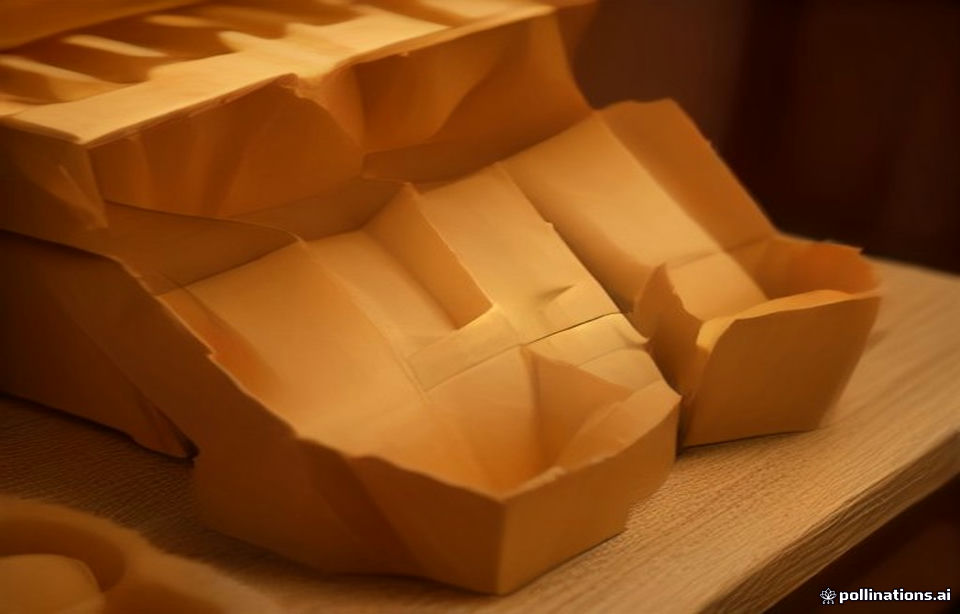
Custom box inserts for UK-market packaging should be specified by material class — molded pulp (≥1.5mm caliper, Cobb 60 <35 g/m²), EPE foam (density 25–35 kg/m³), or E/B-flute corrugated (ECT-32 minimum) — validated under ASTM D4169 / ISTA 3A transit protocols. Sourcing domestically from UK die-cutters cuts lead times to 5–10 days versus 25–35 days ex-Asia, but per-unit cost typically runs 15–30% higher; hybrid split-sourcing often optimizes total landed cost.
E-commerce returns driven by transit damage have pushed UK DTC brands to rethink interior protection, especially under the EU PPWR (Regulation 2024/1991) recyclability mandates now shaping UK packaging policy alignment. This guide strips the trend away and treats custom box inserts as what they are: engineered load-management components whose material physics, tolerance stack-ups, and test protocols determine whether your product arrives intact.
1. Insert Material Classes: Mechanical Selection Criteria
Insert selection is governed by product mass, fragility (measured as g-level tolerance from fragment or shock testing), and warehouse stacking loads. The three dominant classes serve distinct load regimes:
| Insert Material | Typical Caliper / Density | Load Regime | Recyclability (PPWR-aligned) | Governing Standard / Test Protocol |
|---|---|---|---|---|
| Molded pulp (recycled kraft) | 1.5–3.0 mm wall | ≤8 kg products, 60–80 g shock | Excellent — mono-material | ISO 17098; Cobb 60 per ISO 535 |
| E/B/C flute corrugated, die-cut cross-laminated | E-flute 1.5 mm; B-flute 3.0 mm; ECT-32 min | ≤15 kg, stacking-critical SKUs | Excellent — curbside recyclable | ECT per TAPPI T811; burst per TAPPI T810 |
| EPE foam / polyethylene laminated | 25–35 kg/m³, 10–50 mm | Fragile electronics, <40 g shock tolerance | Poor — PFAS-free / mono-material rules increasingly restrict | ASTM D3574 compression set; ISTA 3A |
For most UK DTC SKUs (cosmetics, supplements, premium beverage), E-flute or cross-laminated B-flute corrugated inserts hit the cost/protection/recyclability triple point. Molded pulp wins on sustainability optics and nesting density (up to 40% more units per pallet versus bulky foam). Reserve EPE foam for genuinely fragile loads where shock attenuation below 40 g is non-negotiable — and note that under EU PPWR recyclability-by-design criteria, non-recyclable composite foam inserts face design restrictions that procurement teams must budget for in multi-year contracts.
Q: If McKee’s formula derives box compression strength from ECT, why do enterprise POs still mandate Mullen burst testing on corrugated inserts?
A: McKee (BCT ≈ 5.87 × ECT × √(caliper × perimeter)) predicts stacking performance, not puncture resistance. Burst strength per TAPPI T810 proxies resistance to concentrated point loads — corner impacts, pallet splinters, conveyor snag — which ECT cannot capture. Practical recommendation: specify ECT-32+ for stacking-critical SKUs, but accept burst clauses (≥175 psi on 200#-equivalent stock) when the distribution lane involves hand-sort hubs or LTL consolidation.
2. Tolerance Stack-Up Engineering and CAD Prototyping
Insert failures are overwhelmingly tolerance failures, not material failures. A die-cut corrugated insert specified at nominal 1.0 mm clearance around the product will jam when board caliper runs +0.2 mm heavy and humidity swell adds 0.3 mm across a 300 mm span (corrugated dimensional change ≈ 0.05–0.10% per 10% RH swing). Standard practice:
- Die registration tolerance: ±0.15 mm on the cutting die; allow ±0.5 mm total part tolerance on flat die-cut inserts, ±0.75 mm on cross-laminated assemblies.
- Product clearance: 0.5–1.0 mm per contact face for rigid goods; 2–3 mm for semi-rigid packaging (tube, pouch).
- Creasing rules: 45-durometer creasing matrix with 2-pt creasing rules for folds below 90°; wider 3-pt rules on double-wall BC flute to avoid flute fracture at the score line.
- Grayboard/laminated rigid inserts: warp limit 1.0 mm per 300 mm span; beyond that, lid-fit interference and auto-erector jams occur.
TadaPack’s CAD prototyping service produces physical white samples within 48–72 hours, allowing fit verification against production-intent product before die commitment — a step that eliminates the single most expensive error class (post-tooling dimensional revision). Interactive clearance and stacking-load calculators are available at tadapack.com/tools.
3. Verification SOP and Laboratory Bench Testing
Adopt a four-step verification SOP before releasing any insert design to production:
Step 1 — Condition specimens: ISO 186:2020 conditioning, 23°C ± 1°C, 50% ± 2% RH, minimum 24 hours; caliper measured per ISO 3034 with a Mitutoyo 547-400S digital caliper on 10 specimens (tolerance ±0.15 mm spread).
Step 2 — Static strength validation: Compression per ASTM D642 on assembled insert-in-box systems; ECT per TAPPI T811 on insert board stock; target safety factor ≥1.6× worst-case stacking load after humidity derating.
Step 3 — Dynamic transit simulation: ISTA 3A General Simulation for parcel lanes or ASTM D4169 DC-13 for LTL; verify product shock readings stay below the product’s fragility threshold (e.g., ≤60 g for consumer electronics in molded pulp).
Step 4 — Humidity stress screen: 72-hour exposure at 38°C / 85% RH (per ASTM D4332 conditioning), then repeat compression; reject designs losing >20% compressive retention — a signal that Cobb 60 absorption or adhesive systems are inadequate for ocean-freight lanes.
As a hypothetical worked example (illustrative benchmark, not a recorded test): a 10-specimen B-flute cross-laminated insert lot conditioned at 23°C / 50% RH on a Lansmont compression tester might be expected to retain roughly 88–92% of ambient compressive strength after the humidity screen; designs falling below 80% in such a screen warrant adhesive or barrier-coating revision. Always require your supplier to supply certified lot data rather than assuming these figures.
4. UK Sourcing Cost Matrix and Corridor Logistics Analysis
Hypothetical worked example for 10,000 units of an E-flute cross-laminated insert, 300 × 200 × 40 mm (illustrative 2026 benchmarks — obtain live quotes):
| Sourcing Route | Unit Cost (FOB/DDP-equiv) | Lead Time | Freight Risk Factor |
|---|---|---|---|
| UK regional die-cutter (Midlands / North England) | £0.28–0.42 | 5–10 working days | Minimal — no ocean exposure |
| EU supplier, Rotterdam landing, multimodal rail/road into UK | £0.22–0.34 | 12–18 days door-to-door | Low; short-sea humidity exposure only |
| Asia ex-factory, Felixstowe/Rotterdam ocean lane | £0.14–0.26 | 25–35 days door-to-door | High — 30-day container sweat; specify desiccants and moisture barrier carton liners |
The 15–30% unit-cost premium for UK/EU sourcing frequently nets out to zero or negative total landed cost once ocean freight, duty, humidity-rejection risk, and safety-stock carrying cost are added — particularly for sub-pallet order volumes. For US-destined lanes, inbound inserts consolidate cheaply into mixed container loads landing at Los Angeles/Long Beach for Inland Empire distribution (FBA ONT8 / LGB3 catchment) or the Texas DFW triangle; the key engineering constraint is stacking derating: ambient-conditioned coastal-port stock arriving at ~12–14% MC loses 8–15% compressive capacity in humid Gulf-coast warehouses, so apply a 0.80–0.85 derating factor to nominal ECT-based stack calculations (verify at tadapack.com/tools). Rotterdam’s multimodal rail connections offer the lowest-vibration European inland leg for fragile-load inserts.
5. Defect Diagnostics and Troubleshooting Matrix
| Defect | Root Cause | Corrective Action | Governing Standard / Test Protocol |
|---|---|---|---|
| Insert cracking at fold lines after ocean transit | Cobb 60 absorption >35 g/m²; flute softening under container sweat | Upgrade to higher-sizing stock or PFAS-free water-barrier coating; add container desiccant | ISO 535 (Cobb); ASTM D4332 conditioning |
| Product looseness / rattle in transit | Clearance overspecified; caliper ran light vs nominal | Re-tolerance die to +0.5/−0.15 mm; add friction-lock nick geometry | ISTA 3A vibration sequence |
| Grayboard insert warping / lid jam | Asymmetric lamination moisture gradient; adhesive debonding at >80% RH | Symmetric laminate construction; switch to PVA hot-melt with humidity-rated bond spec | ISO 186 conditioning; ASTM D642 post-conditioned |
6. Frequently Asked Questions
Q1: What ECT rating do corrugated inserts need for UK e-commerce lanes?
A: ECT-32 (32 lb/in) is the practical floor for insert panels carrying stacking loads; specify ECT-44 for multi-tier pallet display or >15 kg products. Validate with TAPPI T811 and confirm via assembled-system ASTM D642 compression.
Q2: Are molded pulp inserts compliant with EU PPWR (Regulation 2024/1991)?
A: Yes — molded pulp is a mono-material fiber product meeting recyclability-by-design criteria and benefits from PPWR recycled-content targets; ensure no fluorinated barrier treatments (PFAS-free certification) if grease/moisture resistance is claimed, per FTC Green Guides (16 CFR Part 260) substantiation rules for US claims.
Q3: How much clearance should I design between insert and product?
A: 0.5–1.0 mm per contact face for rigid goods, 2–3 mm for flexible packaging, with total insert part tolerance ±0.5 mm flat die-cut / ±0.75 mm cross-laminated. Confirm with a physical prototype fit check, not CAD alone.
Q4: Is UK domestic sourcing worth the premium over imports?
A: For volumes under ~20,000 inserts per order, usually yes: the 15–30% unit premium is offset by 5–10 day lead times, no ocean humidity risk, and reduced safety stock. Above pallet-load volumes with stable demand, Asia/EU sourcing with humidity-protected lanes becomes cost-optimal.
Q5: What tests should a buyer demand in the insert specification sheet?
A: Minimum: ECT (TAPPI T811), caliper (ISO 3034), Cobb 60 (ISO 535), assembled compression (ASTM D642), and lane-matched dynamic test (ISTA 3A or ASTM D4169 DC-13), with certified lot data from conditioned specimens at 23°C / 50% RH per ISO 186:2020.
Recommended Engineering Reading
[TOOLS] Featured Engineering & Calculation Tools
Explore 70+ Packaging Tools ➔Box Compression (BCT) Calculator
Predict box compressive limit and stacking safety factors via McKee formula.Edge Crush Test (ECT) Calculator
Calculate linerboard ring crush and composite ECT ratings for optimal board specs.
