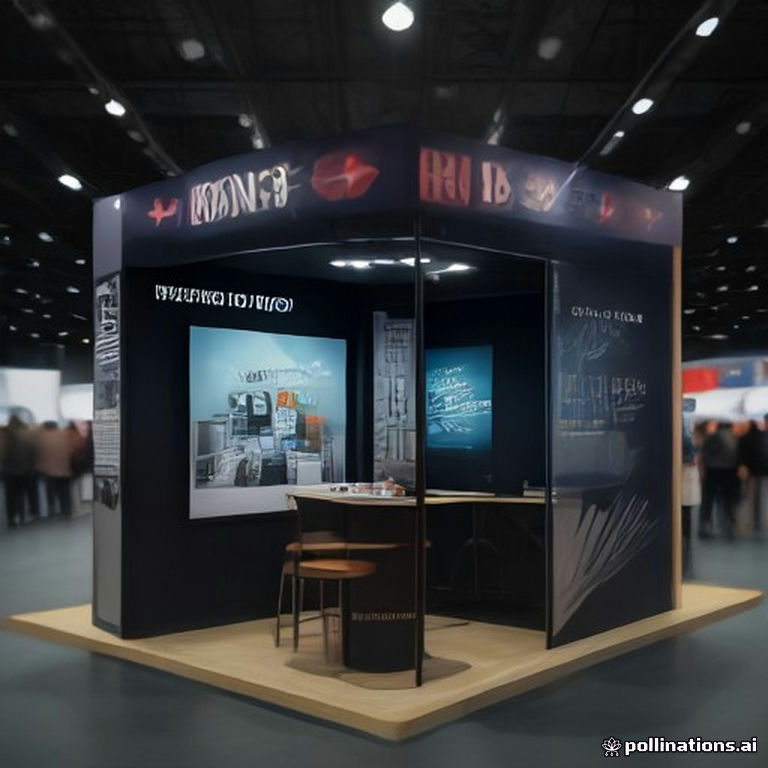
Booth-winning PACK EXPO demos require two parallel prototype tracks: a structural master in E-flute ECT-32 (≤1.5mm caliper) for shelf-visualization and a reinforced BC-flute ECT-44 shipper validated under ISTA 3A drop and ASTM D642 compression to survive freight to Chicago. Digital print-and-die workflows remove all plate and mold fees, compressing turnaround to 24-48 hours at typical short-run economics of $0.90-$3.20/unit at 100-500 units (hypothetical worked example, 2026 market conditions).
At PACK EXPO International, the exhibitors who convert booth traffic into qualified RFQs are rarely the ones with the biggest booth — they are the ones whose printed structural prototypes survive the freight pallet, open flawlessly on the demo table, and photograph like retail-final product. This whitepaper is written for procurement directors, structural engineers, and DTC brand owners who need that result on a 48-72 hour countdown, with engineering-grade material and test data behind every decision.

1. The 48-Hour Prototype Engineering Model: Digital Tooling vs. Conventional Dies
Conventional custom box tooling (rotary die, flatbed die, flexo plates) carries 5-12 business day lead times plus $350-$2,800 in one-time fees — structurally incompatible with a pre-show timeline. Digital die-less cutting (CAD-driven oscillating knife on E/B flute and 350gsm CCNB rigid stock) plus digital inkjet/toner printing eliminates both constraints entirely: no physical die to fabricate, no plates to mount.
The 48-hour workflow decomposes as follows: structural CAD dieline export (0.5-2h), digital proof and color-managed soft proof (2-4h), substrate selection and print (4-8h), die-less cutting and creasing (2-4h), glue/assembly and QC (2-4h), with the remainder consumed by transit — which is why TadaPack maintains US and EU finishing hubs. Verify your stack and freight geometry before committing artwork using the free calculators at https://tadapack.com/tools.
2. Material Physics for Fragile Display Samples: Anti-Breakage Transit Design
Display samples — glass cosmetics, ceramic housewares, electronics enclosures — face the harshest leg of their life between your dock and the booth floor. Under ISTA 3A General Simulation Performance Testing protocol, parcel-profiled packages must survive defined drop shock sequences (up to ~76 cm for sub-9.5 kg parcels on a corner-edge-face rotation) plus random vibration. Engineering countermeasures:
- Double-wall BC flute (ECT-44 to ECT-48) for outer shippers carrying fragile masters; per the McKee formula, BCT ≈ 5.87 × ECT × √(perimeter × caliper), so doubling caliper yields disproportionate compression gains.
- Suspension inserts: die-cut kraft honeycomb or molded pulp cushions (tolerance ±0.5 mm on interference fit) rather than loose void fill — foam peanuts migrate under vibration, voiding energy absorption.
- Moisture barrier: Cobb 60 water absorption per TAPPI T441 — targets below 30 g/m² for coated liners. Cobb 60 exceeding 35 g/m² triggers transit delamination risk of laminated labels and print scuffing during 30-day ocean legs.
- PFAS-free barrier coatings where grease/water resistance is required, keeping the substrate repulpable and compliant with recyclability claims.
Q: If the McKee formula derives BCT directly from ECT, why do overseas enterprise POs still mandate Mullen burst testing (TAPPI T810)?
A: Many legacy procurement specs written pre-2000 reference 275# burst-grade equivalency. Mechanically, Mullen burst (hydrostatic rupture, TAPPI T810, 2026 Revision benchmarks) reflects tensile rupture of liner facings, while ECT reflects column buckling of the flute structure — they correlate loosely and diverge on high-flute/low-liner constructions. Practical recommendation: accept dual-spec contracts (state both ECT-32 and burst ≥ 200 kPa equivalent) since dual testing costs under $50 per board grade at accredited labs, and it removes a contractual dispute vector.
3. Comparative Material & Test Matrix for Booth-Ready Builds
| Application | Substrate / Construction | Typical Caliper | Performance Target | Governing Standard / Test Protocol |
|---|---|---|---|---|
| Booth demo mailer / VIP box | 350gsm CCNB + E-flute laminate, soft-touch lamination | 2.0-2.5 mm | Zero print scuff at 500 open/close cycles (design target) | ISO 186:2020 conditioning; TAPPI T411 caliper |
| Fragile sample shipper (≤15 kg) | BC double-wall ECT-44 kraft, pulp suspension inserts | 7.0-7.5 mm | ISTA 3A drop + vibration pass; Cobb 60 <30 g/m² | ISTA 3A; TAPPI T441 |
| Pallet master (stacked booth freight) | C-flute ECT-32, 175g kraft liner | 4.0 mm | BCT ≥ 3× static stacking load at 50% RH | ASTM D642; ASTM D4169 vibration |
| Luxury rigid VIP gift box (100-500 units) | 1.5-2.0 mm grayboard, wrapped 128gsm art paper, magnetic closure | 3.0-3.5 mm | Grayboard warp <1.0 mm/m at 50% RH; no adhesive debond | ISO 186:2020; ASTM D685 conditioning |
All numeric values above are typical engineering design ranges or hypothetical worked examples, not certified laboratory results. Conditioning per ASTM D685: 23°C ± 1°C, 50% ± 2% RH before any compression or burst test.
4. Manufacturing SOP: The 4-Step Zero-Tooling Verification Protocol
- Step 1 — Dieline lock with dimensional tolerance audit (Hour 0-2): Export structural CAD at ±0.15 mm die registration; verify internal dimensions accommodate product at +1.5-3.0 mm clearance per axis; run stacking/freight math via TadaPack’s calculator suite.
- Step 2 — Substrate and print qualification (Hour 2-6): Specify ECT grade and Cobb 60 ceiling in writing; approve color under D50 illumination with ΔE ≤ 2.0 against soft proof on coated stock; confirm PFAS-free and mono-material status for EU PPWR (Regulation 2024/1991) recyclability statements.
- Step 3 — Convert and crease (Hour 6-14): Digital die-cut with creasing matrix matched to flute profile (typical crease rule 2pt for E-flute, 3pt for C/BC); verify crease cracking absent at 180° fold on 350gsm CCNB laminates.
- Step 4 — QC and transit pack-out (Hour 14-24): Caliper check per TAPPI T411 (accept ±0.10 mm variance on nominal), glue-bond peel check, then pack fragile masters in BC-flute shipper with inserts; label per ISTA 3A parcel profile and photograph pack-out for freight claim evidence.
5. Defect Diagnostics & Troubleshooting Matrix
| Defect | Root Cause | Corrective Action |
|---|---|---|
| Flap popping / gapping after gluing | Insufficient crease depth or wrong creasing matrix durometer (~45-durometer matrix standard); fiber memory in high-yield kraft | Increase crease matrix width by 0.3 mm; add 2-hour dwell under 5 kPa top load; switch to softer-fiber liner |
| Grayboard warping on rigid VIP boxes | Moisture gradient between faces during ocean transit (container sweat); asymmetric wrap tension | Condition board per ISO 186:2020 before wrapping; balance wrap on both faces; include desiccant (≥50g per m³) and VCI-free barrier liner |
| Adhesive debonding / delamination | Cobb 60 >35 g/m² saturated liner; cold-set adhesive below 10°C application temperature in Atlantic winter routes | Respecify liner Cobb <30 g/m²; use hot-melt with 15-18 g/m² coat weight; require ambient-acclimated glue application |
6. Multi-Regional Logistics Landing Matrix: Port-to-Booth Corridor Stress Analysis
Pacific corridor → California Inland Empire (FBA ONT8 / LGB3): 18-30 day ocean legs expose boards to cyclic container sweat; expect 8-12% BCT derating on uncoated kraft at sustained 80% RH, and design stacking loads with a 0.7 humidity derating factor on ECT-derived BCT. Transload and intermodal hop from Long Beach to IEs adds 1-2 compression cycles from clamp-truck handling.
US inland — Texas DFW distribution triangle: Hot-dry ambient (summer interiors frequently <30% RH) risks liner embrittlement on over-dried stock; ECT is stable, but crease-cracking on coated laminates rises. Condition finished units at 50% RH for 24h before booth assembly.
Atlantic corridor → Port of Rotterdam multimodal rail/road: High-humidity coastal handling plus EU rail intermodal vibration (ASTM D4169 truck/rail schedule spectra) demands Cobb 60 <30 g/m² liners and corner-reinforced pallets. Per EU Directive 94/62/EC Annex II and EU PPWR (2024/1991) packaging waste reduction mandates, palletize with mono-material stretch or strapping — mixed-material wraps complicate recyclability declarations for EU-distributed booth freight.
Stack-load derating summary (design guidance): coastal ports at 80% RH use ×0.70 factor on BCT; dry inland warehouses ×0.85; conditioned retail DCs ×0.90. Run your exact pallet geometry and safe stacking height through the free tools at https://tadapack.com/tools before finalizing master carton dimensions — a 5 mm height reduction can drop you a whole freight class and avoid Amazon FBA dimensional penalties on any post-show DTC restock.
Per FTC Green Guides (16 CFR Part 260) substantiation rules, any ‘recyclable’ claim on booth signage or cartons must be substantiated by the substrate’s mono-material composition — TadaPack’s PFAS-free coated kraft and uncoated rigid constructions are specified to keep those claims defensible.
Recommended Engineering Reading
[TOOLS] Featured Engineering & Calculation Tools
Explore 70+ Packaging Tools ➔Box Compression (BCT) Calculator
Predict box compressive limit and stacking safety factors via McKee formula.Edge Crush Test (ECT) Calculator
Calculate linerboard ring crush and composite ECT ratings for optimal board specs.
