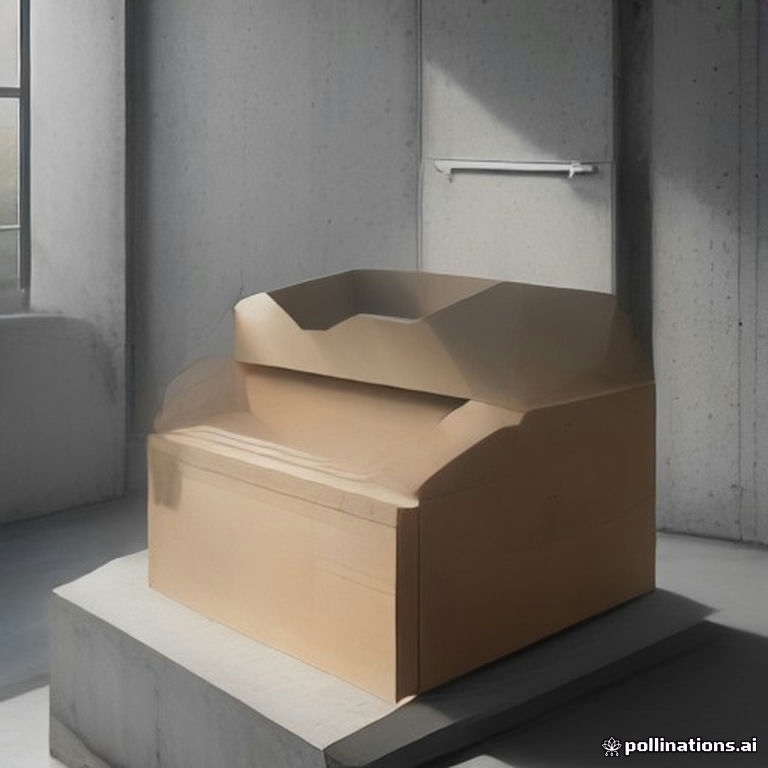
Nike’s packaging is not a rigid setup box at all: it is a one-piece, corner-glued corrugated shoebox (typically E-flute at ~1.5 mm caliper) with high-coverage flexographic orange print, optimized for e-commerce compression and ISTA 3A drop performance at enormous unit-cost discipline. This teardown reverse-engineers the substrate stack, print chemistry and unboxing mechanics, then maps a replicable BOM for DTC brands targeting the same shelf presence at 40-60% lower cost per unit.
Executive Teardown Summary: Nike’s packaging centers on a one-piece lid-base corrugated shoebox — corner-glued, no separate lid, no foam inserts — in high-density recycled linerboard around 1.5-2.0 mm caliper. Signature finishing is a single high-coverage flexo brand-orange laydown plus one black pattern pass. Sustainability credentials center on 100% recyclable mono-material corrugate and high post-consumer recycled content, per EU PPWR (Regulation 2024/1991) design-for-recycling logic.
- Nike’s box is a one-piece corner-glued (rotary-end) E/B-flute corrugated carton — the lid and base are a single blank, eliminating lidding tooling and assembly labor.
- Calipers run roughly 1.5-2.0 mm (E-flute class) with recycled linerboard; compression is tuned for nesting and stacking, not premium rigidity.
- Print is flexo (aniline/soy-compatible water-based inks), typically 1-2 spot colors including the high-coverage orange; no lamination, no soft-touch, no foil.
- Drop and stacking performance is validated against ASTM D4169 / ISTA 3A General Simulation protocols, with nesting geometry doing most of the cushioning work.
- SME brands can hit ~80% of the perceived quality with 200-275 gsm recycled E-flute and single-color flexo, cutting unit cost 40-60% versus rigid setup boxes.

Why the Nike Shoebox Is an Engineering Benchmark, Not a Fashion Statement
Nike ships billions of footwear units annually, which makes its shoebox one of the highest-volume structural packaging decisions on earth. At that scale, every tenth of a millimeter of board caliper and every additional print color is a seven-figure line item — so the current box is the output of relentless cost-down engineering, not aesthetic indulgence. The sports-retail trend of ‘drop-culture’ unboxing moments is real, but Nike’s answer is deliberately restrained: a mono-material corrugated carton that survives global freight, nests densely on pallets, and still reads as premium through pure color blocking and typographic scale.
The structural family is the one-piece lid-base shoebox, also called a corner-glued or rotary-end box. Unlike a two-piece rigid setup box (wrapped chipboard, 1200-1600 gsm greyboard, lidding tooling required), the Nike box is a single die-cut corrugated blank that folds into an integral tray with a hinged or friction-lid top. The engineering consequences are significant: zero secondary assembly beyond corner gluing, flat-ship blanks that cut inbound freight roughly 5-8x versus ship-flat-unassembled rigid boxes, and a mono-material stream that complies with EU PPWR (Regulation 2024/1991) design-for-recycling criteria — all-plastic-free, all-fiber.
Material and Substrate Teardown: The Full BOM
The stack is intentionally simple. There is no wrap layer, no chipboard core, no molded insert — a deliberate contrast with luxury sneaker brands that ship 1400 gsm greyboard boxes with bagasse trays. Nike’s BOM is: recycled corrugated body, water-based flexo ink, and paper tape or minimal fiber sealing. Reference values in the table below are typical industry ranges for this carton class, not proprietary Nike lot data.
| Component / Layer | Substrate Material | Caliper / Basis Weight (Reference Values) | Finishing & Surface Treatment | Eco / Compliance Reference |
|---|---|---|---|---|
| Body blank (lid + base, one piece) | Recycled test liner / semi-chem corrugated, E-flute class | ~1.5-2.0 mm caliper; combined board 450-600 gsm equivalent | High-coverage flexo spot orange (water-based aniline-class ink), 1 black pattern pass | Per EU PPWR (Regulation 2024/1991) recyclability; FSC-certified fiber supply common |
| Corner glue joints | PVA cold-glue lap tabs, 12-16 mm glue width | ±0.5 mm glue registration typical | None | Solvent-free adhesive; FTC Green Guides (16 CFR Part 260) recyclability claims supported by mono-fiber construction |
| Interior | Bare corrugated, sometimes a tissue or molded pulp wrap inside | Molded pulp tray 1.5-2.5 mm where used | Unprinted | Molded pulp per ISO 186 conditioning; plastic-free |
| Carton label / size chip | Uncoated paper sticker or direct flexo overprint | ~80-100 gsm sticker stock | Thermal or flexo variable data (size, SKU) | GS1 barcode compliance; recyclable with board stream |
| Closure / sealing | Friction-fit lid or paper tape | N/A | None | Zero-plastic; per ASTM D1974 fiberboard closure methods |
Board strength targets in this class follow ASTM D642 for compressive resistance, with ECT values typically in the ECT-32 to ECT-44 range depending on stack height in retail backrooms and DC racking. Per TAPPI T810, burst performance of the recycled liner is the secondary spec; at e-commerce stack heights the ECT-to-box-compression (BCT) relationship derived via the McKee formula dominates the specification.
Q: If the McKee formula already derives BCT from ECT, why do global footwear POs still mandate ASTM D642 compression testing of finished boxes?
A: Direct answer: because McKee assumes uniform, dry, perfectly creased board — real corner-glued shoeboxes fail at glue-tab shear and crease cracking before ECT predicts it. The mechanical reason: corner-glued joints introduce localized stress concentrators at each tab, so finished-box compression (ASTM D642) can read 15-25% below the McKee estimate, especially after 23°C/50% RH conditioning per ISO 187 vs. high-humidity transit exposure measured by Cobb 60 water absorption on the liner. Procurement recommendation: always qualify with finished-box ASTM D642 (or ISO 12048) on production-glued samples, and set the purchase spec on BCT, not raw ECT.
Unboxing Mechanics and Kinematics: Where the Experience Lives
The Nike unboxing is a study in friction-tuned reveal. Because the lid is integral, opening force is governed by lid crease bending resistance and the friction between lid inner face and base top edge — not by magnetic closures or ribbon. Engineers in this category tune three variables:
1. Lid crease resistance. A 90° fold along the box length must require enough bending moment to keep the box closed under a 1 m drop (validated in ISTA 3A / ASTM D4169 sequences) but release with a single-hand pull. Production creasing matrices typically run in the 1.5-2.5 N·m bending resistance band for this caliper; too soft and boxes pop open in stacked transit, too hard and the lid panel delaminates at the flute.
2. Nesting and clearance tolerances. Blank conversion tolerance is conventionally held at ±0.5-1.0 mm on crease-to-crease dimensions; a lid-inner to base-outer clearance of 0.3-0.8 mm prevents both jamming (under-tolerance at high humidity, when liner swells) and rattling drop-descent (over-tolerance). Per TAPPI T411 caliper measurement, E-flute board can vary ±0.1 mm across a production run, so the clearance window is specified at the high end of swell allowance for ocean-freight humidity.
3. Stacking compression headroom. A size-run shoebox nest-stacks in retail backrooms and DCs; design BCT must exceed the top-load of a 6-8 high stack by a safety factor of 3-4 to cover humidity derating (which can cut BCT 30-40% at 90% RH coastal warehouses) and warehouse vibration per ASTM D4169 truck distributions.
For a hypothetical 330 × 130 × 120 mm corner-glued E-flute shoebox at ECT-32 (N/m of width, ~5.5 kN/m): the McKee estimate gives BCT ≈ 5.87 × ECT^0.746 × caliper^0.492 × perimeter^0.521 ≈ 1.4 kN. Applying a finished-box joint derating factor of 0.8 gives ~1.1 kN usable. A 6-high stack of boxed shoes at ~1.2 kg each plus DC dynamic load (~2.5x static) yields ~0.45 kN demand — a safety factor near 2.4, adequate per ISTA 3A stack conditioning but marginal at 90% RH, which is why high-humidity export lanes typically spec up to a heavier liner or BC-flute master case instead of inflating the shoeboard itself.
Note that there are no vacuum-release pinholes or magnetic hinge mechanisms in this design — the ‘drop descent’ drama of luxury rigid boxes is absent by choice. The kinematic signature is instead the friction-slide lid: a 1-2 second controlled slide governed by lid-to-base Coulomb friction (paper-on-paper, μ ≈ 0.3-0.45 per TAPPI T815-class coefficient testing), producing the low-tension pull that consumers read as quality.
Print Chemistry and Sustainability Positioning
Nike’s brand orange is delivered as a single high-coverage flexo spot pass. Flexo water-based inks on recycled liner achieve acceptable opacity only at high anilox volumes, which is why the orange reads slightly matte and textured — a byproduct, not a finish. There is no lamination (laminated film would break the mono-material recyclability claim and add cost), no soft-touch coating, no foil. Under FTC Green Guides (16 CFR Part 260), the ‘recyclable’ claims on fiber-based footwear packaging are substantiated by the absence of non-fiber barriers; brand commitments on recycled content and take-back programs documented publicly through Nike’s Circularity reporting push the substrate toward high post-consumer recycled liner where strength allows. Per EU PPWR (Regulation 2024/1991), the all-fiber construction is well-positioned for recyclability-by-design grading, and void-weight minimization also reduces FBA-style dimensional-weight penalties on the e-commerce lane.
What DTC Brands Should Borrow — and What to Skip
Directly copying Nike’s BOM verbatim is a mistake for most scaling footwear and apparel brands, because Nike’s cost position is protected by hundred-million-unit print runs and owned tooling. The transferable engineering lessons are structural, not literal:
Borrow: the one-piece corner-glued structure (eliminates lid tooling and assembly), mono-material fiber construction (PPWR-proof and Green-Guides-safe), and single-spot-color color-blocking as the premium signal. Skip: nothing here needs replacement for a luxury tier — if you want the rigid-box ‘drop reveal,’ the cost path is a hybrid: E-flute outer shipper with a lighter 1000-1200 gsm wrapped inner tray, which preserves the moment while keeping ~60% of Nike’s board cost position.
For SME procurement, a practical replicable BOM at 40-60% lower unit cost than a rigid setup box looks like this:
- Board: 200-275 gsm recycled E-flute (1.5 mm) with ECT-32 minimum, replacing 1400-1600 gsm greyboard.
- Print: one high-coverage flexo spot + one black pass; skip digital-only short runs above ~1,000 units.
- Finish: matte varnish if tactility is needed — never film lamination if you claim curbside recyclability.
- Insert: molded pulp or a folded corrugated footbed insert instead of foam or bagasse trays for footwear.
TadaPack supports this transition with zero-tooling CAD sampling and short-run structural prototyping: designers can validate lid friction clearance, corner-glue shear, and crease resistance on production-representative board before committing to die-cut tooling. Use the free calculators at https://tadapack.com/tools to sanity-check BCT estimates, dimensional-weight freight exposure, and board caliper selection against your stack height and lane conditions.
Verification SOP Before You Place the PO
- Step 1: Condition production-blank samples at 23°C ± 1°C, 50% ± 2% RH per ASTM D685 / ISO 187 for 24 h before any measurement.
- Step 2: Measure caliper per TAPPI T411 across 10 points per blank; reject lots exceeding ±0.1 mm from nominal 1.5 mm.
- Step 3: Run finished-box compression per ASTM D642 / ISO 12048 on glued samples; accept at BCT ≥ 2.5x your worst-case stacked static load, then re-test one set at 85-90% RH to capture humidity derating.
- Step 4: Validate the shipping unit through ISTA 3A (or ASTM D4169 DC-13) drop and vibration sequences including the lid-friction pull test (target opening force 4-8 N single-hand).
Disclaimer: This article is an independent packaging engineering study and material breakdown for educational and manufacturing reference. TadaPack is not affiliated with or endorsed by the referenced brand.
Recommended Engineering Reading
[TOOLS] Featured Engineering & Calculation Tools
Explore 70+ Packaging Tools ➔Box Compression (BCT) Calculator
Predict box compressive limit and stacking safety factors via McKee formula.Edge Crush Test (ECT) Calculator
Calculate linerboard ring crush and composite ECT ratings for optimal board specs.
