
⚡ Key Takeaways & Direct Technical Answer
- Polyurethane (PU) excels at soft cushioning for fragile, low-weight items; EVA delivers structural rigidity and repeat-impact durability.
- PU is open-cell and cheaper per unit; EVA is closed-cell, higher density, and 2-4x more expensive.
- EVA withstands 80-100k+ compression cycles; PU fatigues faster but absorbs drop shock better.
- Selection depends on fragility rating, transit hazards per ASTM D4169, and unit cost targets.
Polyurethane Foam vs EVA Foam: Which Protective Foam Should Engineers Specify?
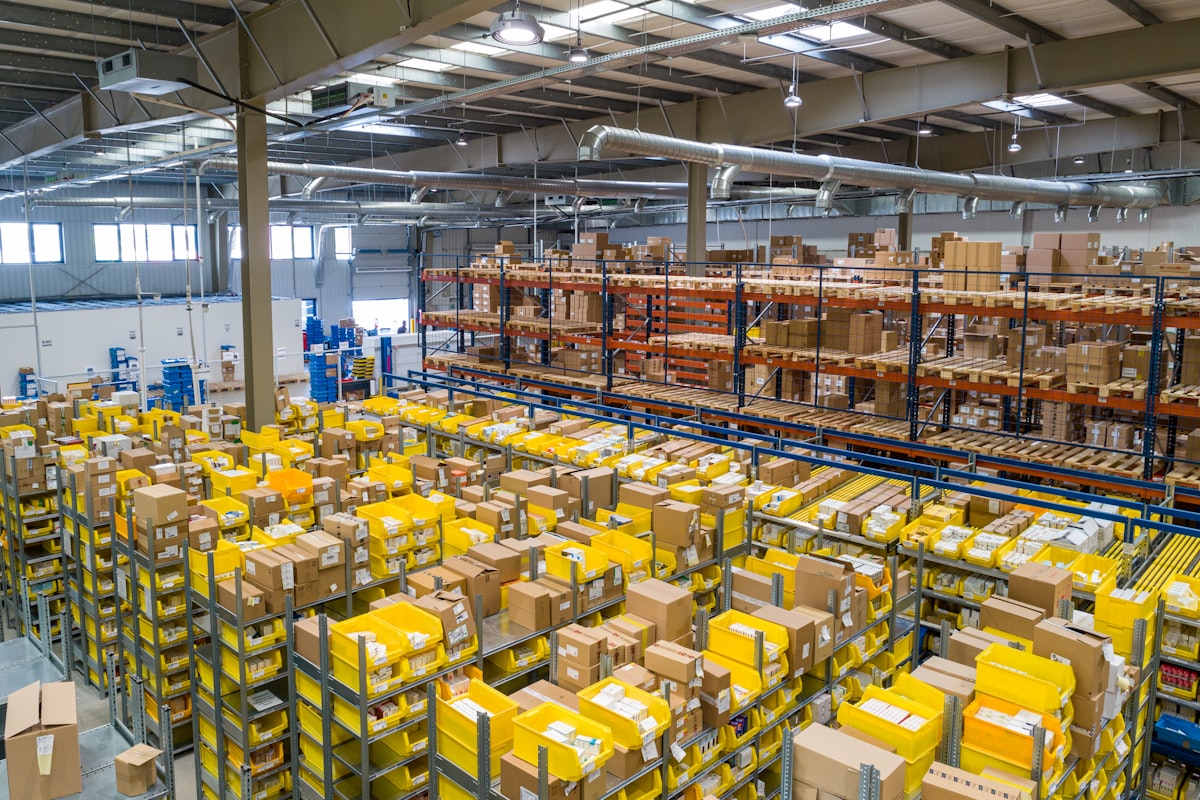
polyurethane foam vs eva foam – High-Speed Automated Packaging and Warehouse Fulfillment (TadaPack Engineering Guide)
Specifying the wrong foam insert is one of the most common root causes of transit damage claims in e-commerce fulfillment. When engineers weigh polyurethane foam vs EVA foam, the decision hinges on three variables: fragility of the product, expected distribution hazards, and landed cost per insert. This guide compares both materials at the structural level so packaging teams can make a defensible specification. For a broader materials overview, start with our Custom E-Commerce & Retail Packaging hub.
Structural Fundamentals: Open-Cell vs Closed-Cell
Polyurethane (PU) foam is an open-cell thermoset. Its interconnected cell structure allows air to flow through the matrix under compression, producing a soft, progressive cushioning curve. Standard packaging-grade PU (ester or polyether type) runs 1.0-2.0 PCF density with ILD (indentation load deflection) values of roughly 25-50 lbs at 25% deflection. It is the default choice for glassware, ceramics, electronics with low fragility factors (G-factors above 40), and void-fill nesting.
EVA foam (ethylene-vinyl acetate) is a closed-cell copolymer, typically 18-33% vinyl acetate content for packaging grades. Density ranges from 45-120 kg/m³ (2.8-7.5 PCF), with compression set resistance under 5% per ASTM D3574 protocols. The closed cells resist moisture, chemicals, and repeated impact, which is why EVA dominates reusable inserts, tool cases, and premium retail presentation trays. Cross-linked EVA laminates are also die-cuttable to ±0.3 mm tolerance for tight product cavities.
Cushioning Performance and Fatigue Life
The defining difference in the polyurethane foam vs EVA foam debate is fatigue behavior. PU foam absorbs a single drop event efficiently — its cushioning curve bottoms out around 35-55 G for a typical 2-inch drop of a 10-15 lb payload — but cell walls rupture under repeated impacts, degrading performance by 20-30% after multiple drops.
EVA behaves in the opposite manner: its stiffer response absorbs less energy per single drop, but sustains 80,000-100,000+ compression cycles with minimal compression set. That is why logistics teams testing multi-trip reusable packaging validate inserts against ASTM D4169 Transit Testing Standards — the assurance-level schedule (random vibration, loose-load bounce, drop sequences) will quickly expose PU fatigue failure while EVA remains stable.
| Property | Polyurethane Foam | EVA Foam |
|---|---|---|
| Cell structure | Open-cell, air-permeable | Closed-cell, sealed |
| Typical density | 1.0-2.0 PCF | 2.8-7.5 PCF |
| Fatigue resistance | Low; degrades after drops | 80k+ compression cycles |
| Relative cost per insert | Low baseline | 2-4x PU |
For teams comparing closed-cell alternatives, our companion guides on EVA Foam vs Polyethylene Foam: Engineer’s Comparison and EVA vs EPE Foam: Which Foam Fits Your Product Packaging? cover where PE and EPE sit on the stiffness/cost matrix.
Cost, Convertibility, and Sustainability (2026 Compliance)
Unit economics. PU bulk sheet stock runs roughly $3-6 per board foot, converting cheaply on CNC or oscillating-knife machines. EVA sheet stock (2-6 mm, typically 45-70 kg/m³) runs $12-25 per board foot equivalent, with laser or die-cut conversion adding setup cost. For single-use shippers, PU almost always wins on landed cost; for reusable retail inserts or SKU-dense kits, EVA’s durability amortizes quickly.
Regulatory posture. Under PPWR (EU Regulation 2025/40) and expanding US state EPR programs in 2026, both materials face recyclability scrutiny. PU packaging foam is difficult to recycle economically and is increasingly flagged in EPR fee schedules. EVA — especially non-halogenated, chemically blown grades — is more readily integrated into polyolefin recycling streams, and bio-based EVA (sugarcane ethylene) now reaches 30-50% renewable content. Packaging teams should verify FSC-certified fiber outers and document foam polymer codes for EPR reporting.
Selection Framework
Choose PU foam when:
– Fragility rating is moderate (G-factor ≥ 40) and shipments are single-trip
– Insert thickness must exceed 50 mm without excessive weight penalty
– Budget per insert must stay under ~$1.50 at volume
Choose EVA foam when:
– Product fragility is high, requiring rigid immobilization rather than soft cushioning
– Inserts are reused across a multi-trip or subscription-logistics loop
– Retail presentation demands color-matched, embossed, or precision-cavity trays
Hybrid assemblies — EVA perimeter frames with PU mattress cores — frequently deliver the best damage-rate-to-cost ratio for fragile e-commerce SKUs above $150 declared value.
Bottom Line
The polyurethane foam vs EVA foam decision is not about which material is superior; it is about matching cell structure to hazard profile. PU wins on cost and single-impact softness; EVA wins on durability, precision, and premium presentation. Run a D4169-assurance-level transit test before committing tooling — the data will settle the specification debate faster than any datasheet.
Frequently Asked Questions (FAQ)
Is EVA foam better than polyurethane foam for shipping electronics?
For fragile electronics (G-factor below 40), EVA’s rigid closed-cell structure immobilizes devices better. For moderately fragile items in single-trip shipments, PU offers adequate cushioning at 2-4x lower cost.
What is the density difference between PU foam and EVA foam?
Packaging-grade polyurethane foam runs 1.0-2.0 PCF (16-32 kg/m³) open-cell. EVA foam runs 2.8-7.5 PCF (45-120 kg/m³) closed-cell, making EVA roughly 2-5x denser and heavier per volume.
Can polyurethane and EVA foam be recycled in 2026 EPR programs?
EVA is more recyclable and increasingly available with 30-50% bio-based content; PU foam remains hard to recycle economically and attracts higher EPR fees under PPWR and US state programs. Document polymer codes for compliance reporting.
Engineering Your Next High-Performance Packaging Batch
From precision CAD dielines to ISTA drop-testing and certified sustainable substrates, TadaPack helps global brands optimize freight cubic volume, minimize shipping breakage, and satisfy European PPWR / EPR packaging standards.
✓ Drop-Test & ECT Optimization
✓ PPWR & FSC Compliant
