
⚡ Key Takeaways & Direct Technical Answer
- Food-safe custom boxes require food-contact-compliant substrates plus structural grades matched to load and flute selection.
- ECT (32–48 lb/in) outperforms Mullen burst specs for stacked e-commerce pallets.
- Grease resistance (KIT rating) and moisture barriers drive substrate choice for fatty or frozen goods.
- 2026 EPR/PPWR fee modulation rewards mono-material, FSC-certified structures with lower PCR thresholds.
Custom Packaging Boxes for Food: Engineering Specs, Barriers & Compliance
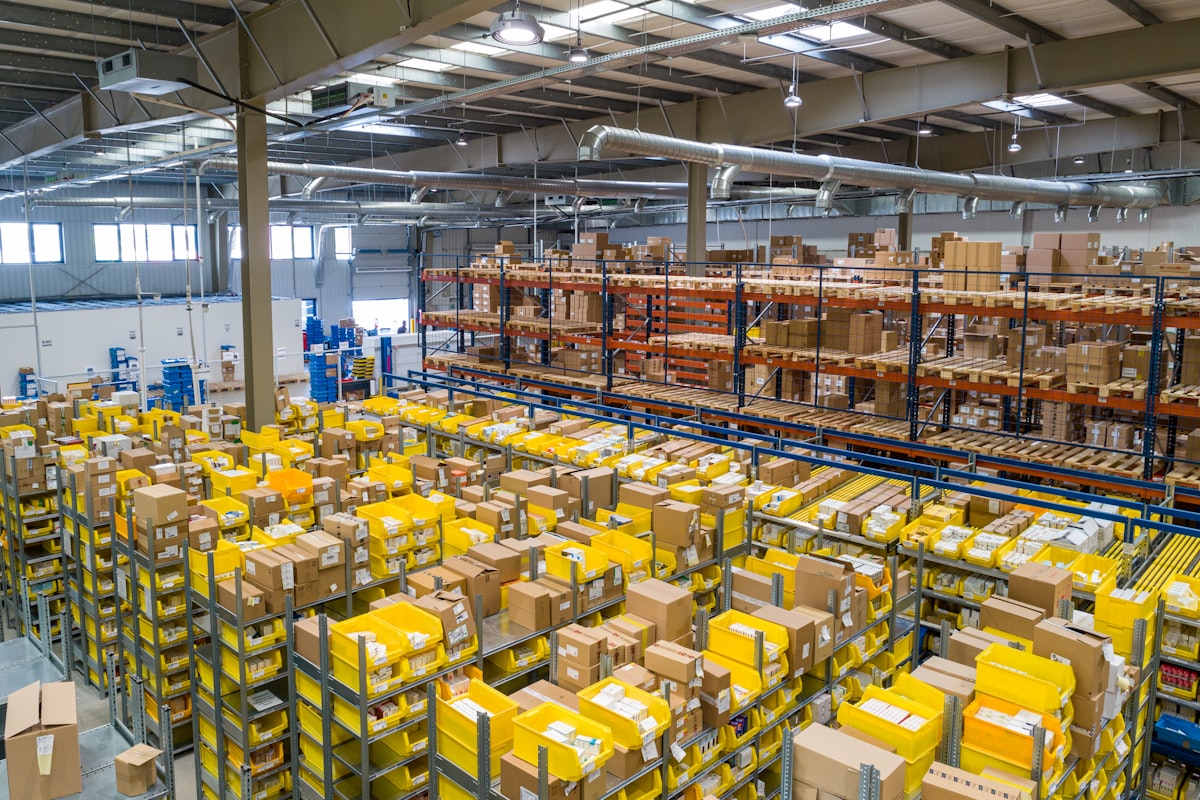
custom packaging boxes for food – High-Speed Automated Packaging and Warehouse Fulfillment (TadaPack Engineering Guide)
Custom food packaging is a dual-specification problem: the box must survive distribution mechanics while maintaining direct or indirect food-contact compliance. Most sourcing failures we audit at TadaPack stem from treating these as separate decisions. This guide consolidates the structural, barrier, and regulatory parameters that determine whether a custom box for food succeeds in 2026 supply chains.
For broader structural context, review our pillar on Custom E-Commerce & Retail Packaging, which frames the full material decision matrix.
Structural Substrate Selection: ECT Over Burst
For food e-commerce, box compression strength (BCT) drives failure rates, not puncture resistance. Specify corrugated flutes and ECT ratings rather than Mullen burst for anything palletized or shelf-stacked.
- B-flute (3.0 mm): Retail-ready food boxes, shelf display trays, 32 ECT minimum.
- C-flute (4.0 mm): Shipping masters for canned/jarred goods, 40–48 ECT for 5+ stack heights.
- E-flute (1.5 mm): Premium direct-to-consumer food cartons, printable fine graphics, 250–300 GSM liners.
- Solid bleached sulfate (SBS) 300–400 GSM: Dry goods, tea, confectionery; folding carton format.
Rule of thumb: BCT must exceed the stacked load by a safety factor of 4–5 for warehouse climates above 60% RH, where linerboard loses 30–40% of dry compression strength. Moisture-resistant coatings (wax-alternative or acrylic) recover most of this loss in cold-chain and humid environments.
Barrier Requirements by Food Category
Fatty, acidic, and frozen foods each impose distinct migration and barrier demands. Grease resistance is graded by the KIT test (TAPPI T559): 12-rated fluorochemical-free barriers now dominate due to PFAS restrictions effective across the EU and multiple US states in 2026.
| Food Type | Board Grade | Key Barrier Spec |
|---|---|---|
| Fatty/baked | SBS + barrier coat | KIT 8–12, PFAS-free |
| Frozen goods | C-flute, wet-strength | SC-2, 90% RH stable |
| Dry goods | 300 GSM SBS/FBB | Moisture MVTR control |
| Fresh produce | Kraft, ventilated | FSC-certified, mono-material |
For cushioned inserts protecting glass jars, sauces, or premium confectionery, pair the box with engineered foam. Our comparison of EVA vs Polyethylene Foam: Engineering Comparison Guide details compression-set behavior for fragile food containers, and EVA Foam vs PE Foam: Engineer’s Material Comparison covers cost-per-insert tradeoffs at volume.
Food-Contact and Sustainability Compliance
Two compliance layers apply to custom food boxes in 2026:
- Food contact: Indirect-contact shippers need FDA 21 CFR-compliant or EU 10/2011-aligned adhesives, inks, and coatings. Primary-contact cartons (e.g., confectionery sleeves touching product) additionally require migration testing under EU 1935/2004.
- Packaging circularity: The EU Packaging and Packaging Waste Regulation (PPWR) enforces recyclability grading and empty-space ratio limits, while US state EPR programs (CA SB 54, OR, CO) apply eco-modulated fees. Mono-material corrugated boxes with FSC-certified fiber and water-based inks consistently land in the lowest fee tiers.
Practical implication: avoid laminated plastic windows and mixed-material coatings on corrugated food boxes unless barrier function is non-negotiable. A wax-alternative coating achieves KIT 10 while keeping the substrate repulpable.
Distribution Validation: Test Before You Scale
Never approve a food shipper without laboratory transit validation. ASTM D4169 transit testing standards define the distribution cycle (DC-1 through DC-13) covering vibration, drop shock, compression, and atmospheric conditioning. For direct-to-consumer food shipments, we specify Distribution Cycle 12 (parcel) with ISTA 3A as a supplementary pre-screen; for palletized retail distribution, DC-3 or DC-4 with assurance-level II.
Standard validation sequence:
- Condition samples at 23°C/50% RH and 38°C/85% RH (tropical or cold-chain analogs).
- Random vibration per ASTM D4728, 30-minute profile.
- Drop sequence per parcel weight class (10 drops, DC-12).
- Post-test BCT verification — reject if residual stack strength falls below 1.5× the warehouse load.
Boxes that pass dry-condition testing but fail at 85% RH account for the majority of field damage claims we investigate in humid-route distribution.
Cost Optimization at Volume
Unit economics for custom food boxes at 10,000+ units:
- E-flute litho-laminated carton: $0.55–$0.90/unit.
- B-flute flexo-printed shipper, 40 ECT: $0.35–$0.60/unit.
- SBS 350 GSM folding carton: $0.18–$0.35/unit.
Reduce cost 8–15% by right-sizing board grade to actual BCT data (many brands over-spec by one flute grade), standardizing die-cuts across SKUs, and shifting from litho lamination to high-graphic flexo with post-print top-coating where brand color tolerances allow ΔE ≤ 3.0.
Specification Checklist
Before issuing a PO for custom packaging boxes for food, lock: ECT/board GSM, KIT or barrier rating, food-contact declarations from the board mill, FSC or PCR fiber percentages, ASTM D4169 cycle and assurance level, and EPR fee-tier documentation. A box that meets all six is both a compliant and commercially optimized asset.
Frequently Asked Questions (FAQ)
What board grade is best for custom food shipping boxes?
B-flute (3.0 mm) at 32–40 ECT suits most direct-to-consumer food shipments; C-flute at 40–48 ECT is standard for palletized canned or jarred goods. Validate with ASTM D4169 including high-humidity conditioning.
Do food boxes need PFAS-free grease barriers in 2026?
Yes in the EU and most US states. Specify fluorochemical-free barrier coatings achieving KIT 8–12 per TAPPI T559, which keep the substrate recyclable and reduce EPR fee exposure.
How does EPR affect custom food packaging costs?
Eco-modulated fees under PPWR and US state EPR programs penalize mixed materials and low recyclability. Mono-material FSC-certified corrugated with water-based inks typically qualifies for the lowest fee tiers, cutting compliance cost per unit.
Engineering Your Next High-Performance Packaging Batch
From precision CAD dielines to ISTA drop-testing and certified sustainable substrates, TadaPack helps global brands optimize freight cubic volume, minimize shipping breakage, and satisfy European PPWR / EPR packaging standards.
✓ Drop-Test & ECT Optimization
✓ PPWR & FSC Compliant
