
⚡ Key Takeaways & Direct Technical Answer
- Bulk custom corrugated pricing is driven by board grade (ECT/Mullen), print process, and MOQ tier—order 5,000+ units to cut per-unit cost 30–45%.
- Select flute profile (B, C, BC) against product weight and stacking height, not aesthetics.
- Verify dimensional weight optimization and ISTA transit performance before committing to full production runs.
- 2026 PPWR and state-level EPR fees make mono-material corrugated the lowest total-cost compliance path.
Custom Cardboard Boxes Bulk: An Engineer’s Guide to Specs, MOQs, and Cost Control
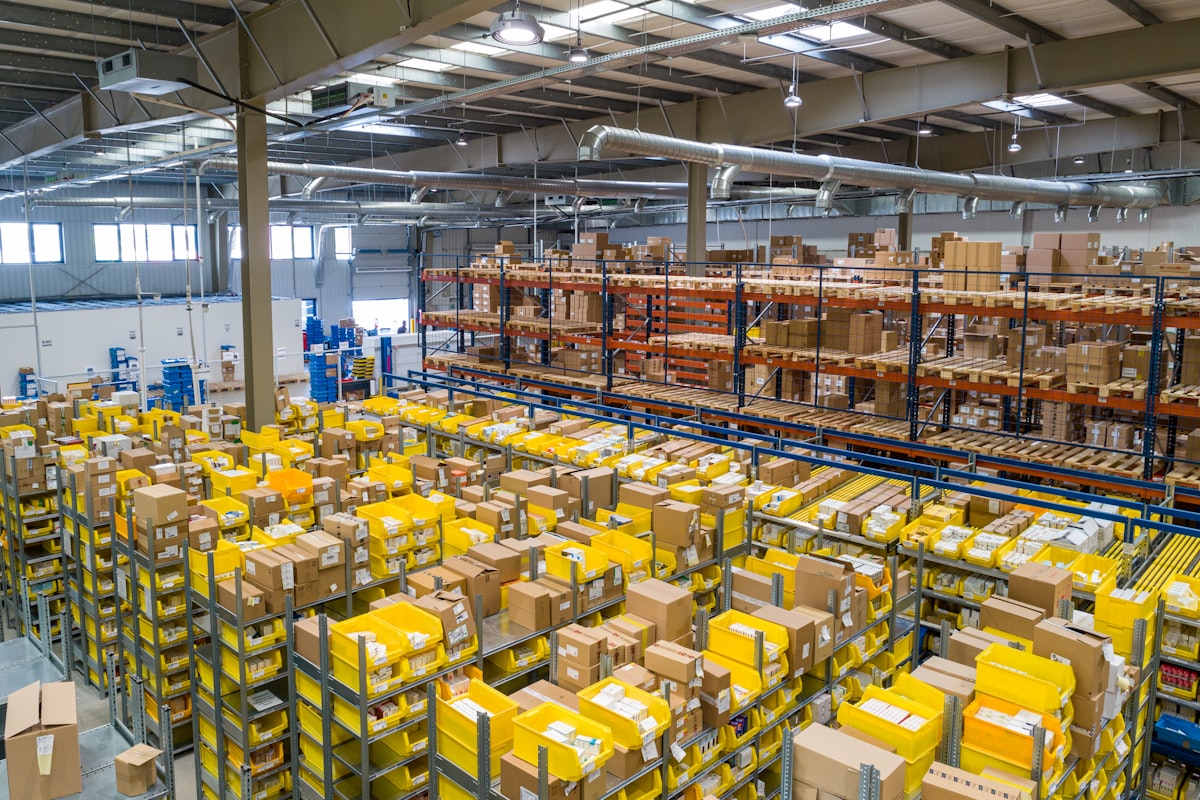
custom cardboard boxes bulk – High-Speed Automated Packaging and Warehouse Fulfillment (TadaPack Engineering Guide)
Ordering custom e-commerce and retail packaging in bulk is a structural engineering decision before it is a purchasing decision. The gap between a well-specified bulk run and a poorly specified one routinely exceeds $0.40 per unit when you account for dimensional weight surcharges, damage claims, and non-compliance fees. This guide covers the technical levers that matter when committing to 5,000-unit-plus production runs of custom cardboard boxes.
Board Grade: ECT vs. Mullen for Bulk Runs
Corrugated strength is specified two ways. Edge Crush Test (ECT, measured in kN/m or lbs/in) predicts columnar stacking strength and is the modern default for e-commerce parcels. Mullen burst (BCT, psi) measures puncture resistance and remains relevant for heavyweight or rough-handled freight.
For most bulk e-commerce programs, specify 32 ECT single-wall C-flute as the baseline, moving to 44 ECT or double-wall BC for loads above 18 kg or pallet stacking above 1.2 m. Do not over-spec: every 200 GSM of unnecessary linerboard adds material cost and freight weight across thousands of units.
Flute Selection Against Product Profile
- B-flute (~3.0 mm): Tight die-cutting, superior flat crush for small electronics and printed retail boxes.
- C-flute (~4.0 mm): The e-commerce workhorse; balanced cushioning and stacking at lowest cost per m².
- BC double-wall (~7.0 mm): Fragile or heavy goods; pair with engineered inserts rather than relying on board thickness alone.
For fragile contents, board grade is only half the system. Internal dunnage selection—foam density, cell structure, compression set—determines damage rates. Compare candidate materials in our Polyurethane Foam vs EVA Foam engineering comparison and the companion EPE Foam vs PU Foam protective packaging guide before finalizing inserts.
Bulk Economics: Where MOQ Tiers Actually Break
Digital printing has collapsed traditional MOQs, but flexo and litho-laminated runs still reward volume. Typical 2026 tier structure for custom RSC or mailer boxes:
| Tier | Per-Unit Effect | Print Method |
|---|---|---|
| 500–1,000 | Premium, digital | Digital inkjet |
| 5,000–10,000 | 25–35% savings | Flexo, 1–2 color |
| 25,000+ | 40–50% savings | Flexo/litho-lam |
| 100,000+ | Custom tooling amortized | Litho-laminated |
Two caveats: confirm tooling (die-cut) ownership transfers to you at high volumes, and lock linerboard pricing against virgin kraft index volatility—OCC and kraft pulp spreads can swing 8–12% within a quarter.
Dimensional Weight: The Hidden Cost Multiplier
Parcel carriers (UPS, FedEx, USPS) bill on dim weight at divisor 139 in³/lb. A box oversized by 25 mm on each dimension can add $1.50–$3.00 per shipment. At bulk scale, a 6% dimensional reduction frequently pays for the entire custom tooling within the first production cycle. Specify internal dimensions to product + insert tolerance, not nominal sizes.
Compliance: PPWR and EPR Fees Reshape Bulk Specs
The EU Packaging and Packaging Waste Regulation (PPWR, applying from 2026 onward) mandates recyclability grading and recycled-content minimums that directly affect bulk board sourcing. In the US, seven-plus states now enforce Extended Producer Responsibility (EPR) fee schedules where eco-modulation rewards mono-material corrugated with FSC or SFI chain-of-custody fiber. The practical outcome: mono-material corrugated with water-based inks carries the lowest per-unit EPR fee, while plastic-taped or laminated variants face penalty rates. Design for recyclability now; it is cheaper than redesigning mid-contract.
Validate Before the Full Run: Transit Testing
Never commit 25,000 units on untested structures. Run ISTA 3A or 6-Amazon.com protocols on production-representative samples to verify drop, vibration, and compression performance. Facilities like ISTA Transit Testing Protocols provide the standardized lab procedures most 3PLs and retailers now require in vendor onboarding. A $2,000 lab test is trivial insurance against a bulk recall or a 4% damage-rate claim stream.
Sourcing Checklist for Bulk Orders
- Specify ECT rating, flute profile, and linerboard GSM in the PO, not just dimensions.
- Require die-line approval (CAD PDF) and physical white sample sign-off.
- Confirm tooling ownership, lead time (typ. 10–18 business days post-approval), and price-hold duration.
- Validate ISTA performance and dim-weight billable weight before release.
- Document fiber certification and ink system for EPR/PPWR reporting.
Bulk custom cardboard buying rewards engineering rigor. Specify the board, validate the structure, and the volume discounts compound without the compliance or damage liabilities that erase them.
Frequently Asked Questions (FAQ)
What is the typical MOQ for custom cardboard boxes bulk orders?
Digital printing enables MOQs of 250–500 units; flexo runs typically require 5,000+ and offer 25–35% per-unit savings. Litho-laminated premium runs usually break even above 25,000 units.
What ECT rating should I choose for shipping boxes?
32 ECT C-flute single-wall handles most e-commerce parcels under 18 kg. Use 44 ECT or BC double-wall for heavier loads, tall pallet stacks, or rough freight handling.
How does PPWR affect bulk corrugated packaging in 2026?
PPWR imposes recyclability grading and recycled-content minimums, while state EPR fees penalize mixed-material boxes. Mono-material corrugated with water-based inks qualifies for the lowest fee tier.
Engineering Your Next High-Performance Packaging Batch
From precision CAD dielines to ISTA drop-testing and certified sustainable substrates, TadaPack helps global brands optimize freight cubic volume, minimize shipping breakage, and satisfy European PPWR / EPR packaging standards.
✓ Drop-Test & ECT Optimization
✓ PPWR & FSC Compliant
