
⚡ Key Takeaways & Direct Technical Answer
- Black corrugated shipping boxes require mottled or dyed kraft liners; color consistency is specified via Pantone Black 6 C with ΔE tolerance under 2.0.
- Structural performance is flute-dependent: 32 ECT C-flute handles most e-commerce loads under 40 lb, while B-flute suits printed retail-facing shippers.
- Black pigment raises board cost 8-15% over kraft and slightly reduces burst strength due to dye loading.
- Validate designs with ASTM D4169 transit testing and confirm 2026 EPR fee exposure before committing to coated black liners.
Custom Shipping Boxes Black: Structural Specs, Printing & Cost Engineering
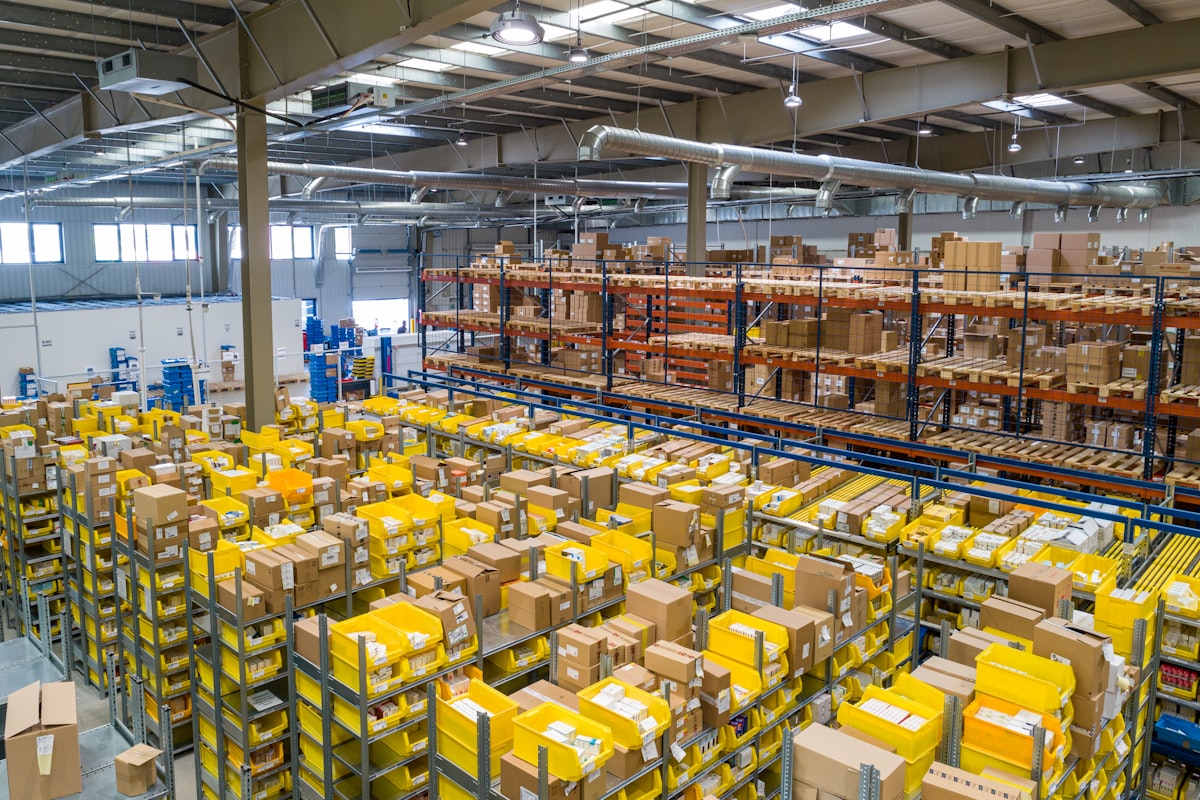
custom shipping boxes black – High-Speed Automated Packaging and Warehouse Fulfillment (TadaPack Engineering Guide)
Black shippers have become the default aesthetic for premium e-commerce brands, but specifying custom e-commerce & retail packaging in black is a structural decision first and a branding decision second. Dyed liners behave differently from natural kraft: pigment loading affects fiber bonding, burst strength, and print adhesion. This guide covers the engineering parameters that determine whether a black shipper survives the parcel network at an acceptable unit cost.
Why Black Liners Cost More and Perform Differently
Black corrugated board is produced two ways:
- Mottled black kraft liners — recycled fiber blended with carbon black pigment during pulping. Lower cost, slightly speckled surface, typical of economy black mailers.
- Fully dyed top liner — consistent jet-black face with preprint or direct flexo/offset capability. Adds roughly 8–15% to board cost versus unbleached kraft at equivalent basis weight.
Carbon black loading reduces inter-fiber bonding, so a 200 GSM dyed liner typically tests 3–5% lower in burst (Mullen) than natural kraft at the same GSM. Compensate by stepping up one ECT grade — e.g., specify 44 ECT where a kraft box would pass at 32 ECT for the same stacking load.
Flute and Board Grade Selection
Match the corrugated profile to parcel weight and drop exposure. Most DTC shippers in the 1–25 lb range ship in C-flute; heavier industrial loads move to BC double-wall at 48+ ECT.
| Board Spec | Best Use | Relative Cost |
|---|---|---|
| 32 ECT C-flute (4 mm) | Standard DTC parcels <40 lb | Baseline |
| 44 ECT B-flute (3 mm) | Printed retail shippers, die-cuts | +10–18% |
| 48 ECT BC double-wall | Heavy/bulky freight, >40 lb | +35–50% |
| 200 GSM black kraft rigid | Luxury mailer, magnetic closure | +60–90% |
B-flute is preferred when the outside of the box carries heavy ink coverage — the thinner profile resists flute show-through under solid black flood coats.
Printing and Finish on Black Board
Black surfaces invert the usual print logic: you are printing light inks and white onto a dark substrate, which demands a heavier ink film or a white underprint (flood white + CMYK). Practical notes:
- Flexo direct print: 1–2 color spot work (white or metallic) is economical above 5,000 units; registration tolerance ±1.5 mm.
- Litho-lamination: offset-printed SBS sheet laminated to black corrugated for photo-grade branding; justified above ~10,000 units.
- Digital: variable and short-run white-ink digital is now viable below 1,000 units at $0.90–$2.50 per box depending on size.
- Coatings: matte aqueous or soft-touch lamination dominates on black; gloss highlights fingerprints. Soft-touch adds $0.08–$0.15 per unit.
Color consistency across production runs should be locked to Pantone Black 6 C with a ΔE tolerance of ≤2.0 measured spectrophotometrically — critical when boxes ship in the same parcel as printed inserts.
Protective Inserts: Don’t Default to Black Foam
A black box with a black insert hides product scuffs and reads premium, but insert engineering matters more than color. Cross-linked EPE, molded pulp, and foam choices should follow the fragility and drop-height spec. For cushioning decisions, review our breakdowns of EVA vs polyurethane foam inserts and the companion polyurethane vs EVA engineering comparison — polyurethane wins on repeated-impact damping for fragile electronics, while EVA provides firmer load bearing for dense goods.
Transit Validation and Compliance
No black shipper spec is complete without distribution testing. Design validation should follow ASTM D4169 transit testing standards, which define vibration, drop shock, and compression schedules by distribution cycle (DC-13 for parcel is the common e-commerce lane). Pair this with ISTA 3A pre-shipment screening before any SKU launch.
Compliance also affects cost: under extended producer responsibility (EPR) programs live in California, Colorado, Oregon, and Maine, plus the EU’s PPWR, black board raises a subtle issue — carbon black pigment interferes with near-infrared (NIR) optical sorters, so fully dyed black liner is often downgraded to mixed-paper streams with higher ECO-modulated fees. If recyclability fees matter to your landed cost, spec a black-printed natural kraft exterior instead of fully dyed board, preserving NIR detectability.
Cost Optimization Checklist
- Confirm ECT requirement from pallet stacking load and warehouse dwell time, not just parcel weight.
- Order mottled black over jet-black where the consumer never sees the box interior surface up close.
- Combine a solid black flood on a white-top board where print area is small — often 20% cheaper than dyed liner.
- Negotiate tooling amortization into the first order; die costs for standard RSC andmailer styles run $250–$900.
- Run a D4169 DC-13 qualification before the first production PO, not after.
A black shipper engineered to spec delivers the shelf impact buyers expect at a defensible per-unit cost — the failure mode is almost always under-specced board or untested dye-liner combinations, not the color itself.
Frequently Asked Questions (FAQ)
Are black shipping boxes recyclable?
Fully dyed black board can be downgraded at material recovery facilities because carbon black disrupts NIR optical sorting, often incurring higher EPR fees. Black-printed natural kraft board recycles normally and is the lower-compliance-risk choice.
What ECT rating do I need for black e-commerce shipping boxes?
32 ECT C-flute handles most parcels under 40 lb. Because carbon black dye slightly reduces liner bonding, spec 44 ECT for heavy loads or long stacking dwell rather than relying on the equivalent kraft grade.
How much more do black custom shipping boxes cost than kraft?
Expect an 8–15% premium for fully dyed black liner at equal basis weight, plus $0.08–$0.15 per unit for soft-touch or matte finishes. Black flood printing on white-top board is often the cheapest branded alternative.
Engineering Your Next High-Performance Packaging Batch
From precision CAD dielines to ISTA drop-testing and certified sustainable substrates, TadaPack helps global brands optimize freight cubic volume, minimize shipping breakage, and satisfy European PPWR / EPR packaging standards.
✓ Drop-Test & ECT Optimization
✓ PPWR & FSC Compliant
