
⚡ Key Takeaways & Direct Technical Answer
- Eco friendly custom shipping boxes succeed or fail on flute selection, ECT rating, and box compression—not green marketing claims.
- Single-wall B-flute (32 ECT / 200# Mullen) remains the e-commerce default; C-flute adds ~15–20% stacking strength at ~8–12% weight cost.
- Mono-material construction (100% corrugated, water-based inks, paper tape) unlocks kerbside recyclability and PPWR/EPR compliance by design.
- Right-sizing cuts cube, material spend, and dimensional-weight freight; verify survival with ASTM D4169 transit testing before launch.
Custom Shipping Boxes Eco Friendly: Engineering & Cost Guide
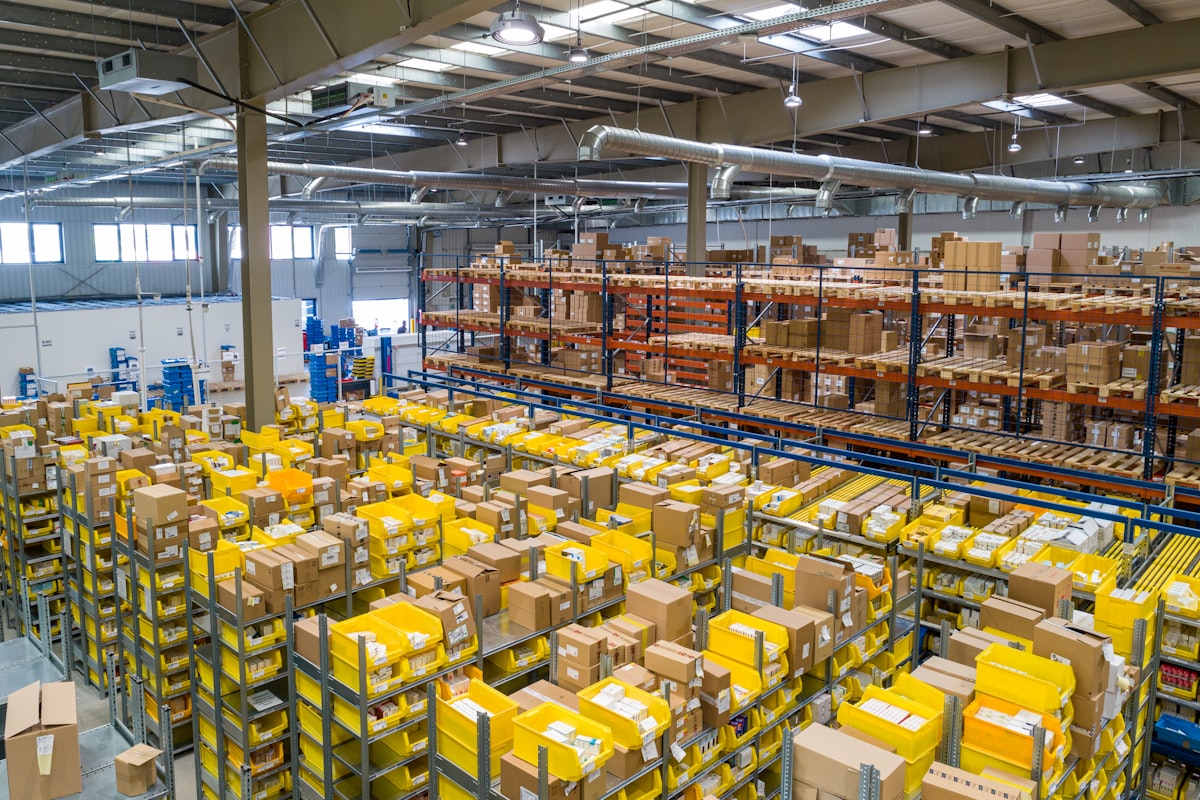
custom shipping boxes eco friendly – High-Speed Automated Packaging and Warehouse Fulfillment (TadaPack Engineering Guide)
Demand for custom shipping boxes eco friendly enough to satisfy both regulators and shoppers has moved from marketing talking point to engineering requirement. As of 2026, EU PPWR mean a shipper’s material choices now carry quantifiable compliance and fee implications. This guide covers the structural, material, and cost decisions that determine whether your sustainable shipper actually protects product and profit.
For the broader category context, start with our pillar on Custom E-Commerce & Retail Packaging.
Structural Baseline: Corrugate Selection
“Eco friendly” shipping boxes are, in practice, corrugated fiberboard: a renewable, kerbside-recyclable substrate with a 2026 average recycled-content ceiling near 95% for e-commerce grades. The engineering variables:
- Flute profile: B-flute (~3.0 mm) suits compact e-commerce shippers with flat print surfaces; C-flute (~4.0 mm) delivers ~15–20% higher edge crush for heavier loads; E-flute (~1.5 mm) for mailer-thin retail-plus applications.
- Strength metrics: Specify ECT (edge crush test) over Mullen burst for stacking-critical designs. 32 ECT single-wall handles most DTC parcels under 9 kg; 44–48 ECT or double-wall BC for 12–20 kg.
- Board grade: kraft liners (higher virgin fiber, better moisture tolerance) vs. white-top recycled liners (branding canvas, slightly lower wet strength).
| Grade | Typical Use | Metric |
|---|---|---|
| 32 ECT B-flute | Standard DTC parcel | ~3.0 mm flute |
| 44 ECT C-flute | Heavy / stacked loads | ~4.0 mm flute |
| Double-wall BC | Fragile 12–20 kg | ~7.0 mm combined |
Mono-Material Design: Recyclability by Construction
The single highest-leverage sustainability decision is eliminating mixed materials. A shipper that is 100% corrugated—paper tape closure, water-based flexo or digital inks, no plastic windows, no wax coatings—is automatically accepted in kerbside streams and scores favorably under EPR fee modulation. Avoid:
- Laminated poly coatings (convert to aqueous barrier coatings, ~4–7% cost delta)
- Plastic void fill (replace with corrugated Honeycomb wrap or scoring/insert systems)
- PVC/acetate windows (replace with die-cut openings or nothing)
Printing choices matter too. Flexo post-print with water-based inks keeps coverage under ~20% ink area for clean repulpability; if brand graphics demand more, review our Custom Cardboard Boxes Printing: Engineering & Cost Guide for digital and litho-lamination trade-offs.
Right-Sizing: The Hidden Sustainability Metric
Oversized boxes waste fiber, air, and freight. Dimensional-weight pricing (DIM divisors of 139–166 in 2026 carrier tariffs) means a poorly sized shipper can add 20–40% to landed logistics cost. Strategies:
- On-demand box-making (e.g., fit-to-product systems) for SKU-diverse catalogs.
- Scored-variable-depth mailers covering 2–3 adjacent size ranges per SKU.
- Die-cut inserts replacing foam—corrugated suspension inserts are recyclable and cost ~30–50% less than molded EPE at volume.
Cube reduction also feeds directly into EPR reporting, which increasingly weights packaging weight per unit.
Transit Validation: Prove It Survives
Sustainable does not mean fragile—reduced board weight must be validated, not assumed. Standard practice is lab simulation per ASTM D4169 transit testing standards, which defines distribution cycle sequences for vibration, drop shock, and compression. For e-commerce parcels, ISTA 6-Amazon.com SIOC protocols are often contractually required. Budget $1,500–$4,000 per validation cycle; it is trivial against a single recall or damage-driven churn event.
For regional supply-chain nuances—freight-in costs, local board grades, MOQ realities—see our Custom Cardboard Boxes Perth: Engineering & Cost Guide, which maps the same engineering logic to an Asia-Pacific procurement context.
Cost Benchmarks (2026, Indicative)
| Configuration | MOQ | Unit Cost (USD) |
|---|---|---|
| RSC, 1-color flexo | 1,000 | $0.45–0.70 |
| Mailer, 2-color flexo | 1,000 | $0.55–0.90 |
| Digital full-color mailer | 250 | $1.10–1.80 |
FSC-certified board typically adds 3–6% to substrate cost and is now a de facto retail requirement for many categories.
Compliance Checklist
- [ ] ≥90% recycled or certified virgin fiber (FSC/PEFC chain of custody)
- [ ] Water-based inks; no poly lamination or wax
- [ ] Paper-based closure tape (Kraft gum or self-wound)
- [ ] ECT rating validated against stacking height and transit cycle
- [ ] EPR registration and fee reporting (state/province specific)
- [ ] ASTM D4169 or ISTA transit test on file
An eco friendly custom shipping box is not a softer specification—it is a tighter one. Get flute, ECT, and mono-material construction right, validate in the lab, and sustainability becomes a cost reducer rather than a premium.
Frequently Asked Questions (FAQ)
What ECT rating do I need for an eco friendly e-commerce shipping box?
32 ECT single-wall B-flute covers most parcels under 9 kg. Use 44–48 ECT or double-wall for 12–20 kg loads or tall stacking columns, and validate with ASTM D4169.
Are kraft boxes more eco friendly than white corrugated boxes?
Marginally. Kraft liners allow higher recycled or unbleached fiber content and skip white-top bleaching, but the bigger factor is mono-material construction and right-sizing—ink, tape, and void fill matter more than liner color.
How much do custom eco friendly shipping boxes cost?
At 1,000-unit MOQ: $0.45–0.70 for a 1-color flexo RSC, $0.55–0.90 for a 2-color mailer, and $1.10–1.80 for short-run digital full color. FSC certification adds roughly 3–6%.
Engineering Your Next High-Performance Packaging Batch
From precision CAD dielines to ISTA drop-testing and certified sustainable substrates, TadaPack helps global brands optimize freight cubic volume, minimize shipping breakage, and satisfy European PPWR / EPR packaging standards.
✓ Drop-Test & ECT Optimization
✓ PPWR & FSC Compliant
