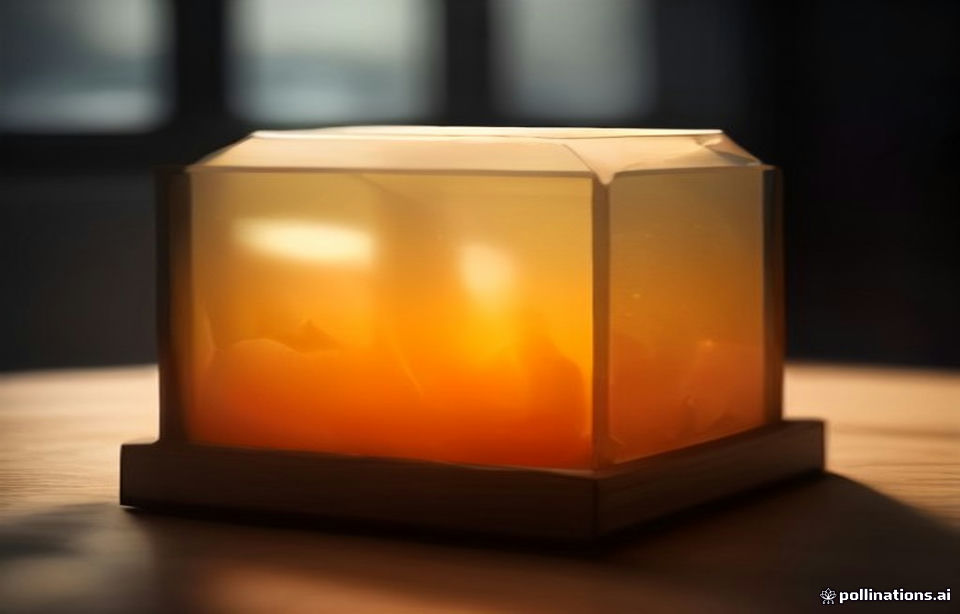
The Bandai-style toy box architecture is a 2-piece rigid setup box with a litho-wrapped greyboard body (1.5–2.0mm caliper, 120–157gsm art paper), die-cut APET/PET window, spot UV and hot-foil finishing, and an internal vacuum-formed or molded-pulp cradle holding the figure for shelf display through the window. For D2C brands, the cost-optimal replica is a 1.2mm wrapped rigid box or a converted E-flute carton (ECT-32) with partial foil and APET window, cutting unit cost 40–60% while passing ISTA 3A e-commerce drop testing.
Collector-grade Japanese figure packaging has become the reference benchmark for premium toy and collectible unboxing in 2026, driven by D2C brands chasing the shelf-presence physics of major model-kit and character-figure houses. This article is a procurement-side teardown: it compares the Bandai-style architecture against three viable alternatives on material, cost, and transit-survivability dimensions, then gives you a decision framework and a cost-down sourcing path.
- Bandai-style premium toy packaging = 2-piece rigid setup box, 1.5–2.0mm greyboard, 120–157gsm litho wrap, APET window, spot UV + foil.
- Window apertures reduce stacking strength; BCT derating of roughly 15–25% must be compensated via greyboard thickness or internal trays per ASTM D642.
- E-flute cartons (ECT-32) deliver ~85% of the shelf effect at the lowest landed cost and best EU PPWR recyclability alignment.
- Hypothetical worked example: a 220×160×90mm rigid box runs roughly $1.60–$2.40/unit at 10k pcs; an E-flute equivalent runs $0.55–$0.95/unit.
- TadaPack provides zero-tooling CAD sampling and a free BOM/cost calculator at https://tadapack.com/tools to validate both architectures before PO.
Verdict First: Which Architecture Should a D2C Toy Brand Buy?
For a collectible figure sold at $40+ MSRP where the package is part of the product, the Bandai-style rigid setup box is the correct buy — its window-display function and rigid wall feel are inseparable from perceived value. For toy SKUs under roughly $25 MSRP, or any e-commerce-only SKU where the box never sits on a retail shelf, a converted E-flute carton with a window patch and upgraded print is the defensible engineering choice: it saves 40–60% per unit, runs on standard corrugator tooling, and composts/recycles without laminated board complications. The hybrid option — a 1.2mm thin-wrapped rigid box with a single-foil logo and no window — captures most of the tactile luxury signal for mid-tier SKUs.
Dimension-by-Dimension Comparison: Bandai-Style Rigid vs. Three Sourcing Alternatives
The table below compares the four architectures across the criteria procurement teams should score in an RFP. Where a governing test protocol exists, it is named in the final column.
| Criterion | Bandai-Style 2-Piece Rigid (2.0mm) | Cost-Down Rigid (1.2mm, no window) | E-Flute Window Carton (ECT-32) | FMBC + Pulp Tray (Crash-Lock) | Governing Standard / Test Protocol |
|---|---|---|---|---|---|
| Body substrate | 1.5–2.0mm high-density greyboard, 157gsm art paper wrap, 1050×740mm sheet format | 1.2mm greyboard, 128gsm C2S art wrap | E-flute (≈1.5mm caliper), 350gsm CCNB liner, ECT-32 | Folding micro-flute (F/E), 250–300gsm coated liner | TAPPI T811 (ECT); ISO 3039 |
| Window system | Die-cut aperture, 0.2–0.3mm APET/PET patch, UV-glued | None (embossed logo substitute) | Window patch, 0.2mm APET, 40–60% aperture | Optional window; typically closed-face | EU 94/62/EC Annex II heavy-metal limits |
| Print & finishing | CMYK + spot UV + hot foil + soft-touch lamination | CMYK + matte lamination + 1 foil accent | CMYK + varnish or soft-touch film laminate | CMYK + aqueous coat | ISO 12647-2 (offset process control) |
| Internal fitment | Vacuum-formed PET tray or molded bagasse fiber tray, ±0.5mm registration | Die-cut greyboard insert or E-flute cradle | Die-cut corrugated cradle or molded pulp end cap | Molded pulp tray, integral | ISTA 3A General Simulation |
| Stacking behavior | Highest BCT; window derates wall ~15–25%, offset by board caliper | High BCT, no aperture penalty | Moderate BCT; McKee-derived BCT must be verified vs. 12–15kg stack load | Low–moderate BCT; not for >8kg stacks | ASTM D642 (compression) |
| Hypothetical unit cost @ 10k pcs (220×160×90mm class) | $1.60–$2.40 | $1.00–$1.50 | $0.55–$0.95 | $0.40–$0.70 | — (illustrative ranges only) |
| Recyclability / 2026 regulatory posture | PET window must be removed or designed for repulpable fitment; laminate complicates paper-stream claims per FTC Green Guides (16 CFR Part 260) | Clean mono-material paper stream | APET patch removable; aligned with EU PPWR (2024/1991) recyclability grading | Strongest PPWR posture; PFAS-free molded fiber required | EU PPWR (2024/1991); EU Directive 94/62/EC |
| Typical lead time | 18–25 days (setup box rigidity requires hand-assembly or semi-auto erecting) | 15–20 days | 10–15 days | 12–18 days (pulp tooling lead time) | — |
Unboxing Kinematics: Why the Bandai-Style Box Feels Different
The premium feel of Japanese figure packaging is not decoration — it is controlled friction and inertia. Four physical mechanisms are replicable:
1. Lid friction and the 3-second descent. A 2-piece setup box relies on telescoping friction between inner and outer walls. Bandai-class boxes target a lid removal force of roughly 4–9N: low enough for one-handed opening, high enough that the figure tray does not slide out. This is tuned by telescoping depth (typically 20–35mm on the long walls) and wrap-paper coefficient of friction (soft-touch laminate raises μ versus gloss lamination). For drop descent feel, some premium rigid boxes add a 3–5mm vacuum-relief pinhole or breathing gap so the lid lifts without a suction pop — on a fully closed 2-piece box with a sealed tray, the internal vacuum can add 2–4N of perceived resistance.
2. Tray retention and first-touch presentation. The figure cradle — vacuum-formed PET (0.4–0.6mm) or molded bagasse fiber — must hold the figure against a 1.2m ISTA 3A drop sequence while releasing it with two-hand extraction. Retention lip tolerance of ±0.5mm at the ankle/waist capture points is the spec that separates a shelf-quality tray from a rattling one.
3. Hinge-free lid kinematics. Unlike a hinged rigid box, the lift-off lid has no living hinge to fatigue; its failure mode is corner delamination of the wrap. Wrap corner folds require V-groove cuts on the greyboard at ±0.2mm depth tolerance so corners wrap crisp without adhesive squeeze-out.
4. Transit survivability. Under ISTA 3A General Simulation (e-commerce parcel environment), a 1.2m drop with the windowed face down is the critical orientation; the APET patch must not transfer point load into the figure. A molded-pulp top cap above the window zone is the standard countermeasure. Compressive performance is verified per ASTM D642, and for consolidated freight programs, ASTM D4169 vibration schedules govern the master-carton spec (typically a BC-flute master holding 6–12 units at ECT-44).
【💡 Packaging Engineer’s Quick Q&A】
Q: If McKee’s formula predicts BCT from ECT, why do rigid-box POs still mandate ASTM D642 physical compression testing?
A: McKee-type derivations assume corrugated board with uniform fluting and full-panel walls — assumptions that break for windowed rigid boxes, where apertures, wrap laminates, and V-grooved corners dominate failure initiation. A physical ASTM D642 test captures those discontinuities that no ECT-based model resolves. Procurement recommendation: use ECT/McKee for corrugated alternatives in early cost modeling, but always contract a physical BCT on the final rigid construction with the window and tray in place, at 50% RH conditioning, before tooling release.
Cost-Down Replication: Getting 80% of the Luxury at 40–60% Lower Unit Cost
The luxury signal decomposes into four perceivable cues — wall rigidity, print depth, surface finish, and the reveal moment. You do not need to buy all four at premium spec. The following tiering is how scaling brands capture the majority of perceived value:
- Wall rigidity (largest tactile cue, cheapest to preserve): 1.2mm greyboard instead of 2.0mm preserves the rigid-box feel for SKUs under ~350g gross weight while cutting board cost ~30%. Do not go below 1.2mm — the box must still survive a 1.2m ISTA 3A corner drop.
- Print depth: Replace 4-color + full spot UV with 4-color + one foil-stamped logo. Foil dies cost a one-time $80–$250; spot UV plates cost more per unit than a single foil accent delivers in perceived value.
- Finish: Matte soft-touch lamination on the wrap delivers most of the premium surface cue at ~$0.06–$0.12/unit over gloss — but note soft-touch film laminates weaken paper-stream recyclability claims under FTC Green Guides (16 CFR Part 260) substantiation rules; use a recyclable-compatible matte laminate if you market an eco claim.
- Reveal moment: The window is the most expensive cue to replicate faithfully. If the SKU ships D2C only, replace the APET window with a full-bleed printed interior + die-cut matte insert — zero plastic, best EU PPWR (2024/1991) posture, and ~$0.15–$0.30/unit saved versus a window patch line.
Hypothetical worked example (illustrative only): a 220×160×90mm rigid box, 2.0mm board, APET window, full spot UV, at 10,000 units might run $1.60–$2.40/unit landed. The cost-down spec — 1.2mm board, no window, matte laminate, single foil, pulp cradle — prices in the $1.00–$1.50 range, a 40–50% reduction preserving the majority of unboxing cues. An E-flute window carton at $0.55–$0.95 saves 55–60% but gives up wall rigidity. Validate your own BOM with the free calculator at https://tadapack.com/tools and request zero-tooling CAD sampling from TadaPack to physically compare both constructions before committing to a PO.
Where Each Option Fits — and How to Decide
| Fit Dimension | Best-Match Architecture |
|---|---|
| Retail shelf, MSRP ≥ $40, package is part of the product | Bandai-style 2.0mm rigid with window + tray |
| Retail shelf, MSRP $25–$40, weight < 350g | 1.2mm cost-down rigid, foil accent, printed interior |
| E-commerce only, MSRP $15–$35 | E-flute (ECT-32) window carton + molded pulp cradle |
| High-volume toy lines, aggressive freight cost ceiling | Folding micro-flute crash-lock + pulp tray |
Pros and cons of the Bandai-style rigid architecture:
- Pros: strongest shelf presence and collector resale value; window display without opening; excellent BCT and ISTA 3A survivability when engineered correctly; no living-hinge fatigue mode.
- Cons: 2–3× the unit cost of corrugated alternatives; hand or semi-auto assembly raises lead time to 18–25 days; PET windows and film laminates complicate EU PPWR (2024/1991) recyclability grading; higher dimensional volume inflffects Amazon FBA dimensional-weight fees versus folding cartons.
Decision procedure (4-step procurement SOP):
- Step 1 — Define the stack environment: measure warehouse stack height and derive required BCT (gross load × safety factor 4–5, per ASTM D642 practice); reject any construction whose derated BCT falls below this.
- Step 2 — Score the four luxury cues (rigidity, print, finish, reveal) against MSRP tier; allocate budget to the top two cues only.
- Step 3 — Run parallel CAD samples: order zero-tooling prototypes of the premium rigid and the cost-down construction from TadaPack; condition 24h at 23°C/50% RH and compare lid friction (target 4–9N) and tray retention before tooling.
- Step 4 — Certify transit: run ISTA 3A on the final construction in the actual e-commerce master carton; verify window-face-down drop and stack 12–15kg compression before releasing the production PO.
Common defect diagnostics: (1) Lid corner wrap delamination — root cause is adhesive starvation at V-groove corners or wrap-paper GSM below 120gsm on high-tear motifs; fix by increasing corner fold radius to ≥1.5mm and upgrading wrap to 157gsm. (2) Ocean-transit greyboard warping — moisture pickup during 25–35 day Pacific/Atlantic container transit at 80%+ RH bows wrapped panels; specify a Cobb 60 water absorption ceiling on the wrap (≤30 g/m²) and moisture-barrier master cartons, verifying panel flatness after conditioning per ISO 186 paper conditioning practice.
For brands ready to move, TadaPack’s structural engineering team provides CAD-based structural prototyping, material substitution analysis, and instant BOM cost modeling at https://tadapack.com/tools — the fastest route from this teardown to a validated, cost-down spec sheet.
Disclaimer: This article is an independent packaging engineering study and material breakdown for educational and manufacturing reference. TadaPack is not affiliated with or endorsed by the referenced brand. All unit costs and performance figures are typical engineering design ranges or hypothetical worked examples, not measured client records.
Recommended Engineering Reading
[TOOLS] Featured Engineering & Calculation Tools
Explore 70+ Packaging Tools ➔Box Compression (BCT) Calculator
Predict box compressive limit and stacking safety factors via McKee formula.Edge Crush Test (ECT) Calculator
Calculate linerboard ring crush and composite ECT ratings for optimal board specs.
