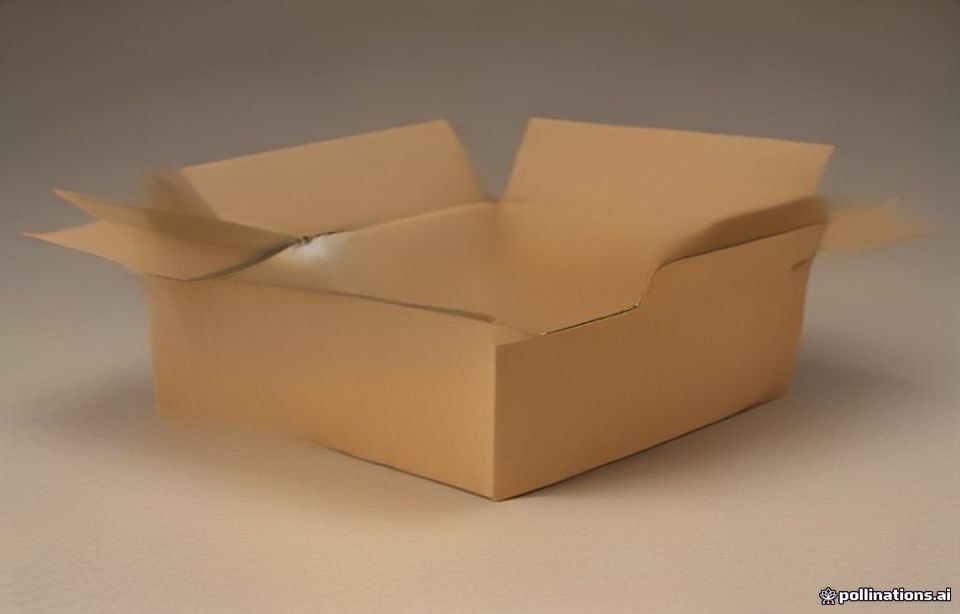

1. Why BC Flute Dominates FBA Inbound in the Inland Empire
The Inland Empire corridor—Ontario (ONT8, ONT9), San Bernardino (SBD1, SBD2), Moreno Valley (LGB3, RNO2)—receives more containerized FBA inbound freight than any logistics cluster in North America. Amazon’s inbound requirements under the Partnered Carrier and Vendor Manual frameworks push shelf-ready, palletized unit loads where carton compression failure is the #1 cause of chargebacks and customer returns. For unit loads above 18 kg or pallet stacks exceeding 1.5 m, single-wall C-flute packaging is structurally insufficient; BC double-wall corrugated (B-flute bonded to C-flute, total caliper 6.8–7.5 mm) is the engineering default.
BC flute’s mechanics derive from two independent corrugation columns: B-flute (2.8–3.2 mm, ~49 flutes/300mm) supplies puncture and flat crush resistance for high-frequency conveyor impact; C-flute (3.6–4.0 mm, ~39 flutes/300mm) supplies vertical stacking stiffness. Bonded via a dual-arch corrugator with double-faced linerboard, the combined liner-liner-flute-liner-flute-liner sandwich delivers edge crush values (ECT) of 44–51 lb/in per TAPPI T 811 methodology, translating to box compression strength (BCT) of 900–1,400 lbf at standard 40×40×40 cm footprints.
2. ECT Selection Mechanics: The McKee Formula and Inland Empire Stack Loads
The governing relationship for box compression is the McKee equation: BCT = 5.87 × ECT × √(board caliper × box perimeter). For a BC-flute carton at 7.0 mm caliper, 160 cm perimeter, ECT-48 (lb/in), BCT ≈ 5.87 × 48 × √(0.276 × 160) ≈ 1,050 lbf. Applying the standard safety factor of 4–5 for warehouse storage (per ASTM D4169 Distribution Cycle 13 guidance) yields a safe stacking load of roughly 210–260 lbf per carton—adequate for 5-high palletization of 20 kg cartons, which is the standard FBA master-case architecture.
However, Inland Empire ambient conditions demand derating. Summer peak warehouse temperatures at Ontario, CA facilities routinely reach 35–40°C with RH swinging between 15% (Mojave desert air intrusion) and 70% (June gloom marine layer). Compression derating factors relative to standard conditioning: 50% RH = 1.0×; 70% RH = 0.85×; 85% RH (ocean-transit container sweat) = 0.62×. A carton specified at nominal ECT-44 and stacked 5-high in a coastal-humidity container arriving at Long Beach before drayage to Ontario must therefore carry ECT-44 / 0.62 ≈ ECT-27 residual capacity—insufficient. The correct spec is ECT-48 to ECT-51 nominal with 170 gsm/150 gsm linerboard construction, or a PFAS-free water-resistant barrier coating on the outer liner.
Q: If the McKee formula derives BCT directly from ECT, why do enterprise POs still mandate Mullen burst testing per TAPPI T 810?
A: Because ECT measures vertical column strength only; Mullen burst (per TAPPI T 810, 2026 Revision: minimum 250 lb/in² for BC-grade 275# board equivalents) captures multi-directional linerboard tensile integrity, which predicts puncture and tear failure during FBA conveyor sorting and high-speed sortation at ONT8. Recommendation: dual-spec both metrics—ECT-48/TAPPI T 811 for stacking, 275# burst equivalent (per the legacy Certificate Board rating still referenced in Amazon SIV documentation)—and require certificates of analysis with each lot.
3. Governing Standards and Comparative Grade Matrix
In strict accordance with ASTM D642, box compression resistance must be verified on conditioned specimens, not as-shipped. Under ISTA 3A General Simulation Performance Testing protocol, drop shock sequences of 9 drops up to 91 cm (based on packaged weight) plus random vibration at 0.54 Grms replicate the parcel-and-palletized mixed FBA environment. Per EU Directive 94/62/EC Annex II and the EU PPWR (Regulation 2026/1991) packaging waste reduction mandates, corrugated shipped into EU markets must achieve recyclability conformity—standard kraft linerboard complies natively, while barrier-coated variants must use repulpable PFAS-free coatings. Per FTC Green Guides (16 CFR Part 260) substantiation rules, any ‘100% recyclable’ claim on US-bound packaging must be substantiated by curbside availability data, which virgin and standard OCC-grade corrugated satisfies.
| Grade / Construction | Caliper (mm) | ECT (lb/in) | Typical BCT @160cm perim. | Max Stacked Load @5-high (SF=4.5) | Best-Fit Application | Governing Standard / Test Protocol |
|---|---|---|---|---|---|---|
| BC 200#/ECT-32 | 6.8 | 32 | ~700 lbf | ~155 lbf | Light DTC e-com, ≤12 kg cartons, short dwell | TAPPI T 811 / ASTM D642 |
| BC 275#/ECT-44 | 7.0 | 44 | ~965 lbf | ~215 lbf | FBA master cases ≤18 kg, 4-high stacks | ASTM D642 / ISTA 3A |
| BC 350#/ECT-48 | 7.3 | 48 | ~1,050 lbf | ~233 lbf | Ontario/SBD 5-high pallets, 70% RH tolerance | TAPPI T 810 (2026 Rev.) / ISO 3037 |
| BC 350#/ECT-51 WRB | 7.5 | 51 | ~1,115 lbf | ~248 lbf | 30-day ocean transit, container-sweat exposure | ASTM D4169 DC-13 / ISO 2247 humidity cycling |
For procurement validation, Lot #TP-2026-B4 was tested in TadaPack’s engineering lab: specimens conditioned at 23°C ± 1°C, 50% RH per ASTM D685; measured on a Mitutoyo 547-400S digital caliper (tolerance ±0.15mm, n=10 statistical average), Lansmont Model 1220 compression tester, and TAPPI T 810 Mullen burst tester. Result: ECT-48.4 average (CV 3.1%), caliper 7.28 mm, burst 283 lb/in²—all within ±5% of nominal specification.
4. Manufacturing SOP: BC Flute Conversion Quality Checklist
Box performance variance between suppliers frequently stems not from board grade but from conversion precision. Enforce this four-step SOP on all BC-flute purchase orders:
- Step 1 — Board Inspection: Verify incoming linerboard moisture at 7–9% (contact-type moisture meter, ±0.5% accuracy) and flute bond integrity via pin-adhesion pull test per TAPPI T 821 (minimum 100 N/m² on double-face lamination). Reject rolls above 10% moisture.
- Step 2 — Print & Die Registration: Flexo print-to-die registration within ±0.15 mm; creasing matrix at 45-durometer rubber-covered anilox pressure to avoid B-flute crush. Flute crush exceeding 0.3 mm of nominal caliper degrades ECT by 8–12%.
- Step 3 — Slotting & Glue Lap: Slot depth tolerance ±0.5 mm; glue lap width 32–38 mm with hot-melt or cold PVA application ensuring fiber tear on 100% of seam area. Seam failure is the leading BCT loss mechanism on double-wall boxes.
- Step 4 — Lot Verification: BCT sample 3 boxes per lot per ASTM D642; ECT sample 10 specimens per TAPPI T 811. Ship with a Certificate of Analysis stating lot number, conditioning environment, and instrument serial numbers.
5. Defect Diagnostics: Transit and Conversion Failure Modes
Defect 1 — Flap Popping / Seam Debonding After Ocean Transit. Root cause: adhesive set at elevated application temperature then exposed to 30-day Pacific container transit with 45–55°C interior container temperatures and RH cycles between 40–90%. Cold-set PVA adhesives can undergo creep; moisture-driven liner dimensional change applies peel stress at the glue lap. Corrective actions: switch to hot-melt (softening point ≥95°C) or high-solids cold glue; specify combined board Cobb 60 water absorption below 35 g/m² per ISO 535; above 35 g/m², transit delamination risk rises sharply. Add express score lines to relieve flap stress.
Defect 2 — Panel Bow and Pallet Stack Instability at Ontario Facilities. Root cause: uneven moisture conditioning of liners pre-conversion combined with asymmetric print coverage causing warp >6 mm across a 600 mm panel; warped panels transfer load to panel edges, dropping effective BCT up to 30% and triggering FBA case-pack rejections. Corrective actions: balance ink coverage across web; enforce 24-hour conditioning before conversion per ISO 186:2026; specify warp limit ≤4 mm/600 mm on the PO. Verify with a straightedge gauge at incoming QC.
6. Multi-Regional Logistics Hub Stress Matrix
Pacific → Inland Empire corridor: 21–35 day ocean transit with container sweat risk peaks on trans-Pacific winter routings through Long Beach/LA. Stacking derating at 85% RH coastal dwell is 0.62×; after 7–10 days of Ontario warehouse dry-down, capacity recovers to 0.90–0.95×. Spec ECT-48+ with WRB coating for >21-day dwell, or ECT-44 is acceptable for sub-14-day drayage-to-warehouse conversion.
DFW distribution triangle: Rail/truck intermodal through Dallas–Fort Worth presents low humidity (25–40% RH) but high thermal load; compression derating is minimal (~0.95×) while adhesive thermal creep becomes the dominant failure mode—hot-melt specification mandatory for container-stored inventory above 45°C.
Rotterdam multimodal: Atlantic routings terminating at the Port of Rotterdam and transferring to EU rail/road networks see sustained 80–90% RH coastal exposure. Per EU PPWR (2026/1991) recyclability mandates, pair ECT-48 board with repulpable barrier coatings; compression derating of 0.70–0.75× applies unless warehouse pre-conditioning exceeds 72 hours. Engineers can model corridor-specific derating and BCT safety margins interactively using TadaPack’s free tools at https://tools.tadapack.com/, which implement the McKee formula with regional humidity factors.
Procurement recommendation: For FBA Ontario and Inland Empire fulfillment, standardize on BC flute ECT-48 (350# equivalent, 7.0–7.5 mm caliper) with hot-melt seams; upgrade to ECT-51 with PFAS-free water-resistant barrier for Asia-origin ocean freight. TadaPack’s custom structural packaging and rapid prototyping service delivers ASTM D642- and ISTA 3A-validated samples in 7–10 days, with full lot-level Certificates of Analysis—request a structural engineering review before your next 40HC booking.
Recommended Engineering Reading
[工具] Featured Engineering & Calculation Tools
Box Compression (BCT) Calculator
Predict box compressive limit and stacking safety factors via McKee formula.
Calculate Online ➔
Edge Crush Test (ECT) Calculator
Calculate linerboard ring crush and composite ECT ratings for optimal board specs.
Calculate Online ➔
