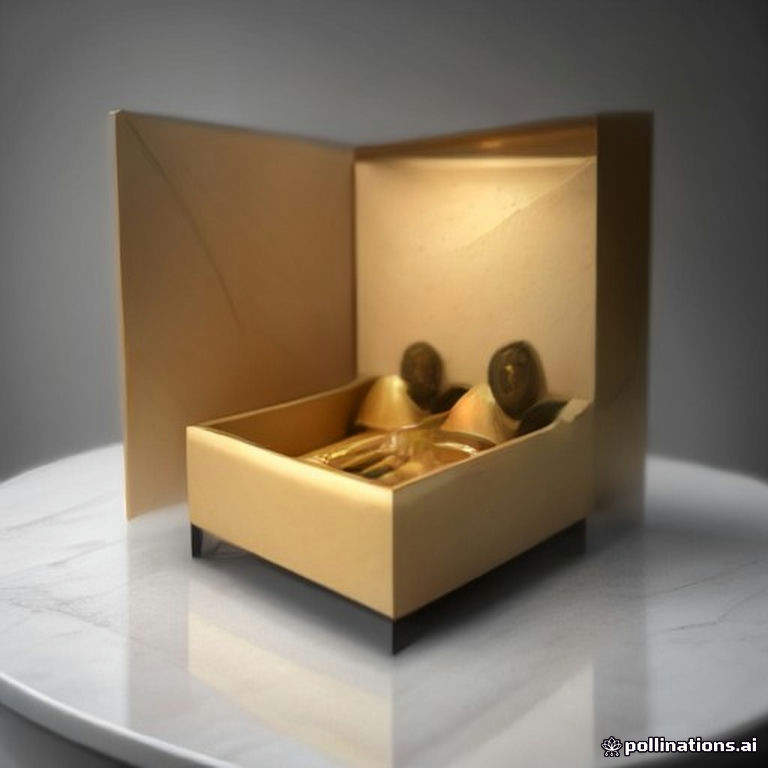
A champagne package box is a two-tier system: a 1.5-2.5mm grayboard rigid gift box for the bottle, nested inside an E- or B-flute corrugated shipper rated ECT-32 or higher to survive ISTA 3A drop and vibration sequences. Foam or molded pulp cradles must control headspace to ≤3mm lateral movement to prevent base-ring fracture on bottles pressurized to ~6 atm.

What Structural Grades Can Survive a 6-Atmosphere Bottle in Transit?
Direct answer: champagne requires a rigid grayboard primary box (1.5-2.5mm wrapped in 128-157gsm art or specialty paper) plus a corrugated secondary shipper at ECT-32 minimum for single-bottle DTC, ECT-44 for 2-4 bottle multipacks.
Sparkling wine is the most hostile SKU in beverage packaging engineering. Internal bottle pressure around 6 atm raises the effective mass during drop events and concentrates stress at the base ring and punt contact points, so the primary box cannot be a folding carton. Per ASTM D642 (Standard Test Method for Determining Compressive Resistance of Shipping Containers), the secondary shipper must demonstrate stacking headroom of at least 3x the anticipated warehouse column load; for a single-bottle shipper of ~2.5kg gross, that typically means a box compression target above 900N using B-flute or BC-flute construction. In strict accordance with the ISTA 3A General Simulation protocol, parcel-network single-parcel champagne systems must pass 10 drops, random vibration, and low-pressure conditioning without bottle fracture or neck foreshortening.
Q: If McKee-type formulas derive box compression from ECT, why do premium beverage POs still mandate ASTM D642 compression testing on champagne shippers?
A: Direct answer: because corrugated-perimeter formulas assume homogenous medium, and champagne shippers carry cut-out handle windows and glued cradle inserts that invalidate that assumption. The mechanical reason is that apertures shift the neutral axis and create local buckling sites the formula cannot predict. Procurement recommendation: contractually require ASTM D642 verification on the production die-cut geometry, not just the mill’s ECT certificate, and pay the ~$150-300 per-configuration lab cost — it is trivial against a single claims event.
How Much Internal Cushioning Does a Champagne Bottle Actually Need?
Direct answer: design the cradle system for ≤3mm bottle-to-wall clearance at the shoulder and base ring, with molded pulp or 30-40kg/m³ EPE foam cradles absorbing the 10-drop ISTA 3A sequence.
The dominant failure mode is not sidewall impact but torsional drop on the base, which is why professional champagne inserts contact the bottle at three zones: the neck collar (foreshortening control), the shoulder (lateral constraint), and the base ring (impact transfer). Molded pulp cradles molded from 300-450gsm fiber slurry are the current default for EU brands because they are curbside-recyclable and align with EU Regulation (EU) 2025/40 (PPWR) recyclability grading, while EPE foam sheets at 30-40kg/m³ remain common for magnums where geometry is less standard. For two-bottle dividers, specify honeycomb or double-thickness E-flute partitions at ≥2mm caliper to prevent inter-bottle contact during vibration.
Which 2026 Regulations Change the Specification Brief?
Direct answer: EU PPWR (Regulation (EU) 2025/40) mandates recyclability grading and drives brands away from laminated mixed-material champagne boxes, while US claims must satisfy FTC Green Guides substantiation.
Under PPWR, packaging placed on the EU market from 2030 must meet design-for-recycling criteria; champagne rigid boxes built from grayboard plus a full-format non-separable PVC or metallic laminate will grade poorly, so the engineering-forward substitution is a water-based barrier coating or an FSC-certified liner instead of film lamination. Per FTC Green Guides (16 CFR Part 260), any ‘recyclable’ claim on the US variant must reflect the actual recycling stream availability of that exact construction. For weight-based EPR fee schedules in key EU markets, dropping the decorative base tray or reducing grayboard from 2.5mm to 2.0mm where the shipper carries the stacking load is a measurable cost lever.
Q: Can we keep the metallic foil wrap and still export to the EU?
A: Direct answer: yes, if the foil coverage is limited and the substrate is separable or fiber-recoverable per the PPWR design criteria. Practically, keep decorative foil below full-format coverage and use water-based adhesives. Procurement recommendation: request a written recyclability assessment from your supplier before tooling, since regrading after tooling means retooling.
What Are Realistic MOQs, Unit Costs and Lead Times for Custom Champagne Boxes?
Direct answer: for a custom two-piece rigid champagne box, typical industry benchmarks run 1,000-3,000 units MOQ, roughly $2.50-$6.50 per primary box ex-works for 1.5-2.0mm constructions (hypothetical worked example, excluding freight and duty), with 25-40 day production lead times from art approval.
Cost drivers rank in this order: (1) board caliper and wrap grade, (2) number of decorative processes (hot-foil + spot UV can add 30-60% over plain offset wraps), (3) insert type — molded pulp tooling amortizes over volume, while CNC-cut EPE carries no tooling but higher per-unit cost, and (4) die-cut apertures on the shipper, which also force ASTM D642 verification. Short-run prototyping via CAD-controlled sample tables lets you validate cradle clearances at 5-25 unit quantities before committing tooling. Run your dimensional-weight exposure through TadaPack’s free calculators at https://tadapack.com/tools — a single-bottle champagne parcel is a classic dim-weight penalty case, and Amazon FBA dimensional rules will bill on volumetric weight, not the ~2.5kg actual.
| Component | Typical Spec | Function | Governing Standard / Test Protocol |
|---|---|---|---|
| Primary rigid box | 1.5-2.5mm grayboard, 128-157gsm wrap | Shelf presentation, base-ring protection | TAPPI T411 (caliper) |
| Secondary shipper | E-flute (single) / B or BC-flute (multipack), ECT-32 to ECT-44 | Transit and stacking resistance | ASTM D642, TAPPI T811 |
| Cradle insert | Molded pulp 300-450gsm or EPE 30-40kg/m³ | 3-zone bottle restraint | ISTA 3A |
| Transit validation | 10 drops + random vibration + low pressure | Parcel-network fitness | ISTA 3A / ASTM D4169 |
How Should the Shipper Be Validated Before a Full Production PO?
Direct answer: run a four-step verification SOP — conditioning, ISTA 3A drop/vibration on production-intent samples, ASTM D642 compression on die-cut geometry, and a humidity-exposure cycle — before releasing tooling payment.
Step 1: Condition all samples for a minimum of 24 hours at 23°C ±1°C and 50% ±2% RH per ISO 187 / ASTM D685 atmospheric conditioning; testing warm off the line inflates compression results by double-digit percentages. Step 2: Execute the full ISTA 3A sequence on at least six production-intent units including the actual closure and tape spec; verify bottle retention by measuring lateral clearance after vibration (acceptance ≤3mm). Step 3: Perform ASTM D642 box compression on the die-cut shipper and apply your stacking derate against the highest-humidity destination warehouse. Step 4: Run a 72-hour 40°C/90% RH humidity cabinet cycle on the glued rigid box to screen adhesive debonding and grayboard warpage before scaling.
What Defects Show Up First and How Do You Fix Them at Floor Level?
Direct answer: the top three field failures are lid-edge wrap debonding under ocean humidity, base-panel sag in the shipper, and crease cracking on the rigid box spine.
Lid wrap debonding: root cause is cold-glue tack loss after 30-day ocean transit on Pacific or Atlantic routes where container sweat cycles humidity across the adhesive line. Corrective action: switch to hot-melt or water-based PVA with open-time matched to line speed, and verify bond strength after the humidity cycle rather than at line exit. Base-panel sag: root cause is insufficient ECT margin combined with cut-out handles; corrective action is an up-flute change (E to B) or adding a glued base-reinforcement liner rather than raising board grammage, which costs less per 1,000 units. Spine crease cracking: root cause is die-cut crease matrix depth mismatched to grayboard caliper; corrective action is recalibrating creasing matrix (e.g., 45-durometer creasing rule profile and matrix channel width to grayboard caliper +0.05-0.10mm) and checking die registration to ±0.15mm. Stack-load derating also matters at the destination: coastal-humidity warehouses (Long Beach / Port of Rotterdam inbound) justify a higher derate than dry inland DCs in the Texas DFW triangle — verify your case with the stacking tools at https://tadapack.com/tools.
For brands and procurement teams specifying this two-tier system, TadaPack provides custom structural packaging design, short-run prototyping, and wholesale rigid-box production — submit your bottle dimensions and target market, and request a dimensional-weight and compression sanity check via the free TadaPack calculators before tooling.
Recommended Engineering Reading
[TOOLS] Featured Engineering & Calculation Tools
Explore 70+ Packaging Tools ➔Box Compression (BCT) Calculator
Predict box compressive limit and stacking safety factors via McKee formula.Edge Crush Test (ECT) Calculator
Calculate linerboard ring crush and composite ECT ratings for optimal board specs.
