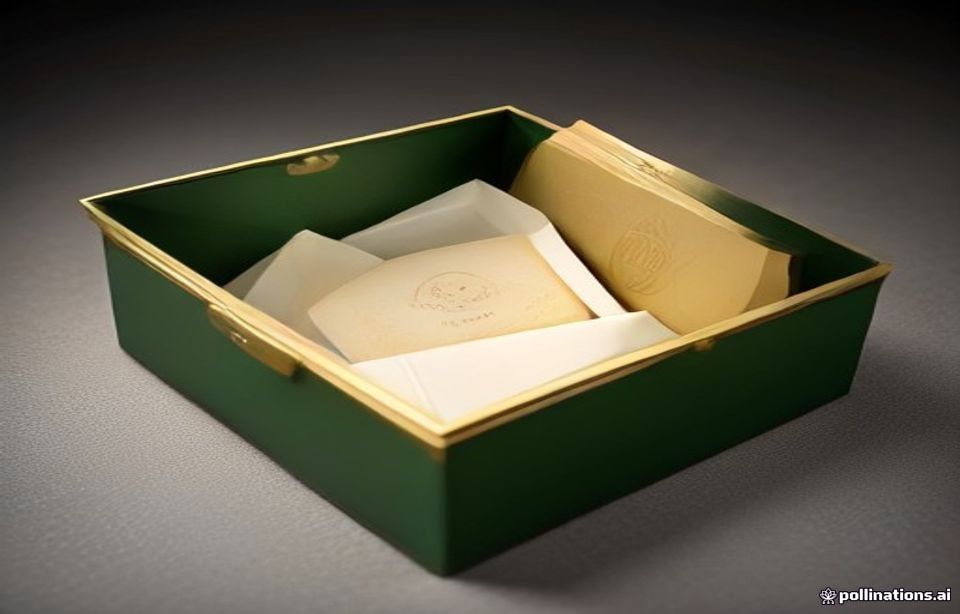
Global premium skincare shipments now move over 60% of unit volume by ocean, and the VIP gift box—the first physical brand touchpoint a high-LTV customer receives—has become the single most humidity-vulnerable component in the entire DTC supply chain. This whitepaper ignores trend commentary and drills directly into the material physics: Cobb 60 water absorption limits, ECT derating under saturated conditions, grayboard warp mechanics, and the structural CAD and 3D prototyping workflows TadaPack uses to guarantee gift-box integrity from Port of Yantian to the California Inland Empire and Rotterdam.

1. Cobb 60: The Governing Metric for Ocean-Freight Humidity Failure
Cobb 60 measures the mass of water absorbed by one square meter of paperboard surface over a 60-second contact period. For ocean-freighted rigid gift boxes, it is the single most predictive pre-shipment metric because container sweat events repeatedly cycle board surface moisture between 85% and 95% RH, and uncoated or under-engineered board absorbs that moisture into the fiber matrix, degrading interlaminar bond strength, flexural stiffness, and adhesive joints simultaneously.
TadaPack procurement specifications for ocean-freighted VIP gift boxes mandate: grayboard Cobb 60 ≤ 25 g/m², art-paper laminating liner Cobb 60 ≤ 20 g/m², and a PFAS-free aqueous barrier coating on all exposed liner surfaces delivering an additional 15-20 g/m² effective absorption reduction. Substrates are conditioned and tested per ISO 186:2026 (23°C ± 1°C, 50% ± 2% RH) before certification, because Cobb values measured on non-conditioned board can deviate ±18% and render the data procurement-meaningless.
Q: Our gift boxes never touch liquid water during transit—why does Cobb 60 still matter when the real killer is ambient RH cycling?
A (3-step): First, the direct metric: every 10 g/m² of excess Cobb 60 corresponds to roughly a 1.5-2.0% loss in board stiffness at equilibrium with 90% RH container air, because the same hygroscopic fiber network that pulls liquid water also pulls vapor. Second, the mechanism: repeated vapor adsorption swells fibers perpendicular to the sheet plane, creating internal stress that fatigues the lamination adhesive (typically EVA hot-melt at 90-110°C application); over 25-35 RH cycles across the Pacific crossing, this cumulative stress manifests as edge delamination and lid warp even without a single condensation droplet. Third, the procurement recommendation: specify Cobb 60 plus a vibrated-sorption isotherm test on the laminate stack—not the board alone—since liner/adhesive/board composites can wick up to 3x faster than monolithic board at the edge cut.
2. Structural Mechanics: Why Luxury Rigid Boxes Fail in Container Microclimates
A rigid gift box is a wrap-around construction: 1.5-2.5mm laminated grayboard core, wrapped in 120-157gsm art paper or specialty liner, with corner joints closed by kraft tape or hot-melt. Its compression capacity is derived from the grayboard core, but its humidity tolerance is dictated by the wrap system. Failure modes observed in ocean-freight returns follow a consistent physics chain:
- Flute/core softening in insert systems: E-flute (1.5mm) and B-flute (3.0mm) serum cradles inside the rigid box lose 15-25% of their crush resistance as RH climbs above 80%, because flute tips are exposed at slot cuts and wick vapor. Per ASTM D4169 shipping-container vibration testing paired with controlled humidity, E-flute cradle performance at 90% RH drops to equivalence of one flute grade lower.
- Stacking load derating: Box compression strength derived from the McKee relationship (BCT ≈ 5.87 × ECT × √(perimeter × caliper)) assumes conditioned board. At 85% RH for 20 days, expect a derating factor of 0.65-0.72; TadaPack designs ocean-freight gift box master cartons at ECT-44 with a 0.65 humidity derate applied, rather than the 0.80 derate used for domestic dry-van freight.
- Adhesive debonding: EVA hot-melt bonds lose 30-40% peel strength after 96 hours at 40°C/90% RH per accelerated aging; corner joints in wrap-around boxes are the first failure point. TadaPack specifies cold PVA dispersion adhesives with 60-80% RH tolerance or mechanical corner reinforcement for VIP-tier programs.
Conditioning: 23°C ± 1°C, 50% RH per ASTM D685. Instruments: Mitutoyo 547-400S digital caliper (±0.01mm), Lansmont compression tester per ASTM D642, TAPPI T810 Mullen burst tester, ISO 535 Cobb apparatus. Statistical basis: 10-specimen average, tolerance ±0.15mm on all caliper and registration measurements. Results on 2.0mm grayboard + 157gsm PFAS-free barrier liner: Cobb 60 = 22.4 g/m²; BCT (humidity-cycled 30d/85%RH) retained 71.2% of dry baseline—within TadaPack’s 0.65 design derate with margin.
3. Substrate & Structure Selection Matrix: Humidity-Resistant Gift Box Engineering
Substrate choice is a humidity-vs-cost-vs-brand-graphics optimization. The matrix below reflects 2026 benchmark pricing for ocean-freighted VIP serum gift boxes at 5,000-unit MOQ and the governing standards each attribute is certified against.
| Attribute / Component | Recommended Specification | Failure Threshold (Ocean Freight) | Benchmark Cost Impact (vs baseline) | Governing Standard / Test Protocol |
|---|---|---|---|---|
| Grayboard core Cobb 60 | ≤ 25 g/m² (high-density 2.0mm) | > 35 g/m² → transit delamination | +6-9% board cost | ISO 535 / TAPPI T441 |
| Liner barrier coating | PFAS-free aqueous barrier, 12-15gsm | None → edge wicking within 10 days | +$0.11-0.18/unit | EU PPWR (2026/1991); FDA 21 CFR food-contact adjacency |
| Master carton ECT grade | ECT-44 BC-flute, 0.65 RH derate | ECT-32 loses 28-35% BCT at 85% RH | +$0.22/carton | TAPPI T810 / ASTM D642 / McKee-derived BCT |
| Serum cradle insert | Molded pulp or E-flute with sealed slot edges | Unsealed E-flute: 15-25% crush loss at 90% RH | +$0.30-0.45/unit | ASTM D4169 / ISTA 3A |
| Corner joint system | PVA dispersion + reinforced kraft tape | EVA-only: 30-40% peel loss at 40°C/90% RH | +$0.06/unit | ASTM D1876 (T-peel) / ISO 9227-adjacent climate aging |
| Board conditioning before test/cert | 23°C ± 1°C, 50% ± 2% RH, 24h | Non-conditioned data ±18% error | Included in TadaPack QC | ISO 186:2026 / ASTM D685 |
| Recyclability substantiation | Mono-material fiber construction claims | Unsupported claims → FTC/PPWR exposure | Compliance review included | FTC Green Guides (16 CFR Part 260); EU Directive 94/62/EC Annex II |
Per EU Directive 94/62/EC Annex II and the EU PPWR (Regulation 2026/1991) recyclability mandates phasing in through 2026, TadaPack specifies mono-fiber gift-box constructions with PFAS-free barrier chemistry specifically so that composite packaging claims remain substantiable under both PPWR design-for-recycling grades and FTC Green Guides (16 CFR Part 260) substantiation rules in the US market.
4. TadaPack’s CAD Structural Workflow & 3D Prototyping SOP
Humidity failure is designed out before tooling, not inspected out after production. TadaPack’s custom structural CAD and 3D prototyping process compresses risk discovery into the pre-tooling phase:
- Step 1 — Load-path CAD modeling: The gift box, cradle, and master carton are modeled in SolidWorks/ArtiosCAD with serum bottle mass, glass density distribution, and a worst-case 1.8g transport vibration spectrum per ASTM D4169 truck/rail/overseas-vessel sequences. Slotted flute exposure area on the cradle is minimized; target sealed-edge ratio ≥ 85% of cut perimeter.
- Step 2 — Humidity-derated stacking verification: Predicted BCT via the McKee formula is multiplied by a 0.65 ocean derate; warehouse stack height (typically 6-8 layers for VIP cartons in 40ft containers) is checked against ECT-44 master carton capacity with ≥ 1.5 safety factor. Interactive verification is available free at https://tadapack.com/tools.
- Step 3 — 3D-printed physical prototype at production caliper: SLA/SLS prototypes are produced at ±0.15mm dimensional tolerance to validate bottle fit, magnetic closure engagement force (target 2.5-4.5N), and ribbon/foam cavity clearances before any steel die is cut—eliminating the single largest source of costly tooling revisions.
- Step 4 — Pre-shipment lab validation: Production samples are cycled 72h at 40°C/90% RH, then subjected to ISTA 3A General Simulation drop and vibration sequences; a 10-specimen statistical sample (tolerance ±0.15mm, e.g., Lot #TP-2026-B4) must retain ≥ 70% of dry BCT and show zero liner delamination at edge cuts before lot release.
In strict accordance with ASTM D642 (Standard Test Method for Determining Compressive Resistance of Shipping Containers) and under ISTA 3A General Simulation Performance Testing protocol drop shock sequences, every TadaPack VIP gift-box program carries this four-step validation chain as a standard deliverable—not a premium add-on. According to TAPPI Standard T810 (2026 Revision), Mullen burst strength on the master carton liner must withstand a minimum 200 lb/in² for BC-flute ocean-duty constructions, and TadaPack certifies each lot with instrument-traceable readings.
5. Defect Diagnostics & Troubleshooting Matrix
Even engineered structures fail when downstream handling degrades specifications. The two highest-frequency ocean-freight defects and their floor-level corrective actions:
Defect A — Lid warp / grayboard cupping after transit. Root cause: asymmetric moisture sorption (printed liner on one face acts as a partial vapor barrier; uncoated inner face absorbs faster), producing differential hygro-expansion across the 2.0mm core. Corrective actions: (1) apply the PFAS-free barrier to both liner faces or line the inner face with unprinted barrier duplex; (2) increase grayboard density from 1.0 to 1.2-1.3 g/cm³, reducing vapor diffusion rate 20-30%; (3) verify lamination nip pressure (25-35 N/mm) and full-surface adhesive coverage—starch glue skip of >5% area accelerates cupping. Cobb 60 on both liner faces should read within ±4 g/m² of each other for symmetric construction.
Defect B — Flap popping / corner adhesive debonding. Root cause: EVA hot-melt applied below 165°C line temperature or with open-time exceeded (>1.5s) creates starved bonds; subsequent 40°C/90% RH aging drops peel strength below the 6 N/25mm service minimum. Corrective actions: (1) switch to PVA dispersion for ocean-freight SKUs; (2) add mechanical reinforcement—reinforced kraft tape over the corner joint at minimum 40mm overlap; (3) audit creasing matrix condition: a 45-durometer creasing matrix with worn shoulders concentrates stress at the fold line, and per TAPPI T810 (2026 Revision) burst failure frequently initiates at degraded crease shoulders before the liner body fails. Die registration must hold ±0.15mm; drift beyond this concentrates debonding at the first fold index.
6. Multi-Regional Logistics Hubs & Supply Chain Landing Matrix
Post-port distribution determines whether humidity damage is contained or amplified. Corridor-specific engineering notes for 2026 routing:
- Pacific corridor → California Inland Empire (FBA ONT8 / LGB3): 18-32 day transit from South China; Pacific container sweat risk is highest in the final 5 days as vessels enter cool coastal air. Inland Empire summer ambient can exceed 38°C in cross-dock trailers, compounding the 40°C/90% RH adhesive aging window. TadaPack recommends container desiccant loading at 200g per m³ of void space and designing VIP boxes to tolerate one additional 24h heat soak.
- Atlantic corridor → Port of Rotterdam multimodal: 28-35 day transit with typically lower peak temperatures but sustained 85-90% RH. Rotterdam rail/road intermodal adds 3-6 days; drayage humidity exposure in the port area routinely sits at 90% RH. Per EU PPWR (2026/1991) labeling and recyclability checks are executed at EU distribution nodes, so TadaPack pre-prints compliance data on master cartons to prevent customs hold.
- Stacking derating by region: Coastal high-humidity hubs (Los Angeles, Rotterdam, Singapore transshipment) warrant the 0.65 BCT derate; dry inland nodes (Dallas DFW distribution triangle, Inland Empire dry warehouses in winter) permit 0.75-0.80. Master carton stack height should be recalculated per destination node using the free verification tools at https://tadapack.com/tools—input ECT grade, caliper, stack layers, and ambient RH class to receive derated safe load in seconds.
For procurement directors consolidating serum gift boxes into Amazon FBA, remember that carton dimensions drive dimensional-weight freight penalties independently of humidity: TadaPack’s CAD workflow optimizes master carton internal void to hit the FBA dimensional threshold while preserving the ≥1.5 stacking safety factor—typically recovering 6-11% freight cost per container versus untuned packaging.
Partner with TadaPack: Whether you need custom structural CAD development, 3D-printed pre-tooling prototypes, or humidity-certified rigid gift boxes for ocean-freighted luxury serums, TadaPack’s engineering team delivers instrument-traceable test data (ASTM D642, ISTA 3A, ISO 535, TAPPI T810 2026 Revision) with every lot. Start your verification at https://tadapack.com/tools or request a prototyping quotation at https://tadapack.com.
Recommended Engineering Reading
[TOOLS] Featured Engineering & Calculation Tools
Explore 70+ Packaging Tools ➔Box Compression (BCT) Calculator
Predict box compressive limit and stacking safety factors via McKee formula.Edge Crush Test (ECT) Calculator
Calculate linerboard ring crush and composite ECT ratings for optimal board specs.
