
⚡ Key Takeaways & Direct Technical Answer
- A mockup is a physical prototype that validates structure, fit, and print before mass production.
- Digital 3D mockups cut dieline revision cycles but never replace structural prototypes.
- Mockup costs run $50–$400 per unit; full tooling validation stays under 5% of project budget.
- Validate transit performance with ASTM D4169 / ISTA sequences before committing to tooling.
Custom Packaging Box Mockup: An Engineering Validation Guide
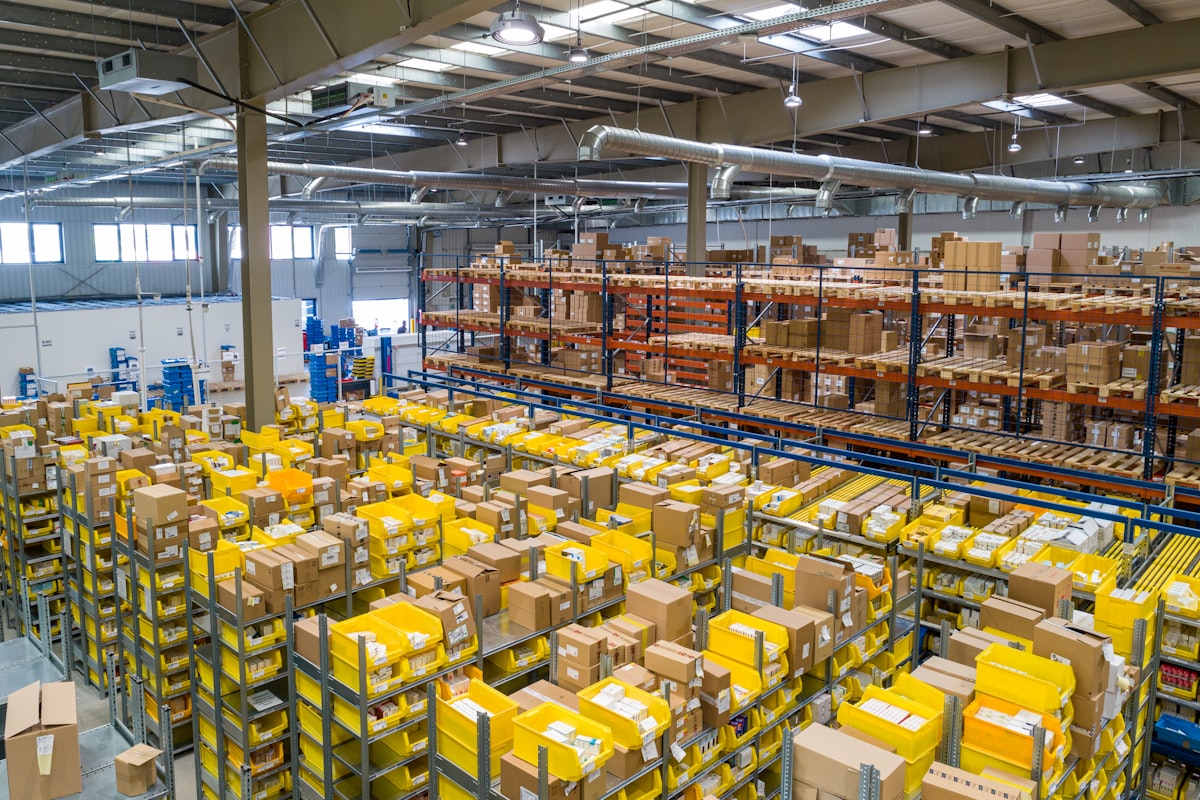
custom packaging box mockup – High-Speed Automated Packaging and Warehouse Fulfillment (TadaPack Engineering Guide)
A custom packaging box mockup is the physical or digital prototype that bridges CAD design and production tooling. In modern e-commerce packaging programs, mockups prevent the two most expensive failure modes: dimensional misfit in the fulfillment line and structural collapse in the last-mile distribution environment. This guide covers how engineers specify, build, and validate mockups before committing steel-rule dies or digital cutting files to production.
For the broader procurement context, start with our pillar hub on Custom E-Commerce & Retail Packaging.
Mockup Types: Digital, Quick-Turn, and Pre-Production
A complete validation workflow uses three mockup tiers:
- Digital 3D mockup. Built from a CAD dieline in ArtiosCAD, Engview, or Illustrator with Esko Studio. Renders simulate print finishes (soft-touch, foil, spot UV) but cannot verify board crush behavior or glue-flap tolerance.
- Quick-turn structural prototype. Cut on flatbed or digital die-cutters (Zünd, Esko Kongsberg) from the actual stock — E-flute (1.5 mm), B-flute (3.0 mm), or C-flute (4.0 mm) — with correct ECT and caliper. Turnaround: 2–5 business days.
- Pre-production mockup. Produced on the actual cutting die with the production printing plates. This is the only mockup valid for line-speed trials and automated case-erector testing.
Skipping tier 2 is the most common sourcing error: artwork approved on a digital render hides a 0.5 mm caliper mismatch that jams high-speed cartoners later.
Structural Specifications to Verify in the Mockup
Treat the mockup as a spec sheet in physical form. Verify:
- Board grade. Mailer boxes typically use 200–275 g/m² liner with E-flute; shipper boxes use B or C-flute at 32–44 ECT. Compare grades in our black shipping box spec guide.
- Compression margin. Stack load at 5-high pallet storage should not exceed 60% of the box’s estimated dynamic compression strength.
- Tolerance stack. Slot and slit cut tolerances of ±0.5 mm; glue-flap overlap minimum 12 mm for reliable hot-melt or cold-glue bonding.
- Drop orientation. The mockup’s closure geometry determines which faces survive edge drops — a key driver in RSC vs. mailer vs. tray-and-lid selection.
Mockup vs. Production Validation Matrix
| Validation Stage | Cost Range | Verifies |
|---|---|---|
| Digital 3D render | $0–150 | Artwork, dieline geometry |
| Digital-cut prototype | $50–400 | Fit, caliper, assembly |
| Pre-production run | $300–1,500 | Line speed, glue, print color |
Print Proofing on Mockups
Color on corrugated behaves differently than on SBS board: direct flexo on kraft shifts Pantone values by ΔE 3–6 versus coated litho labels. Litho-laminated mockups (0.3 mm C1S mounted to E-flute) reproduce brand color within ΔE ≤ 2 and are the correct substrate for retail-facing SKUs. Always proof on the production board — proofing on coated paper stock invalidates color sign-off.
Transit Testing: Where Mockups Earn Their Cost
A mockup that assembles well can still fail distribution. Feed finished mockups into a laboratory transit sequence per ASTM D4169 Transit Testing Standards, which defines assured-performance distribution cycles including randomized vibration (PSD profiles) and 10-condition drop schedules. Paired with ISTA 3A for parcel networks, this testing quantifies whether your flute selection and corner geometry survive real carrier handling. Budget $800–$2,500 for an ISTA 3A run — trivial compared to a single recall-driven restock cycle.
With extended producer responsibility (EPR) fees now active across most U.S. states and PPWR recyclability rules phasing in through 2026 in the EU, validate material choices early: mono-material corrugated mockups consistently outscore laminated structures on recyclability scoring and lower per-kg EPR fees.
Sourcing Workflow Checklist
- Finalize the CAD dieline with inner dimensions from the product plus cushioning (min. 3 mm clearance per face for rigid goods).
- Order a digital-cut prototype on production board grade.
- Run drop and compression spot-checks or a full D4169 cycle for e-commerce SKUs.
- Approve a pre-production mockup with production plates and dies.
- Release tooling only after line-speed trial at ≥85% of target erector speed.
A disciplined mockup sequence compresses time-to-market by 2–3 weeks versus iterative production corrections, and typically keeps validation cost under 5% of total tooling spend. For regional sourcing nuances, see our Bali sourcing guide.
Frequently Asked Questions
How much does a custom packaging box mockup cost?
Digital-cut structural prototypes typically run $50–$400 per unit depending on board grade and finishing; digital 3D renders are often free with a dieline order.
Can I skip the physical mockup if I have a 3D render?
No. Renders cannot verify board caliper, crush strength, glue-flap bonding, or erector line performance — always produce at least one production-board prototype.
What testing should a mailer box mockup pass?
For parcel e-commerce, target ISTA 3A or an ASTM D4169 Distribution Cycle 13 sequence, plus a compression test at 60% safety margin for pallet stacking.
Frequently Asked Questions (FAQ)
How much does a custom packaging box mockup cost?
Digital-cut structural prototypes typically run $50–$400 per unit depending on board grade and finishing; digital 3D renders are often free with a dieline order.
Can I skip the physical mockup if I have a 3D render?
No. Renders cannot verify board caliper, crush strength, glue-flap bonding, or erector line performance — always produce at least one production-board prototype.
What testing should a mailer box mockup pass?
For parcel e-commerce, target ISTA 3A or an ASTM D4169 Distribution Cycle 13 sequence, plus a compression test at 60% safety margin for pallet stacking.
Engineering Your Next High-Performance Packaging Batch
From precision CAD dielines to ISTA drop-testing and certified sustainable substrates, TadaPack helps global brands optimize freight cubic volume, minimize shipping breakage, and satisfy European PPWR / EPR packaging standards.
✓ Drop-Test & ECT Optimization
✓ PPWR & FSC Compliant
