
⚡ Key Takeaways & Direct Technical Answer
- A custom packaging boxes machine is the converting asset (flexo folder-gluer, die-cutter, case erector) that transforms corrugated board into finished, brand-ready boxes.
- 2026 benchmarks: flexo folder-gluer lines run 300–450 m/min; rotary die-cutters hit 12,000–18,000 sheets/hour.
- Machine ROI hinges on changeover time, board utilization yield (target ≥92%), and labor displacement—not nameplate speed alone.
- Brand-side buyers should match machine capabilities to ECT-rated board specs and verify transit durability via ASTM D4169 distribution testing.
Custom Packaging Boxes Machine: A B2B Engineer’s Selection Guide
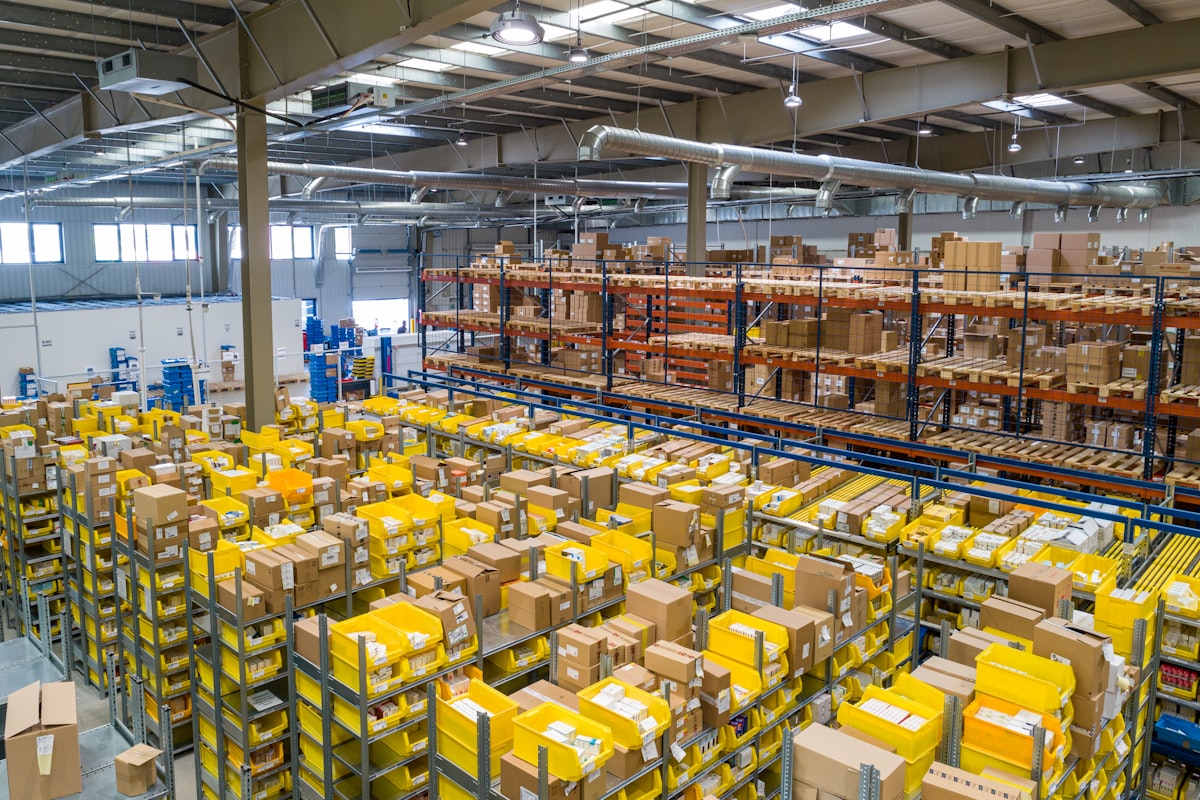
custom packaging boxes machine – High-Speed Automated Packaging and Warehouse Fulfillment (TadaPack Engineering Guide)
A custom packaging boxes machine is the converting asset—flexo folder-gluer, rotary die-cutter, or case erecting line—that transforms corrugated board into finished, brand-ready boxes at industrial throughput. Whether you’re a converter evaluating capital expenditure or an e-commerce brand auditing a supplier’s capability, understanding machine specs is the difference between quote-grade packaging and commodity failure.
This guide breaks down the machine classes, 2026 throughput benchmarks, board-grade compatibility, and the ROI math that governs purchasing decisions.
Machine Classes in Corrugated Converting
The corrugated packaging value chain runs from Custom E-Commerce & Retail Packaging design through board manufacturing and final converting. Machines fall into four tiers:
- Corrugators – laminate liner and medium into single/double/triple-wall board at 250–400 m/min, producing flute profiles (B-flute 2.5 mm, C-flute 3.6 mm, E-flute 1.5 mm) with take-up factors between 1.25–1.48.
- Flexo folder-gluers (FFG) – print, fold, and glue RSC/HGL cartons inline. Modern 2026 lines run 300–450 m/min with print resolution of 100–133 lpi anilox.
- Rotary die-cutters – cut complex die-lines, mailer styles, and retail-ready packs at 12,000–18,000 sheets/hour with ±0.5 mm registration.
- Case erectors/packers – the downstream automation that folds, seals, and packs at 15–40 cases/min, increasingly robot-fed.
Key Specs That Actually Matter
Nameplate speed sells machines; these metrics determine payback:
- Changeover time: Plate and die swaps on quick-change machines drop from 45 min to under 10 min—a 4x effective capacity gain on short runs.
- Board utilization yield: Leading converters achieve ≥92% layout efficiency; every point below that is material waste on a board costing $0.75–1.40/m².
- Minimum order economics: A machine’s cost-efficient run length determines which custom shipping boxes bulk orders make sense in-house versus outsourced.
- Print capability: Post-print flexo handles 4-color process; preprint or litho-lamination is required for retail-grade graphics above 150 lpi.
| Machine Type | Throughput | Best-Fit Order |
|---|---|---|
| Flexo folder-gluer | 300–450 m/min | 5,000+ units |
| Rotary die-cutter | 12,000–18,000 sheets/hr | Complex die-lines |
| Corrugator | 250–400 m/min | Board supply |
| Case erector | 15–40 cases/min | Fulfillment lines |
Matching Machine Output to Structural Specs
Machine choice constrains your structural design envelope. An FFG line produces consistent crease-to-score accuracy suited to B- and C-flute RSCs with ECT ratings of 32–48 lb/in. Rotary die-cutting unlocks E-flute mailers and lock-bottom trays where 1.5 mm flute geometry demands ±0.5 mm tolerance. Specify kraft-paper liners and mono-material constructions that modern gluers handle without solvent-based adhesives—a growing requirement under extended producer responsibility schemes.
Critically, machine-consistent converting must be validated downstream. Use ASTM D4169 Transit Testing Standards to verify that machine-cut boxes withstand distribution vibration and drop shock under Schedule 1–3 conditions. Poor creasing or skewed gluers from a misused machine are the leading root cause of transit failures we audit.
ROI Math for Converters
A mid-range FFG line with inline rotary slotting runs $1.5–3.5M installed in 2026. The payback model:
- Revenue capacity: 450 m/min × 22 hr/day × 85% OEE ≈ 8,200 km board/year converted.
- Contribution margin: $0.08–0.18 per converted m² on typical e-commerce shipper volumes.
- Labor displacement: Automated feeder/stacker reduces crew from 4 to 2 operators ($150–220K/year saved at developed-market wages).
- Break-even: Typically 30–42 months at 65% utilization; under 24 months for converters with committed e-commerce contracts.
For brands below 10 million boxes/year, partnering with a converter is almost always superior to vertical integration—the capital barrier and short-run inefficiency rarely justify it.
2026 Compliance Considerations
Machine investment now intersects with regulation. EU PPWR recyclability grading (effective sorting/recycling thresholds phasing in through 2030) favors mono-material board runs—machines with clean gluing and water-based inks score better on design-for-recycling assessments. US state-level EPR programs (California SB 54 implementation ongoing) similarly reward converters whose equipment minimizes coatings and mixed-material add-ons. Specify machines capable of running plastic-free, curbside-recyclable constructions as the default.
Buying Checklist
- Demand changeover-time guarantees in the purchase contract (under 12 min plate-to-plate).
- Audit installed OEE at reference sites, not showroom demos.
- Verify flute-range compatibility across 1.5–7 mm profiles.
- Confirm ASTM D4169 validation support for structural designs run on the machine.
- Model board waste yield at your actual order-length distribution, not quoted averages.
The right custom packaging boxes machine converts board cost into brand equity. The wrong one converts capital into scrap.
Frequently Asked Questions (FAQ)
What is a custom packaging boxes machine?
It is converting equipment—typically a flexo folder-gluer, rotary die-cutter, or case erecting line—that prints, cuts, folds, and glues corrugated board into finished custom boxes at production scale.
How much does a box-making machine cost in 2026?
A mid-range flexo folder-gluer line with inline slotting runs $1.5–3.5M installed; entry-level case erectors start around $50K–150K. Payback typically lands at 30–42 months at 65% utilization.
Which machine suits short-run e-commerce packaging?
Rotary die-cutters with quick-change dies (under 10-minute changeovers) suit short runs of 500–5,000 units, especially for E-flute mailers and complex die-lines; below that, digital cutting tables are more economical.
Engineering Your Next High-Performance Packaging Batch
From precision CAD dielines to ISTA drop-testing and certified sustainable substrates, TadaPack helps global brands optimize freight cubic volume, minimize shipping breakage, and satisfy European PPWR / EPR packaging standards.
✓ Drop-Test & ECT Optimization
✓ PPWR & FSC Compliant
