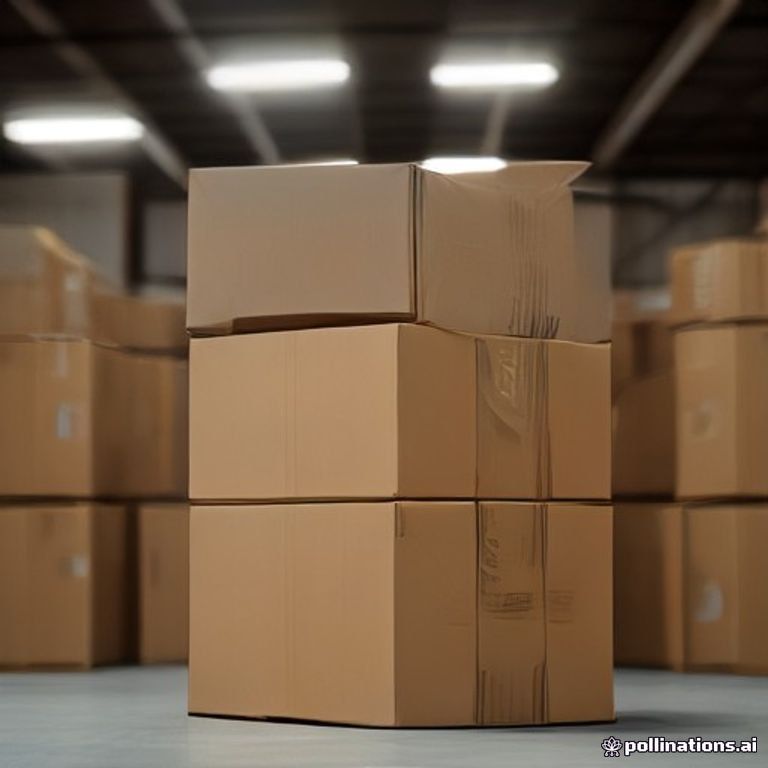

1. Why ECT-44 Is the De Facto Spec for Inland Empire Distribution
Inland Empire e-commerce volumes have pushed FBA and 3PL facilities from Ontario to Redlands toward weight-tiered inbound compliance programs that penalize manufacturers whose packaging fails at the dock, not in the lab. That commercial pressure aside, the engineering case for ECT-44 is material physics: a BC-flute double-wall board at 44 lb/in edge crush resistance delivers the stacked column strength required for 5-high warehouse palletization of 20–35 kg shipper cartons while staying under Amazon’s dimensional weight break thresholds. This whitepaper anchors every recommendation to measurable metrics — ASTM D4169 distribution cycling, TAPPI T810 edgewise compression, Cobb 60 absorption limits, and EU PPWR (Regulation 2026/1991) recyclability mandates — so your POs specify performance, not vendor adjectives.
2. From ECT to Box Compression: The Math Your PO Must Contain
ECT is a material property; what protects product in the warehouse is Box Compression Strength (BCT), tested in strict accordance with ASTM D642 (Standard Test Method for Determining Compressive Resistance of Shipping Containers) or ISO 12048. The industry-standard McKee approximation links them:
BCT ≈ 5.87 × ECT × √(t × Z), where t = board caliper (in) and Z = box perimeter (in).
Worked example — a 16 × 12 × 12 in FBA-ready shipper on BC-flute (t = 0.240 in, Z = 56 in, ECT = 44):
BCT ≈ 5.87 × 44 × √(0.240 × 56) ≈ 5.87 × 44 × 3.67 ≈ 948 lb.
Now apply derating. A 5-high stack with a 30 lb unit load puts 120 lb of live column load on the bottom carton; add a safety factor of 4–5 for warehouse storage, humidity derating (15–25% at 70–85% RH, per ISO 2247 humidity cycling behavior), and pallet deckboard gap bridging losses of 10–20%, and the effective requirement approaches 600–700 lb — which a 948 lb lab BCT satisfies with margin. An ECT-32 single-wall board on the same footprint yields ~590 lb lab BCT, which fails the derated requirement. This is precisely why FBA heavy-bulk ASINs (>50 lb units) in Ontario, CA facilities routinely specify ECT-44 double-wall.
Q: If the McKee formula derives BCT from ECT, why do overseas enterprise POs still mandate Mullen burst testing?
A (3-step): 1 — Direct answer: Legacy carrier classifications (UPS/FedEx/historical Rule 41 derivatives) and many Asian OEM contracts still reference bursting strength classes (e.g., 275# / 350# test) per TAPPI T 810, so Mullen remains a contract-compliance gate regardless of ECT sufficiency. 2 — Mechanical reason: Mullen measures multi-directional hydrostatic rupture of the liner facings — a proxy for puncture and tear resistance under rough handling — whereas ECT measures only vertical column crush; the two correlate imperfectly, and a high-ECT/low-burst board can pass stacking but fail corner impacts. 3 — Procurement recommendation: Specify ECT as the governing stacking metric and add a burst floor (≥ 250 psi for 32 ECT, ≥ 350 psi for 44 ECT equivalent grades) plus ISTA 3A or ASTM D4169 sequence testing, so the PO covers both mechanisms without paying for redundant board weight.
3. Board Construction & Comparative Specification Matrix
ECT-44 is almost universally achieved with double-wall constructions. The dominant Inland Empire inbound configuration is BC-flute (B-flute ~0.100 in + C-flute ~0.150 in, total caliper 0.240–0.260 in) using 42–44 lb/1000ft² kraft liners (e.g., 42/44/42 combination) or recycled-test liners where PPWR-compliant recycled content targets apply. Per EU Regulation 2026/1991 (PPWR), all corrugated shipping packaging placed on the EU market must be recyclable by design and meet recycled content targets by 2030 — recycled-test liner grades (e.g., 44/44/44 RL) meet this while holding ECT-44, at a Cobb trade-off.
| Attribute | ECT-32 Single-Wall (C) | ECT-44 Double-Wall (BC) | Governing Standard / Test Protocol |
|---|---|---|---|
| Caliper (typical) | 0.150 in (±0.015) | 0.240–0.260 in (±0.015) | ISO 3034 / TAPPI T 411 |
| Edge crush resistance | ≥ 32 lb/in (5.64 kN/m) | ≥ 44 lb/in (7.74 kN/m) | TAPPI T 811 / ISO 3037 (2026 revision in force) |
| Burst floor (equivalent grade) | ≥ 250 psi | ≥ 350 psi | TAPPI T 810 / ISO 2759 |
| Lab BCT, 16×12×12 in box | ~590 lb | ~950 lb | ASTM D642 / ISO 12048 |
| Max recommended stack height (30 lb unit, RH ≤ 60%) | 3–4 high | 5–6 high | ASTM D4169 DC-13 / warehouse SOP |
| Humidity derating @ 80% RH | −20 to −28% BCT | −15 to −25% BCT | ISO 2233 conditioning / ISO 2247 cycling |
| Moisture uptake ceiling (outer liner) | Cobb 60 ≤ 35 g/m² | Cobb 60 ≤ 35 g/m² (or PFAS-free barrier coat) | TAPPI T 441 / ISO 535 |
| Transit simulation pass criteria | ISTA 3A (single parcel ≤ 70 lb) | ISTA 3B or ASTM D4169 DC-12 (LTL palletized) | ISTA 3A/3B; ASTM D4169-22 |
| EU recyclability / recycled content | Compliant (design-for-recycling) | Compliant; PPWR targets phased to 2030 | EU Regulation 2026/1991 (PPWR); Directive 94/62/EC Annex II |
| Relative board cost index | 1.00 | 1.55–1.75 | Q1 2026 OCC/kraft linerboard market basket |
Per FTC Green Guides (16 CFR Part 260), any “100% recyclable” claim on corrugated shippers must reflect the substantial majority of US recycling facilities — virgin and recycled corrugated qualify; laminated plastic-reinforced or wax-dipped variants do not, which matters for any DTC brand printing sustainability claims on FBA inbound cartons.
4. Regional Freight Stress: Ocean Transit, Container Sweat & Hub Derating
Pacific corridor (Shanghai/Ningbo → LA/LGB). A 25–35 day trans-Pacific voyage exposes board to container sweat cycles; internal container RH swings of 60–90% are routine without desiccants. Kraft liner at 8–10% equilibrium moisture will climb toward 14–16%, temporarily cutting BCT 15–25% and, in worst cases, causing adhesive bond softening at the B/C flute interface. Mitigation: moisture-barrier coated liners (PFAS-free, per emerging global PFAS restrictions), container desiccant loads of 200–300% for high-value loads, and pallet corner boards to redistribute column load.
Inland Empire hub (FBA ONT8/ONT9/LGB8, Ontario CA). Dry inland ambient (RH 25–45% most of the year) actually recovers board strength post-transit — but only if cartons are rested 24 h at 50% RH per ISO 187 conditioning before retest. FBA inbound rules that bite here: units >50 lb must be “Team Lift” labeled; cartons on pallets must not overhang the 40×48 in pallet footprint (overhang converts edge column loading into a lever, cutting effective stack capacity 20–40%); and pallets must not exceed 72 in total height. Specify ECT-44 BC-flute for all case weights ≥ 30 lb destined for 5-high racking.
DFW distribution triangle (Dallas–Fort Worth). Hot-dry summers (38°C+, RH < 25%) embrittle recycled liners and dry out starch adhesive bonds; derate BCT 8–12% for recycled-test liner grades and verify bond integrity with a pin adhesion test (TAPPI T 821).
Port of Rotterdam → EU multimodal. Rhine barge/rail intermodal adds vibration energy in the 3–100 Hz band; per ASTM D4169 Schedule with truck/rail assurance levels, double-wall BC board on slip-sheeted pallets typically passes, but verify with a 60-min random vibration sweep at 0.54 Grms (truck) per ASTM D4728. Per Directive 94/62/EC Annex II and PPWR heavy-metal limits (Cd+Pb+Hg+Cr6+ ≤ 100 ppm), require supplier declarations with each EU-bound lot.
Engineers can model stack loads, dimensional weight, and derated BCT interactively using TadaPack’s free calculators at https://tools.tadapack.com/ — the box compression and freight cost tools encode the humidity and overhang derating factors discussed above.
5. TadaPack Lab Bench Test Record — ECT-44 BC-Flute, Lot #TP-2026-B4
6. Supplier Verification SOP & Defect Troubleshooting
4-Step Incoming-QA SOP for ECT-44 shipments:
Step 1 — Condition & caliper check. Condition 10 specimens 24 h at 23°C/50% RH (ASTM D685); measure caliper with a dead-weight caliper or Mitutoyo-class digital instrument; reject if any specimen deviates from 0.240 in by more than ±0.15 mm, as caliper loss directly collapses the McKee √t term.
Step 2 — ECT verify. Run TAPPI T 811 edgewise compression on 10 specimens across the sheet width; reject lot if the 10-specimen mean falls below 44 lb/in or if any single specimen falls below 40 lb/in (indicating poor corrugating bond distribution).
Step 3 — BCT & drop validation. Compression-test three finished boxes per ASTM D642 against the derated requirement (not raw McKee); then run ISTA 3A (parcel) or a reduced ASTM D4169 DC-12 cycle including 18-in corner drops and 0.54 Grms vibration; accept only if no structural failure and post-test residual BCT ≥ 70% of initial.
Step 4 — Print, die-cut & crease audit. Verify flexo die registration ±0.5 mm, crease-rule depth such that flap fold line scores do not crack liners (45-durometer creasing matrix, 0.5 pt rule typical for BC-flute), and barcode print quality (ANSI/ISO grade ≥ B) so FBA inbound scanning at Ontario, CA does not trigger receipt delays.
Troubleshooting Matrix:
Defect 1 — Flap popping / crease cracking on RSC flaps. Root causes: crease matrix durometer mismatched to board caliper; scoring rule worn; board over-dried (<6% moisture) after inland desert storage. Corrective actions: switch to a matrix channel width of caliper + 0.3–0.5 mm and 45-durometer matrix; replace scoring rules at >500,000 impressions; pre-condition board at 45–50% RH for 12 h before converting.
Defect 2 — Adhesive debonding / ply delamination after ocean transit. Root causes: raw starch bond over-cooked at the corrugator (brittle bond line), Cobb > 35 g/m² liner absorbing container sweat, insufficient wet-strength additive. Corrective actions: specify wet-strength starch or a PFAS-free moisture-barrier coat on the outer liner; audit supplier Cobb certificates per lot (TAPPI T 441); load container desiccants at ≥ 2 g/m³ of container volume and reject any inbound lot with visible flute-line wicking before palletization at ONT/LGB facilities.
Frequently Asked Questions
Q1: Is ECT-44 overkill for FBA parcel shipments under 50 lb?
Usually yes. For single-parcel ISTA 3A distribution with case weights under 30 lb and 3-high stacking, ECT-32 single-wall C-flute with a BCT ≥ 4× the unit load typically suffices. Reserve ECT-44 BC-flute for ≥ 30 lb cases, 5-high palletization, LTL/palletized lanes (ISTA 3B / ASTM D4169 DC-12), or any ASIN flagged by FBA for damage claims. Overspecifying adds 25–40% board cost and freight weight for no structural benefit.
Q2: How do I convert “350# test” Mullen-spec board to ECT for a single specification?
There is no exact conversion — burst and edgewise compression measure different failure modes — but contemporary double-wall 350# grades typically test ECT 44–48 lb/in with heavy-duty liners. Do not accept a verbal equivalence: require the supplier’s mill certificate showing both TAPPI T 810 burst ≥ 350 psi and TAPPI T 811 ECT ≥ 44 lb/in, plus ASTM D642 BCT on your exact box geometry.
Q3: What derating should I apply for 5-high stacking at 80% RH coastal warehouses?
Apply 15–25% BCT reduction for double-wall BC board (use 25% for recycled-test liners, 15–18% for virgin kraft), then divide by the required safety factor (4 for static warehouse storage, 5 for unknown dwell). If your derated BCT per box still exceeds bottom-carton live load, the spec holds; if not, step up liner weights (e.g., 44/50/44 combination) rather than fluting count.
Q4: Do PFAS-free moisture barrier coatings jeopardize recyclability or PPWR compliance?
No, provided the coating is a repulpable water-based dispersion (kaolin/starch or acrylic-latex systems at ≤ 3–5% coat weight). These hold Cobb 60 below 30 g/m² and remain fully recyclable per PPWR design-for-recycling criteria (Regulation 2026/1991) and FTC Green Guides substantiation. Avoid PE-laminated or waxed liners if any EU market or recyclability claim is in scope — they fail repulping yield thresholds and void the claim.
Q5: What lead times and MOQs are realistic for custom-printed ECT-44 BC-flute FBA cartons?
For 16–24 in maximum-dimension RSCs with 1–2 color flexo, expect MOQ 1,000–3,000 units, 12–18 day production, and 18–30 day ocean transit to LA/LGB plus 2–4 days drayage to Ontario, CA — plan 45–55 days total. For new structural designs, run CAD prototyping and physical samples first: TadaPack’s custom structural packaging and prototyping service delivers dimensioned CAD dielines and lab-tested samples within 5–7 days, letting you validate BCT and ISTA 3A performance before committing to a production MOQ. Use the free tools at https://tools.tadapack.com/ to size the box against Amazon’s dimensional weight tiers before finalizing the dieline.
Recommended Engineering Reading
[TOOLS] Featured Engineering & Calculation Tools
Explore 70+ Packaging Tools ➔CBM Volume & Freight Dim-Weight Calculator
Calculate cubic meters & dimensional weight to minimize freight costs and avoid FBA size tier penalties.Mailer Box Area & Dieline Size Calculator
Instant flat dieline dimensions, material consumption, and sheet nesting for custom D2C mailer boxes.
