
⚡ Key Takeaways & Direct Technical Answer
- EPE (expanded polyethylene) is a closed-cell foam with superior moisture resistance, dimensional stability, and reusable drop protection.
- PU (polyurethane) is an open-cell foam excelling in soft-contact cushioning, vibration damping, and low-volume laminated applications.
- EPE fits rigid electronics, glass, and reusable returnable packaging; PU fits cosmetics, coated surfaces, and one-way fragile shipment.
- 2026 EPR/PPWR recyclability rules and resin pricing favor LDPE-recyclable EPE in most e-commerce distribution programs.
EPE Foam vs PU Foam: Engineer’s Guide to Protective Packaging
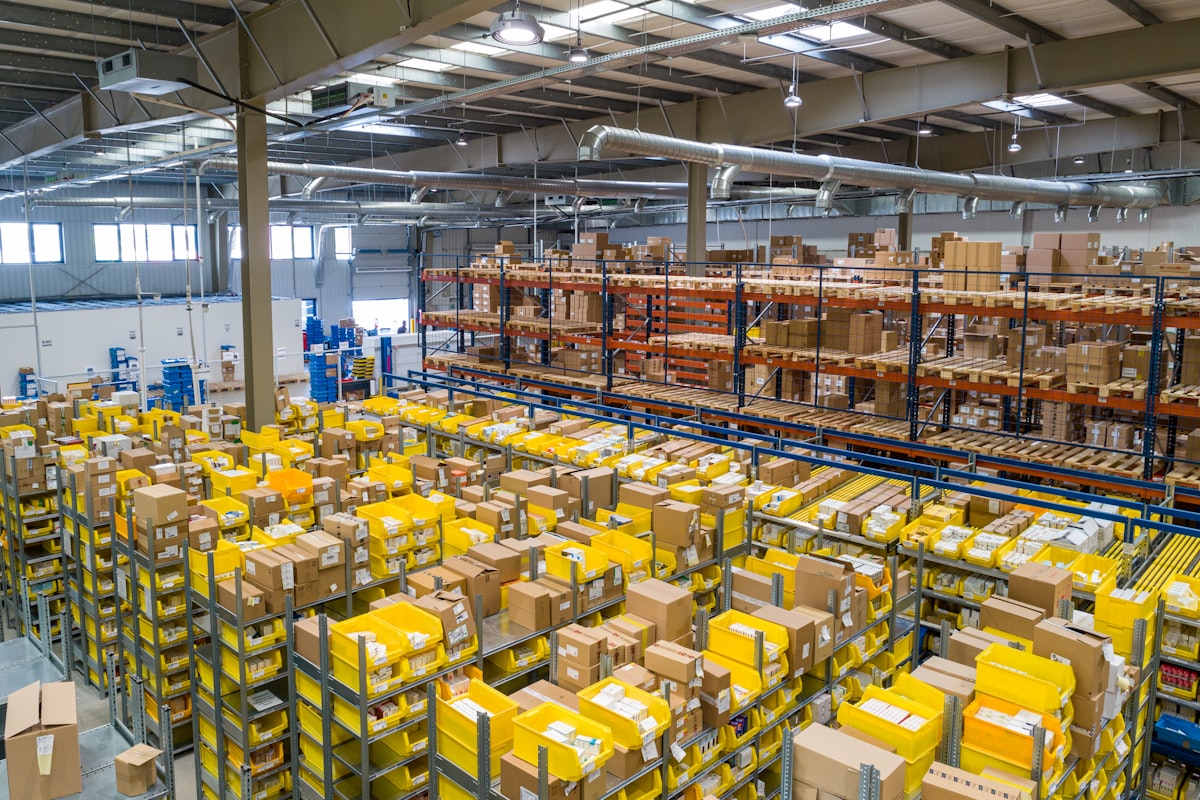
epe foam vs pu foam – High-Speed Automated Packaging and Warehouse Fulfillment (TadaPack Engineering Guide)
Cushioning foam selection determines damage rates, freight density, and end-of-life compliance. In the epe foam vs pu foam decision, the core distinction is cellular structure: EPE is closed-cell polyethylene; PU is open-cell polyurethane. That single difference cascades through compression behavior, moisture tolerance, cost curves, and 2026 EPR recyclability scoring.
This guide is part of our pillar on Custom E-Commerce & Retail Packaging and complements our structural deep-dives on EVA Foam vs Polyethylene Foam and EVA vs EPE Foam.
Material Structure and Mechanical Behavior
EPE (Expanded Polyethylene): Closed-cell foam, typically 25–40 kg/m³ density, produced via LDPE resin expansion with butane or CO₂. Compression strength ranges 20–60 kPa at 25% deflection. Closed cells resist water uptake (<1% absorption), giving EPE stable cushioning in cold-chain and humid environments. Recovery after 50% compression exceeds 95%, making EPE suitable for multi-cycle, returnable, and reusable e-commerce inserts.
PU (Polyether or Polyester Polyurethane): Open-cell foam, typically 20–35 kg/m³, manufactured in continuous bun stock and laminated to thickness. It absorbs water readily (200%+ by weight when submerged), so PU is unsuitable for wet distribution but excels at vibration attenuation and soft-contact protection for coated, anodized, or polished surfaces where rigid foam could scuff.
Cushioning Curves and Transit Testing
Engineers select foam from dynamic cushioning curves: peak G transmitted versus static stress at a given drop height. EPE delivers low peak-G performance across a broad static-load band (roughly 0.05–0.35 psi), ideal for products surviving 60–100 cm drops. PU transmits slightly higher peak G at equivalent thickness but damps sustained vibration better—relevant for hard drives, optics, and lab instruments.
Both materials should be validated under ASTM D4169 Transit Testing Standards, which define distribution cycle sequences including randomized vibration, drop shock, and compression. For 2026 e-commerce cycles (DC-13 equivalent), we typically specify EPE at 30–40 mm thickness for products under 10 kg, and PU at 25–30 mm for delicate low-mass items where abrasion governs rather than impact.
Performance Comparison Table
| Property | EPE Foam | PU Foam |
|---|---|---|
| Cell structure | Closed-cell | Open-cell |
| Density range | 25–40 kg/m³ | 20–35 kg/m³ |
| Moisture resistance | <1% absorption | Absorbs water readily |
| Best fit | Rigid, reusable inserts | Soft-contact, fragile surfaces |
Cost Analysis and Conversion Economics
EPE carries a higher resin cost per cubic meter, but two factors narrow the real-world gap. First, EPE’s higher compression set resistance allows 20–30% thinner sections to meet the same G-threshold, reducing material volume. Second, PU buns require lamination and die-cutting steps that add labor cost below roughly 5,000 units per run.
Typical 2026 unit costs for a 300 × 200 × 20 mm insert: EPE runs $0.28–$0.45; laminated PU runs $0.22–$0.38. Above 10,000 units, EPE’s reusability economics dominate for brands running subscription or returnable packaging loops.
Regulatory and Sustainability Positioning (2026)
Under the EU Packaging and Packaging Waste Regulation (PPWR) phase-in and North American EPR programs, packaging is scored on recyclability by resin type and mono-material purity. EPE—being a PE (#4) material—sorts into existing LDPE film and rigid streams where foam acceptance exists, and PCR-EPE grades are now commercially available at 30–50% post-consumer content. PU foam remains harder to recycle; most EPR schemes assign it a higher fee tier or classify it as residual waste, increasing per-unit compliance cost.
For brands pursuing FSC-certified corrugate outer boxes with foam inserts, pairing EPE with mono-material corrugate simplifies declaration audits. Avoid laminating EPE to PS or PU layers—multi-polymer stacks drop a recyclable item to non-recyclable in most 2026 fee matrices.
Application Selection Framework
Choose EPE when:
– Product mass exceeds 2 kg or drop heights exceed 60 cm
– Inserts must survive 5+ fulfillment cycles (reusable kits)
– Humidity, cold chain, or condensation exposure exists
– EPR fee optimization and PCR content matter
Choose PU when:
– Protecting coated, lacquered, or mirror-finish surfaces
– Vibration damping outweighs drop protection
– Section thickness must compress tightly (perfume, cosmetics in rigid mailers)
– One-way shipment with low material budget governs
For blended needs, hybrid designs—EPE structural corners with PU face laminates—are common in retail-ready electronics packaging, though verify mono-material rules before stacking dissimilar polymers.
Engineering Verdict
For most e-commerce and retail programs in 2026, EPE wins on compliance scoring, moisture stability, reusability, and compression efficiency. PU retains a defensible niche in surface-sensitive, vibration-dominated, one-way applications. Prototype both, run cushioning curve validation, and confirm results with ASTM D4169 sequence testing before committing tooling budgets.
Frequently Asked Questions (FAQ)
Which is better for electronics shipping, EPE or PU foam?
EPE for products over 2 kg or drops above 60 cm due to lower peak-G cushioning; PU for lightweight, surface-sensitive devices where vibration damping and soft contact matter more than impact.
Is EPE foam recyclable under 2026 EPR rules?
Yes. EPE is a PE (#4) material eligible for LDPE streams, and 30–50% PCR-EPE grades are commercially available. PU foam attracts higher EPR fees and is often classified as residual waste.
Is EPE foam more expensive than PU foam?
Per cubic meter, yes, but EPE’s 20–30% thinner required sections and reusability typically deliver lower total cost above 10,000 units or in returnable packaging loops.
Engineering Your Next High-Performance Packaging Batch
From precision CAD dielines to ISTA drop-testing and certified sustainable substrates, TadaPack helps global brands optimize freight cubic volume, minimize shipping breakage, and satisfy European PPWR / EPR packaging standards.
✓ Drop-Test & ECT Optimization
✓ PPWR & FSC Compliant
