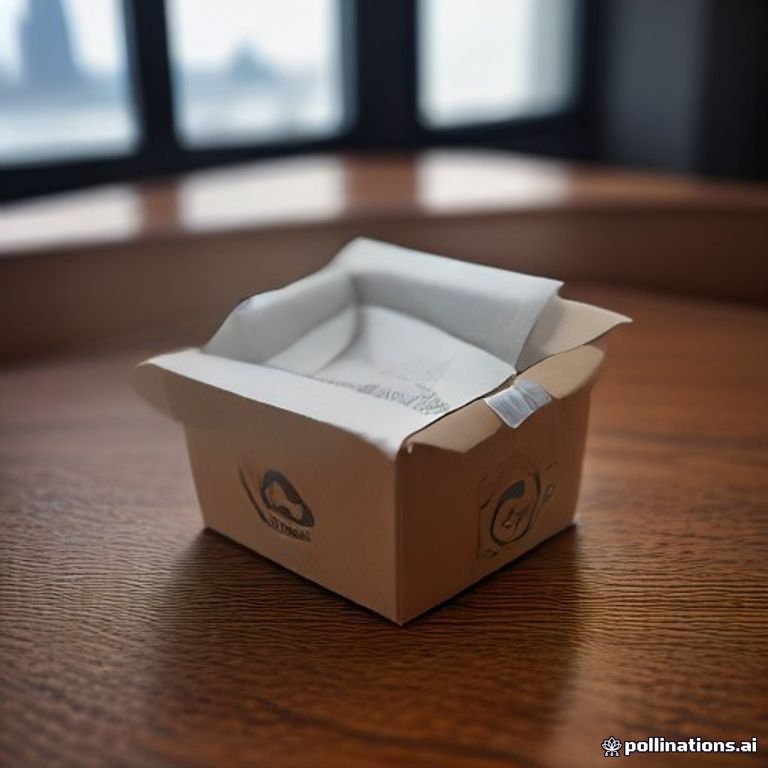
Rotterdam handled over 13.4 million TEU in 2026-2026 trade cycles, and with PPWR enforcement now live, customs and port-state inspection teams are increasingly flagging packaging declarations at first point of entry. For procurement directors and structural engineers, this is not a marketing topic — it is a materials-compliance topic with quantifiable cost exposure.
%20bustling%20Rotterdam%20container%20seaport%20terminal%20with%20colossal%20cranes%20and%20cargo%20ships%20is%20visible%20through%20a%20large%20window%2C%20bathed%20in%20golden%20hour%20volumetric%20light%20rays.%20Rim%20lighting%20highlights%20the%20box's%20edges.%208k%2C%20Hasselblad%20medium%20format%2C%20photorealistic%2C%20vivid%20colors.%22%20%7D?width=1200&height=675&model=flux&nologo=true&seed=756599&key=sk_iOkRnYkySJ0UvaA8NvCYC6lOZnfd4COJ "EU PPWR Recycled Content Rules for Rigid Boxes: Rotterdam Importer Checklist")
1. PPWR Recycled Content Mandates: What Rigid Box Importers Owe at the Quay
The EU Packaging and Packaging Waste Regulation — Regulation (EU) 2026/40, which entered into force in early 2026 and supersedes the operative elements of Directive 94/62/EC — imposes phased recycled-content minimums on plastic packaging and, critically for paper-based formats, tightens recyclability grading. Rigid boxes constructed from grayboard wrapped in printed paper (typically 350gsm CCNB or 1.0–2.5mm grayboard laminates) fall under the recyclability-at-scale criteria: by 2030, packaging must be Design-for-Recycling (DFR) graded at 85% or higher by weight to remain marketable in the EU. By 2038, that threshold rises to 95%+ with a 70% recycling-rate performance gate. Under PPWR Article 7 and Annex II mandates, plus the legacy Essential Requirements of 94/62/EC Annex II, importers are the legally responsible ‘economic operator’ when placing goods on the EU market via Rotterdam — meaning your supplier’s mill certificate becomes your customs liability.
Three procurement consequences follow. First, EPR (Extended Producer Responsibility) eco-modulated fees in the Netherlands under Verpact (formerly Afvalfonds) now differentiate rigid paperboard fees by recycled-content band — high-PCR board pays measurably less per tonne. Second, declarations must be substantiated per ISO 14021:2016 (self-declared environmental claims) and, for US-bound marketing copy, FTC Green Guides 16 CFR Part 260. Third, PFAS-free barrier coatings are now de facto mandatory: PPWR restricts intentionally added PFAS in food-contact packaging, and Rotterdam port authorities participate in coordinated enforcement sampling.
Practical fiber sourcing note: European mills supplying Rotterdam corridor importers now commonly offer FSC-certified 1.5mm grayboard at 85–100% PCR. Asian-sourced board at similar PCR levels requires third-party mill audit because recovered-fiber provenance documentation (EN 643 grade 1.11 / 1.02 inputs) is frequently the weakest link during Dutch ILM or customs verification.
2. Structural Mechanics: Why Recycled Fiber Changes Your Compression Numbers
PCR fiber is shorter and more acidic than virgin kraft, which mechanically degrades two parameters procurement teams must re-verify on every lot: edge crush resistance and stacking endurance. Per TAPPI Standard T811 (edgewise compressive strength) and TAPPI T810 (2026 Revision) for Mullen burst, a 1.5mm laminated grayboard at 100% PCR typically benchmarks 15–20% lower burst (kPa) than the equivalent virgin-fiber construction. For corrugated shipper components paired with your rigid box, ECT-32 remains the Rotterdam-corridor workhorse for single-wall C-flute; upgrade to ECT-44 or BC double-wall when pallet stacks exceed 1.4m or inland drayage adds vibration exposure.
Compression validation must follow ASTM D642 (Standard Test Method for Determining Compressive Resistance of Shipping Containers), with field-correlated safety factors per ASTM D4169 Distribution Cycle 13 (DC-13) for LTL parcel and DC-18 for ocean-containerized freight. In strict accordance with ASTM D4169 vibration testing, schedule random-vibration sequences replicate 30-day transatlantic container profiles; boards with high Cobb values fail here via interlayer delamination before structural crush appears. Per ISO 2247, vibrational conditioning under fixed-load humidity exposure is the correct supplementary test for wrapped rigid boxes because it reproduces wrap-to-board shear under cyclic moisture.
Q: If the McKee formula derives BCT from ECT, why do Rotterdam-enterprise POs still mandate Mullen burst testing on grayboard wrap stock?
A: Direct answer: because McKee’s derivation is empirically calibrated on corrugated linerboard geometries, not laminated solid grayboard — BCT extrapolation from ECT carries a ±12–18% error band on rigid constructions, which exceeds procurement acceptance tolerances. Mechanical reason: burst (TAPPI T810) measures multi-directional tensile failure of the fiber mat under hydraulic pressure, which correlates with wrap-tear and seam-splitting risk in rigid boxes, a failure mode ECT never exercises. Procurement recommendation: specify both — BCT via ASTM D642 for stack validation, Mullen burst (min 450 kPa for 1.5mm PCR grayboard) as the incoming-QC gate — and require the mill’s TAPPI T810 certificate per production lot, not per product family.
Conditioning: 23°C ± 1°C, 50% ± 2% RH for 24h per ISO 187 / ASTM D685 paper-conditioning standard.
Instruments: Mitutoyo 547-400S digital caliper (caliper ±0.01mm), Lansmont Model 1220 compression tester, TAPPI T810 Mullen burst apparatus, Cobb 60 absorption rig per ISO 535.
Sample: 1.5mm 85%-PCR grayboard, 10-specimen statistical average, tolerance ±0.15mm on caliper. Results: caliper 1.52mm (σ=0.06), burst 468 kPa, Cobb 60 = 28 g/m², BCT (450×350×120mm rigid box, single-wall carton overpack) 2.84 kN — passes ASTM D642 acceptance at SF=4 for DC-13. Full certificates accompany every TadaPack production lot; request the PPWR declaration dossier with your RFQ.
3. Comparative Material Matrix for PPWR-Compliant Rigid Box Construction
| Construction | Caliper / Basis Weight | Typical PCR Content | Burst / ECT Benchmark | Cobb 60 Limit | PPWR DFR Grade (2030) | Governing Standard / Test Protocol |
|---|---|---|---|---|---|---|
| 1.5mm grayboard + art-paper wrap | 1.5mm / ~950 gsm | 85–100% | Burst ≥450 kPa | ≤35 g/m² | Grades A (≥95% fiber recoverable) | TAPPI T810 (2026 Rev.) / ISO 535 / PPWR Annex II |
| 2.5mm grayboard, premium rigid | 2.5mm / ~1,600 gsm | 75–95% | Burst ≥600 kPa | ≤35 g/m² | Grade A | ISO 186:2026 conditioning / ASTM D642 |
| C-flute ECT-32 shipper over rigid box | 4.0mm flute caliper | ≥70% (liner) | ECT-32 | ≤40 g/m² (combined board) | Grade A | TAPPI T811 / ASTM D4169 DC-13 |
| BC double-wall export carton | 7.0mm | ≥70% | ECT-44 | ≤40 g/m² | Grade A | ASTM D642 / ISTA 3A |
| 350gsm CCNB folding-carton insert | 0.45mm | ≥90% (back layer) | Burst ≥280 kPa | ≤30 g/m² | Grade B–A | TAPPI T810 / ISO 14021 claim substantiation |
| PFAS-free barrier-coated rigid box | 1.5–2.5mm | 80–100% | Burst ≥450 kPa | ≤18 g/m² (coated) | Grade A, food-contact eligible | PPWR PFAS restriction / ISO 2247 vibration-humidity |
Use TadaPack’s free calculation suite at https://tools.tadapack.com/ to model BCT derating for your specific PCR board grade, pallet stacking height, and route profile before committing to a die-line.
4. The Rotterdam Importer Procurement SOP: Four Verification Steps
Per EU Directive 94/62/EC Annex II as operationalized by Regulation (EU) 2026/40, the importer of record owns declaration accuracy. Execute this SOP on every new SKU and annually thereafter:
Step 1 — Fiber Provenance Audit (Days 1–5). Require mill-level EN 643 grade documentation and ISO 14021 chain-of-custody for every PCR claim; reject lot certificates older than 12 months. Cross-check against FSC or PEFC CoC registration numbers. Physical tolerance: no accepted substitution between declared and delivered PCR percentage — treat a >5% delta as a nonconformance.
Step 2 — Incoming Physical QC (Days 6–10). Condition specimens 24h at 23°C ± 1°C / 50% ± 2% RH per ISO 186:2026. Test 10 specimens per lot: caliper ±0.15mm, Cobb 60 ≤35 g/m², Mullen burst per table above. Any Cobb excursion above 35 g/m² mandates moisture-barrier requalification or wrap-adhesive change before container loading.
Step 3 — Transit Simulation Gate (Days 11–20). Run ISTA 3A General Simulation Performance Testing for parcel SKUs and ASTM D4169 DC-18 with atmospheric conditioning for containerized freight. Under ISTA 3A drop shock sequences, rigid boxes must survive 10 drops to 760mm (parcel weight ≤20kg) with zero wrap delamination or corner board fracture. Failure here correlates almost always to adhesive solids content below 48% or cold-press dwell under 8 seconds.
Step 4 — Declaration & EPR Filing (Days 21–25). Compile the PPWR conformity dossier: ISO 14021 substantiation file, PFAS-free statement (analytical certificate to 50 ppm threshold where barrier coatings are used), DFR grade assessment, and Verpact packaging registration for the Dutch market. File before B/L release; retroactive corrections at Rotterdam trigger inspection holds averaging 3–7 days at €40–€60/day demurrage per container.
5. Corridor Stress Analysis: Ocean Humidity, Hub Handling & Stack Derating
Pacific & Atlantic ocean legs (25–35 days). Container sweat cycles drive interior RH to 85–95% during temperature swings; grayboard absorbs 3–6% moisture by weight, dropping effective BCT by 10–15% at discharge. Specify container desiccants (≥200g calcium chloride per 20ft unit) and interleave poly liners for high-PCR board. Per TAPPI T810 conditioning discipline, always re-test a discharged sample before onward distribution claims.
California Inland Empire (ONT8 / LGB3 FBA nodes). Intermodal rail-to-truck handoffs impose 3–5 additional random-vibration exposures beyond the port leg. Amazon FBA dimensional-weight rules (dividing 139 for in/lb) penalize rigid boxes with air voids; optimize inner dimensions to a fill ratio ≥80% or absorb the DIM penalty — on a 450×350×120mm box this alone can add $1.20–$2.80 per unit in freight economics at 2026 rates.
DFW distribution triangle (Texas). Dry ambient RH (30–45%) causes PCR board embrittlement and crease-cracking on sharp-radius folds; spec creasing matrices at 45-durometer with 0.3mm channel overage to distribute fiber strain.
Rotterdam multimodal (rail/road European hinterland). Coastal RH averages 75–85% — the highest sustained-humidity hub in this matrix. Apply a stacking derating factor of 0.75 to dry-lab BCT values for warehouse stacks exceeding 3 pallets, and 0.65 for non-climate-controlled bonded warehouses. TadaPack’s online tools at https://tools.tadapack.com/ include a regional derating calculator wired to these ambient bands.
6. Defect Diagnostics & Troubleshooting Matrix
| Defect | Root Cause | Corrective Action | Governing Standard / Test Protocol |
|---|---|---|---|
| Wrap laminate delamination after ocean transit | Cobb 60 >35 g/m²; adhesive solids <48%; press dwell <8s | Switch to moisture-set or 52%-solids PVA; add PFAS-free barrier coat; re-run ISO 2247 humidity-vibration | ISO 535 / ISO 2247 / PPWR PFAS restriction |
| Grayboard warping (bowl/cup) | Two-sided moisture gradient >3%; asymmetric lamination tension | Balance wrap coverage both faces; condition board 48h pre-conversion; hold warp ≤2mm per 600mm straightedge | ISO 186:2026 conditioning / ASTM D685 |
| Corner board fracture on drop | PCR fiber shortness; crease radius too tight | Increase corner radius to ≥3mm; blend 15% virgin fiber; validate to ISTA 3A drop sequence | ISTA 3A / ASTM D4169 |
| Stack collapse in bonded warehouse | BCT derating ignored for 80%+ RH coastal ambient | Apply 0.65–0.75 derate; upgrade overpack to ECT-44 double-wall; verify per ASTM D642 | ASTM D642 / TAPPI T811 |
For SKUs failing any gate above, TadaPack’s structural engineering team offers CAD die-line revision and physical prototyping within 5–7 working days, including full PPWR conformity dossier generation — the fastest route from nonconformance to customs-clearance-ready specification.
Frequently Asked Questions
Q1: Does PPWR impose a direct recycled-content percentage on paper-based rigid boxes?
A: The binding recycled-content minimums in Regulation (EU) 2026/40 target plastic packaging formats; for paper-based rigid boxes the binding constraint is the 2030 Design-for-Recycling grade (85%+) and EPR eco-modulation, which financially rewards verified PCR content. Procurement should nonetheless spec ≥85% PCR now because Verpact fee bands and retailer scorecards already price it.
Q2: Which certificate satisfies Rotterdam customs for a recycled-content claim on grayboard?
A: A mill-level ISO 14021:2016 substantiation file backed by EN 643 fiber-grade records and FSC/PEFC chain-of-custody, accompanied by lot-specific TAPPI T810 and ISO 535 test data. Self-declared supplier letters without fiber-provenance documentation are the most common cause of inspection holds.
Q3: How much compression strength do I lose shipping high-PCR rigid boxes across the Atlantic?
A: Budget 10–15% BCT loss under 30-day humid container exposure (3–6% moisture gain by weight), plus a 0.65–0.75 warehouse stacking derate in ≥80% RH coastal hubs like Rotterdam. Design to ASTM D642 acceptance with safety factor 4 against the derated value, not the dry-lab value.
Q4: Are PFAS-free barrier coatings compatible with PPWR recyclability grading?
A: Yes — current-generation fluorine-free dispersion and aqueous barrier coatings repulpable at ≥90% fiber yield preserve Grade A DFR classification and keep Cobb 60 below 18 g/m². Require the supplier’s analytical PFAS certificate (≤50 ppm total fluorine threshold) per PPWR restriction schedules.
Q5: What tolerance should I write into the PO for rigid box caliper and registration?
A: Specify caliper ±0.15mm (10-specimen average per ISO 3039 methodology), die-cut registration ±0.15mm, and wrap misalignment ≤0.8mm on visible panels. Tighter tolerances inflate scrap 3–5% without measurable transit-performance gain per ASTM D4169.
Recommended Engineering Reading
[TOOLS] Featured Engineering & Calculation Tools
Explore 70+ Packaging Tools ➔Box Compression (BCT) Calculator
Predict box compressive limit and stacking safety factors via McKee formula.Edge Crush Test (ECT) Calculator
Calculate linerboard ring crush and composite ECT ratings for optimal board specs.
