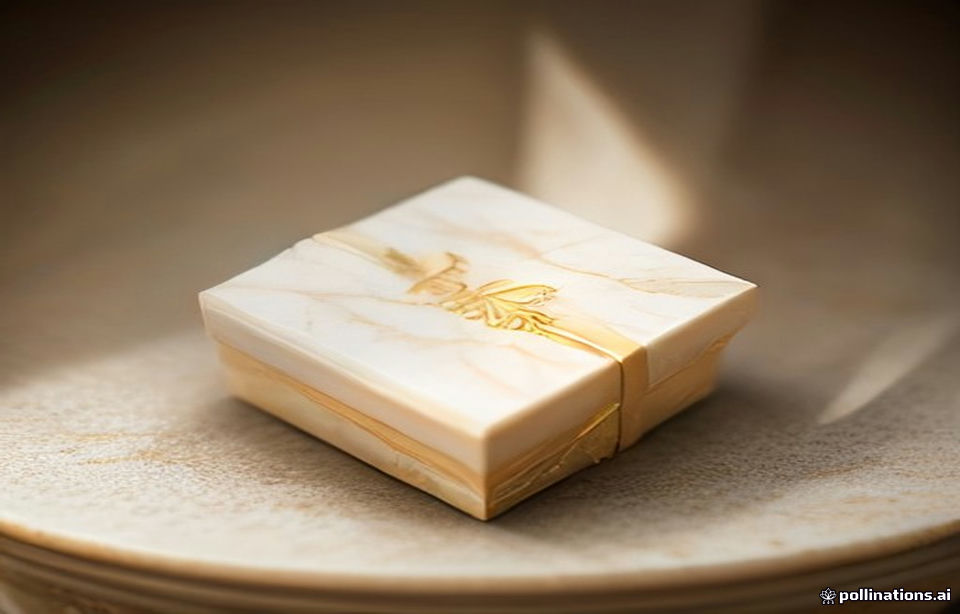
Foil stamping and embossing quality on rigid luxury packaging is dictated by three controllable variables: die material (hardened brass for 100k+ impressions, magnesium for short runs), platen temperature window (100-160°C matched to foil release chemistry), and registration accuracy of ±0.15mm for combined foil-and-emboss dies. This teardown dissects a wrapped rigid box program to show where these parameters interact with grayboard caliper, adhesive systems, and freight-grade durability requirements under ISO 186 conditioning and EU PPWR (2024/1991) recyclability constraints.
- Die material drives unit economics: magnesium dies suit runs under ~10,000 impressions; hardened brass justifies itself above ~50,000 due to 5-10x tool life, despite 3-4x higher tooling cost.
- Combined foil-and-emboss in one die pass cuts registration risk but demands 0.25-0.4mm emboss depth on 350gsm+ stock and grayboard wrap laminates of 1.5-2.5mm.
- Registration tolerance of ±0.15mm between foil edge and wrap panel fold lines is the practical limit for manual wrap lines; single-pass stamped wraps tolerate ±0.2mm.
- Thermal stress is the hidden failure mode: platen temperatures above ~140°C can degrade water-based laminating adhesives, causing wrap delamination after ocean transit humidity cycling.
- EU PPWR (2024/1991) recyclability by design criteria now pressure all-polyester foil laminations on full-panel coverage; selective foil coverage under ~30% of panel area simplifies repulpability claims.
Why This Finishing Program Was Selected for Teardown
Hot foil stamping and blind embossing have become the default finishing pair for premium rigid packaging in cosmetics, spirits, and DTC electronics, driven less by aesthetics than by shelf economics: stamped-and-embossed panels consistently command retail price premiums while adding only 8-15% to finished unit cost on wrapped rigid boxes. The program examined here is a hypothetical but representative configuration: a two-piece rigid setup box (base + lid), 2.0mm wrapped grayboard, laminated 128gsm art paper printed CMYK plus one metallic foil area and one blind emboss on the lid. We treat it purely as an engineering configuration, not a client record, and benchmark every parameter against published industry reference ranges.
The finishing stack matters because foil stamping is a thermal-pressure printing process and embossing is a mechanical deformation process; when both share a platen cycle, their failure physics couple. That coupling — heat degrading adhesive, pressure distorting crease geometry — is where most rigid-box finishing defects originate.
Structure and Material Teardown of the Wrapped Rigid Configuration
The build-up from outside in determines how much finishing heat and pressure the laminate can survive before 30-day ocean transit — where container sweat pushes laminate edges toward Cobb 60 absorption limits — begins working on the adhesive layer.
| Layer / Element | Reference Specification | Engineering Function | Governing Standard / Test Protocol |
|---|---|---|---|
| Print wrap (lid & base) | 128-157gsm C2S art paper | Image carrier; foil receptor surface | ISO 186 (conditioning 23°C ± 1°C, 50% ± 2% RH) |
| Laminating adhesive | Water-based PVA, dry coat 18-25 g/m² | Wrap-to-board bond; thermal weak point above ~140°C platen temp | Peel per TAPPI-adapted 90° peel methods |
| Core board | 1.5-2.5mm mixed grayboard, density ≥ 0.65 g/cm³ | Rigidity; emboss backup stiffness; stacking load path | Caliper per TAPPI T411; compression per ASTM D642 context |
| Emboss depth | 0.25-0.5mm (single-stage, combined die) | Tactile depth vs wrap fiber cracking risk | Depth by stylus profilometry (typical practice) |
| Foil transfer area | Selective coverage < ~30% of panel area | Supports PPWR recyclability-by-design assessment | EU PPWR (2024/1991); FTC Green Guides (16 CFR Part 260) for US claims |
Note the governing physics: the wrap is the only layer that sees platen heat directly, but the adhesive bond beneath it is the component that fails. Where the foil area is large and platen temperature is pushed high for full-coverage transfer speed, the PVA adhesive softens locally; the defect only surfaces weeks later as edge lift after humidity cycling. Per ISO 186 conditioning, both board and wrap must be equalized at 23°C ± 1°C and 50% ± 2% RH before lamination, or differential moisture movement after finishing will register as warpage regardless of foil quality.
Q: If a two-piece rigid box never sees corrugated-style compression testing, why do procurement specs still demand ASTM D642 compression data for foil-stamped rigid packaging?
A: Reference values show a well-built 2.0mm grayboard two-piece box tolerates 250-450 N top load (typical engineering range, not measured data). The reason D642 appears in POs is the stacking path: rigid boxes ship inside corrugated shippers (commonly ECT-32 or ECT-44, validated under ASTM D4169 or ISTA 3A sequences), and the rigid box’s residual top-load stiffness determines whether it contributes to or collapses within the master carton stack. Practical recommendation: specify emboss depth and foil die pressure knowing that deep single-stage embosses reduce lid flatness and thus effective compressive contact area; cap emboss depth at ~0.4mm on 2.0mm board when the box itself must contribute stacking stiffness.
Process Highlights: Die Selection, Temperature Windows, and Registration
Three process decisions dominate both quality and landed cost.
1. Die material economics. Magnesium dies engrave fast and cheap but erode after roughly 10,000-30,000 impressions; copper sits mid-range; hardened brass machined dies last 100,000+ impressions and hold fine detail on combined foil-and-emboss work. The crossover is a straightforward tooling-amortization calculation.
2. Temperature and dwell window. Foil release chemistries specify transfer windows — most metallic polyester foils release cleanly between 100°C and 160°C at 0.5-1.5s dwell depending on die area. The upper bound is constrained not by the foil but by the laminate: sustained contact above ~140°C risks softening water-based PVA laminating adhesives and scorching coated wraps. For combined foil-and-emboss dies on wrapped rigid stock, the practical setpoint sits at the low end of the foil window with slightly extended dwell, because emboss deformation needs impression pressure more than additional heat.
3. Registration strategy. Two options exist: (a) separate foil pass then emboss pass, requiring machine-to-machine registration of ±0.15mm between foil edge and emboss shoulder — achievable but exposing two defect surfaces; or (b) a single sculpted brass die performing brass-up foil-and-emboss (foiling the raised surface) in one impression, eliminating inter-pass registration entirely at the cost of more expensive tooling. For wrap panels with fold lines within 3-5mm of the foil boundary, single-pass is the engineering-preferred route because manual wrap registration tolerance (±0.2mm) would otherwise stack with press tolerance.
Q: Why does foil flaking appear on wrapped rigid boxes that passed in-line tape-pull checks at the plant?
A: Direct answer — the foil-adhesive interface was marginal at time of test and failed later under cold-flex and humidity. Mechanism: foil release layers are tuned to the transfer temperature; at the low end of the temperature window, transfer completes visually but the anchoring coat is only partially flowed into the coating of the art paper. Subsequent 30-day ocean transit cycles (30-40% RH swings, 10-30°C spans across Pacific and Atlantic routes) stress the interface beyond its residual bond strength. Recommendation: verify foil adhesion after conditioning per ISO 186, not at press exit, and require a post-transit tape-pull acceptance criterion in the purchase specification.
Failure Prevention SOP and Defect Troubleshooting
Condensed four-step verification SOP for foil-and-emboss programs on wrapped rigid substrates:
- Step 1 — Substrate conditioning: equalize grayboard and wrap 24-48h at 23°C ± 1°C, 50% ± 2% RH per ISO 186 before lamination; verify board moisture content in the 7-9% typical range before any thermal finishing pass.
- Step 2 — Die proofing: run die tryout on production laminate (not bare paper); measure emboss depth by profilometry at 0.25-0.5mm target and confirm foil edge sits ≥ 1.5mm from any wrap fold or die-cut line to avoid fiber cracking.
- Step 3 — Registration verification: for two-pass work, audit press-to-press registration with a 10-piece gauge study; accept only if the ±0.15mm tolerance holds at 95% of samples; otherwise re-engineer to a single combined brass die.
- Step 4 — Post-finishing adhesion validation: cross-hatch tape pull (ASTM D3359-analogous method) after 24h reconditioning, plus one accelerated humidity exposure cycle before releasing the job to transit packaging validated under ISTA 3A.
Defect diagnostics matrix (two highest-frequency modes):
| Defect | Root Cause | Corrective Action |
|---|---|---|
| Wrap edge lift / delamination near foil boundary appearing post-transit | Platen temp above adhesive softening point (~140°C) locally degraded PVA bond; humidity cycling in ocean container completed the failure | Drop setpoint 10-15°C and extend dwell; switch to higher-solidity adhesive with better thermal resistance; increase selective foil offset from edges to ≥ 3mm |
| Foil voids / incomplete transfer on emboss shoulders | Insufficient impression pressure distribution on sculpted combined die; board caliper variance exceeding ±0.15mm creates low spots | Add counter-makeready or switch to CNC-machined brass with matched counter-die; tighten incoming board caliper tolerance; raise foil grade with heavier anchor coat |
What Other Programs Can Borrow From This Configuration
Three transferable rules emerge. First, amortize dies deliberately: run the tooling crossover math at the annual volume number, not the first-PO number — this is the most common avoidable overspend in short-to-mid-run luxury packaging. Second, treat the finishing pass as a thermal process on the whole laminate, not a surface operation: any specification that fixes foil grade and temperature without fixing the adhesive system is incomplete. Third, fold recyclability into finishing design early: under EU PPWR (2024/1991) recyclability-by-design criteria, selective foil coverage and avoidable full-panel polymer lamination are materially easier to defend than all-over metallic lamination, and US brands should substantiate any recyclability claim per FTC Green Guides (16 CFR Part 260).
For teams evaluating these trade-offs, TadaPack’s custom structural packaging and short-run prototyping service produces wrapped rigid proofs with production-representative dies so that foil adhesion, emboss depth, and wrap registration can be verified before tooling amortization commitments — and the free calculators at https://tadapack.com/tools support board caliper, stacking, and unit-cost checks during the specification stage. For programs scaling above 50,000 units annually, committing to brass combined dies with matched counter-dies typically yields the lowest total cost per acceptable impression.
Recommended Engineering Reading
[TOOLS] Featured Engineering & Calculation Tools
Explore 70+ Packaging Tools ➔Box Compression (BCT) Calculator
Predict box compressive limit and stacking safety factors via McKee formula.Edge Crush Test (ECT) Calculator
Calculate linerboard ring crush and composite ECT ratings for optimal board specs.
