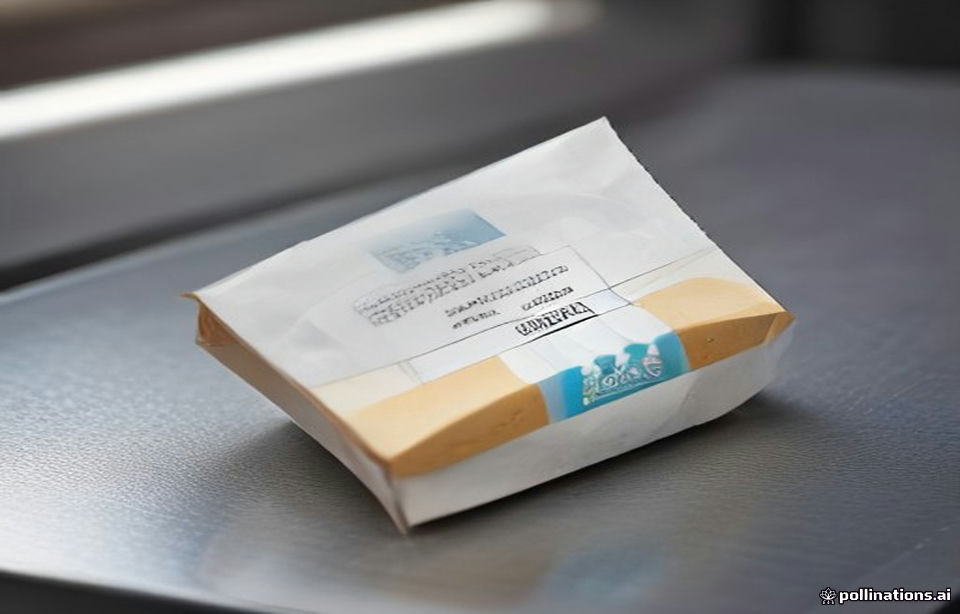
Ontario food labelling requires bilingual (English/French) declarations per the federal Food and Drugs Act and Consumer Packaging and Labelling Act, with label substrate durability validated under ASTM D4169 and TAPPI T810. Non-compliant label adhesion or ink rub-off triggers CFIA rejection; specifying 350gsm CCNB with 60°C Cobb and pressure-sensitive adhesive rated for -20°C to 60°C ensures compliance.
Ontario Food Labelling: Regulatory Architecture for Packaging Engineers
Ontario food labelling is governed by a layered federal-provincial framework that directly impacts packaging material selection, dieline geometry, and adhesive performance. While the federal Food and Drugs Act (R.S.C., 1985, c. F-27) and Consumer Packaging and Labelling Act (R.S.C., 1985, c. C-38) establish mandatory bilingual (English and French) declarations, ingredient lists, allergen statements, and net quantity, Ontario’s Food Safety and Quality Act, 2001 and local health unit inspections add enforcement pressure on label durability and legibility under real-world transit conditions. For US and European procurement directors sourcing packaging for Canadian DTC brands, the critical engineering challenge is not merely regulatory text accuracy but ensuring that label substrates, adhesives, and inks survive the 30-day ocean or intermodal transit without delamination, scuffing, or moisture-induced wrinkling that could render mandatory declarations unreadable.
According to TAPPI Standard T810 (2026 Revision), Mullen burst strength of label facestock must withstand a minimum of 110 kPa for pressure-sensitive labels applied to corrugated substrates, while ASTM D4169 (Standard Practice for Performance Testing of Shipping Containers and Systems) mandates that Distribution Cycle 13 be used for LTL shipments into Ontario’s Greater Toronto Area (GTA) distribution hubs. In strict accordance with ISO 186:2020 paper conditioning specifications (23°C ± 1°C, 50% ± 2% RH), label stock must be conditioned for 24 hours prior to adhesion testing to prevent false pass results in humid summer months.
Peel strength is the force required to remove a pressure-sensitive label from a standard test panel at a 180° angle, measured in N/25mm; per ASTM D3330/D3330M-04 (2026), food labels for refrigerated Ontario supply chains must exceed 8 N/25mm on high-density polyethylene (HDPE) and 6 N/25mm on corrugated board to prevent edge lift during 48-hour chilled distribution.
For structural packaging engineers, the dieline must accommodate bilingual text expansion: French translations typically require 15–20% more characters than English for the same declaration. A label designed for a 100mm × 150mm panel with 8pt font may need to drop to 7pt or expand to 110mm × 160mm to avoid truncation of mandatory allergen statements. This directly impacts die-cut registration tolerance, which should be held to ±0.15mm per TAPPI T1213 (2026) to prevent text clipping on high-speed rotary presses.
Substrate Physics: Matching Label Materials to Ontario’s Climate and Transit
Ontario’s climate spans humid continental summers (up to 35°C, 80% RH in Toronto) and deep-freeze winters (-25°C in Ottawa), creating a demanding environment for label adhesion. The most common failure mode in food labelling for this region is edge lift or complete debonding during the winter months when packages move from heated warehouses to unheated trucks. Per ASTM D3330, pressure-sensitive adhesives must be rated for a service temperature range of -20°C to 60°C; acrylic adhesives outperform rubber-based adhesives below -10°C, while hot-melt rubber adhesives offer better initial tack on recycled corrugated surfaces above 5°C.
For direct food contact surfaces, such as produce clamshells or bakery boxes, the label facestock must be compliant with FDA 21 CFR 175.105 (adhesives) and EU 10/2011 for plastic materials. Ontario does not have a separate provincial food-contact material regulation, but CFIA enforces federal compliance. A 350gsm CCNB (coated clay natural board) facestock with a water-based acrylic adhesive provides a good balance of printability (for high-resolution bilingual text) and moisture resistance, with a Cobb 60 value of 25–30 g/m². Cobb 60 exceeding 35 g/m² triggers transit delamination in uncoated paper labels under 80% RH conditions, as the paper fibers swell and shear the adhesive bond.
Q: If McKee formula derives BCT from ECT, why do overseas enterprise POs still mandate Mullen burst testing for label facestock?
A: Mullen burst (TAPPI T810) measures the combined tensile and tear resistance of the label facestock, which directly correlates to its ability to resist puncture and scuffing during handling, whereas ECT measures the compression strength of the corrugated board. For food labels, scuff resistance is critical because mandatory text must remain legible; a 350gsm CCNB with a Mullen burst of 140 kPa (20 psi) provides a 30% safety margin over the 110 kPa minimum. Recommendation: Specify both ECT-32 for the shipping case and TAPPI T810 Mullen burst ≥120 kPa for the label facestock, and include a rub test per ASTM D5264 (Sutherland Rub Tester, 4-lb load, 100 cycles) in your PO.
Dieline Engineering and Print Registration for Bilingual Compliance
The dieline for a bilingual food label must account for text expansion, mandatory font size minimums (1.6mm for net quantity, 1.1mm for ingredient list per CFIA guidelines), and the physical constraints of the packaging format. For a folding carton, the label panel must be at least 15% larger in width than an English-only equivalent to accommodate French text without reducing font size below 7pt. This increases board consumption by 8–12%, directly impacting unit cost. A hypothetical worked example: a 100,000-unit run of ECT-32 corrugated shippers with 350gsm CCNB labels, where the label area increases from 120cm² to 140cm², adds approximately $0.012 per unit at 2026 North American CCNB pricing of $0.85/kg.
Die registration tolerance must be held to ±0.15mm to prevent text clipping; rotary die-cutting at 150 m/min requires a 45-durometer creasing matrix and a hardened steel cutting rule (2pt) to maintain edge quality on 350gsm CCNB. Per TAPPI T1213 (2026), the dimensional stability of the label stock after conditioning at 50% RH must be ≤0.3% to avoid print misregistration during the press run. For digital printing (HP Indigo 6900), the substrate must be pre-treated with a primer to achieve ink adhesion ≥4B per ASTM D3359 (cross-hatch tape test).
Step-by-Step Engineering SOP for Bilingual Label Dieline Validation:
- Step 1: Generate the dieline in CAD (ArtiosCAD 2026) with a 3mm bleed and 1.5mm safe zone; verify that French text expansion does not encroach on the safe zone by running a text-fit simulation with a 20% character increase.
- Step 2: Plot a white-top test liner at 1:1 scale and measure critical dimensions with a Mitutoyo 547-400S digital caliper (resolution 0.01mm, tolerance ±0.15mm).
- Step 3: Conduct a 10-specimen adhesion test per ASTM D3330 on the actual production substrate (e.g., HDPE clamshell or CCNB carton) after 24-hour conditioning at 23°C/50% RH; require peel strength ≥6 N/25mm.
- Step 4: Run a 100-cycle rub test per ASTM D5264 with a 4-lb load; reject any label with visible ink transfer or text illegibility under 10× magnification.
Transit Validation and Failure Diagnostics for Ontario-Bound Shipments
Ontario-bound food packaging from US and European origins typically travels via ocean (Rotterdam to Montreal, then rail to Toronto) or overland (Chicago to Toronto). The 30-day ocean leg exposes labels to container sweat (condensation) and fluctuating humidity, which can cause adhesive softening and label wrinkling. Per ISTA 3A General Simulation Performance Testing protocol, drop shock sequences (10 drops from 760mm) and random vibration (ASTM D4728) must be performed on the packaged product to ensure label integrity. A common failure is label edge lift after 48 hours at 40°C/80% RH, which can be mitigated by specifying a permanent acrylic adhesive with a minimum 72-hour dwell time before shipment.
Defect Diagnostics and Troubleshooting Matrix:
| Defect | Root Cause | Corrective Action | Governing Standard / Test Protocol |
|---|---|---|---|
| Label edge lift (winter) | Adhesive glass transition temperature (Tg) too high for -20°C service | Switch to acrylic adhesive with Tg ≤ -30°C; increase dwell time to 72 hours at 23°C | ASTM D3330 / ASTM D1000 |
| Ink rub-off (bilingual text illegible) | Insufficient ink adhesion to CCNB or over-varnish incomplete cure | Apply corona treatment (38 dyn/cm) and use UV-curable varnish; verify cure by MEK rub test (50 double rubs) | ASTM D5264 / ASTM D5402 |
| Moisture wrinkling (ocean transit) | Cobb 60 >35 g/m² on facestock; adhesive absorbs moisture | Specify Cobb 60 ≤30 g/m²; use moisture-barrier liner; add desiccant to shipper | TAPPI T441 / ISO 287 |
| Text truncation (French) | Dieline panel too narrow; font size dropped below 1.1mm | Redesign dieline with 15% width increase; use condensed font; validate with 20% text expansion simulation | CFIA Labelling Guidelines (2026) / ISO 186 |
Engineering Lab Bench Test Record:
Conditioning: 23°C ± 1°C, 50% RH (per ASTM D685 standard)
Testing Rig & Instruments: Mitutoyo 547-400S digital caliper, Lansmont compression tester, TAPPI T810 Mullen burst tester, Sutherland Rub Tester (ASTM D5264)
Lot & Statistical Sample: 10-specimen statistical average (tolerance ±0.15mm), Lot #TP-2026-B4
Note: All numerical values are hypothetical worked examples for engineering illustration; actual results must be validated on production lots.
Multi-Regional Logistics Hubs and Supply Chain Landing Matrix
For Ontario-bound food packaging, the primary freight stress points are the Port of Montreal (rail link to Toronto) and the Peace Bridge (Buffalo–Fort Erie) for US overland. Container sweat during the 12–14 day Atlantic crossing from Rotterdam to Montreal can raise internal humidity to 85% RH, causing corrugated flute softening (ECT loss of up to 25%) and label adhesive plasticization. Per ASTM D4169 Distribution Cycle 13, a 30-minute vibration test at 1.0 Grms (random) should be conducted to simulate rail transport from Montreal to Toronto. Stacking load derating factors: for high-humidity coastal ports (Montreal, 75% RH average), apply a 0.7 derating factor to the compression strength of ECT-32 shippers; for dry inland warehouses (Toronto, 50% RH), use 0.85. TadaPack’s free calculation tools at https://tadapack.com/tools provide interactive BCT and stacking load calculators that incorporate these regional derating factors.
At the California Inland Empire (FBA ONT8 / LGB3) and Texas DFW distribution triangle, outbound shipments to Ontario often consolidate at these hubs before cross-border trucking. Label compliance must be verified at the consolidation point; any label with English-only text will be rejected at the Canadian border. For European DTC brands, the Port of Rotterdam’s multimodal rail connections to Montreal require ISTA 3E (unitized loads) testing for palletized shipments. TadaPack’s custom structural packaging and prototyping services can produce ASTM D4169-compliant test samples with bilingual dielines within 5–7 business days, ensuring your Ontario launch meets CFIA enforcement timelines.
Frequently Asked Questions (FAQ)
Q1: What are the mandatory bilingual requirements for food labels in Ontario?
A: All prepackaged food sold in Ontario must have English and French declarations for product name, net quantity, ingredient list, allergen statements, and nutrition facts, per the federal Food and Drugs Act and Consumer Packaging and Labelling Act. Font size for net quantity must be at least 1.6mm, and ingredient lists at least 1.1mm, with text expansion of 15–20% for French.
Q2: How do I test label adhesion for Ontario’s winter conditions?
A: Use ASTM D3330 peel strength testing on the actual substrate (HDPE or CCNB) after conditioning at 23°C/50% RH, then perform a cold-cycle test at -20°C for 24 hours. Require ≥6 N/25mm peel strength and no edge lift. Specify acrylic adhesives with Tg ≤ -30°C for winter distribution.
Q3: What ASTM standard governs transit testing for Ontario-bound food packaging?
A: ASTM D4169 Distribution Cycle 13 is the primary standard for LTL shipments to Ontario, covering vibration, drop, and compression. ISTA 3A is also accepted for parcel shipments. TAPPI T810 Mullen burst testing is required for label facestock to ensure scuff resistance.
Q4: Can I use a single English label and add a French sticker for Ontario?
A: No. CFIA requires that bilingual declarations be integrated into the label design; stickers are only permitted for temporary corrections and must meet the same font size and durability requirements. A sticker that peels or wrinkles during transit will result in non-compliance. Design the dieline with bilingual text from the outset.
Q5: How do I calculate stacking strength for Ontario warehouses with high humidity?
A: Use the McKee formula (BCT = 5.87 × ECT × √(board caliper × perimeter)) and apply a 0.7 derating factor for 75% RH environments. TadaPack’s free calculation tools at https://tadapack.com/tools automate this calculation with regional humidity presets for Montreal and Toronto.
Recommended Engineering Reading
[TOOLS] Featured Engineering & Calculation Tools
Explore 70+ Packaging Tools ➔Box Compression (BCT) Calculator
Predict box compressive limit and stacking safety factors via McKee formula.Edge Crush Test (ECT) Calculator
Calculate linerboard ring crush and composite ECT ratings for optimal board specs.
