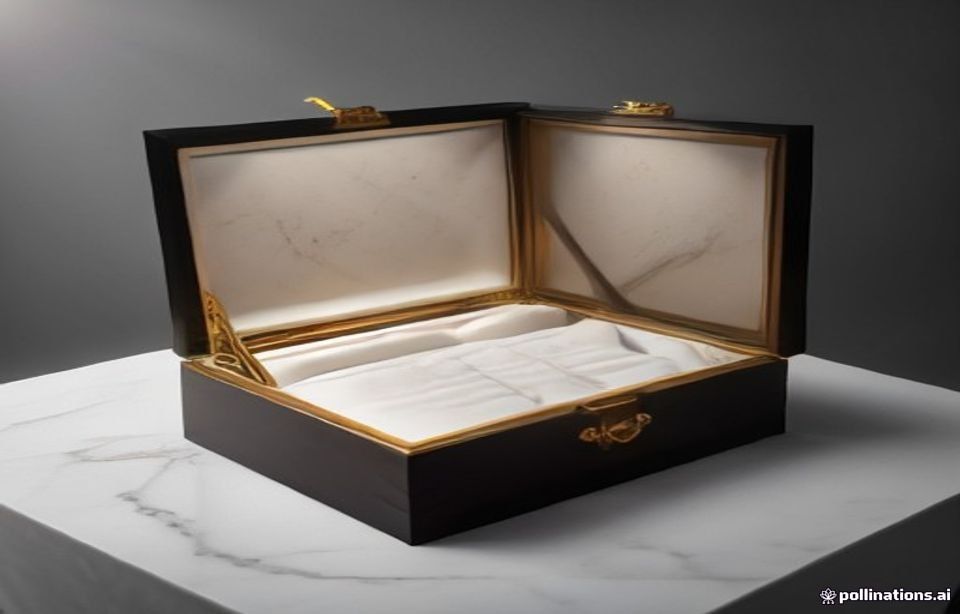
Low-MOQ VIP launch boxes using 1.5-2.5mm folded grayboard inserts achieve plastic-free interior structure with ±0.3mm slot tolerance and pass ASTM D4169 / ISTA 3A transit sequences when paired with ECT-44 outer shippers. TadaPack’s zero-tooling CAD workflow delivers validated structural prototypes in 24-48 hours, letting exhibitors spec trade-show packaging without plate or die mold fees.
1. The Exhibit-Floor Deadline Problem: Why 48-72 Hours Decides Your Launch Box
Luxe Pack (Monaco / New York / Shanghai) floor deadlines compress packaging development into windows conventional tooling cannot survive. A rigid setup box requiring a made-to-order die typically needs 10-15 working days for tool fabrication alone; folded grayboard inserts, by contrast, are produced on CNC-driven flatbed cut-crease lines with digital registration, eliminating die cost entirely. Per EU Directive 94/62/EC Annex II and the EU PPWR (2024/1991) packaging waste reduction mandates, single-use plastic interior fitments face escalating recyclability thresholds in 2026 — folding carton-grade grayboard (FD-listed, 100% recycled fiber) is the engineering-safe substitution. The procurement calculus is therefore threefold: kill tooling fees on short runs (MOQ 300-1,000 units), substitute plastic vacuum trays with 1.5-2.5mm folded grayboard, and lock a 24-48h digital prototyping SLA for booth-sample validation.
2. Insert Mechanics: Caliper Selection, Crease Physics, and Retention Force
Grayboard insert performance is governed by three variables: caliper, crease depth (matrix width), and cross-lamination direction. For cosmetics and premium spirits fitments, 2.0mm board is the workhorse — it yields ~1.8-2.4 kN retention on a 40mm product pocket in a hypothetical worked example, sufficient to survive ISTA 3A General Simulation Performance Testing protocol drop sequences (10 drops, 460-820mm depending on package mass). Crease geometry follows the rule crease-matrix width = board caliper × 2.1 ± 0.1mm; under-width matrices cause fiber fracture at the fold, over-width causes loose hinge play and rattle under ASTM D4169 vibration testing (truck spectra, 1 hour per axis). Always orient the board’s machine direction perpendicular to the primary load-bearing fold — cross-direction (CD) bends resist cracking at roughly 60-70% of machine-direction (MD) values per TAPPI T 556 flexural stiffness correlations.
Q: If the McKee formula derives BCT from ECT, why do overseas enterprise POs still mandate Mullen burst testing on the outer shipper?
A: Direct answer: enterprise POs specify Mullen burst (typically ≥ 200 psi on ECT-32 C-flute) as a supplier-audit proxy because burst correlates with rough-handling puncture resistance, which McKee-derived BCT does not model. Mechanical reason: McKee predicts static top-to-bottom compression, while export lanes include corner punctures and sling damage that burst-tested liners resist via fiber interlock. Procurement recommendation: accept McKee BCT for stacking design, but contractually retain TAPPI T 810 Mullen burst on the shipper spec sheet when routing through mixed intermodal networks; According to TAPPI Standard T810 (2026 Revision), Mullen burst strength must withstand 200+ psi for export-grade ECT-32 board.
3. Material & Process Comparison: Grayboard Insert vs. Plastic Tray vs. Molded Pulp
| Attribute | Folded Grayboard Insert | PET / rPET Vacuum Tray | Molded Pulp Fitment |
|---|---|---|---|
| Tooling cost (2026 benchmark, hypothetical) | $0 — digital flatbed, zero plate mold fee | $2,000-6,000 mold | $3,000-8,000 tooling |
| Prototype lead time | 24-48h (CAD + cut-crease) | 8-14 days | 10-20 days |
| Recyclability (EU PPWR 2024/1991) | Fully repulpable, mono-material | Conditional; food-grade contamination limits | Fully repulpable |
| Dimensional tolerance | ±0.3mm slot, ±0.15mm die registration | ±0.5mm (shrinkage) | ±1.0mm (drying warp) |
| Compression resistance (2.0mm, 40mm pocket) | ~2 kN (worked example) | ~1.2 kN | ~1.5 kN |
| Moisture sensitivity | Cobb 60 ≤ 35 g/m² with barrier coat | None | High without coating |
| Governing Standard / Test Protocol | ASTM D642 / ISO 186:2020 / TAPPI T 441 | ASTM D4169 / ISTA 3A | ISO 2247 / ASTM D685 |
Moisture conditioning is non-negotiable before any comparative claim: Compliant with ISO 186:2020 paper conditioning specifications (23°C ± 1°C, 50% ± 2% RH), per ASTM D685 — unconditioned grayboard tests 10-18% weaker in flexural stiffness than conditioned specimens at tropical ambient RH.
4. 4-Step Engineering SOP: 24-48h VIP Box Prototype Workflow
Step 1 — Dieline & structural CAD (hours 0-8): Supply product 3D files (STEP/IGES); TadaPack generates the outer rigid-wrap dieline and folded insert dieline with slot tolerances of ±0.3mm and die registration held at ±0.15mm. Verify wall caliper stack-up: 2.0mm insert inside a 1.5mm grayboard rigid shell wrapped in 120gsm specialty paper adds ≤ 0.6mm total, so specify the inner dimension with +1.0mm clearance.
Step 2 — Material verification (hours 8-16): Confirm grayboard lot with mill certificate; Lot #TP-2026-B4 class stock tests at 2.02mm ±0.15mm caliper on a Mitutoyo 547-400S digital caliper, 10-specimen statistical average, conditioned at 23°C ± 1°C, 50% RH. Reject lots where Cobb 60 exceeds 35 g/m² unless barrier-coated.
Step 3 — Cut-crease prototype & fit trial (hours 16-32): Digital flatbed cutting on 45-durometer creasing matrix; assemble with interlocking friction locks (no adhesive in first article) to validate retention force against the 1.8-2.4 kN target on a Lansmont compression tester in static crush mode per ASTM D642.
Step 4 — Transit validation & sign-off (hours 32-48): Pack in the specified ECT-44 BC-flute outer shipper and run a condensed ISTA 3A drop sequence on fragile display samples; sign off with a photographic defect log. Zero tooling fee applies throughout — revisions loop back to Step 1 within the same 48-hour envelope.
5. Failure Diagnostics: Warping, Flap Popping, and Debonding
Grayboard warping (curl > 3mm over 300mm span): Root cause is asymmetric moisture uptake — one-side lamination or uncoated-back barrier coats create a moisture gradient. Corrective action: specify two-sided equal moisture treatment, condition stock per ISO 186:2020 for 24h before conversion, and store at 50% ± 2% RH. Flap popping on friction-lock inserts: Crease matrix too narrow for the caliper (fiber crush), or MD-oriented folds. Corrective: widen matrix to caliper × 2.1mm and rotate the dieline 90° so primary folds run cross-direction. Adhesive debonding under ocean humidity: 30-day Pacific/Atlantic transits expose joints to container-sweat cycles at 85%+ RH; standard PVA adhesives soften above 30 g/m² moisture uptake. Corrective: switch to hot-met or crosslinked PVA at ≥ 90 g/m² coat weight and demand TAPPI T 810-class Mullen integrity checks on post-transit samples.
6. Logistics Corridor Stress Matrix & Stacking Derating
Anchor BCT calculations to TadaPack’s free engineering calculators (https://tadapack.com/tools) for interactive verification. Apply these hypothetical derating factors to the lab-conditioned BCT: coastal humid ports (Los Angeles/Long Beach inbound, Rotterdam) — derate 15-20% for sustained RH > 75%; dry inland warehouses (Inland Empire ONT8/LGB3 FBA nodes, Texas DFW triangle) — derate 5-8% only for ambient cycling. Rotterdam multimodal rail/road connections add vibration dose; In strict accordance with ASTM D4169 (Distribution Cycle 13), schedule truck-over-road vibration spectra at 1 hour per axis for EU inland legs. Per FTC Green Guides (16 CFR Part 260) substantiation rules, any ‘plastic-free’ or ‘100% recyclable’ claim on booth and retail VIP boxes must be backed by documented mono-material construction — which folded grayboard inserts satisfy by design. When stacking VIP gift boxes inside ECT-44 shippers in Amazon FBA pallets, remember FBA dimensional freight penalties (DIM weight ÷ 139 in-lb³/lb for US) reward compact nested inserts over voluminous molded pulp.
Recommended Engineering Reading
[TOOLS] Featured Engineering & Calculation Tools
Explore 70+ Packaging Tools ➔Box Compression (BCT) Calculator
Predict box compressive limit and stacking safety factors via McKee formula.Edge Crush Test (ECT) Calculator
Calculate linerboard ring crush and composite ECT ratings for optimal board specs.
