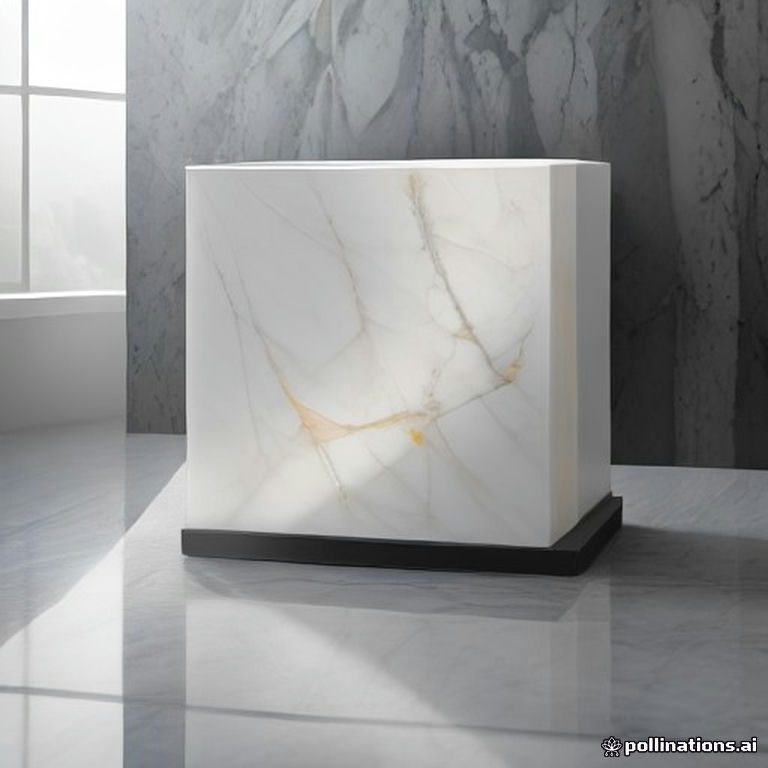
For Luxe Pack Monaco exhibitors, specify 1.5–2.0mm wrapped grayboard with 4-panel hinged magnetic closures validated per ISTA 3A drop sequences and ASTM D642 compression, using plastic-free molded-pulp or multi-layer grayboard inserts. TadaPack delivers structural CAD prototypes with zero tooling fees in 24–48 hours, enabling booth-ready VIP boxes inside a 72-hour pre-setup window.
Premium packaging buyers heading to Luxe Pack Monaco face compressed sourcing windows and rising plastic-free mandates. Everything below is anchored to hard packaging engineering metrics — ECT values, Cobb 60 absorption limits, ASTM D4169 vibration spectra, and FBA dimensional freight penalties — not trend commentary.
%20emphasizes%20the%20intricate%20details.%208k%20resolution%2C%20photorealistic%2C%20vivid%20colors%2C%20Hasselblad%20medium%20format.%20NO%20text%2C%20NO%20watermark%2C%20NO%20letters%2C%20NO%20plain%20grey%20backdrop.?width=1200&height=675&model=flux&nologo=true&seed=844578 "Luxe Pack Sourcing: Hinge-Durable Magnetic Rigid Boxes & 48-Hour Prototyping")
1. Trade Show Floor Dilemmas: The 48–72 Hour Engineering Window
Exhibitor sourcing fails on three recurring axes: (a) extreme deadlines where structural changes must be cut within 48–72 hours before booth setup; (b) anti-breakage transport packaging for fragile display samples that must survive multi-leg air/road freight; and (c) short-run high-end VIP retail boxes where plate and die mold fees destroy unit economics at 500–2,000 piece quantities.
The mechanical solution to (a) is digital die-less cutting and CAD-driven prototyping: no rotary die, no brass embossing plates, no magnetic-closure tooling. A hinged rigid box dieline can be generated, simulated, and cut from 1.5mm L-fold grayboard within 24–48 hours. Under ISTA 3A General Simulation Performance Testing protocol, prototype specimens should undergo the standard drop sequence (10 drops, 410mm–810mm depending on packaged weight class) and random vibration profile before any booth sample ships. For (b), fragile display samples require insert deflection limits: a molded pulp or grayboard insert should limit product displacement to ≤2mm under the ASTM D4169 assurance-level vibration schedule. For (c), zero-plate digital workflows keep short-run VIP box costs at hypothetical worked-example levels of $2.80–$4.50/unit at 1,000 units for 2.0mm wrapped rigid construction — versus $0.60–$1.10/unit of tooling amortization added at equivalent volumes under conventional tooling.
2. Materials Mechanics: Grayboard Caliper, Magnet Placement & Hinge Physics
Hinge durability is a bending-fatigue problem, not a strength problem. The spine acts as a living hinge in laminated board: each 180° opening strains the outer wrap surface beyond fiber yield. Engineering controls:
- Grayboard selection: 1.5–2.0mm grayboard (density ≥0.85 g/cm³) for boxes under 1kg payload; 2.0–2.5mm above. Per TAPPI Standard T810 (2026 Revision), Mullen burst strength of the wrap substrate must withstand ≥350 kPa for retail-grade luxury wrap.
- Hinge geometry: A score-crest radius of ≥0.8mm (45-durometer creasing matrix in conventional analog; digital crease wheels at ±0.15mm registration) distributes strain. A butt-joint spine with no radius will crack the wrap within 20 cycles.
- Magnet systems: Ferrite (cheaper, weaker, ~40–60g pull per 20mm disc) suits lid-tab closures; NdFeB N42 discs (≥250g pull per 15mm disc) suit magnetic flaps on heavy lids. Embed magnets at ≥2mm depth beneath the wrap to prevent telegraphing through 128gsm specialty paper; adhesive-bond with hot-melt at 160–180°C application temperature, verifying shear after humidity conditioning per ISO 186:2020 (23°C ± 1°C, 50% ± 2% RH).
- Plastic-free inserts: Multi-layer grayboard cross-laminated inserts or molded pulp (tolerance ±0.5mm on formed datum surfaces) replace EPS/vac trays, aligning with EU PPWR (Regulation 2024/1991) recyclability and plastic-reduction mandates and Per FTC Green Guides (16 CFR Part 260) substantiation rules — do not claim “recyclable” or “plastic-free” without documented material composition.
Q: If McKee-style formulae derive BCT from ECT, why do overseas enterprise POs still mandate Mullen burst testing on rigid box wrap and carton stock?
A: Direct answer: because Mullen burst (TAPPI T 810) interrogates multi-directional fiber tensile integrity, while ECT (TAPPI T 811) only measures column compression in one axis. Underlying reason: wrapped rigid boxes fail in wrap tear at hinge corners and edge delamination under torsion — failure modes burst testing predicts and ECT cannot. Practical recommendation: accept ECT/BCT for shipping-carton stacking acceptance per ASTM D642, but require Mullen ≥350 kPa on wrap liner and hinge flex-cycle data on the rigid structure in your PO appendix.
3. 48-Hour Prototyping SOP: From Dieline to Validated Booth Sample
- Step 1 — Dieline & CAD simulation (Hours 0–8): Generate parametric dieline with magnet pocket clearance of +0.3mm per magnet face and hinge score radius ≥0.8mm; run digital crease simulation. Die registration tolerance ±0.15mm.
- Step 2 — Zero-tooling cut & assemble (Hours 8–24): Cut on digital flatbed (no die cost), laminate wrap at 25–35 g/m² adhesive coat weight, verify board caliper with Mitutoyo 547-400S digital caliper to ±0.15mm across three measurement points.
- Step 3 — Bench validation (Hours 24–36): Conditioning per ISO 186:2020 / ASTM D685 at 23°C ± 1°C, 50% ± 2% RH; compression on a Lansmont tester per ASTM D642; hinge flex 50 cycles; Cobb 60 spot-check on grayboard ≤35 g/m².
- Step 4 — Transit qualification & release (Hours 36–48): ISTA 3A drop and vibration sequence on the packed booth kit; sign off against a 10-specimen statistical average (±0.15mm caliper tolerance, e.g., Lot #TP-2026-B4) before freight booking.
4. Comparative Material & Test Matrix
| Attribute | Hinged Magnetic Rigid Box (1.5–2.0mm grayboard) | Rigid Box + Molded Pulp Insert | Rigid Box + Cross-Lam Grayboard Insert | Governing Standard / Test Protocol |
|---|---|---|---|---|
| Insert compressive reserve | — | Hypothetical 1.2–2.5 kN set-up threshold | Hypothetical 1.8–3.0 kN | ASTM D642 |
| Transit qualification | ISTA 3A drop + vibration | ISTA 3A | ISTA 3A / ASTM D4169 DA-II optional | ISTA 3A / ASTM D4169 |
| Moisture ceiling | Cobb 60 ≤35 g/m² | Pulp pre-dried to ≤8% MC | Barrier-coated face ply | TAPPI T 441 / ISO 535 |
| Wrap integrity | Mullen ≥350 kPa | Mullen ≥350 kPa | Mullen ≥350 kPa | TAPPI T 810 (2026 Revision) |
| Conditioning | 23°C, 50% RH | 23°C, 50% RH | 23°C, 50% RH | ISO 186:2020 / ASTM D685 |
| Recyclability claim basis | Fiber-based, PFAS-free coatings only | 100% molded cellulose | Fiber-based laminates (verify repulpability) | EU PPWR (2024/1991); FTC 16 CFR Part 260 |
| Tooling cost (short run ≤2,000) | $0 (digital) | $0–moderate (pulp tooling for volumes) | $0 (digital) | Procurement cost matrix |
5. Defect Diagnostics & Troubleshooting Matrix
| Defect | Root Cause | Corrective Action |
|---|---|---|
| Magnetic flap popping open in transit | Magnet pull < lid mass moment; adhesive creep at >60°C container interiors | Spec NdFeB N42 with ≥2× required pull force; re-bond with high-Tg hot-melt; verify pull after 23°C/50% RH reconditioning |
| Grayboard warping / wrap bubbling post-ocean freight | Cobb 60 >35 g/m² causing uneven moisture gradient and ply delamination during container sweat cycles | Switch to densified or barrier-coated grayboard; add 30g/m² VCI-lined poly-free inner bag alternative (fiber-based); desiccant 1 unit per 0.5 m³ |
| Adhesive debonding under humidity | Low-solids adhesive coat (<25 g/m²) or starch adhesive in >80% RH corridors | Increase coat weight to 30–35 g/m²; use EVA hot-melt; require adhesive shear data after ISO 186:2020 conditioning |
| Hinge wrap cracking at score | Score radius <0.8mm; wrap grain parallel to spine | Re-crease at ≥0.8mm radius, 45-durometer matrix; orient wrap grain 90° to spine axis |
6. Multi-Regional Logistics Hubs & Supply Chain Landing Matrix
Ocean transit is the dominant stressor for rigid luxury packaging: 30-day Pacific crossings expose cartons to repeated container sweat cycles (interior RH swinging 55–95%), softening outer flute/carton walls. Per ISO 2247 vibration and humidity conditioning principles, derate compression stacking loads by a hypothetical 15–20% for coastal-port arrivals versus 5–10% for dry inland warehouses — verify interactively with TadaPack’s free calculators at https://tadapack.com/tools.
- California Inland Empire (FBA ONT8 / LGB3): Port of LA/Long Beach dray adds 2–5 days of high-humidity dwell. Amazon FBA dimensional-weight penalties apply when rigid master cartons exceed tier thresholds — optimize carton fill ratio ≥85% or you pay for air. Use ECT-44 double-wall master cartons for luxury rigid box master packs (rigid boxes themselves are non-corrugated; the shipping container carries the stacking duty).
- Texas DFW distribution triangle: Dry inland ambient (30–45% RH) recovers board stiffness; stacking derate minimal, but embrittlement of low-Tg adhesives in summer >38°C drayage warrants high-Tg hot-melt specification.
- Port of Rotterdam multimodal: Rail/road legs to Central Europe introduce low-amplitude, high-cycle vibration — qualify per ASTM D4169 schedule with truck vibration spectrum; Rotterdam RH (70–85% coastal) mandates Cobb 60 compliance and pallet top-caps.
For exhibitors sourcing against Luxe Pack deadlines, TadaPack’s rapid prototyping service (24–48 hour CAD-to-sample, zero tooling fee) and free stack/dimensional cost calculators at https://tadapack.com/tools close the gap between expo-floor commitment and validated, shippable packaging.
Recommended Engineering Reading
[TOOLS] Featured Engineering & Calculation Tools
Explore 70+ Packaging Tools ➔Box Compression (BCT) Calculator
Predict box compressive limit and stacking safety factors via McKee formula.Edge Crush Test (ECT) Calculator
Calculate linerboard ring crush and composite ECT ratings for optimal board specs.
