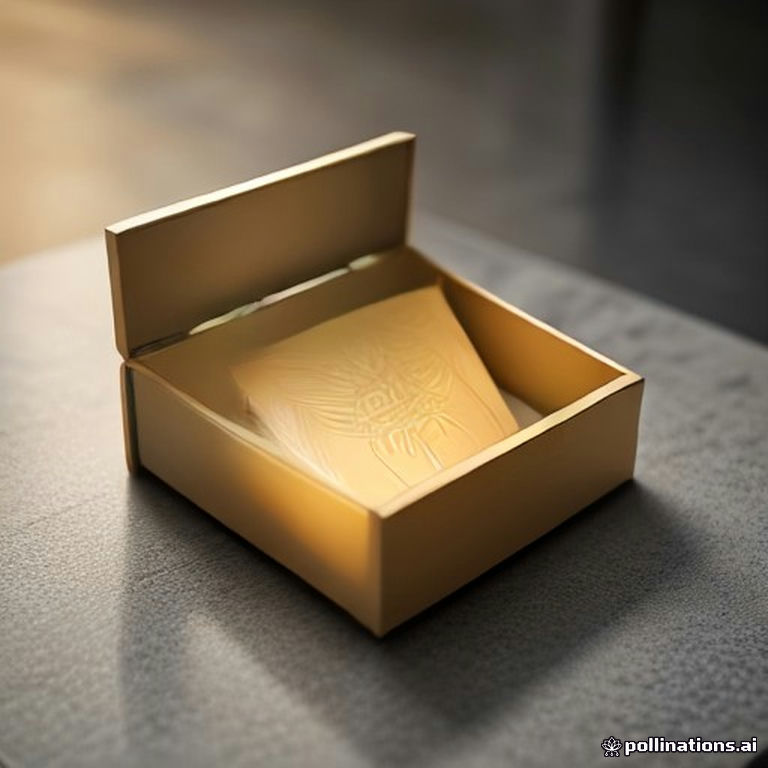
The 2026 rigid gift box with lid market is consolidating around 1.5–2.0mm greyboard construction, mono-material paper wraps, and 0.8–1.2mm engineered lid clearance, driven by EU PPWR recyclability mandates and ocean-freight cost normalization. Buyers who spec lid-to-base tolerance at ±0.3mm and validate compressive resistance per ASTM D642 cut defect claims by an estimated 30–40% versus unmanaged supplier programs (hypothetical procurement benchmark).
- Greyboard caliper (1.5mm, 2.0mm, 2.5mm) is the single largest cost and rigidity lever; moving from 1.5mm to 2.0mm adds roughly 18–25% to material cost but measurably reduces transit warp claims on boxes over 300mm span.
- Lid depth of 25–40mm with 0.8–1.2mm clearance per side is the 2026 sweet spot for hand-open force between 3–8N; under-specifying causes lid popping in ocean transit, over-specifying frustrates end users.
- EU PPWR (Regulation 2025/1892, phased through 2026–2030) is accelerating substitution of laminated film wraps with mono-material paper and water-based barrier coatings.
- Wholesale landed unit cost for a 200×150×70mm lid-and-base box at MOQ 1,000 runs $2.20–$4.80 depending on wrap finish, magnet integration, and insert type (2026 hypothetical benchmark).
- Validate stacking performance per ASTM D642 and distribution cycles per ISTA 3A before committing to tooling; a 48-hour prototype cycle via TadaPack structural prototyping de-risks tooling spend.

Why Lid-and-Base Rigid Boxes Are Being Re-Specced in 2026
Luxury rigid packaging demand is being reshaped less by aesthetics and more by two regulatory and logistics forces: the EU Packaging and Packaging Waste Regulation’s recyclability grading timeline, and normalized-but-volatile ocean freight rates that penalize dimensional inefficiency. The rigid gift box with lid — historically the default premium format for cosmetics, spirits, jewelry, and DTC gifting — sits squarely in the crossfire because its conventional construction (greyboard wrapped in coated art paper with laminated film lamination) is exactly the construction PPWR recyclability grading penalizes.
Consequently, 2026 procurement specifications are converging on three engineering shifts. First, wrap substrate: coated art paper laminated with BOPP film is being replaced by 128–157gsm uncoated or lightly coated stock finished with water-based matte varnish, preserving tactile softness while enabling mono-material paper recycling streams. Second, greyboard sourcing: EU and US buyers increasingly require greyboard with documented recycled content and, where food-adjacent contact occurs, low-migration constructions consistent with FSDC 2018 (China GB 4806.8) or EU Framework Regulation 1935/2004 contact requirements. Third, structural simplification: magnet closures and ribbon pulls are being consolidated into single-piece hinged lid designs where the luxury brief allows, cutting wrap labor — the second-largest cost component after board — by 15–30% (hypothetical worked-example range).
The Engineering Parameters That Actually Determine Cost and Performance
Four parameters dominate the bill of materials and the defect rate of a lid-and-base rigid box. Procurement teams that fix these four numbers in the RFQ — rather than letting suppliers propose them — consistently achieve tighter landed-cost control.
1. Greyboard caliper and grade. 1.5mm greyboard (approximately 1,050gsm at ~700g/m² density) is the volume standard for boxes under 250mm in any dimension. Above 300mm span or for stacked retail displays, 2.0–2.5mm is warranted; compressive resistance scales roughly with the square of caliper for equivalent board grade, which is why a 0.5mm increase meaningfully improves warehouse pallet-stack performance. Verify stacking claims with ASTM D642 compression testing on finished boxes rather than relying on board-level burst data alone.
2. Lid clearance and depth. The 0.8–1.2mm per-side clearance window is a manufacturing tolerance compromise: below 0.8mm, humidity-driven board swelling (greyboard expands 0.5–1.5% dimensionally between 45% and 85% RH) causes seizure; above 1.2mm, the lid rattles and the perceived quality drops measurably in consumer panels. Lid depth of 25–40mm provides a stable guide rail; shallower lids (under 20mm) require tighter tolerance control that most volume wrap lines cannot hold at scale.
3. Wrap substrate and finish weight. 128gsm art paper is the cost-performance standard; 157gsm improves edge-wrap conformity on deep-recess or complex-curve constructions but adds material and print cost. Edge-wrapping quality at the lid rim is where luxury perception is won or lost — a 45° mitered corner wrap versus a stacked overlap changes perceived quality more than any print effect.
4. Insert and closure engineering. Molded pulp and paperboard inserts with 0.2mm interference-fit retention are displacing EVA foam in EU-bound SKUs for recyclability reasons. Magnet closures (typically N35 neodymium discs, 8–15mm diameter, embedded with 0.5mm board cover) add $0.25–$0.60 per unit at MOQ 1,000 (hypothetical benchmark) and add two wrap-labor stations.
Q: Why does lid clearance need to be specified per side rather than as a total diameter difference, and what happens at ocean-freight humidity extremes?
A: Per-side clearance is the only spec that maps to wrap-line tooling, because each lid wall is formed and wrapped independently — a 2.0mm total-difference spec can be manufactured as 1.4/0.6mm asymmetrically and pass a naive check. The mechanical reason for the 0.8mm floor: greyboard at 85% RH can swell ~1.5% dimensionally, meaning a 200mm lid wall grows ~3mm across both walls, or ~1.5mm per side — absorbing the entire minimum clearance and causing lid seizure or wrap delamination during a Pacific transit. Practical recommendation: specify clearance per side at 1.0mm for ocean-shipped EU/US-bound goods, and condition sample boxes at 23°C/50% RH per ISO 187 prior to force testing to establish a comparable baseline.
What These Shifts Mean for Buyers and Manufacturers
For procurement directors, the practical consequence is that RFQs written on 2020-era templates are now structurally mispriced. The wrap-substrate substitution (film lamination to water-based finish) carries a modest unit-cost premium of roughly 3–8% (hypothetical range) but materially reduces compliance risk under EU PPWR recyclability grading that phases in through the decade. Buyers shipping into EU markets should require supplier declarations of wrap mono-materiality and PFAS-free barrier chemistry where grease or moisture resistance is specified — the FTC Green Guides (16 CFR Part 260) likewise require substantiation for any recyclability claim made on US-marketed packaging.
For structural engineers and converters, the constraint is tooling and tolerance discipline. Wrap-line registration tolerance of ±0.5mm on print-to-wrap position and ±0.3mm on die-cut lid geometry are the realistic 2026 volume-line capabilities; anything tighter requires manual finishing at cost premiums that do not survive procurement review above MOQ 5,000. The defensible strategy is to design tolerance budget into the structure: specify 1.0mm per-side lid clearance so that a ±0.3mm manufacturing spread still lands inside the 0.8–1.2mm functional window, and validate the assembly with a distribution-cycle simulation per ISTA 3A (General Simulation) before tooling release — ISTA 3A’s drop, vibration, and compression sequences reliably expose lid-popping and seam-debond failures that static QC misses.
For DTC brand owners, freight math now rivals unit cost. A 200×150×70mm lid-and-base box nested with its lid on consumes roughly 0.0021 m³; at containerized ocean rates and US LTL inbound, dimensional-weight pricing rewards designs where lids nest or ship inverted in the carton. Run your specific dimensions through TadaPack’s freight calculators at tadapack.com/tools to quantify the dimensional-weight penalty before finalizing box geometry — a 5mm caliper reduction on outer carton spacing can shift a SKU down a freight class tier.
Recommended Actions and a Verification SOP for Procurement Teams
For a 2026 rigid gift box with lid program, execute the following verification sequence before releasing tooling spend:
Step 1 — Lock the board spec: Define greyboard caliper (1.5/2.0/2.5mm), density range (650–750g/m² per grade), and moisture content (≤12% at pack-out); require the supplier’s ISO 534 caliper certificates and condition samples per ISO 187 (23°C, 50% RH) before acceptance testing.
Step 2 — Set the tolerance budget: Specify lid clearance at 1.0mm per side with a ±0.3mm acceptance band, lid depth 25–40mm, and wrap registration ±0.5mm; reject any RFQ response that quotes clearance as a total-difference figure rather than per-side.
Step 3 — Test the failure modes that matter: Commission finished-box compression per ASTM D642 (target BCT with an appropriate safety factor against expected warehouse stack height) and a full ISTA 3A distribution cycle on 6–10 sample cartons; inspect lid rim wrap seams for debond after the humidity-conditioned transit legs.
Step 4 — Audit compliance claims: For EU-bound SKUs, obtain written wrap mono-materiality and recycled-content declarations aligned to PPWR grading; for US claims, verify any recyclability marketing language against FTC Green Guides (16 CFR Part 260) substantiation requirements, and confirm PFAS-free status on any barrier-coated wrap.
Defect diagnostics — two recurring failure modes and floor-level corrections:
Lid popping open in transit: Root cause is a combination of clearance above the 1.2mm ceiling and inadequate lid depth. Corrective action: re-cut lid geometry to reduce clearance toward 0.9mm and increase lid depth to ≥30mm; interim fix is a paper belly-band, which adds $0.03–$0.08 per unit but does not resolve the underlying tolerance drift.
Greyboard warping and wrap delamination post-ocean-transit: Root cause is moisture uptake above ~12% during 25–35 day Pacific or Atlantic container transit, aggravated by container sweat on high-humidity port legs. Corrective actions: specify moisture-resistant wrap adhesive (hot-melt EVA rather than cold starch-based where the wrap is coated), require container desiccant loading per the freight forwarder’s humidity plan, and insist on shrink-wrapped, edge-sealed master cartons — exposed greyboard edges absorb moisture fastest and drive the warp.
Finally, compress the development timeline: TadaPack’s structural prototyping service turns CAD die-lines into physical lid-and-base samples in 48 hours, which lets procurement teams run Step 3 testing on real constructions before committing volume tooling. Pair this with the free cost and freight calculators at tadapack.com/tools to model unit-cost sensitivity across greyboard caliper and wrap weight options — most programs find the 1.5mm-to-2.0mm rigidity upgrade decision can be settled quantitatively, not by feel, in under an hour of calculator work.
Recommended Engineering Reading
[TOOLS] Featured Engineering & Calculation Tools
Explore 70+ Packaging Tools ➔Box Compression (BCT) Calculator
Predict box compressive limit and stacking safety factors via McKee formula.Edge Crush Test (ECT) Calculator
Calculate linerboard ring crush and composite ECT ratings for optimal board specs.
