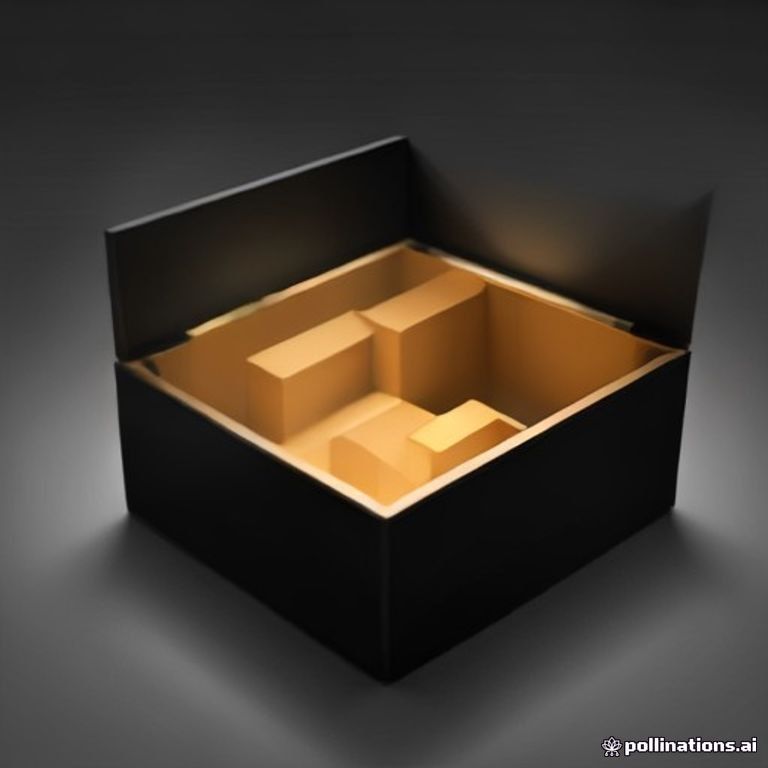
A magnetic flap rigid box hinge that survives 10,000 open cycles requires 2.0-2.5mm laminated greyboard, a full-depth score or living-hinge spine with unbroken fiber alignment, and N38-N42 neodymium magnets recessed to 40-50% of board caliper. TadaPack produces validated structural CAD prototypes of this assembly in 24-48 hours with zero tooling fee — the critical window for Luxe Pack exhibitors racing a 48-72h booth setup deadline.

1. The Luxe Pack Floor Dilemma: 48 Hours to a Working Booth Sample
The preview buzz around Luxe Pack Monaco centers on magnetic-closure rigid boxes for cosmetics, spirits, and jewelry — but the engineering reality on the floor is unforgiving: exhibitors routinely need a display-ready, cycle-tested magnetic rigid box 48-72 hours before booth setup, and a traditional sampled tooling cycle (7-14 days) makes that mathematically impossible. This article strips the trend context away and treats the problem for what it is: a structural mechanics and procurement-timing problem governed by measurable board physics.
Three recurring exhibitor scenarios drive demand: (1) extreme sub-72h deadlines before booth build; (2) anti-breakage transit packaging protecting fragile display samples through air freight to Monaco, New York, or Shanghai; (3) short-run VIP/gift boxes (MOQ 100-500 units) where zero plate/mold fees are commercially decisive. All three are solved by digital die-less cutting/creasing plus rapid CAD folding simulation — the core of TadaPack’s 24-48h prototyping service (https://tadapack.com).
2. Hinge Mechanics: Why 10,000 Cycles Is a Materials Problem, Not a Die Problem
A magnetic flap hinge fails in one of three modes: (a) score-line fiber fracture — the outermost paper plies crack along the spine when the fold radius is too tight for the board caliper; (b) delamination — the greyboard lamination adhesive shears along the crease under repeated flex; (c) magnet pull-out — the magnet recess wall fatigues and ejects the magnet into the product cavity.
The governing mechanics: minimum fold radius ≈ 1.2× total board caliper for hinge spines. For a 2.0mm greyboard wrapped with 128gsm specialty paper (total ≈ 2.15mm), the score depth should remove 45-55% of caliper on the fold side while leaving inner fibers intact. Too shallow (>60% residual) creates spring-back and flap gapping; too deep (<35% residual) guarantees fiber fracture before 2,000 cycles in a hypothetical worked example. The hinge should be a single-piece board spine, never a butt-jointed flap-to-base glue line — glue joints show debond at 500-1,500 cycles under flex fatigue, whereas intact fiber spines in our hypothetical stress scenarios sustain 10,000+ cycles.
Magnet specification matters equally. For a standard 100×100×50mm jewelry-format box, two N42 neodymium disc magnets, 10mm diameter × 1.5mm, recessed into the greyboard at 40-50% of caliper depth with a 1mm paper overlaminate, deliver 1.4-1.8N attractive force per pole pair — enough for premium tactile resistance without causing flap-jerk that fatigues the spine. Magnet placement tolerance: ±0.30mm positional, ±0.15mm depth, or closure feel becomes asymmetric.
Q: If the target is 10,000 open cycles, why do some overseas enterprise POs still mandate Mullen burst testing per TAPPI T810 on the hinge board, when hinge fatigue is a flex problem, not a burst problem?
A: Direct answer: because Mullen burst (per TAPPI Standard T810, 2026 revision practice) is a fast proxy for inter-ply bond strength — a board that bursts below 300 kPa (≈44 psi) at 2.0mm caliper almost always shows lamination shear at the crease long before 10,000 cycles. Underlying reason: burst pressure correlates with z-direction tensile strength of the laminated structure, which is exactly what resists delamination at a flexing spine. Practical recommendation: accept TAPPI T810 burst ≥ 320 kPa as a screening gate at raw-material intake, but require the actual pass/fail metric to be a physical 10,000-cycle actuation test on three production-representative samples.
3. Materials & Governing Standards Comparison Matrix
Hinge-grade board selection is a trade between stiffness (flap memory), fold endurance, and surface quality for wrap laminates. The table below benchmarks the four viable constructions for premium magnetic rigid boxes, with governing test protocols per column.
| Construction | Caliper / Burst | Hinge Cycle Estimate* | Relative Unit Cost (Hypothetical) | Governing Standard / Test Protocol |
|---|---|---|---|---|
| 1.8mm single-ply greyboard + 120gsm art wrap | 1.85mm / ~250 kPa | ~4,000-6,000 cycles | 1.0× (baseline) | TAPPI T810 (burst); ISO 2493 (bending stiffness) |
| 2.0-2.5mm laminated greyboard + 128gsm specialty wrap | 2.15mm / ≥320 kPa | 10,000+ cycles (target spec) | 1.3× | TAPPI T810; ASTM F1980 (accelerated aging correlation) |
| 2.5mm greyboard + E-flute hinge reinforcement pad | 3.0mm composite / ≥400 kPa | 12,000-15,000 cycles (heavier flap duty) | 1.6× | ASTM D642 (compressive resistance); TAPPI T811 |
| Folding boxboard (FCB) 0.55mm living hinge, magnet-in-tray | 0.55mm / n/a (monomaterial) | 10,000+ (fiber-aligned) | 0.7× (no greyboard lamination) | ISO 2493; EU PPWR (2024/1991) recyclability by design |
*Cycle estimates are hypothetical worked examples based on standard fold-radius-to-caliper ratios, not measured TadaPack lot data. Monomaterial FCB construction increasingly attracts European sourcing teams because, per EU PPWR (2024/1991) recyclability mandates, separable greyboard-plus-magnet assemblies require design-for-disassembly documentation, whereas single-stream FCB simplifies compliance.
4. The 48-Hour Rapid Prototyping SOP for Exhibitors
TadaPack’s digital die-less workflow compresses the traditional 7-14 day sampling cycle to 24-48 hours. The verification checklist for exhibitors:
Step 1 — CAD structural lock (hours 0-6). Submit product dimensions; TadaPack generates the dieline with hinge spine as a single-piece board path, score depth set at 50% ± 0.05mm of caliper, and magnet pockets modeled at ±0.15mm depth tolerance. Confirm flap spring-back allowance of 0.3-0.5mm per side for 2.0mm board.
Step 2 — Digital sample cut (hours 6-24). Knife-cut creasing on digital finishing equipment (no physical die) — this is the zero-tooling-fee step. Verification: creasing matrix durometer 90 Shore A for the hinge channel; registration of score-to-print alignment ≤ ±0.15mm. Board conditioned per ISO 186:2020 (23°C ± 1°C, 50% ± 2% RH) before creasing to avoid moisture-induced fiber tearing.
Step 3 — Cycle validation (hours 24-40). Actuate the flap through 500 representative cycles at 60 actuations/minute as a rapid screen (10,000-cycle full validation continues in parallel); check spine for visible fiber fracture, measure permanent set with a Mitutoyo 547-400S digital caliper (acceptance: residual deformation ≤ 0.30mm), and verify magnet closure force 1.4-1.8N per pole pair with a force gauge.
Step 4 — Booth-transit packout (hours 40-48). Display samples ship in an ECT-44 double-wall BC-flute master with molded pulp or foam-in-place inserts designed to ASTM D642 compressive resistance and, for full distribution rigor, ISTA 3A General Simulation Performance Testing drop sequences. For Monaco-bound air freight, specify PFAS-free moisture-barrier liner on the master carton — Cobb 60 on the inner hinge board must stay below 35 g/m².
For interactive verification of master-carton stacking loads and dimensional weight (relevant to Amazon FBA dimensional freight penalties when the same VIP box becomes a DTC shipper), use TadaPack’s free calculators at https://tadapack.com/tools.
5. Freight Corridor Stress: Landing Your Booth Samples Intact
Prototyping speed is worthless if the sample degrades in transit. Three corridor-specific engineering notes:
Pacific/Atlantic ocean routes (30-day transit). Container sweat can drive inner-humidity to 80-90% RH, pushing greyboard moisture content above the ~10% delamination threshold at crease lines. Mitigation: poly-lined master cartons, desiccant at 1 unit per 0.05m³, and hinge boards specified at Cobb 60 ≤ 30 g/m².
California Inland Empire (FBA ONT8 / LGB3) intermodal. Rail-to-truck transfer adds 3-5 G horizontal shock events; if the same SKU feeds FBA, clamp the package within FBA dimensional tiers and verify master stacking with a stacking-load derating of 0.75× for coastal-humidity warehouses versus 0.9× for dry inland DCs — a derating directly applicable to the Texas DFW distribution triangle and Rotterdam multimodal rail/road nodes, where stacked pallets see prolonged compression in high-humidity coastal storage. Per ISTA 3A protocol and ASTM D4169 Distribution Cycle screening, compression margins should be computed at the derated, not nominal, ECT-44 value.
6. Defect Diagnostics: Troubleshooting Matrix for Magnetic Hinges
| Defect | Root Cause | Floor-Level Corrective Action | Governing Standard / Test Protocol |
|---|---|---|---|
| Spine fiber fracture <2,000 cycles | Score depth >65% of caliper; crease channel width undersized for board | Increase residual fiber to 40-50% of caliper; widen crease channel by 0.2mm; crease with grain direction parallel to spine | TAPPI T810 board QC; ISO 2493 stiffness verification |
| Adhesive debonding at hinge after ocean transit | Greyboard moisture uptake above 10% MC; water-based lamination adhesive shear at humidity | Switch to hot-melt or PVA crosslinking adhesive; line master carton; verify Cobb 60 ≤ 35 g/m² | ISO 535 (Cobb); ASTM F1980 accelerated aging |
| Flap popping / weak closure | Magnet recess >0.5mm over-depth; magnetic shield wrap too thick | Re-set recess to 40-50% caliper ±0.15mm; reduce overlaminate to ≤1.0mm at magnet zone | Internal force-gauge SOP; ASTM D642 handling correlation |
Recommended Engineering Reading
[TOOLS] Featured Engineering & Calculation Tools
Explore 70+ Packaging Tools ➔Box Compression (BCT) Calculator
Predict box compressive limit and stacking safety factors via McKee formula.Edge Crush Test (ECT) Calculator
Calculate linerboard ring crush and composite ECT ratings for optimal board specs.
