Box compression strength predicted by the McKee equation (BCT ≈ 5.87 × ECT^0.746 × Z^0.492 × d^0.608) should be derated 30–50% for ocean-freight humidity and warehouse dwell time before selecting ECT-32 or ECT-44 board grades. Verification requires 10-specimen ASTM D642 compression testing (or ISO 12048 equivalent) after 23°C/50% RH conditioning per ASTM D685.
As e-commerce volumes push container utilization toward theoretical maximums and EU PPWR (2024/1991) recyclability mandates force material downgauging, the classic failure mode of corrugated containers — column buckling under static stack load during 30-day ocean transit — has returned to the center of procurement risk. The hypothetical worked examples below use the McKee-derived BCT framework, cross-verified under ASTM D642 and ISO 12048 protocols, to convert lab numbers into safe warehouse stack heights.
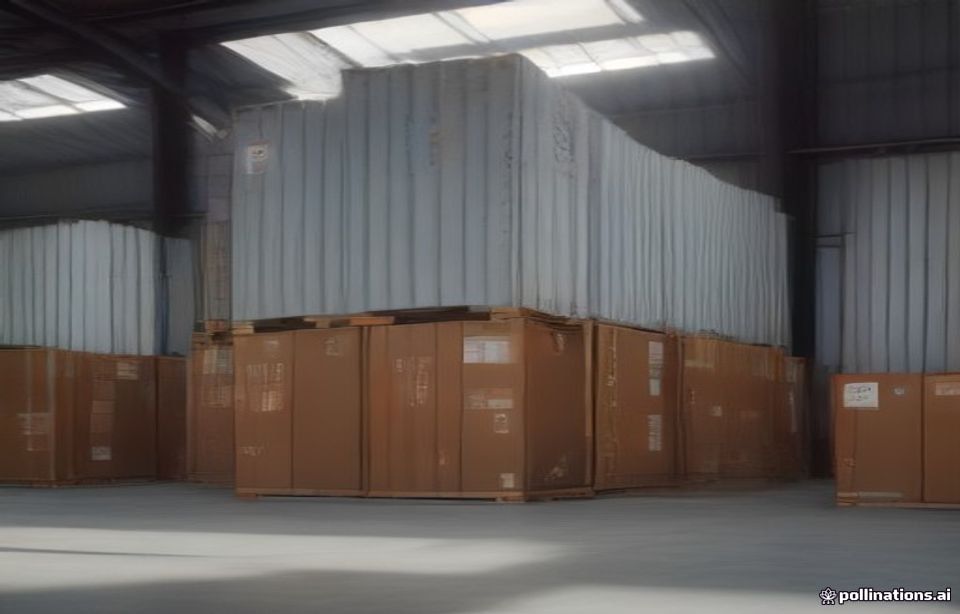
.%20Golden%20hour%20lighting%2C%20rim%20lighting.%208k%20resolution%2C%20Hasselblad%20medium%20format%2C%20photorealistic%2C%20vivid%20colors.%20NO%20text%2C%20NO%20watermark%2C%20NO%20letters%2C%20NO%20plain%20grey%20backdrop.%22%20%7D?width=1200&height=675&model=flux&nologo=true&seed=143172&key=sk_KwnsMjO1dSD7tHPGPQMEMx2EkWVkvOuh "McKee BCT Failure Analysis: ASTM D642 & ISO 12048 Stack-Strength Optimization")
1. McKee Mechanics: From ECT to Box Compression Strength
The semi-empirical McKee equation remains the industry’s primary predictive tool:
BCT = 5.87 × ECT^0.746 × Z^0.492 × d^0.608
Where ECT is edge crush strength (kN/m), Z is box perimeter (mm), and d is combined board caliper (mm). Hypothetical worked example: a 400 × 300 × 250 mm RSC (Z = 1400 mm) in ECT-32 C-flute (d ≈ 4.2 mm) yields BCT ≈ 5.87 × 32^0.746 × 1400^0.492 × 4.2^0.608 ≈ 4,270 N. With a required stack load of 1,100 N per box and a target safety factor of 3.0, this grade passes — but only at laboratory humidity.
Key engineering levers within the McKee exponents:
- ECT dominates (0.746 exponent): upgrading ECT-32 → ECT-44 lifts predicted BCT by roughly 28%.
- Perimeter penalizes: doubling box size cuts per-box column efficiency; multi-depth trays and interior supports restore load paths.
- Caliper matters less than expected (0.608): flute selection should be driven by cushioning and ISTA 3A drop requirements, not BCT alone.
Q: If McKee derives BCT from ECT, why do overseas enterprise POs still mandate Mullen burst testing?
A (direct): Mullen burst (TAPPI T810, 2026 Revision) verifies fiber quality and puncture resistance, not stacking strength — it guards a different failure mode. (reason): Rough-handling corridors with sharp-edge impacts and pallet-slat point loads rupture sidewalls before column buckling occurs; burst-resistant kraft liners resist tear propagation that ECT cannot predict. (recommendation): Accept dual specification — ECT for BCT/staking design and a 250 psi (1,724 kPa) minimum burst for export cartons — and use TadaPack’s free calculators to map both to cost-optimal liner combinations.
2. Test Protocol Comparison: ASTM D642 vs. ISO 12048 and Supporting Standards
In strict accordance with ASTM D642, specimens are compression-tested at 12.7 mm/min platen speed after conditioning per ISO 186:2020 paper conditioning specifications (23°C ± 1°C, 50% ± 2% RH) and ASTM D685. ISO 12048 adds sustained-load stacking methodology (typically 24 h or 7-day dwell under fixed dead load), which better models warehouse creep. TAPPI T811 (ECT) supplies the board-level input; ISTA 3A General Simulation Performance Testing governs the packaged-product dynamic validation.
| Test / Attribute | Method Detail | Pass/Fail Benchmark (Typical) | Governing Standard / Test Protocol |
|---|---|---|---|
| Box compression (quasi-static) | 12.7 mm/min platens, 10-specimen average, ±0.15 mm dimensional tolerance | BCT ≥ 3.0 × sustained top load | ASTM D642 / ISO 12048 |
| Sustained stacking (creep) | Fixed dead load, 24 h–7 day dwell, deflection < 13 mm | No collapse; < 5% dimensional drift | ISO 12048 |
| Edge crush input | 100 × 25 mm specimen, waxed clamps | ECT-32 (single-wall export), ECT-44 (double-stack) | TAPPI T811 / TAPPI T810 (2026 Revision) burst |
| Moisture resistance | Cobb 60 water absorption, liner face | < 35 g/m² (higher triggers transit delamination risk) | ISO 535 / ISO 2247 humidity cycling |
| Dynamics (drop/vibration) | Random vibration + 10-drop sequence, e-commerce parcel profile | No product damage, no box rupture | ISTA 3A / ASTM D4169 (DC-13) |
| Recyclability & claim substantiation | PFAS-free barrier coatings; recyclable-corrugated labeling | Designed-for-recycling; claim substantiated | EU PPWR (2024/1991) / FTC Green Guides (16 CFR Part 260) |
3. Ocean-Freight Humidity Derating: The 30-Day Corridor Physics
Container sweat across Pacific and Atlantic routes routinely drives in-box RH to 85–95% for multi-day cycles. Corrugated loses 40–55% of its room-condition BCT at those levels because moisture plasticizes the starch adhesive bond line and softens flute walls — the same mechanism flagged when Cobb 60 water absorption exceeds 35 g/m². TadaPack’s factory-floor derating model:
- High-humidity coastal ports (Long Beach, Rotterdam, Singapore): apply BCT derating factor 0.50–0.55.
- Intermodal rail legs (California Inland Empire — FBA ONT8 / LGB3; Texas DFW triangle): derating 0.60–0.70; dry inland warehouses allow 0.75+.
- Port of Rotterdam multimodal road/rail: derating 0.55–0.65, compounded by EU winter dew point swings.
Hypothetical worked example: the ECT-32 box (predicted BCT ≈ 4,270 N) derated at 0.52 for a trans-Pacific container delivers an effective 2,220 N — a safety factor of 2.0 against a 1,100 N top load, which is marginal for >60-day ocean plus port dwell. Corrective paths: (a) upgrade to ECT-44 BC-flute (+28% McKee BCT), (b) specify Cobb 60 < 30 g/m² water-resistant liner, or (c) add corner posts converting side walls into load-bearing columns. Verify interactively at https://tadapack.com/tools.
4. Factory-Floor SOP: 4-Step BCT Validation & Lightweighting Workflow
- Step 1 — Board qualification: Confirm ECT to TAPPI T811 and burst to TAPPI T810 (2026 Revision) on incoming lots; caliper check ±0.15 mm with Mitutoyo 547-400S; reject liner lots with Cobb 60 > 35 g/m².
- Step 2 — McKee pre-design: Compute predicted BCT in the CAD/dieline environment (E-flute 1.5 mm, B 3.0 mm, C 4.2 mm, BC 7.0 mm combined calipers); set slot depth to flute pitch minus 0.5 mm and maintain ±0.15 mm die registration to avoid crush at crease lines, which can locally reduce ECT by up to 15%.
- Step 3 — Lab verification: Run 10-specimen ASTM D642 compression after ISO 186:2020 conditioning (23°C ± 1°C, 50% ± 2% RH); run a parallel 5-specimen set after ISO 2247 humidity exposure; accept only if the derated mean BCT ≥ 3.0 × sustained top load.
- Step 4 — Dynamics and release: Validate the palletized/parcel configuration under ISTA 3A (or ASTM D4169 distribution cycle) with drop shock sequences; release the dieline with a documented maximum stack height and a regional derating table for each destination corridor.
5. Failure Diagnostics & Troubleshooting Matrix
| Defect | Root Cause | Floor-Level Corrective Action |
|---|---|---|
| Flap popping / top-load buckling at creases | Over-creased or mis-registered scoring crushing flute; slot depth mismatch | Re-cut scoring matrix to 45-durometer creasing rule, restore ±0.15 mm registration, verify slot depth = flute pitch − 0.5 mm |
| Adhesive debonding / delamination after ocean transit | High Cobb 60 liner plus non-water-resistant starch bond; prolonged >85% RH | Switch to water-resistant (WR) liner, Cobb 60 < 30 g/m²; add container desiccant at 1 unit/2 m³; re-run ISO 2247 cycling |
6. Procurement Cost-Down Model: Lightweighting Without Risk
Hypothetical procurement worked example (illustrative math, not audited results): migrating 500,000 export cartons/year from C-flute ECT-44 double-wall to a redesigned ECT-32 single-wall with two internal corner supports can cut board cost per box by roughly 12–18% and reduce dimensional weight, provided the derated BCT still clears the 3.0 safety factor at destination humidity. Pair with EU PPWR (2024/1991) designed-for-recycling compliance and PFAS-free barrier coatings, and substantiate any recyclable claim per FTC Green Guides (16 CFR Part 260). For structurally re-engineered dielines, prototype iterations through TadaPack’s custom structural packaging and prototyping services, then confirm each revision against the full ASTM D642 / ISO 12048 validation loop in Section 4.
Recommended Engineering Reading
[TOOLS] Featured Engineering & Calculation Tools
Explore 70+ Packaging Tools ➔Box Compression (BCT) Calculator
Predict box compressive limit and stacking safety factors via McKee formula.Edge Crush Test (ECT) Calculator
Calculate linerboard ring crush and composite ECT ratings for optimal board specs.
