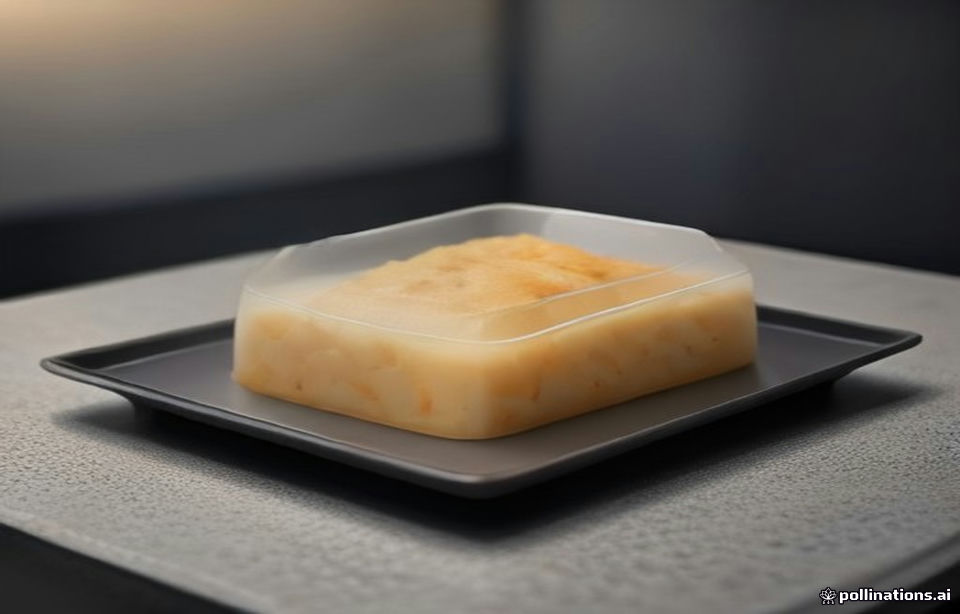
The WorldStar 2026 Food-category win for ReKeepEat confirms that 100% mono-material PET tray-and-lid systems with resealing technology are now the commercial benchmark for recyclable fresh-food packaging, developed at Grupo Lantero’s Innotech centre with an eco-design brief to minimize material use and life-cycle impact. Procurement teams should treat single-polymer PET construction, recycled-content compatibility, and repeated open/close seal integrity as mandatory specification lines for sliced products, fresh meat, and ready meals in vacuum or MAP formats.
- ReKeepEat (Coexpan + Emsur, Grupo Lantero) won the WorldStar Awards 2026 “Food” category, selected from 481 entries across 36 countries — the solution’s fourth award.
- The winning architecture is a 100% mono-material PET tray and lid with resealing technology for repeated open/close cycles while preserving freshness and reducing food waste.
- Eco-design objectives: minimize material usage and environmental impact across the full life cycle, from manufacturing to recycling, with recycled-content integration enabled by single-polymer construction.
- Target applications: sliced products, fresh meat, and ready meals packed in vacuum or modified atmosphere (MAP).
- Buyer action: audit current multi-laminate tray SKUs against mono-PET alternatives to hit 2030 recyclability goals without compromising design or functionality.
Why a Mono-PET Tray Beat 480 Other Entries: The Judging Logic Decoded
WorldStar is judged on the total packaging system, not on a single material property. The verified facts explain the win precisely: ReKeepEat is a 100% mono-material PET tray and lid — meaning the closure, which is the most common source of dissimilar-polymer contamination in rigid recycling streams, is also PET. Resealing technology allows repeated opening and closing while preserving freshness, which addresses food waste, a life-cycle impact category that modern LCA methodologies weight heavily alongside material circularity. All development occurred at Grupo Lantero’s Innotech innovation centre under an explicit eco-design brief: minimize material usage and environmental impact from manufacturing through recycling.
For structural engineers, the lesson is that judges and regulators now evaluate the same three axes: polymer purity (single resin family across all components), functional performance (seal integrity through repeated consumer handling), and demonstrable recyclability. Per EU Regulation (EU) 2024/1991 (PPWR) and Directive 94/62/EC Annex II, packaging placed on the EU market must be designed for recyclability by defined grade thresholds — a multi-material tray with a PP or PE lid and an EVOH barrier layer increasingly fails those design-for-recycling checks, while an all-PET construction passes by construction. Note on barrier layers: if your fresh-meat SKU requires an oxygen barrier, typical industry practice is to specify barrier-coated or coextruded PET systems that remain >95% PET by mass (typical industry reference value; confirm against your certification body’s recyclability protocol), rather than laminating a dissimilar polymer film.
The Physics of Reseal on Rigid PET: Sealing Bead Design and MAP Integrity
Resealability on a rigid PET tray is a geometry problem, not an adhesive problem. The verified source states the tray supports vacuum and modified atmosphere packing for fresh meat and ready meals — which means the lidding film-to-flange interface must sustain hermetic seal integrity at initial sealing, then survive repeated consumer peel/reseal cycles while retaining headspace gas composition. In typical industry design practice, this is achieved with a raised perimeter sealing bead on the tray flange (typical bead width 2–4 mm, flange flatness tolerance ±0.15 mm, typical industry reference values) that re-engages a PE-sealant lidding layer under consumer thumb pressure. The critical engineering point: because the tray itself is 100% PET, the flange does not distort under retort-free chilled distribution, so bead re-engagement force stays within spec across the shelf life.
Q: If our MAP tray holds initial seal burst pressure, why do we still see shelf-life failures after consumer reseal cycles?
A: Initial seal integrity per ASTM F88 measures the pristine seal, but repeated open/close cycles degrade the sealant surface; industry practice is to cycle-test 5–10 reseal events and measure residual seal strength and residual OTR of the resealed zone (typical acceptance: residual seal strength ≥50% of initial, typical industry reference values). Mechanically, each peel partially exhausts the sealant’s tack and can micro-contaminate the bead with product fats — especially on fresh-meat SKUs. Procurement recommendation: write reseal-cycle count and residual-seal-strength retention into the specification, not just initial burst, and validate the full tray-lid system (not components) under ASTM F1929 seal-g leak screening before line trials.
For distribution validation of the filled system, run ISTA 3A General Simulation for e-commerce-ready meal kits or ASTM D4169 Distribution Cycle 13 for retail pallet distribution: vibration and conditioned drop sequences will expose flange cracking and lid delamination that bench-top seal tests miss. Compression of stacked retail-ready tray packs is checked per ASTM D642, with the safe stack load derived from a McKee-type approach adapted to thermoformed geometry rather than corrugated ECT — most brands use a 3–4x safety factor over the highest expected warehouse stack column (typical industry reference value).
Procurement Impact: Cost Teardown of Mono-PET vs. Conventional Multi-Material Trays
The buyer-relevant consequence of the WorldStar signal is a specification shift. ReKeepEat’s eco-design brief — minimize material usage across the full life cycle — maps directly onto the two cost levers in thermoformed PET: downgauging (each 10% web-weight reduction typically yields roughly 8–10% resin cost reduction, illustrative calculation) and recycled-content integration, which the source explicitly states the PET construction enables. Because the tray and lid are both PET, the post-consumer recyclate (PCR) fraction can be introduced into the lid or non-food-contact tray layers without creating a mixed-stream contaminant — a structural advantage multi-material tray/lid combinations cannot match without downstream separation.
A hypothetical worked example for a ready-meal program at 10 million units/year: converting a PET/PE-laminate-lid tray to an all-PET tray-and-lid system with 30% PCR in the lid (illustrative) would reduce polymer dissimilarity fees under emerging EPR fee-modulation schemes (2026 market condition in several EU member states), cut lid stock SKUs from two resin systems to one (simpler procurement, fewer MOQs), and support a recyclability claim substantiable under FTC 16 CFR Part 260. Offsetting items to model: PET resin pricing volatility, PCR supply security in your region, and reseal-lidding film premium versus standard peel film. Use TadaPack’s free calculation tools (https://tadapack.com/tools) to model unit-cost deltas and freight cube before committing to a conversion tooling order.
Recommended Actions: A Conversion SOP for Brand and Procurement Teams
- Step 1 — SKU audit and polymer mapping: List every rigid tray SKU with its full bill of materials (tray resin, lid resin, sealant, barrier, inks) and flag any construction below ~95% single-polymer mass as a PPWR/EPR conversion candidate (typical industry screening threshold).
- Step 2 — Prototype with dimensional discipline: Commission short-run thermoformed prototypes with flange flatness held to ±0.15 mm and sealing bead width verified by optical measurement, then validate seal windows (temperature, pressure, dwell) on your lidding film — TadaPack’s structural prototyping service supports this stage before production tooling.
- Step 3 — Validate the system, not the components: Run ASTM F88 initial and post-reseal-cycle seal strength, ASTM F1929 seal-g leak screening, ASTM D642 compression on stacked retail packs, and ASTM D4169/ISTA 3A distribution sequences on the filled, capped package.
- Step 4 — Substantiate and document claims: Assemble the recyclability dossier (polymer mass fractions, design-for-recycling assessment) per FTC Green Guides for US claims and PPWR design-for-recycling criteria for the EU, and confirm PCR content with supplier certifications before printing any on-pack recycling messaging.
Defect diagnostics to pre-plan: (1) Flange cracking at the corner radius after MAP sealing — root cause is usually draw-ratio excess at tight radii; corrective action is opening radii to ≥3 mm (typical practice) or adjusting plug-assist temperature. (2) Reseal force drift (lids becoming hard to reclose) — root cause is sealant surface fatigue plus fat migration from meat exudate; corrective action is specifying a higher-tack sealant lidding and validating fat-exposure cycling during Step 3.
Bottom line: the ReKeepEat WorldStar 2026 win — its fourth award, which Grupo Lantero says helps brands approach 2030 recyclability goals without compromising design or functionality — is the clearest market signal yet that mono-material PET tray-and-lid systems are the default specification for fresh and ready-meal categories. Procurement directors who begin conversion audits now will hold tooling capacity and PCR supply ahead of the compliance squeeze.
Recommended Engineering Reading
[TOOLS] Featured Engineering & Calculation Tools
Explore 70+ Packaging Tools ➔Box Area & Dieline Size Calculator
Calculate precise dieline dimensions and board blank area for rigid boxes.Paper Weight & Thickness Converter
Instant conversion between GSM, Caliper (pt), and board caliper millimeters.
