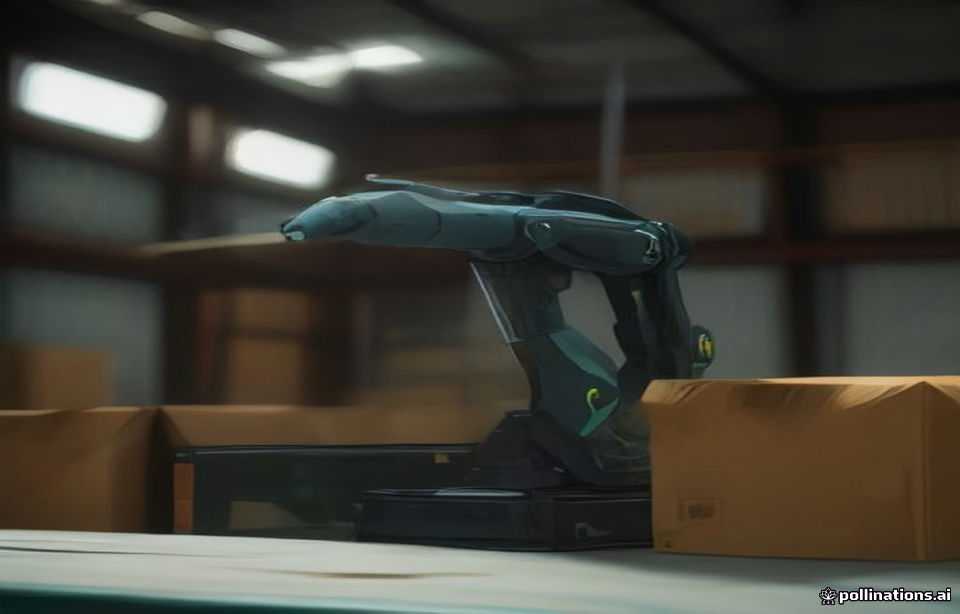
For robotic case packers, specify corrugated shippers with a caliper tolerance of ±0.5mm, ECT-32 minimum (ECT-44 for 18kg+ loads), and wraparound (RSC or HSC) geometry with blank-length tolerance of ±1.5mm so vacuum grippers and downstackers cycle without jam events. Validate designs with ASTM D642 compression testing and ISTA 3A transit simulation before the show floor — TadaPack delivers structural CAD prototypes in 24-48 hours with zero tooling fees for PACK EXPO exhibitors.
Exhibitors walking the PACK EXPO International floor in 2026 face compressed timelines that turn packaging engineering into a crisis discipline: display samples must survive transcontinental freight, and any case packer demo on the show floor will reject a shipper whose caliper drifts a fraction of a millimeter. This guide ignores the booth theatrics and anchors directly to the metrics that matter — ECT ratings, flute caliper, McKee-derived BCT, and die-cut registration tolerances.
1. Robotic Case Packer Compatibility: The Non-Negotiable Mechanical Specs
Robotic case packers — whether top-load pick-and-place cells, wraparound case packers, or side-load downstackers — impose dimensional and stiffness constraints that manual packing never reveals. Automation OEMs typically mandate:
- Caliper variance: ≤ ±0.5mm across the blank, or vacuum gripper landing height sensors and flap-tucking lugs misfire. Per TAPPI T411, measure caliper at five points per blank; a C-flute nominal 4.0mm board measuring 4.7mm at a crease will stall a rotary flap closer.
- Blank dimensional tolerance: ±1.5mm on blank length and width for wraparound formats; slot depth must remain within ±1.0mm of the caliper specification.
- Crease integrity: Fold lines must score cleanly at 180° with no liner cracking. Use a creasing matrix matched to board — typically a 45-durometer polymer crease matrix for E-flute, wider channel for BC doublewall.
- Flute direction: Always vertical (flutes perpendicular to the load-bearing faces). Horizontal flute direction can reduce stacking BCT by 30-40% in hypothetical worked examples and is a common cause of case packer magazine feed collapse.
- Board grade: ECT-32 (32 lb/in edge crush) is the floor for automation-rated RSCs up to ~18kg; ECT-44 or BC doublewall for heavier multipacks or warehouse-clamp handling. According to TAPPI Standard T810 (2026 Revision), Mullen burst strength must withstand 200 psi minimum for singlewall heavy-duty classifications where buyers still specify burst-based procurement.
2. Right-Sizing Physics: BCT, McKee Formula & Stacking Derating
Over-specifying board wastes 8-18% of freight and material spend in typical procurement scenarios; under-specifying causes pallet collapse. The engineering answer is the McKee formula (per ASTM D642, Standard Test Method for Determining Compressive Resistance of Shipping Containers):
BCT ≈ 5.87 × ECT × √(caliper × perimeter)
Apply a stacking safety factor of 4-5× for warehouse storage up to 8 weeks, derating further for humidity. In strict accordance with ASTM D642, validate the calculated BCT on a compression platen at 12.7mm/min deflection rate. Under ISTA 3A General Simulation Performance Testing protocol, drop shock sequences (roughly 9-23 drops depending on packaged weight for e-commerce shipments) and random vibration profiles then confirm the shipper survives the actual distribution cycle — a requirement for any Amazon FBA and most major retailer onboarding programs. In a hypothetical worked example: an ECT-32 C-flute RSC with 1,650mm perimeter and 4.2mm caliper yields BCT ≈ 5.87 × 32 × √(4.2 × 1650) ≈ 5,530N; with a 5× safety factor and a 9kg product, 8-week warehouse stack height must stay below ~7 pallets high.
Q: If the McKee formula derives BCT from ECT, why do enterprise POs still mandate Mullen burst testing?
A: Direct answer: burst reflects liner tensile/tear properties that ECT does not capture, and legacy procurement specifications (retail vendor manuals, pharma distribution SOPs) were written around 175/200/275 burst classes. Mechanical reason: Mullen (TAPPI T810) hydrostatic rupture testing probes the fiber bonding quality of the liner itself — predictive of puncture and rough handling — while ECT probes column crush. Practical recommendation: for robotic case packing and palletized distribution, negotiate ECT-based specs (faster, cheaper, more relevant), but honor burst minimums where a retailer compliance manual requires both; TadaPack’s engineers can map burst-class equivalents to ECT grades during quoting at tadapack.com/tools.
3. Comparative Board & Flute Selection Matrix
| Attribute | E-Flute (ECT-32 class) | C-Flute (ECT-32/44) | BC Doublewall (ECT-48+) | Governing Standard / Test Protocol |
|---|---|---|---|---|
| Nominal caliper | 1.5mm | 4.0mm | 7.0mm | TAPPI T411 |
| Typical use load | ≤ 9kg inner packs, retail-ready trays | 9-18kg shipper, workhorse RSC | 18-32kg, export / long-term stack | ASTM D642 |
| Robotic feed suitability | Excellent (magazine feed, tight creases) | Excellent (most common automation grade) | Moderate (verify blanker & flap tucker specs) | OEM machine spec (PMMI member OEM datasheets) |
| Transit validation | ISTA 3A (≤ 9kg parcels) | ISTA 3A / ASTM D4169 DC-13 | ASTM D4169 DC-1/DC-12 | ISTA 3A / ASTM D4169 |
| Moisture sensitivity (Cobb 60 liner) | Keep ≤ 35 g/m² | Keep ≤ 35 g/m²; consider PFAS-free barrier coating | ≤ 35 g/m² + water-resistant adhesive | TAPPI T441 / ISO 535 |
| Recyclability compliance | All-fiber constructions compliant with EU PPWR (2024/1991) recyclability-by-design criteria; per FTC Green Guides (16 CFR Part 260), recyclability claims require substantiation of regional access to recycling. | EU PPWR (2024/1991) / FTC 16 CFR 260 | ||
4. Pre-Show Prototyping SOP: 4 Steps From CAD to Show-Ready Shipper
PACK EXPO exhibitor timelines routinely compress to 48-72 hours before booth setup. Execute this SOP:
- Step 1 — CAD dieline & load simulation (Hour 0-4): Generate the structural dieline in CAD with flute direction, crease matrix callouts, and internal partitioning; run McKee BCT and stacking derating against your pallet pattern. TadaPack’s free calculators at tadapack.com/tools verify ECT, caliper, and box dimensions interactively.
- Step 2 — Zero-tooling digital sample (Hour 4-24): Cut the prototype on digital flatbed with ±0.15mm die registration equivalent; test case erectability by hand and, where possible, on the actual case packer OEM demo cell. Confirm flap tuck and glue-flap closure forces.
- Step 3 — Transit qualification (Hour 24-48): Compressive validation per ASTM D642 plus conditioned drop/vibration per ISTA 3A or ASTM D4169 distribution cycle matching your corridor (see Section 5). For fragile display samples, add molded pulp or anti-static EPE corner dunnage engineered to 60mm minimum drop clearance.
- Step 4 — Short-run production & print (Hour 48+): Release flexo or digital print on the qualified dieline. Short-run high-end VIP/retail boxes use digital CMYK with soft-touch or spot-UV laminate with zero plate/mold fees; Per EU Directive 94/62/EC Annex II, heavy metals in inks and laminates must stay below 100 ppm cumulative (Cd, Hg, Pb, Cr VI).
5. Multi-Regional Logistics Stress & Stacking Derating
Ocean transit (Pacific & Atlantic, ~30-day): Container sweat can raise internal RH above 80%, driving Cobb-driven moisture uptake that softens flutes. Design rule: derate stacking BCT by 30-40% for ocean-exposed shippers, or specify PFAS-free water-resistant barrier coating and water-resistant adhesives. Excess Cobb 60 above 35 g/m² on kraft liners correlates with transit delamination — verify with TAPPI T441.
US inland distribution: California Inland Empire hubs (FBA ONT8, LGB3) impose Amazon SIPP/SFP dimensional weight and flat-pack stacking requirements — a 0.5-inch caliper error multiplied across a pallet changes DIM billing. Texas DFW triangle distribution favors standard GMA pallet patterns; keep RSC outer dimensions on 40×48-inch pallet modules with ≤ 25mm overhang.
EU entry: Port of Rotterdam multimodal rail/road connections add vibration and repeated clamp-truck handling; ASTM D4169 DC-13 (truck + rail) with clamped-handling elements is the qualification baseline. High-humidity coastal ports demand higher safety factors than dry inland warehouses (Phoenix, inland Spain) where 1.15-1.3× derating may suffice.
6. Defect Diagnostics & Troubleshooting Matrix
| Defect | Root Cause | Floor-Level Corrective Action | Governing Standard / Test Protocol |
|---|---|---|---|
| Flap popping open on case packer tucker | Crease matrix channel too narrow; score depth > 50% of caliper; high-humidity board softening | Widen matrix one size; reduce score depth to ~40-45% caliper; re-condition board 24h at 23°C/50% RH before run | TAPPI T411 / ISO 186:2020 |
| Adhesive debonding / glue flap lift in ocean containers | Standard cold adhesive loses shear at >75% RH; contaminated glue lap surface | Switch to water-resistant hot-melt or wet-strength adhesive; widen lap to ≥ 32mm; add moisture barrier coating | TAPPI T441 (Cobb 60) / ASTM D642 post-conditioning |
| Pallet stack creep / column lean | ECT derating under humidity ignored; pallet overhang loading box edges | Apply 30-40% humidity derating; add slip sheet & corner boards; re-verify BCT per ASTM D642 after 72h 90% RH exposure | ASTM D642 / ASTM D4169 |
For exhibitor-specific needs — fragile sample anti-breakage transport crates, short-run VIP retail boxes with zero plate fees, and booth-ready shipper branding — TadaPack’s structural engineering desk supports PACK EXPO International timelines with 24-48 hour CAD prototyping at tadapack.com.
Recommended Engineering Reading
[TOOLS] Featured Engineering & Calculation Tools
Explore 70+ Packaging Tools ➔Box Compression (BCT) Calculator
Predict box compressive limit and stacking safety factors via McKee formula.Edge Crush Test (ECT) Calculator
Calculate linerboard ring crush and composite ECT ratings for optimal board specs.
