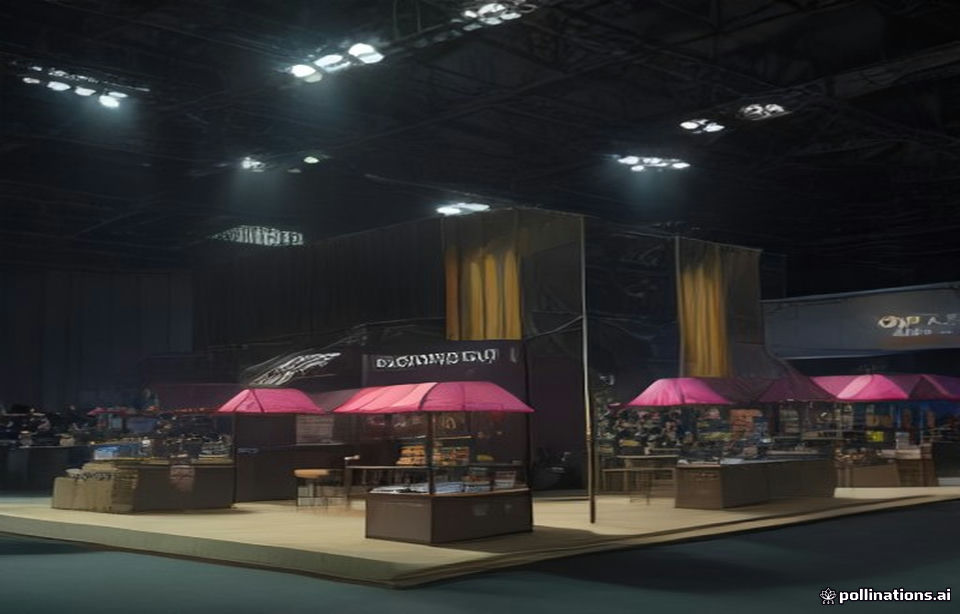
Floor-ready PACK EXPO demo packaging requires structurally validated prototypes deliverable within 24-48 hours, engineered to ECT-32/ECT-44 corrugated calipers and verified under ASTM D642 compression and ISTA 3A simulation protocols so robotic case-packing cells run without jams. Digital print-and-cut workflows with zero tooling fees eliminate plate costs, enabling fully printed, dimensionally accurate samples in under two days.
Live robotic case-packing demos at PACK EXPO International (PMMI) fail within seconds when sample cartons drift even 1-2 mm outside the cell’s gripper tolerance window — a reality every exhibitor engineer knows. This whitepaper anchors the entire floor-ready prototyping problem in hard metrics: ASTM D4169 vibration sequencing, ECT-32/ECT-44 edge crush ratings, Cobb 60 moisture thresholds, and Amazon FBA dimensional freight math that also applies to inbound booth freight.
1. Why 24-48 Hour Prototyping Is a Structural Problem, Not a Print Problem
Conventional offset packaging runs on a 3-5 week tooling pipeline: structural design, die cutting steel rule fabrication, plate mounting, and makeready. For an exhibitor confirming booth space 72 hours before setup, that pipeline is irrelevant. What matters is whether a digitally produced prototype still satisfies the mechanical constraints of the demo environment:
- Robotic case-packing tolerance: vacuum or suction cup end-effectors typically require flap score registration within ±0.5 mm and consistent blank squareness; warped or out-of-square blanks cause mis-picks that kill a live demo.
- Stack strength at the booth: demo cartons stacked 4-5 high on pallets near the booth must hold a BCT (box compression top-load) derived per the McKee formula — BCT ≈ 5.874 × ECT × t0.508 × Z0.492 (perimeter Z, caliper t) — before any human ever touches them.
- Print fidelity for brand impact: 1200 dpi digital inkjet or HP Indigo electrophotographic output delivers sell-sheet-grade graphics without plates, meaning zero plate mold fees on short-run VIP retail boxes.
Per ISO 186:2020 paper conditioning specifications, all board physical testing must occur at 23°C ± 1°C and 50% ± 2% RH. Boards rushed through a 24-48 hour prototype cycle and tested before full conditioning will read artificially low on ECT and burst — a frequent source of false alarm in expedited sampling programs.
2. Material Selection Matrix for Demo & VIP Short-Run Packaging
Selecting the wrong substrate is the single most common cause of failed booth demos and damaged fragile display samples. The matrix below consolidates typical engineering design ranges — not certified lot values — for the substrates most used in 24-48 hour prototype programs.
| Application | Typical Substrate / Caliper | Key Performance Range (Typical) | Governing Standard / Test Protocol |
|---|---|---|---|
| Robotic case-packing demo shipper | C-flute, ECT-32, ~4.0 mm | BCT ~2,400-2,800 N (600×400×400 mm, hypothetical worked example) | ASTM D642 / TAPPI T811 |
| Heavy retail-ready club store display | BC-double wall, ECT-44, ~7.0 mm | Stack loads ≥ 350 kg per column (dry, 50% RH) | ASTM D642 / ASTM D4169 |
| Fragile sample inner fitment | E-flute, ECT-20, ~1.5 mm | ISTA 3A drop sequence pass at 11-16 certification heights | ISTA 3A General Simulation |
| VIP retail rigid box (short run) | 1.5-2.5 mm grayboard wrap, 157 gsm art paper | Warp ≤ 1.0 mm/m after adhesive cure; adhesive shear per ASTM D1002 methodology | ISO 2247 vibration / ASTM D1002 |
| Ocean-freight inbound booth pallet | ECT-44 + PFAS-free moisture-barrier coating | Cobb 60 ≤ 35 g/m²; humidity derating factor 0.6-0.7 on BCT | TAPPI T441 (Cobb) / TAPPI T810 (burst) |
According to TAPPI Standard T810 (2026 Revision), Mullen burst strength must withstand the minimum linerboard ratings still mandated in many overseas enterprise POs (e.g., 200 lb/in² class for 32 ECT C-flute equivalents), which is why dual-spec boards remain common even as ECT has become the engineering norm. Per FTC Green Guides (16 CFR Part 260) substantiation rules, any recyclability claim printed on booth or VIP packaging must be substantiated — corrugated kraft with PFAS-free barrier coatings remains safely claimable; mixed-material laminates generally do not.
Q: If the McKee formula derives BCT from ECT, why do overseas enterprise POs still mandate Mullen burst testing?
A: Direct answer — many procurement standards (and legacy retail routing guides) still specify a minimum burst of 175-250 lb/in² because burst correlates with puncture and tear resistance, which ECT does not capture. Mechanical reason — McKee predicts static top-load from edgewise column strength, but rough-handling corridor damage (forklift contact, sharp pallet edges) is a puncture failure mode governed by liner toughness, best proxied by TAPPI T810 burst. Practical recommendation — spec dual-compliant board (e.g., ECT-32 meeting 200 lb/in² class) so one substrate satisfies both the McKee-based stack calculation and legacy burst PO clauses; use the free calculators at tadapack.com/tools to verify both simultaneously.
3. The 4-Step SOP: From CAD File to Floor-Ready Sample in 48 Hours
TadaPack’s expedited prototype program compresses the conventional five-week tooling pipeline into a controlled four-step SOP. Each step carries explicit physical tolerances because robotic cells and VIP buyers are unforgiving:
Step 1 — Structural CAD & dieline lock (Hours 0-6): Import client dielines or generate parametric CAD in ArtiosCAD-equivalent format. Lock score-to-score dimensions at ±0.15 mm and verify blank squareness (diagonal delta ≤ 0.5 mm on a 600 mm panel). Simulate robotic end-effector pick points against flap geometry before any cutting occurs.
Step 2 — Digital print & substrate mount (Hours 6-18): Output at 1200 dpi on pre-qualified substrates; verify color against ISO 12647-7 contract proofing targets (ΔE2000 ≤ 2.0 on brand-critical colors). For VIP rigid boxes, cut grayboard at ±0.3 mm and wrap with a 45-durometer creasing matrix profile to avoid fiber cracking on fold edges.
Step 3 — Digital die-cut & crease (Hours 18-30): Flatbed digital cutting at ±0.15 mm registration. Crease depth set to 0.3-0.5× caliper; crease-width-to-caliper ratio of 2.0-2.3× prevents flap bowing that misaligns vacuum cup picks. Deburr and knock out all waste cleanly — loose chads inside a demo carton jam case packers.
Step 4 — Verification & QC release (Hours 30-48): Condition samples to ISO 186:2020 (23°C ± 1°C, 50% ± 2% RH) as far as the schedule allows; spot-check caliper with a digital micrometer per TAPPI T411 (accept ±0.15 mm variance); run dimensional CMM or caliper audit on 100% of robotic-demo units and a compression sanity check per ASTM D642 methodology on one sacrificial sample where freight schedule permits.
4. Defect Diagnostics & Troubleshooting Matrix
Even under expedited timelines, two failure modes dominate returned prototype feedback. Root-cause them with the matrix below rather than re-cutting blind.
| Defect | Root Cause (Engineering) | Corrective Action |
|---|---|---|
| Flap popping open during robotic pick | Crease width below 2.0× caliper or crease depth > 0.5× caliper overstresses liner fibers; also gluing gap > 3 mm on manufacturer’s joint | Re-cut with 2.2× crease ratio; verify joint glue skip ≤ 2 mm; check warp ≤ 1.0 mm/m before loading cell |
| Grayboard warping on VIP boxes after 30-day ocean transit | Moisture differential between board faces (container sweat); adhesive shear loss above 60% RH | Specify balanced-layup grayboard, PFAS-free barrier wrap, and desiccant at 5 g/m³ container volume; dual-side moisture equalization before wrap bonding |
Per EU Directive 94/62/EC Annex II and the EU PPWR (Regulation (EU) 2024/1991) packaging waste reduction mandates, VIP and demo packaging shipped into the EU (e.g., through Port of Rotterdam) must be designed for recyclability — favor mono-material corrugated and water-based adhesives over plastic laminates to avoid 2026-era compliance exposure on multi-material formats.
5. Freight Stress Points: Landing Booth Freight Intact
Ocean corridors (Pacific & Atlantic, ~30-day transit): Container sweat can drive internal RH above 85%, cycling ECT downward. Under ISTA 3A General Simulation Performance Testing protocol, drop shock sequences and compression loads assume conditioned lab environments; real-world ocean derating of 30-40% on BCT is the conservative engineering planning assumption. Boards with Cobb 60 above 35 g/m² are the primary delamination risk.
US inland hubs: California Inland Empire nodes (FBA ONT8 / LGB3 corridors) impose strict Amazon FBA dimensional freight penalties — cartons must be cubed to the dimensional divisor window (units > 20 lb fall under 139 in³/lb dimensional math), so booth-return and reshipment cartons should be dieline-optimized, not over-boxed. Texas DFW triangle distribution tolerates wider stacking but brings 35°C+ summer warehouse ambients that soften hot-melt joints above 60°C internal case temperature on dark-printed cartons in direct sun.
EU multimodal (Rotterdam): Rail/road intermodal from Rotterdam introduces low-frequency vibration (2-5 Hz resonance bands) that fatigues E-flute scores; ISO 2247 vibration testing is the reference protocol for verifying fitment integrity across that corridor. Stacking derating: dry inland German warehouses sustain ~1.0 of nominal BCT, while high-humidity coastal buffer warehouses should be planned at 0.6-0.7. Run your own corridor math with TadaPack’s free stack-load and dimensional-weight calculators at tadapack.com/tools.
6. Procurement Cost Logic: Zero Tooling Fee vs. Conventional Runs
For quantities under ~500 units — the typical PACK EXPO demo and VIP gift box scenario — digital production with zero tooling fees beats flexo+offset decisively: conventional dies run $400-900 per dieline and plates $150-600 per color (typical industry ranges), plus 2-4 weeks of lead time. Digital print-and-cut at $1.80-$4.50 per unit (hypothetical worked example, 100-300 unit lots, C-flute full-coverage print) reaches a floor-ready sample for a fraction of tooling capital and compresses cash risk when booth requirements change late. Above ~1,000-2,000 units, flexo economics reassert themselves — the crossover is substrate- and coverage-dependent, and the TadaPack calculator suite models it per SKU.
For exhibitors sourcing demo and VIP packaging on compressed timelines, TadaPack’s 24-48 hour structural prototyping service integrates CAD lock, digital print, and QC release under one program — request a dieline review and instant quote at tadapack.com.
Recommended Engineering Reading
[TOOLS] Featured Engineering & Calculation Tools
Explore 70+ Packaging Tools ➔Box Compression (BCT) Calculator
Predict box compressive limit and stacking safety factors via McKee formula.Edge Crush Test (ECT) Calculator
Calculate linerboard ring crush and composite ECT ratings for optimal board specs.
