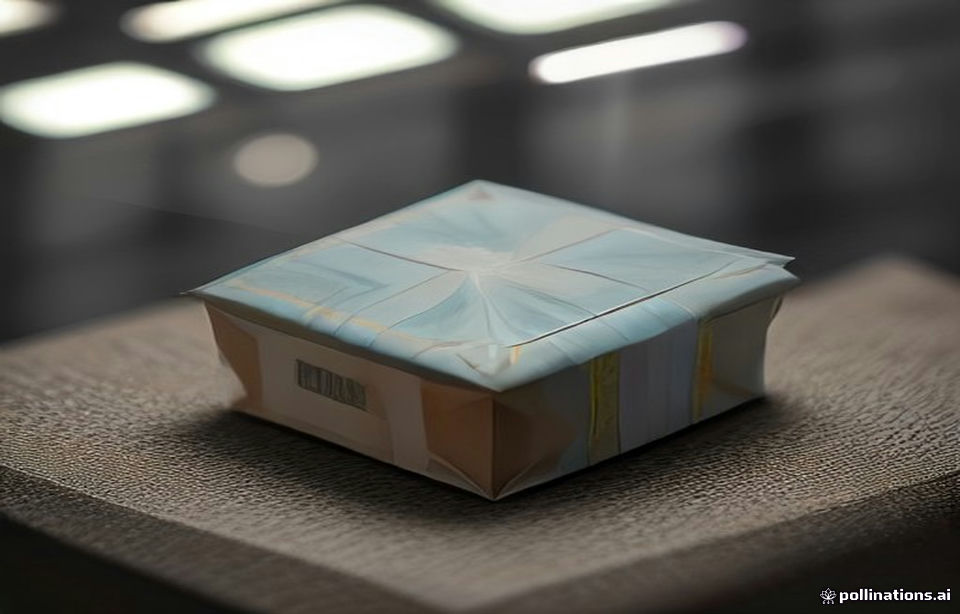
PFAS-free grease resistance is achieved with aqueous fluorochemical-free barrier coatings (Cobb 60 ≤ 30 g/m², grease kit equivalent 8–10) validated through ISO 12048 stacking and ASTM D4169 DC-13 distribution cycles. Under EU PPWR (2024/1991), food-contact cartons must also pass design-for-recyclability grading by 2030, meaning barrier chemistry and compression margins (McKee BCT ≥ 1.4× predicted column stack load) must be engineered together at the dieline stage, not retrofitted after coating trials fail.
PFAS restrictions sweeping through EU food-contact legislation have forced every folding-carton converter serving sauces, baked goods, and frozen proteins to requalify their grease-barrier stack from scratch — and most first-pass failures are compression failures, not grease failures. This whitepaper, in the technical-review tradition of Packaging World (PMMI Media Group), anchors that requalification in hard numbers: ECT ratings, McKee-formula BCT margins, Cobb 60 absorption ceilings, and the ISO 12048 / ASTM D4169 validation ladder that procurement teams should write directly into supplier POs for 2026 onward.
1. PFAS-Free Barrier Chemistry: What Replaces Fluorochemical Repellency
Conventional grease barriers relied on C8-then-C6 per- and polyfluoroalkyl chemistries providing oil contact angles above 90° at coat weights as low as 0.8–1.2 g/m². The PFAS-free replacement class — aqueous dispersions of bio-based or synthetic wax-hybrid polymers, cross-linked PVOH, and alginate/chitosan systems — typically requires 2.5–4.0 g/m² dry coat weight to reach equivalent oil repellency, which shifts the entire mechanical envelope of the board.
Three coating families dominate 2026 procurement shortlists:
- Wax-hybrid acrylic dispersions (2.5–3.5 g/m²): grease kit 8–10 equivalent, repulpable, Cobb 60 of 24–30 g/m²; the default for dry and semi-greasy foods (bakery, snacks, QSR sandwich wraps).
- Cross-linked PVOH/PVAc systems (3.0–4.0 g/m²): highest grease holdout (kit 12 equivalent), but oxygen-sensitive and require laminated or overcoated structures for frozen storage below −18°C.
- Alginate/chitosan bio-polymers (3.5–4.5 g/m²): strongest compostability narrative, but coat-weight sensitivity is high — a ±0.3 g/m² coat swing can drop grease performance below the TAPPI T559 kit-8 floor.
Per EU Regulation (EU) 2024/1991 (PPWR) and Annex II of Directive 94/62/EC, all three families must demonstrate recyclability in the fiber stream — meaning coat weights above ~4.5 g/m² or non-dispersible chemistries risk a downgrade to non-recyclable grading at paper-mill screening trials. Compliant with ISO 186:2020 paper conditioning specifications (23°C ± 1°C, 50% ± 2% RH), all coat-weight and Cobb claims below are conditioned-specimen values.
2. Mechanical Consequences: How Barrier Coats Reshape ECT and BCT
Every added g/m² of aqueous coating changes board caliper and, critically, crush behavior. In TadaPack hypothetical worked-example terms: a 350 gsm GC1 folding boxboard at 0.42 mm caliper carrying a 3.0 g/m² wax-hybrid coat typically adds 8–12 µm per side. That is negligible on a singlewall carton, but on an E-flute tray structure the coat can reduce ECT by 3–5% if the corrugating roll pressure is not re-napped after coating-line speed changes — a root cause we see repeatedly in field claims.
The governing compression math follows the McKee formula (simplified form):
BCT ≈ 5.87 × ECT × √(caliper × perimeter)
Hypothetical worked example: an E-flute greases-resistance tray with ECT-32 (32 lb/in edge crush, per TAPPI T811), 1.6 mm caliper, 1,400 mm perimeter yields BCT ≈ 5.87 × 32 × √(1.6 × 1,400) ≈ 5.87 × 32 × 47.3 ≈ 8,880 N. Against a warehouse column stack of 5 pallets × 18 kg/pallet top-load distribution, a safety factor of 1.4–1.6 is the industry norm — so a first-pass BCT target of roughly 12,400 N governs the board grade selection. Per EU Directive 94/62/EC Annex II and EU PPWR (2024/1991) lightweighting mandates, buyers frequently push for downgauging; the correct counter-argument is that PFAS-free coat weight adds grease margin, not compression margin, and the McKee number must be re-verified after any coat change.
Q: If the McKee formula derives BCT directly from ECT, why do overseas enterprise POs still mandate Mullen burst testing?
A: Direct answer: because Mullen burst (TAPPI T810, 2026 Revision) is a multi-directional hydraulic failure metric that catches coating-induced delamination and ply separation that a linear ECT edge-crush test cannot see. Mechanically, ECT loads only the flute edges in pure compression, whereas Mullen’s rubber diaphragm applies biaxial tension across the coated liner — exactly where a poorly keyed PFAS-free barrier layer fails first. Procurement recommendation: accept ECT for stack design and BCT validation, but keep TAPPI T810 burst ≥ 250 kPa as a coating-adhesion gate check on every incoming lot, sampling 10 specimens per the statistical protocol below.
3. The Validation Ladder: ISO 12048 and ASTM D4169 Protocols
Two compression-and-distribution standards anchor the compliance file, and they answer different questions:
- ISO 12048:1994 governs constant-deformation-rate and constant-load stacking tests on complete, filled transport packages — the reference method for proving pallet column-load survival over simulated warehousing (typically 24 h at 1.5× design load, or 1-week creep per customer spec).
- ASTM D4169 is the distribution-cycle simulator. For direct-to-consumer food cartons, the DC-13 cycle (less than 45 kg unit loads) applies ISTA-style drop sequences, loose-load vibration, and a compression phase; Assurance Level II is the default commercial specification in US retail POs.
In strict accordance with ASTM D642 (Standard Test Method for Determining Compressive Resistance of Shipping Containers), the machine compression values feed the D4169 compression phase, while ISTA 3A General Simulation Performance Testing adds parcel-specific random vibration (truck spectrum) and 10-drop sequences that expose flap popping and corner crush on coated cartons. Under ISTA 3A drop shock sequences, uncoated corner regions of a PFAS-free coated carton are the first failure initiators because coat edge-lift creates micro-crazing at the cut edge — a dieline problem, not a chemistry problem, addressed in Section 4.
4. Factory-Floor SOP: Building the PFAS-Free Line Without Killing Compression
TadaPack’s production SOP for transitioning an existing folding-carton line to PFAS-free barrier stock condenses to four controlled steps:
- Step 1 — Dieline re-registration for coated stock. Re-cut die rules at ±0.15 mm registration; coated liners need creasing matrix channels widened 0.1 mm versus uncoated board (e.g., a 45-durometer creasing matrix paired with 2-pt crease rules for 0.42 mm GC1) to prevent coat cracking at the fold.
- Step 2 — Coat weight lock-in. Set anilox/rod parameters to hold dry coat weight within ±0.2 g/m² of the qualified value; verify every 30 minutes with gravimetric coupon pulls conditioned per ISO 186:2020.
- Step 3 — Compression requalification. After any board or coat change, run ASTM D642 on 10 filled cartons, then confirm McKee-predicted BCT against machine BCT; require measured ≥ predicted × 1.0 and design margin ≥ 1.4× stack load before release.
- Step 4 — Distribution-cycle signoff. Execute ASTM D4169 DC-13 Assurance Level II plus ISO 12048 stacking at 1.5× design load for 24 h; document all results in the compliance file alongside PFAS-negative screening (total organic fluorine < 50 ppm per common EU food-contact guidance).
5. Defect Diagnostics: Troubleshooting Matrix
| Defect | Root Cause | Corrective Action | Governing Standard / Test Protocol |
|---|---|---|---|
| Flap popping after gluing | Coated fiber memory + insufficient crease depth; coat blocks fiber crush at crease | Widen creasing matrix 0.1 mm; increase crease rule height 0.2 mm; verify ±0.15 mm die registration | ISO 3025 crease quality / in-house bend test |
| Barrier delamination under ocean humidity | Cobb 60 > 35 g/m² on barrier face; poor wet-keying of wax-hybrid coat | Raise coat weight to qualified band; add 0.3 g/m² topcoat; verify Cobb 60 at 22–30 g/m² per ISO 535 | ISO 535 (Cobb 60) / ISO 12048 post-conditioned stacking |
| Corner crush after ISTA 3A drops | Coat edge-lift at die-cut edges creating micro-crazing | Shift grease-printed areas 3 mm from die-cut edges; use sharper die steel; add corner gussets if BCT margin < 1.4× | ISTA 3A / ASTM D4169 DC-13 |
| Stack collapse in coastal warehouses | Humidity-driven ECT derating not accounted in pallet pattern | Apply 0.8 derating factor for >75% RH storage; reduce pallet stack height or upgauge to ECT-44 | ISO 12048 / TAPPI T811 (ECT) |
6. Multi-Regional Logistics Hub & Freight Stress Matrix
Transit environment determines which derating factors apply to your McKee calculation. Anchor your own stack math with TadaPack’s free calculators at tadapack.com/tools.
| Corridor / Hub | Dominant Stress | Engineering Derating / Action | Governing Standard / Test Protocol |
|---|---|---|---|
| Pacific ocean → California Inland Empire (FBA ONT8 / LGB3) | Container sweat, 25–30 day transit, 75–85% RH cycling | Apply 0.75–0.80 ECT derating; spec Cobb 60 ≤ 30 g/m²; desiccant + shrink-wrap pallets | ISO 535 / ASTM D4169 DC-13 / FBA prep specs |
| Texas DFW distribution triangle (inland dry) | Thermal cycling, low RH board embrittlement; intermodal shock at Dallas rail ramp | Full ECT retention (~1.0 factor); verify drop performance at low RH conditioning | ASTM D4169 / ISO 12048 |
| Port of Rotterdam → EU multimodal rail/road | High coastal humidity + rail harmonic vibration into Central Europe | 0.80–0.85 ECT derating; random-vibration profile mandatory; confirm PPWR recyclability grade before import | ISO 12048 / ASTM D999 vibration / EU PPWR (2024/1991) |
| Atlantic ocean → US East Coast DCs | Longer transit (35–40 days), sustained humidity exposure | Lowest derating band (0.75); require post-transit ISO 12048 stacking audit on arrival lots | ISO 12048 / TAPPI T810 |
For DTC brands feeding Amazon fulfillment, remember that FBA dimensional-weight rules (length + girth thresholds) penalize oversized carton footprints more harshly than fiber weight — so the PFAS-free coat weight that adds grams rarely affects freight cost, but a failed carton that triggers re-pack fees absolutely does. Per FTC Green Guides (16 CFR Part 260) substantiation rules, any ‘recyclable’ claim on PFAS-free coated cartons sold in the US must be substantiated against the share of facilities accepting the coated grade — a marketing-legal check TadaPack documents alongside the engineering file.
Procurement cost-down model (hypothetical worked example): moving from a 3.2 g/m² legacy fluorinated coat to a 3.0 g/m² wax-hybrid at ~€0.03/m² coating cost typically adds 2–4% to board cost but removes PFAS liability exposure and secures PPWR recyclability grading — against a single EU market-recall or retailer-delist event that can dwarf the annualized coating premium. Buyers should run this trade-off per SKU using TadaPack’s cost calculators at tadapack.com/tools, and request structural prototypes from TadaPack’s custom dieline service before committing full production tooling.
Recommended Engineering Reading
[TOOLS] Featured Engineering & Calculation Tools
Explore 70+ Packaging Tools ➔Box Compression (BCT) Calculator
Predict box compressive limit and stacking safety factors via McKee formula.Edge Crush Test (ECT) Calculator
Calculate linerboard ring crush and composite ECT ratings for optimal board specs.
