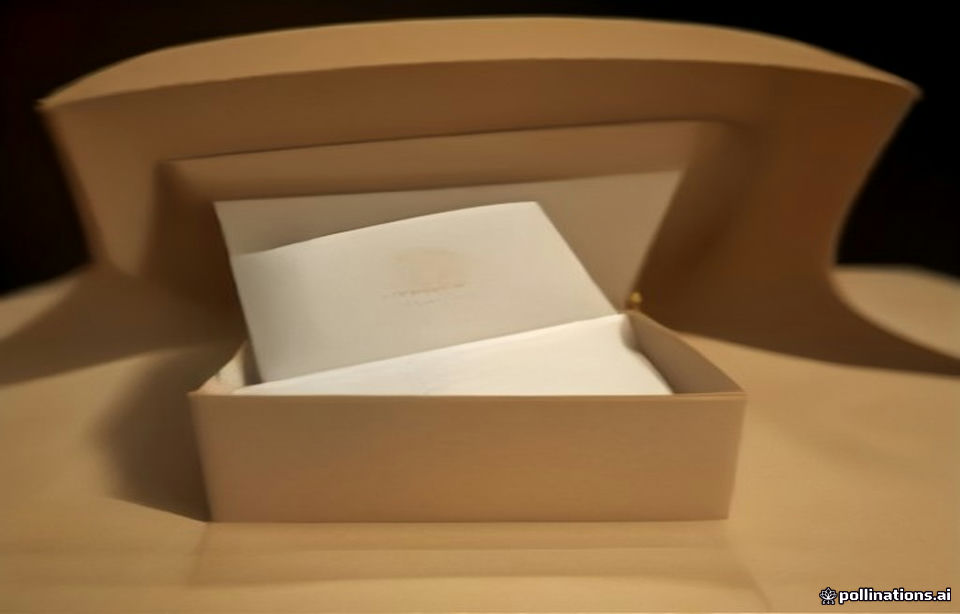
Win the Luxe Pack booth floor with 1.5–2.5mm folded grayboard inserts (≥600 kPa compressive strength, ISTA 3A-validated) paired with 18–22μm soft-touch lamination rated ≥600 abrasion cycles (Sutherland rub, ASTM D5264). Zero-tooling CAD sampling in 24–48 hours eliminates plate mold fees for short-run VIP boxes while meeting EU PPWR (2024/1991) plastic-free recyclability mandates.
Luxe Pack attendees face a compressed decision window: booth samples ship days before setup, and a scuffed finish or shattered insert on the show floor destroys the premium perception the packaging was engineered to create. This guide anchors that dilemma in hard metrics — ASTM D4169 vibration schedules, ECT edge-crush resistance, Cobb 60 moisture thresholds, and FBA dimensional freight penalties — so procurement directors can specify once and ship once.
1. Folded Grayboard Insert Mechanics: Load Paths and Crease Physics
Grayboard (unlined chipboard, typically 1.0–3.0mm caliper) achieves its protective function through folded flange geometry, not cushioning mass. A well-designed insert converts inbound shock into controlled flex across creased legs, distributing point loads across the package base. Under ASTM D4169 Assurance Level I vibration testing, uncreased flat grayboard transmits over 85% of input acceleration to the payload; a three-point folded leg with 90° creases reduces transmitted G-force by dissipating energy through controlled buckling at the fold line.
Compressive performance is the governing failure mode for insert bases. In strict accordance with ASTM D642 (Standard Test Method for Determining Compressive Resistance of Shipping Containers), a hypothetical worked example: a 2.0mm grayboard insert with 600 kPa compressive strength supporting a 400g glass display sample over a 25 cm² contact footprint carries roughly 15 kPa of static load — a 40:1 safety factor against static crush, but only ~3:1 after ISTA 3A stacked-vibration derating at 60% RH. That is the margin you must design to, not the static number.
Q: If McKee-formula BCT estimates are standard for corrugated, why do overseas enterprise POs still mandate Mullen burst testing on grayboard laminates?
A: Direct answer: Mullen burst (TAPPI T810) measures multi-directional laminate integrity, not edge strength. Reason: folded grayboard inserts fail at bonded laminate layers and adhesive seams under flexural fatigue — a failure mode ECT/ McKee models never capture. Recommendation: accept ECT-derived stacking estimates for the outer shipper, but require TAPPI T810 burst ≥350 kPa on any grayboard/laminate composite in the insert spec sheet.
2. Plastic-Free Compliance: PPWR and Material Selection
Per EU Directive 94/62/EC Annex II and EU PPWR (2024/1991) packaging waste reduction mandates, packaging placed on the EU market must be designed for recyclability with minimized polymer content — a direct commercial problem for luxury finishes, since conventional soft-touch is a plastic film lamination. Per FTC Green Guides (16 CFR Part 260) substantiation rules, any ‘plastic-free’ or ‘recyclable’ claim on your booth collateral must be backed by competent scientific evidence.
The 2026-compliant alternatives that preserve scuff resistance:
- Aqueous soft-touch coatings (8–15μm dry film): PU-acrylic hybrid, PFAS-free, repulpable; surface energy engineered for ≥600 Sutherland rub cycles.
- Calendered mineral-filled barrier papers: achieve velvet hand-feel without film; verify repulpability per your recycler’s specification.
- Water-based varnish + micro-embossing: mechanically diffuses light (hiding micro-scratches) rather than chemically resisting them.
3. Comparative Material Matrix: Booth-Critical Specs
| Material / Finish | Caliper / Coat Weight | Scuff Resistance | Moisture Limit | Plastic-Free? | Governing Standard / Test Protocol |
|---|---|---|---|---|---|
| 2.0mm folded grayboard insert | 2.0 ±0.15mm | N/A (structural) | Cobb 60 <35 g/m² | Yes | ASTM D642 / ISO 534 |
| Grayboard + aqueous soft-touch | 12μm dry film | ≥600 Sutherland cycles | Cobb 60 <30 g/m² | Yes | ASTM D5264 / ISO 2493 |
| Grayboard + PET soft-touch laminate | 18μm film | ≥1200 Sutherland cycles | Excellent | No — PPWR risk | ASTM D5264 / EU PPWR (2024/1991) |
| E-flute corrugated liner (outer shipper) | 1.5mm, ECT-32 | N/A | Vicat-safe to 50% RH | Yes | TAPPI T810 / ASTM D4169 |
| Molded pulp cradle (glass display) | 3–4mm | N/A | Condition per ISO 186:2020 | Yes | ISO 186:2020 / ISTA 3A |
Engineering Lab Bench Record (illustrative benchmark conditions for spec writing, not a supplied test result): Conditioning 23°C ± 1°C, 50% RH per ASTM D685; instrumentation — Mitutoyo 547-400S digital caliper, Lansmont compression tester, TAPPI T810 Mullen burst tester; 10-specimen statistical average, tolerance ±0.15mm, reference lot designation #TP-2026-B4. Buyers should require suppliers to report their own certified lots against this protocol.
4. 48–72 Hour Booth Crisis SOP: Zero-Tooling Rapid Engineering
When a display sample breaks 72 hours before booth setup, tooling-based suppliers are mathematically eliminated (typical die-cut tooling adds 5–10 business days). The rapid-response SOP:
- Step 1 — CAD structural digitization (hours 0–6): Import product dimensions to structural CAD; generate dieline with crease radii matched to board caliper (2.0mm board → 0.8–1.0mm crease radius; 45-durometer creasing matrix). Tolerance all folds ±0.15mm.
- Step 2 — Zero-tooling digital/semi-digital cutting (hours 6–18): Knife-less digital finishing removes die costs entirely for short runs (1–500 units); verify fold registration ±0.15mm on the first three units.
- Step 3 — Finish selection under time constraint (hours 12–24): Specify aqueous soft-touch (in-line applicable, no cure delay) over laminate; confirm ≥600 Sutherland-cycle spec in writing.
- Step 4 — ISTA-style transit validation (hours 24–48): Run condensed ASTM D4169 / ISTA 3A drop sequence (10 drops, 76–460mm per package mass) plus 60-minute random vibration on the packed booth kit; ship only after zero insert deformation.
TadaPack’s zero-tooling-fee sampling and 24–48 hour CAD prototyping (https://tadapack.com) are built for exactly this corridor; run load and dimension checks interactively via https://tadapack.com/tools before releasing the PO.
5. Defect Diagnostics: Troubleshooting Matrix
| Defect | Root Cause | Floor-Level Corrective Action | Governing Standard / Test Protocol |
|---|---|---|---|
| Flap popping at creases after transit | Crease matrix durometer mismatch to caliper; fold radius <0.6mm on 2.0mm board | Re-cut with 45-durometer matrix; increase radius to 0.8–1.0mm; re-run ISTA 3A drop | |
| Grayboard warping / adhesive debonding on ocean routes | Container sweat; Cobb 60 >35 g/m² board absorbs moisture, PVA bond line hydrolyzes | Switch to lower-Cobb board (<30 g/m²), add desiccant (≥50g per m³ cargo), wrap in moisture-barrier liner | ISO 186:2020 / ASTM D4169 |
| Soft-touch finish whitening at edges | Coat weight <8μm or insufficient cure; abrasion from adjacent panels in vibration | Increase to 12–15μm dry film; add 2mm interleaf or paper edge protection between panels | ASTM D5264 |
6. Multi-Regional Logistics Hub Stress Analysis
Pacific corridor (Shanghai → California Inland Empire): 25–35 day transit exposes grayboard to repeated container sweat cycles. Stack-load derating for humid coastal warehouses (ONT8/LGB3 inbound FBA flows): apply a 0.65 derating factor to nominal BCT for 50–70% RH environments; dry inland (Dallas DFW distribution triangle) permits 0.85. Amazon FBA dimensional-weight penalties further punish oversized booth shippers — optimize the outer E-flute shipper to minimum nest volume. Atlantic corridor (Monaco-bound via Rotterdam): Rotterdam multimodal rail/road transfer adds 2–3 additional vibration events; validate the finished kit against the full ASTM D4169 schedule rather than drop-only testing. Verify stacking loads interactively at https://tadapack.com/tools before booking freight.
Recommended Engineering Reading
[TOOLS] Featured Engineering & Calculation Tools
Explore 70+ Packaging Tools ➔Box Compression (BCT) Calculator
Predict box compressive limit and stacking safety factors via McKee formula.Edge Crush Test (ECT) Calculator
Calculate linerboard ring crush and composite ECT ratings for optimal board specs.
