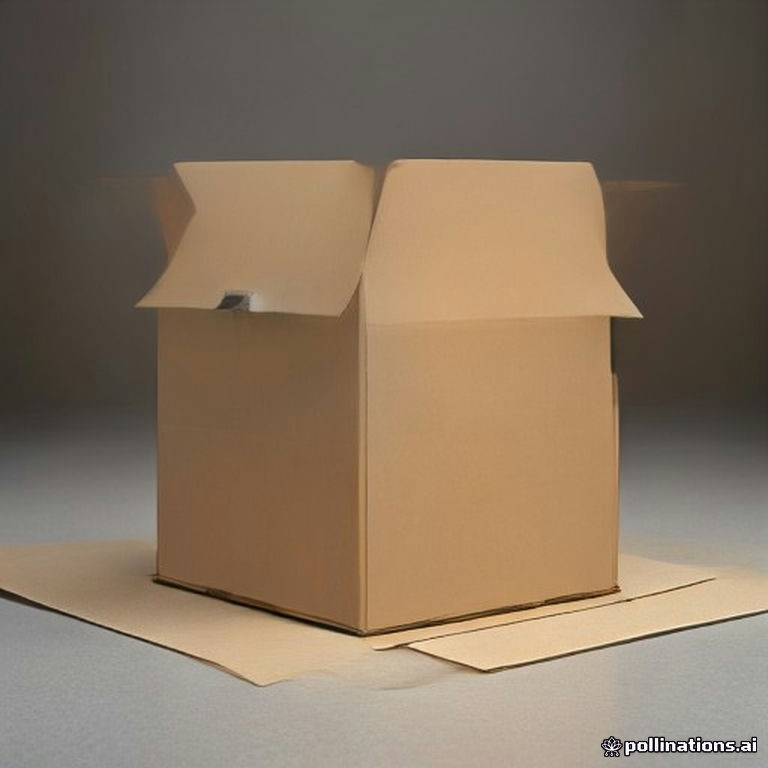
Right-size mono-material corrugated shippers by matching internal case dimensions to product footprint plus 6–10mm void per axis, then verify ECT rating (typically ECT-32 for <15kg payloads, ECT-44 for palletized column stacks) against ASTM D4169 Distribution Cycle 13 compression and vibration schedules. Robotic case packers additionally demand ±1.5mm die-cut registration and creep-resistant RSC flap geometry to prevent vacuum head misgrips and line stoppages.

1. Why Right-Sizing Is Now a Robotics Problem, Not Just a Strength Problem
Robotics integration is dominating the 2026 exhibitor halls at PACK EXPO International, with robotic case packing cells now quoted into mid-volume lines that previously used side-load semiautomatics. Procurement teams evaluating these cells quickly discover a hard truth: the corrugated shipper is no longer a passive container — it is a machine interface. A dimensionally sloppy RSC that a human packer tolerated now generates misgrips, flap interference, and full-line fault stops.
This guide anchors every recommendation to verifiable engineering metrics: ECT grade selection per ASTM D4169 distribution cycles, McKinsey-formula-derived box compression targets, Cobb 60 moisture limits, and robotic gripper tolerance windows. All numerical worked examples below are hypothetical illustrations for calculation methodology — validate against your own line data.
2. Mono-Material Mandate: PPWR-Compliant Board Architecture
Per EU Regulation (EU) 2024/1991 (PPWR) packaging waste reduction mandates, all corrugated shippers sold into the EU market from 2030 onward must be recyclable-at-scale, which in practice pushes procurement toward 100% paper mono-material constructions: single-fiber liner/facings, water-based PFAS-free barrier coatings, and paper-based tapes replacing plastic strapping. Per FTC Green Guides (16 CFR Part 260) substantiation rules, US-market recyclability claims on corrugated must reflect available recycling stream access — full-fiber corrugated at >90% curbside availability comfortably supports the claim.
Mono-material does not mean single-grade. A practical 2026 construction stack for a robotic-packed shipper:
- E-flute (1.5mm caliper): DTC mailers, <8kg payloads, high print face.
- B-flute (3.0mm caliper): Interior partitioned shippers, robotics-friendly flatness.
- C-flute (4.0mm caliper): General e-commerce workhorse, best cushioning-to-cost.
- BC double-wall (7.0mm caliper): Palletized column stacks, >20kg payloads, export transit.
Board flatness is the unsung robotics variable. Warp exceeding 5mm per 600mm of panel length causes vacuum cup misalignment and case-sealer glue skips. Specify warp tolerance ≤3mm per 600mm on the purchase order — most mills will hold it at nominal tooling cost impact if stated explicitly.
3. Dieline Physics: Internal Dimensions, Flap Interference & Gripper Tolerances
Right-sizing methodology starts with internal case dimensions (ID): ID = product footprint + void allowance (6–10mm per axis for rigid goods, more for cushioning) + partition thickness. But for robotic case packers, three dieline-level parameters dominate performance:
- Flap gap and score depth: RSC minor flaps must clear the product by ≥3mm in the closed state; manufacturer’s joint (glue lap) must sit 12–15mm from the leading flap edge so it never enters the gripper plane.
- Crease quality: Score (crease) depth on 32 ECT C-flute should be 0.5mm ± 0.15mm from board surface using a 45-durometer creasing matrix; over-creasing collapses the flute and creates hinge cracking under humidity.
- Die registration: Hold ±1.5mm slot-to-print registration so vision-guided robots locate flaps consistently. Cell tolerances of modern case packers (Fanuc, ABB cells) typically accept ±3mm positional variance — your shipper must consume less than half of that window.
- Corner radius on hand-holes and vents: ≥6mm radius; sharp die-cut corners initiate crack propagation at <60% of rated BCT.
McKee formula for compression prediction: BCT = 5.87 × ECT × √(caliper × perimeter). As a hypothetical worked example: a C-flute shipper at ECT-32 (32 lb/in), 4.0mm (0.157 in) caliper, 100 in perimeter yields BCT ≈ 5.87 × 32 × √(0.157 × 100) ≈ 743 lb (~3.3 kN). For a pallet column stack of 5 high with 18kg gross cases, stacking load on the bottom case ≈ 4 × 18kg × 9.81 ≈ 707N — requiring a safety factor ≥3 for 90-day warehouse dwell, pushing specification toward ECT-44 BC double-wall. Run your own payload and stack height through the TadaPack compression calculator at https://tadapack.com/tools for interactive verification.
Q: If the McKee formula derives BCT from ECT, why do overseas enterprise POs still mandate Mullen burst testing?
A (direct): Because burst (per TAPPI Standard T810, 2026 Revision) measures liner tensile-and-puncture resistance across the laminate, which correlates with rough-handling survival (puncture, corner loading) that ECT does not capture. Mechanical reason: ECT is a pure edge-compression metric optimized for static stacking; Mullen hydrostatic pressure (kPa or psi) proxies the linerboard’s fiber bond quality — double-backer delamination from poor wet-end chemistry shows up in burst long before ECT degrades. Procurement recommendation: Accept dual specification — ECT-32/44 for stacking plus a 200 psi (1379 kPa) burst minimum on 175gsm kraft liners for export SKUs — and require the mill certificate of analysis with each lot.
4. ASTM D4169 Compliance Protocol for Robotic-Packed Shippers
ASTM D4169 (Standard Practice for Performance Testing of Shipping Containers and Systems) defines 18 distribution cycles; robotic-packed e-commerce and retail-distribution shippers overwhelmingly map to DC-13 (non-palletized/palletized general distribution) or DC-1A sequences. In strict accordance with ASTM D642 (compressive resistance of shipping containers), the machine direction compression test validates the McKee prediction; under ISTA 3A General Simulation protocol, drop shock sequences of 9 drops at heights scaled to gross packaged weight validate corner and edge integrity; ASTM D999 random vibration at 0.52 Grms over the 3–100Hz band simulates over-the-road input on the flute laminate and adhesive bonds.
Laboratory validation standard: condition per ASTM D685 / ISO 187 — 23°C ± 1°C, 50% ± 2% RH for minimum 24 hours before test. Instrumentation benchmark: Mitutoyo 547-400S digital caliper for caliper verification (tolerance ±0.15mm, 10-specimen statistical average), Lansmont or equivalent compression tester per ASTM D642, and TAPPI T810 Mullen burst apparatus. Hypothetical lab record format for a Lot (e.g., Lot #TP-2026-B4) should log: nominal vs. measured caliper, ECT average and standard deviation, BCT at failure mode (panel bulge vs. joint delamination), and post-humid-cycle ECT retention. Establish your own baseline before releasing tooling — never accept supplier lab data alone for first-article approval.
5. Failure Diagnostics & Troubleshooting Matrix
| Defect / Symptom | Root Cause (Engineering) | Floor-Level Corrective Action | Governing Standard / Test Protocol |
|---|---|---|---|
| Flap popping open on vacuum pick-up | Insufficient crease depth; flap memory set too low; 0.5mm score tolerance exceeded | Re-cut with 45-durometer creasing matrix; verify score depth 0.5mm ± 0.15mm; add 1-second flap pre-form | ISO 3021 creasing; ASTM D4169 DC-13 handling |
| Stack collapse at bottom pallet layer, coastal warehouse | ECT derating under >75% RH; Cobb 60 >35 g/m² liner absorption | Upsize to BC double-wall ECT-44; specify water-resistant (W-5R) starch adhesive; verify ECT retention ≥85% after ISO 2247 cycling | ASTM D642 / TAPPI T810 / ISO 2247 |
| Glue-lap debond after 30-day ocean transit (container sweat) | Cold-set adhesive creep at 35°C/90% RH inside container microclimate | Switch to hot-melt lap glue, 5–7 g/m² bead; desiccant load 200g per container pallet unit | ASTM D4169 DC-1 atmospheric conditioning; ISTA 3A |
| Robot vision misread on printed panel | Print-to-slot registration drift >1.5mm; glossy varnish reflectance | Tighten die registration spec to ±1.5mm; use matte aqueous coating in gripper/target zones | ISO 186:2020 sampling & conditioning |
6. Multi-Regional Logistics Corridors & Landing Matrix
Freight stress is corridor-specific, and derating factors must be applied before BCT targets are frozen:
- Pacific corridor → California Inland Empire (FBA ONT8/LGB3): 18–30 day ocean transit with container sweat cycles; apply 0.80 stacking derating on ECT for high-humidity port dwell, then dry-inland warehouse recovery is partial only. Amazon FBA dimensional weight rules additionally penalize cubic inefficiency — right-sizing to ≤9mm void per axis routinely recovers 8–12% of dimensional freight cost on hypothetical worked scenarios.
- Trans-Atlantic → Port of Rotterdam multimodal: Rail/road intermodal into Central Europe adds low-frequency vibration (2–5Hz sway) that fatigues adhesive bonds; ISTA 3A plus an extended ASTM D999 dwell is recommended for SKUs transiting two modal changes.
- Texas DFW distribution triangle: Dry inland environment (typically <45% RH) allows full ECT retention, but board desiccation makes liners brittle — crease cracking risk rises on double-wall constructions; condition per ISO 186:2020 (23°C ± 1°C, 50% RH) before filling.
For EU landings, ensure mono-material claims align with PPWR (2024/1991) recyclability grading; PFAS-free barrier coatings must be documented per supplier declaration to avoid greenwashing exposure under FTC Green Guides (16 CFR Part 260) and EU Directive 94/62/EC Annex II essential requirements.
Trade show and booth logistics note: Exhibitors flying fragile display samples to PACK EXPO International should treat booth cases as DC-13 non-palletized shipments — double-wall BC flute, ISTA 3A-validated corner protection, and 24–48 hour structural CAD prototyping from TadaPack gets a validated shipper to you without tooling delay. For standard programs, our online calculators at https://tadapack.com/tools let you iterate ECT, stack height, and void ratios before committing to die tooling.
Recommended Engineering Reading
[TOOLS] Featured Engineering & Calculation Tools
Explore 70+ Packaging Tools ➔Box Compression (BCT) Calculator
Predict box compressive limit and stacking safety factors via McKee formula.Edge Crush Test (ECT) Calculator
Calculate linerboard ring crush and composite ECT ratings for optimal board specs.
