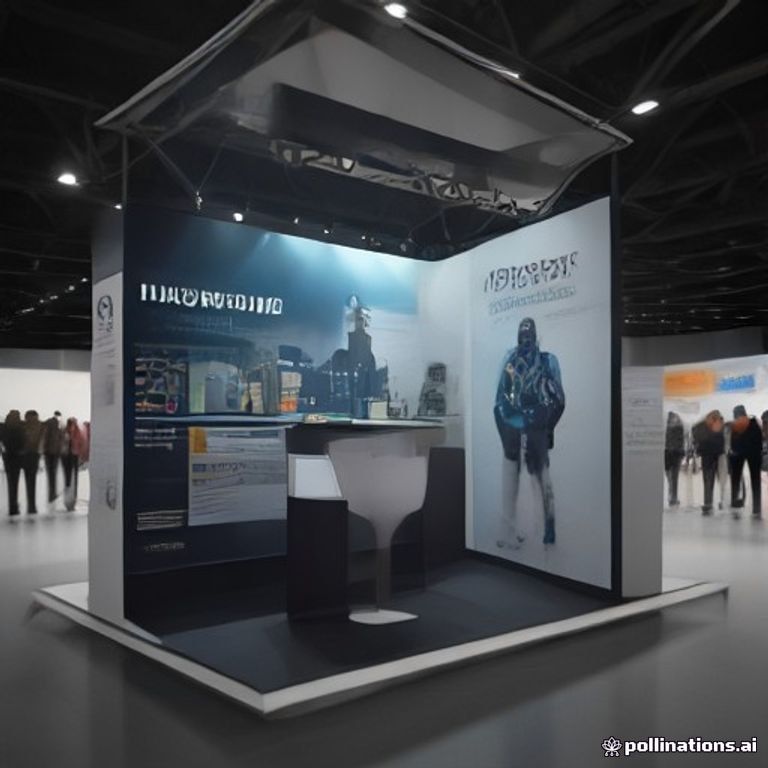
A retail-compliant 48-hour booth prototype requires a CAD-cut, zero-tooling dieline on 300-350gsm SBS or FSC-certified CCNB with Cobb 60 absorption under 30 g/m² and PFAS-free barrier coating, validated to EU PPWR (2024/1991) recyclability rules. Prioritize ASTM D4169 Short Schedule pre-shipment simulation so fragile display samples survive intermodal freight to the show floor.
Pack Expo booths are won or lost on the first 30 seconds a buyer handles your sample — and in 2026, with EU PPWR recyclability mandates fully in force and US state EPR programs scaling, that sample must be both premium-feeling and provably recyclable. This guide is written for procurement directors, structural engineers, and DTC founders who need printed folding carton prototypes in under 48 hours, in short runs, with zero plate or die mold fees.

1. The 48-Hour Prototype Clock: What Is Physically Achievable
A 48-hour turn is only realistic when the workflow is digital-first. The governing constraint is not printing speed — digital toner/inkjet lines run thousands of sheets per hour — but dieline iteration and die tooling. Conventional rotary dies take 3-7 days to fabricate and cost $300-$900. CAD-driven flatbed sample tables with a 45-durometer creasing matrix and oscillating tangential knife eliminate that dependency entirely, cutting samples directly from calibrated board.
Realistic 48-hour critical path (hypothetical worked example, TadaPack standard SOP):
• Hours 0-4: dieline upload, artboard bleed check (3mm bleed, 5mm safe zone), auto fold-verification
• Hours 4-10: digital color proof on production stock, ΔE00 ≤ 2.0 tolerance against brand Pantone target
• Hours 10-30: print, laminate/coating (PFAS-free aqueous barrier), 24h full cure per ISO 186:2020 conditioning
• Hours 30-44: CAD cutting, glue assembly, ISTA 2A-style drop check on protective transit carton
• Hours 44-48: expedited air dispatch
Per EU Directive 94/62/EC Annex II and EU PPWR (Regulation (EU) 2024/1991), any carton carrying a recyclability claim for EU retail must be designed for fiber repulpability — meaning no metallized polyester laminates and minimum 90% fiber mass recoverable. Per FTC Green Guides (16 CFR Part 260) substantiation rules, US booth claims of ‘recyclable’ must be backed by documented access to recycling facilities; a laminated SBS carton with a PP-window glued in fails that bar.
2. Substrate Selection: The 2026 Material Matrix
Substrate choice determines both shelf impact and regulatory compliance. The comparison below reflects current 2026 market pricing benchmarks (hypothetical indicative ranges for planning purposes).
| Substrate | Caliper / Basis Weight | Stiffness Behavior | Recyclability Posture | Indicative Short-Run Cost (per 1k, 2026) | Governing Standard / Test Protocol |
|---|---|---|---|---|---|
| SBS (Solid Bleached Sulfate) | 0.38-0.46mm / 300-350gsm | Highest white-back print fidelity; ~18-24 GN bending stiffness at 350gsm | Fully repulpable, PPWR-compliant | $0.42-0.68 | ISO 2493 (bending stiffness) / ISO 535 (Cobb) |
| CCNB (Clay-Coated News Back) | 0.40-0.50mm / 350gsm | Good economics; humidity-sensitive, stiffness drops ~15-20% at 80% RH | Recyclable fiber stream (mixed paper) | $0.30-0.48 | TAPPI T489 / ISO 187 conditioning |
| Uncoated Kraft (FSC) | 0.35-0.45mm / 280-340gsm | Strong tensile; premium natural aesthetic for eco positioning | Highest recyclability score under PPWR grading | $0.38-0.60 | TAPPI T494 (tensile) / FSC chain-of-custody |
| E-Flute Laminated Cartonboard | ~1.5mm / E-flute (~1.1-1.5mm flute caliper) | Structural rigidity for heavier booth samples; ECT-32 minimum | Fully curbside-recyclable (corrugated stream) | $0.75-1.20 | TAPPI T811 (ECT) / ASTM D642 |
Q: If E-flute laminated cartonboard already delivers ECT-32 stack strength, why do European retail buyers still mandate repulpability documentation for a display carton?
A: Direct answer: under EU PPWR (2024/1991), all transport and sales packaging placed on the EU market must meet Design-for-Recycling grade thresholds by the phased deadlines, regardless of mechanical performance. Mechanical reason: laminated E-flute combines two fiber grades (liner + medium) plus adhesive; if the adhesive or coating content exceeds roughly 5% non-fiber mass, the recycler’s repulping yield degrades and the structure downgrades to ‘limited recyclability.’ Procurement recommendation: specify water-dispersible adhesives and request a repulpability certificate (per applicable INGEDE or CEPI test method) with every prototype batch — TadaPack includes this documentation on request at no tooling fee.
3. Dieline Physics: Creasing, Folding & Fracture Prevention in 48 Hours
Folding carton failure at retail is 80% dieline engineering, not art. The governing mechanics: when board folds, the outer fiber layer goes into tension and the inner into compression. If crease channel depth is wrong, the outer layer fractures (visible white crack lines on dark ink coverage — the single most common booth-sample defect).
Critical parameters: crease channel width should be approximately 2× caliper + 0.3mm; crease rule height sits 0.3-0.5mm below the cutting rule height. For a 0.45mm SBS, a 1.23mm crease rule against a 2.0mm-wide channel is the typical starting point. Die registration must hold ±0.15mm; beyond that, flap tabs misalign and tuck flaps pop open under vibration.
4-Step Prototype Verification SOP:
Step 1 — Dieline audit: run automated fold-geometry check; verify grain direction is parallel to the primary fold axis (cross-grain folding reduces fold endurance by up to 40% per TAPPI T511 fold testing).
Step 2 — Proof on production stock: color proof on the identical substrate/coating lot, ΔE00 ≤ 2.0, checking halftone dot gain on uncoated stock (typically 8-14% at 50% tone).
Step 3 — Hand-fold & crease validation: fold 10 specimens by machine crease; inspect for outer-fiber cracking under 10× magnification; measure fold-to-fold dimension with 0.01mm resolution — hold ±0.15mm tolerance.
Step 4 — Transit simulation: pack fragile display samples in an ECT-32 minimum double-check inner carton with 30mm molded pulp or EPE corner protection; verify compression headroom per ASTM D642 so stacked booth crates do not exceed 60% of the box BCT.
4. Freight Stress: Getting Fragile Booth Samples to the Floor Intact
The last mile before a booth demo is usually the most abusive mile the package will ever see. Under ISTA 3A General Simulation Performance Testing protocol, parcel-shipment drop sequences (up to ~0.9m for sub-20kg parcels) and random vibration spectra are applied — a proxy for LTL handling and air freight at show-site consolidators. For the show corridor itself, ASTM D4169 Short Schedule vibration testing provides a defensible pre-shipment validation baseline.
Corridor-specific stress points:
• Pacific/Atlantic ocean routes: 25-35 day transit exposes board to container sweat cycles; RH inside uninsulated containers routinely swings 55%→90%+. E-flute and CCNB lose measurable stiffness above 75% RH. Countermeasure: aqueous barrier coating targeting Cobb 60 ≤ 30 g/m², plus desiccant load of 100-200g per m³ of cargo volume.
• California Inland Empire (FBA ONT8 / LGB3 corridor): high ambient temps in trailer deck cycles (up to 50°C+ interior); heat-softened hot-melt adhesive can debond carton bottoms. Use cold-bond or lap-glue with ≥ 140 N/15mm shear bond.
• Texas DFW distribution triangle: dry inland ambient (RH 30-45%) is favorable, but intermodal rail hump-shunting imposes longitudinal shock — crate cartons with 40mm+ edge crush clearance against crate walls.
• Port of Rotterdam multimodal (rail/road into EU): high coastal humidity plus double-handling; stacking load derating of 15-20% versus dry-inland assumptions is prudent for BCT calculations on high-humidity coastal legs.
Estimate your dimensional-weight exposure and stacking loads interactively at TadaPack’s free calculation tools — including carton BCT estimates and volumetric weight checks against carrier dim rules (Amazon FBA dimensional freight penalties apply above the density thresholds; oversized cartons with utilization below the FBA minimum trigger surcharge tiers).
5. Defect Diagnostics & Troubleshooting Matrix
| Defect | Root Cause (Mechanics) | Corrective Action | Governing Standard / Test Protocol |
|---|---|---|---|
| Flap popping on tuck closures | Crease channel too wide or rule too low; insufficient set in crease → spring-back exceeds tuck tab retention | Reduce channel width by 0.1-0.2mm; verify 45-durometer matrix; extend make-ready dwell | TAPPI T511 fold endurance / internal crease-set checks |
| Adhesive debonding after ocean transit | Hot-melt softening under 60°C+ container interiors plus 90% RH cycling; Cobb-driven fiber weakening at glue lap | Switch to water-based cold adhesive; increase glue lap to ≥ 16mm; add Cobb-coated inner liner | ISO 535 (Cobb 60) / ASTM D4169 transit simulation |
| Outer-fiber cracking on dark graphics | Cross-grain fold; dried board (over-conditioned below 45% RH); crease channel undersized | Re-orient dieline to grain-parallel folds; recondition at 23°C/50% RH 24h before folding | ISO 187 / ASTM D685 conditioning |
For booth-ready prototypes and short-run VIP gift cartons with zero plate mold fees, TadaPack’s custom structural packaging & prototyping service pairs CAD sample cutting with production-intent materials, so what wins on the show floor converts 1:1 into production tooling later.
Recommended Engineering Reading
[TOOLS] Featured Engineering & Calculation Tools
Explore 70+ Packaging Tools ➔CBM Volume & Freight Dim-Weight Calculator
Calculate cubic meters & dimensional weight to minimize freight costs and avoid FBA size tier penalties.Mailer Box Area & Dieline Size Calculator
Instant flat dieline dimensions, material consumption, and sheet nesting for custom D2C mailer boxes.
