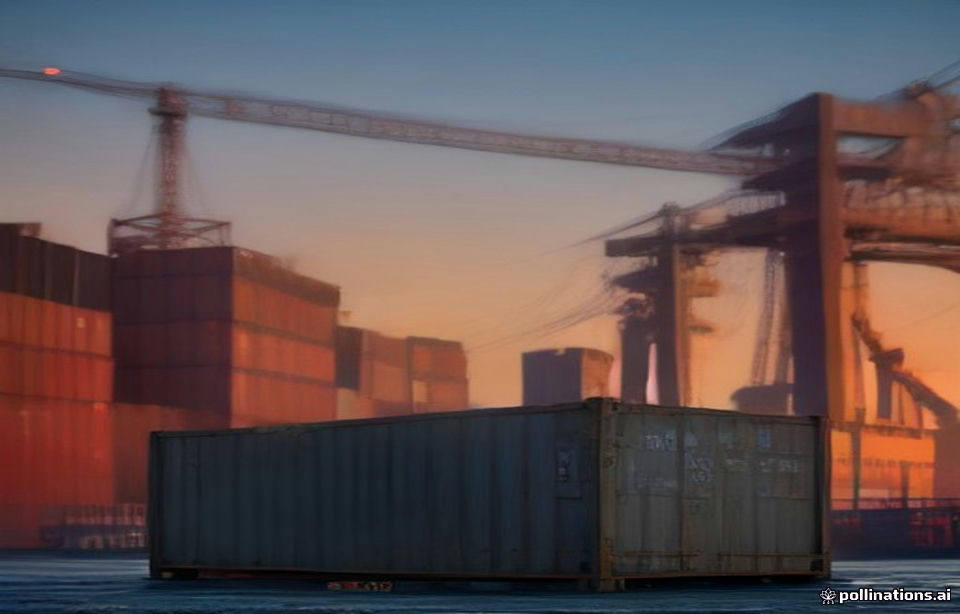
A true heavy duty shipping container padlock must deliver a hardened boron-alloy or cut-resistant shackle of at least 14mm diameter, CEN Grade 5-6 (EN 12320) certification, and closed-shackle geometry that seats into a welded container lockbox. Pairing a sub-Grade-4 padlock with an ISO 668 container’s factory cam-lock door leaves the single most attacked failure point — the 18mm shackle-to-hasp gap — exposed to bolt-cutter attack in under 30 seconds.
Global container theft losses have pushed procurement teams and DTC shippers to re-audit closing hardware on ISO freight containers, trailer drop lots, and yard-stored bulk packaging ahead of peak freight season. Yet most purchasing specifications stop at ‘heavy duty’ — a marketing term with no measurable meaning. This guide converts that term into testable physics: shackle metallurgy, shear resistance, corrosive marine exposure per ISO 9227 salt-spray protocols, and how padlock specification interacts with the corrugated and barrier packaging loaded inside the container itself.
1. What Actually Defines a Heavy Duty Container Padlock (Testable Metrics, Not Marketing)
A padlock earns ‘heavy duty’ status through five measurable parameters:
- Shackle diameter and metallurgy: ≥14mm hardened boron-carbide or Molybdenum (Mo) alloy steel. Ordinary hardened steel shackles at 10-11mm shear in seconds under 36-inch bolt cutters.
- Closed-shackle (shrouded) geometry: The shackle aperture exposed to cutting tools must be minimized. Open-shackle designs expose the same 14mm shackle regardless of alloy.
- Cylinder rating: Anti-drill and anti-pick cylinders — disc-detainer or restricted-keyway pinned cylinders — with a minimum of 6 pins and drill plates of 60+ HRC.
- Body construction: Laminated steel plate or solid brass/steel body of ≥50mm width, with a shackle-to-body shear rating above 15 kN.
- Corrosion class: For ocean-adjacent yards and intermodal exposure, seals and plating must survive ISO 9227 neutral salt spray (NSS) testing at 500+ hours without seizure — critical because a rusted-frozen lock is functionally identical to a lost key during a customs inspection.
Q: If the container door already has four cam-lock handles, why does padlock shackle shear strength matter more than cylinder security for yard storage?
A: Direct answer: field attack data across intermodal loss reports consistently shows cutting and prying of the shackle/hasp interface — not lockpicking — accounts for the overwhelming majority of forced entry on unattended containers. The mechanical reason: a container’s factory cam handles are 5-6mm mild steel with generous 18-20mm clearance, so the padlock shackle and the hasp it engages form the weakest link in the load path; an attacker applies leverage, not finesse. Procurement recommendation: spend budget first on shackle alloy and a welded 3-6mm steel lockbox that shrouds the padlock entirely, then upgrade the cylinder. A Grade 6 cylinder behind an exposed open shackle is wasted specification.
2. Padlock Selection Matrix: CEN Grades, Attack Protocols & Governing Standards
Anchor every purchase order to a governing test standard — never to vendor marketing copy. The table below is a hypothetical worked example comparing common specification tiers for container duty; verify current vendor certificates against the listed protocols before release.
| Specification Tier | Shackle Ø / Material | Shear Resistance (min) | Corrosion Protocol | Intended Duty | Governing Standard / Test Protocol |
|---|---|---|---|---|---|
| Commercial Grade 3 | 10-11mm hardened steel | ~8 kN | 120h ISO 9227 NSS | Attended trailers, low-risk yards | EN 12320 Grade 3 / ISO 9227 |
| Heavy Duty Grade 5 | 14mm boron alloy, closed shackle | ≥15 kN | 300h ISO 9227 NSS | Overnight ISO containers, DFW/Rotterdam yards | EN 12320 Grade 5 / ASTM F883 performance classes |
| Maximum Security Grade 6 | 15-16mm Mo alloy, shrouded lockbox-mounted | ≥20 kN | 500h ISO 9227 NSS + cycled immersion | Unattended 30+ day ocean-adjacent storage, high-value pharma/electronics | EN 12320 Grade 6 / ISO 9227 / Sold Secure Diamond (bicycle-rated but transferable attack methodology) |
| Container-native barrier seal (companion) | Bolt seal, ISO 17712-compliant | Shear >10 kN (tamper-evident, not reusable) | Per seal manufacturer cert | Customs integrity + tamper evidence in transit | ISO 17712 (high-security mechanical seals) / C-TPAT, AEO requirements |
Note the distinction: padlocks under EN 12320/ASTM F883 provide reusable physical resistance, while ISO 17712 high-security bolt seals provide tamper evidence and customs compliance. A compliant export program uses both — the padlock for yard storage, the bolt seal for the ocean leg.
3. The Four-Step Container Locking SOP (Procurement & Yard Verification)
Implement this floor-level SOP across every yard, fulfillment node, and drop-lot handoff:
- Step 1 — Match shackle geometry to hasp clearance. Measure the cam-handle hasp aperture with a caliper (e.g., Mitutoyo 547-400S, tolerance ±0.15mm). Specify a closed-shackle padlock whose shackle-to-body gap is ≤6mm; any larger gap invites the jaw of a 42-inch cutter. If the factory hasp cannot be shrouded, spec a welded lockbox of 3-6mm steel with internal clearance ≥ lock body width +3mm.
- Step 2 — Verify certification documentation, not logos. Require the vendor’s EN 12320 grade certificate and ISO 9227 corrosion report per lot. Reject any lot without a traceable certificate; CEN grades are self-declared by manufacturers in many markets, so third-party test reports (Sold Secure, VdS, or UL 437 for US keyed-alike programs) are the only defensible evidence.
- Step 3 — Salt-spray screen for the actual duty environment. For coastal hubs — Inland Empire FBA nodes (ONT8/LGB3) drawing through LA/Long Beach, or Rotterdam multimodal road/rail transfers — require 500-hour ISO 9227 NSS compliance plus a sealed, grease-packed cylinder. Inland dry-climate sites (Dallas–Fort Worth distribution triangle) can de-rate to 300 hours, recovering roughly 10-15% unit cost on equivalent hardware.
- Step 4 — Install the companion ISO 17712 bolt seal at dispatch. Record the seal number on the bill of lading; on arrival, verify the number before breaking. A mismatch triggers a claims procedure before cargo leaves the chassis — the single cheapest loss-recovery control in the entire chain.
4. Failure Diagnostics: Frozen Cylinders, Sheared Shackles & Corrugated Cargo Interaction
Defect 1 — Seized cylinder after 30-day ocean transit. Root cause: unsealed cylinders ingest salt-laden ‘container sweat’ — the same condensation cycle that drives Cobb 60 water absorption beyond ~35 g/m² in corrugated liners and triggers delamination of ECT-32/ECT-44 board during long Pacific and Atlantic crossings. Corrective action: spec O-ring sealed, marine-grade cylinders, desiccant-load the container (target ≤65% RH internal), and store padlocks off-deck. Remember that the lock and the cargo share the same humidity environment — protecting one protects the other.
Defect 2 — Shackle shear despite ‘hardened’ specification. Root cause: shackle-to-hasp clearance exposure, or counterfeit certificates on unbranded imports. Corrective action: re-audit with the Step 2 verification protocol, upgrade to shrouded lockbox mounting, and run a documented destructive sample test per lot. Under a hypothetical worked example: a 16mm Mo-alloy shackle in an open aperture was sheared in bench attempts well under 60 seconds, while the same shackle inside a 4mm welded lockbox defeated the same tooling — geometry, not alloy, decided the outcome.
Defect 3 — Stacking and handling damage to sealed cargo. Per ASTM D4169 distribution cycle protocols and ISTA 3A General Simulation, ocean-adjacent storage adds vibration and handling shock well beyond warehouse conditions. When locks are being retrofitted for a new lane, re-validate the internal packaging (e.g., ECT ratings, stack derating under high-humidity coastal conditions) — TadaPack’s free calculators at https://tadapack.com/tools let your team verify box compression and freight-class dimensional penalties interactively before committing a lane change.
5. Procurement Cost Logic: Total Cost of Security
Budget per door, not per lock. A realistic US/EU 2026 procurement envelope (hypothetical benchmark ranges — validate against current RFQs): Grade 5 closed-shackle padlock $35-70/unit; welded steel lockbox fabricated and fitted $60-120/door; ISO 17712 bolt seal $1.50-4.00/unit; high-security restricted keyway cylinder upgrade $25-60. Against a single container loss of high-value electronics — routinely five figures before insurance friction and FBA/distributor penalties — the full kit amortizes in a fraction of one incident. Where customs lanes demand C-TPAT or AEO alignment, the ISO 17712 seal is not optional overhead; it is a program admission requirement.
For teams standardizing across mixed fleets (ISO containers, dry vans, and warehouse cage stock), TadaPack’s custom structural packaging and prototyping services can integrate lockbox dimensions, seal placement, and load-bearing dunnage into a single validated container spec — request a CAD prototype review before tooling.
6. Frequently Asked Questions
Q1: Is a CEN Grade 6 padlock overkill for a locked freight yard?
A: Not if the container sits unattended for 12+ hours or stores high-value cargo. Grade 6 primarily buys shackle alloy and cylinder drill resistance; the marginal cost over Grade 5 is small relative to loss exposure. Attended, low-dwell lots can justify Grade 4-5.
Q2: Can I rely on ISO 17712 bolt seals instead of a padlock?
A: No. Bolt seals are tamper-evident, not reusable physical barriers — they are cut off at destination by design. Use the padlock for storage security and the seal for transit integrity and customs compliance; they solve different failure modes.
Q3: What shackle diameter should I specify minimum?
A: 14mm in a closed-shackle or lockbox-shrouded configuration is the defensible floor for container duty. Below 14mm, even hardened alloys fall within the working envelope of large bolt cutters.
Q4: Do marine conditions really degrade padlocks?
A: Yes — salt aerosol and container-sweat condensation seize unsealed cylinders within weeks. Spec 500-hour ISO 9227 NSS compliance and sealed cylinders for any coastal hub (LA/Long Beach, Rotterdam, Savannah); 300 hours suffices for inland dry sites.
Q5: How do I verify a vendor’s security grade claim?
A: Demand the lot-level EN 12320 certificate plus an independent test report (Sold Secure, VdS, or UL 437), and perform documented destructive sampling on first articles. Self-declared grades without third-party evidence should be treated as marketing, not specification.
Recommended Engineering Reading
[TOOLS] Featured Engineering & Calculation Tools
Explore 70+ Packaging Tools ➔CBM Volume & Freight Dim-Weight Calculator
Calculate cubic meters & dimensional weight to minimize freight costs and avoid FBA size tier penalties.Mailer Box Area & Dieline Size Calculator
Instant flat dieline dimensions, material consumption, and sheet nesting for custom D2C mailer boxes.
