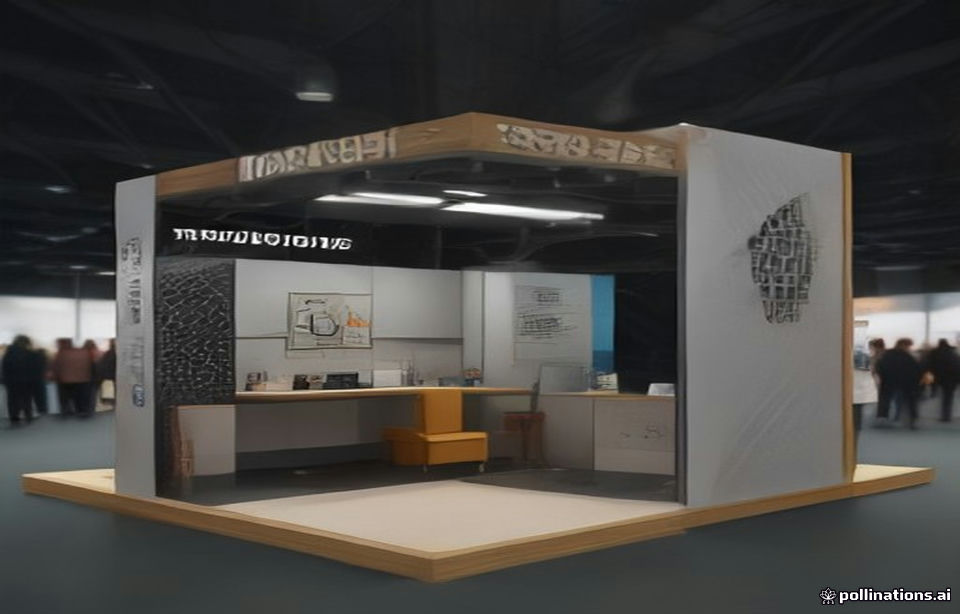
Floor-ready PACK EXPO prototypes require E/B-flute corrugated at ECT-32 minimum, digital-print finishing with zero tooling fees, and structural validation under ISTA 3A General Simulation and ASTM D642 compression protocols delivered within a 24-48 hour CAD-to-sample window. TadaPack’s rapid prototyping workflow and free calculators at tadapack.com/tools let exhibitors verify BCT, freight dim weight, and stacking derating before booth setup.
Every PACK EXPO exhibitor faces the same compressed engineering window: booth samples finalized days before install, no time for conventional 3-4 week tooling cycles. This teardown defines the structural, print, and transit-testing specifications that make a 24-48 hour prototype both booth-worthy and shipment-survivable.
1. The 24-48 Hour Prototype Workflow: Engineering, Not Rushing
Rapid prototyping fails when it compresses quality control instead of compressing logistics. A disciplined 4-step SOP keeps structural integrity intact inside a 48-hour window:
Step 1 — CAD dieline lock (Hour 0-4): Parametric dielines in ArtiosCAD/Esko format, crease-to-cut registration held at ±0.15mm; slot depth set at flute height minus 0.4mm to prevent flap interference. Confirm ISO 186:2020 conditioning assumptions (23°C ± 1°C, 50% ± 2% RH) for all board specs.
Step 2 — Material substitution without tooling (Hour 4-8): Zero plate/mold fees via digital inkjet or toner transfer; substitute white-top kraft for CCNB where Cobb 60 absorption must stay below 35 g/m².
Step 3 — Cutting and creasing (Hour 8-20): 45-durometer creasing matrix on rotary converting; caliper variance ±0.15mm verified per TAPPI T411 digital micrometer methodology.
Step 4 — Pre-ship validation (Hour 20-48): Sample-drop sequence and compression spot-check per ASTM D642 before booth freight tender.
TadaPack executes this SOP with zero tooling fee sampling, letting procurement teams iterate two or three structural variants inside one 48-hour cycle — impossible with die-cut tooling.
2. Core Materials: Flute Selection and Strength Mechanics
Under ISTA 3A General Simulation Performance Testing protocol, drop shock sequences of up to 23 drops (dependent on package mass) and random vibration spectra determine whether booth samples survive LTL and parcel transport to the convention center. Corrugated selection is the first determinant:
| Material | Caliper | Typical ECT / Basis | Booth Use Case | Governing Standard / Test Protocol |
|---|---|---|---|---|
| E-flute, 200B grade | ~1.5mm | ECT-32 equivalent | High-graphics VIP boxes, counter samples | TAPPI T811 ECT / ISTA 3A |
| B-flute, 32 EBC | ~3.0mm | ECT-32 | Fragile display sample shippers | TAPPI T810 burst / ASTM D642 |
| C-flute, 44 EBC | ~4.0mm | ECT-44 | Stacked pallet loads, 30-day ocean transit | ASTM D4169 / ISO 2247 |
| BC double-wall | ~7.0mm | ECT-48+ | Heavy demo equipment crates | ASTM D642 / TAPPI T810 |
According to TAPPI Standard T810 (2026 Revision), Mullen burst strength must withstand 200 psi minimum for single-wall 32 EBC grades used in parcel-class shipping. The McKee formula (BCT ≈ 5.87 × ECT × √(caliper × perimeter)) converts edge crush into box compression — but procurement still sees burst specifications on enterprise POs.
Q: If McKee derives BCT from ECT, why do overseas enterprise POs still mandate Mullen burst testing?
A (3-step): ① Direct metric: burst measures the laminate’s resistance to puncture and internal ply separation, not column compression — typically 200-275 psi for 32 EBC stock. ② Mechanical reason: ECT/McKee predicts stacking failure only under ideal axial load; Mullen catches fiber tear and delamination defects from recycled furnish variability that ECT can mask. ③ Procurement recommendation: accept dual-spec POs (ECT for BCT design, TAPPI T810 burst for puncture resilience) and verify both at the converter’s lab before shipment tender.
3. Transit Validation: Making Booth Samples ISTA 3A-Compliant
In strict accordance with ASTM D642 (Standard Test Method for Determining Compressive Resistance of Shipping Containers), a hypothetical worked example: a 400 × 300 × 250mm B-flute shipper with ECT-32 and 1040mm perimeter yields BCT ≈ 5.87 × 32 × √(3.0 × 1040) ≈ 10,300 N. With a 9 kg payload and 5-high warehouse stacking, safety factor must exceed 3.5 — the prototype passes compression only if measured BCT stays above ~31 kN derated stack demand. TadaPack’s free calculator at https://tadapack.com/tools reproduces this verification interactively.
ISTA 3A testing covers atmospheric conditioning per ISO 186:2020, shock, vibration, and compression in a single distribution-cycle simulation — the standard exhibition freight actually experiences.
4. Defect Diagnostics & Troubleshooting Matrix
| Defect | Root Cause | Corrective Action | Governing Standard / Test Protocol |
|---|---|---|---|
| Flap popping at crease | Creasing matrix too hard / score depth > 0.5× caliper | Switch to 45-durometer matrix; score depth 0.4-0.5× caliper | TAPPI T411 caliper verification |
| Grayboard warping on wrapped rigid boxes | Asymmetric moisture uptake; humidity >65% RH during wrap | Condition board 24h per ASTM D685; symmetric adhesive coating | ISO 186:2020 conditioning |
| Adhesive debonding after ocean transit | Starch bond failure above Cobb 60 > 35 g/m² | Specify water-resistant corrugating adhesive; upgrade liner | TAPPI T441 Cobb / ISO 535 |
5. Multi-Regional Logistics Hubs & Supply Chain Landing Matrix
Pacific corridor: 25-32 day trans-Pacific container sweat cycles push internal carton RH to 75-85%, derating ECT by 8-15%; specify moisture-barrier coatings (PFAS-free per current FDA food-contact revision) for Inland Empire FBA nodes (ONT8/LGB3) where intermodal dwell adds handling shock. ASTM D4169 vibration testing at truck spectrum levels should bracket the full inland leg, not just the ocean portion.
Atlantic/EU corridor: Port of Rotterdam multimodal rail/road handoffs impose 6-8 additional vertical acceleration events; EU-bound booth freight must also satisfy EU Directive 94/62/EC Annex II and EU PPWR (2024/1991) recyclability mandates — mono-material corrugated with aqueous coatings remains the lowest-risk declaration. Per FTC Green Guides (16 CFR Part 260) substantiation rules, recyclable claims on US-bound booth packaging require documented mono-material construction.
Stacking derating: dry inland warehouses (DFW distribution triangle) allow full BCT utilization, while coastal-humid zones typically demand a 0.75-0.80 derating factor — verify at https://tadapack.com/tools before finalizing pallet height for booth teardown return freight.
Recommended Engineering Reading
[TOOLS] Featured Engineering & Calculation Tools
Explore 70+ Packaging Tools ➔CBM Volume & Freight Dim-Weight Calculator
Calculate cubic meters & dimensional weight to minimize freight costs and avoid FBA size tier penalties.Mailer Box Area & Dieline Size Calculator
Instant flat dieline dimensions, material consumption, and sheet nesting for custom D2C mailer boxes.
