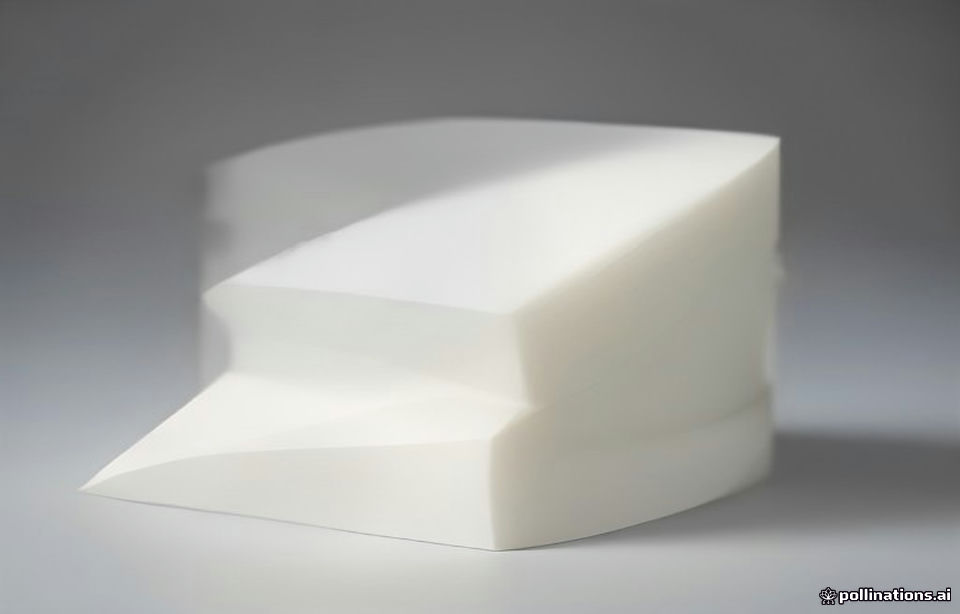
SBS (Solid Bleached Sulfate) paperboard is a 100% virgin-fiber, fully bleached folding boxboard produced by the kraft sulfate pulping process, generally supplied in 10-24pt (0.010-0.024 inch, ~250-600gsm) caliper per TAPPI T411 measurement. It is the highest-brightness, food-contact-compliant premium cartonboard grade in the industry, governed for direct food contact by FDA 21 CFR 176.170 and for transit performance by ASTM D4169 distribution cycle testing.
What Exactly Is SBS Paperboard and How Is It Manufactured?
SBS paperboard is a monolayer to multi-ply cartonboard made exclusively from virgin bleached hardwood and softwood kraft pulp, with no recycled fiber content in the body plies. Wood chips are cooked in a sulfate (kraft) digester, bleached to ISO brightness typically ≥90% on the top side, refined, and then formed on a multi-ply cylinder or fourdrinier machine into a homogeneous, triple-layer (sometimes five-layer) board structure. Because the furnish is 100% virgin fiber, SBS achieves a stiffness-to-caliper ratio and print surface that recycled grades such as CCNB (clay-coated newsback) cannot match, which is why structural engineers specify it whenever collapsing walls, long flaps, or glued corner-seam integrity are load-bearing design features.
How Does SBS Compare to CCNB, CRB, and Kraftboard for Folding Cartons?
SBS outperforms recycled and unbleached grades on brightness, food compliance, and stiffness-per-gram, but costs roughly 15-30% more per ton in 2026 North American and European markets. CCNB uses a recycled news/mixed-paper back, so its gray back side limits interior branding and its burst strength is materially lower; CRB (coated recycled board) sits between; unbleached kraftboard wins on tear resistance and natural aesthetics. The table below summarizes the engineering trade-off:
| Property | SBS (Virgin) | CCNB (Recycled) | Governing Standard / Test Protocol |
|---|---|---|---|
| Fiber furnish | 100% virgin bleached kraft | ≥85-100% recycled mixed paper | ISO 21775 (board terminology) |
| Typical caliper | 10-24pt (250-600gsm) | 12-22pt (300-550gsm) | TAPPI T411 |
| Top-side brightness | ≥90 ISO | ~75-82 ISO | ISO 2470-1 |
| Bending stiffness (MD, 16pt class, typical design range) | ~18-24 mN·m | ~12-17 mN·m | ISO 2493-1 |
| Direct food contact | Yes (with compliant barrier coating) | Restricted (MOSH/MOAH migration risk) | FDA 21 CFR 176.170 / EU 1935/2004 |
Note that all numeric ranges above are typical engineering design ranges for grade selection, not lot-specific certificates; always verify against your supplier’s certified mill spec sheet per purchase order.
Which Caliper (Point Size) Should I Specify for My Carton Structure?
Match SBS caliper to carton wall height, product mass, and retail load path: 12-14pt for lightweight cosmetic and pharma cartons, 16-18pt for standard DTC e-commerce folding cartons, and 20-24pt for rigid-feel premium boxes or shelf-ready tray walls exceeding ~100mm height. The governing physics is bending stiffness, which scales with the cube of caliper; doubling board thickness yields roughly eight times the panel stiffness, so upsizing caliper beats adding coating weight when flap sag or panel bow is the failure mode. As a hypothetical worked example: a 90mm-tall side wall in 14pt SBS showing visible bow under shelf compression would typically be corrected by moving to 16-18pt rather than redesigning the diecut. Per ASTM D642 (compressive resistance of shipping containers) and the ISTA 3A General Simulation protocol, the finished carton-stack combination should be validated on the actual distribution cycle before mass production.
【💡 Packaging Engineer’s Quick Q&A】
Q: If stiffness scales with caliper cubed, why do some buyers still specify 20pt SBS for cartons that pass in 16pt?
A: Direct answer: because perceived premium value, printing flatness on heavy coverage, and high-speed cartoner feeding reliability all improve at heavier caliper even when static strength passes. Mechanically, heavier board resists warp from two-sided moisture gradients during ocean transit and carries deeper crease channels without fiber cracking. Practical recommendation: run the carton through your cartoner’s feed trial at 16pt; if jam rates or warp exceed 0.5% rejection, step up to 18-20pt and re-run die-cutting registration (target ±0.15mm) before locking the BOM.
Is SBS Paperboard Food-Safe and Compliant With 2026 Regulations?
Yes-virgin SBS is the most food-compliant cartonboard class because it contains no recycled-fiber contaminant load, provided any functional barrier (fluorochemical-free grease resistance, aqueous dispersion coating, or PE extrusion) is itself compliant. In the US, direct food contact is governed by FDA 21 CFR 176.170 (aqueous and fatty foods) and 176.180 (dry foods); in the EU, Framework Regulation (EC) 1935/2004 applies, and under the EU PPWR (Regulation (EU) 2024/1991) all cartonboard packaging must be designed for recyclability by grade with recycling-performance criteria phasing in through 2030. Critically for 2026 procurement: any ‘greaseproof’ SBS specification must be PFAS-free, since US state-level restrictions and EU REACH universal-PFAS restriction proposals have effectively eliminated intentionally added PFAS in food-contact paper. Per FTC Green Guides (16 CFR Part 260), a ‘100% recyclable’ claim on SBS cartons is substantiable where curbside fiber recovery access exists-which is broadly true for uncoated or water-dispersion-coated SBS, but not for PE-extrusion-laminated or foil-laminated variants.
How Do I Qualify an SBS Carton Before Releasing a Purchase Order?
Qualification should follow a four-step verification SOP on production-representative board, conditioned to standard atmosphere before every measurement:
- Step 1 – Conditioning: Condition samples 24h minimum at 23°C ± 1°C, 50% ± 2% RH per ASTM D685 / ISO 187 before any physical test; testing unconditioned board inflates stiffness readings by up to 10%.
- Step 2 – Board-level verification: Measure caliper per TAPPI T411 (accept ±5% of spec), burst per TAPPI T810, and MD/CD bending stiffness per ISO 2493-1; reject lots outside the mill certificate tolerance band.
- Step 3 – Conversion verification: Run die-cut trials confirming crease rule/matrix setup produces clean hinges without fiber crack (typical creasing matrix durometer 45-55 Shore A equivalent channel), and glue-flap shear samples showing fiber tear rather than glue-line failure.
- Step 4 – Distribution validation: Test finished filled cartons per ASTM D4169 (chosen distribution cycle) or ISTA 3A, including compression, vibration, and drop sequences; release the PO only on pass with documented margin.
Q: Can SBS cartons survive ocean freight to inland distribution?
A: Yes, provided Cobb 60 absorption is specified and moisture-cushioning allowances are designed in-30-day Pacific or Atlantic container transit routinely exposes cartons to 75-85% RH cycles that soften unbarriered board and derate stacking compression; verify stacking load with the free tools at https://tadapack.com/tools before committing to master-case counts.
What Defects Should I Watch for With SBS, and How Do I Fix Them at the Press?
The two highest-frequency SBS conversion defects are hinge cracking at folds and curl/warp after offset printing, both traceable to moisture and fiber-orientation physics. Root causes and floor-level corrections:
- Crease cracking / white-line fracture at folds: Usually caliper-to-crease-channel mismatch or board dried below equilibrium moisture. Correction: match crease channel width to caliper per rule/matrix charts (channel ≈ caliper + 2× rule height), increase cylinder temperature or pre-condition board at 50% RH; crack severity above hairline triggers rejection.
- Curl / panel bow after printing: Two-sided moisture gradient introduced by heavy aqueous coating coverage on one side. Correction: balance coating weight across sides, maintain stack RH at 45-55% in storage, and orient the machine direction of the board parallel to the dominant fold line to minimize warp propagation.
- Glue-flap debonding under humidity: Cold-glue (PVA) bonds failing at high RH usually indicate insufficient fiber-tear substrate or expired adhesive. Correction: verify glue penetration and require fiber-tear failure in peel samples; switch to a matched-humidity PVA grade if debonding recurs.
When Should a Brand Choose SBS Over Cheaper Recycled Board?
Choose SBS whenever any of four conditions apply: direct or indirect food contact, premium print/brightness requirements (top-side ISO brightness ≥90), structural features that load the board in bending (tall walls, hanging tabs, long flaps), or export distribution with high-humidity transit legs. Choose CCNB or CRB when the product is non-food, interior appearance is irrelevant, and unit cost dominates-typically commodity non-food retail at scale. A pragmatic procurement approach is to run a BOM comparison at equal-caliper, equal-stiffness basis rather than price-per-ton, because SBS’s higher stiffness-per-gram frequently lets you down-gauge one point size and close much of the cost gap; model both scenarios with the BOM calculator at https://tadapack.com/tools, and for structural prototypes request short-run diecut sampling from TadaPack’s custom structural packaging service before committing tooling.
Recommended Engineering Reading
[TOOLS] Featured Engineering & Calculation Tools
Explore 70+ Packaging Tools ➔CBM Volume & Freight Dim-Weight Calculator
Calculate cubic meters & dimensional weight to minimize freight costs and avoid FBA size tier penalties.Mailer Box Area & Dieline Size Calculator
Instant flat dieline dimensions, material consumption, and sheet nesting for custom D2C mailer boxes.
