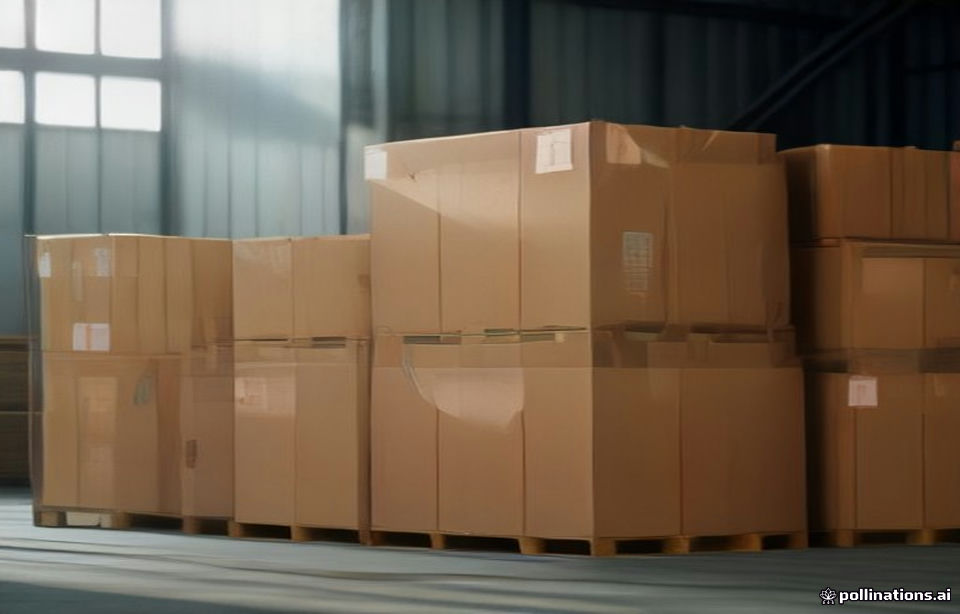
For most DTC and e-commerce shippers, a single-wall C-flute corrugated box rated ECT-32 (per TAPPI T810 / ASTM D642 validation) is the correct baseline; upgrade to ECT-44 BC-flute only when stacked column loads exceed ~18 kg per unit or ISTA 3A distribution testing shows panel deflection. Printing method — flexographic, litho-laminated, or digital — must be specified against the flute profile to avoid crush lines and warp, and all board must meet EU PPWR (2024/1991) recyclability and PFAS-free coating requirements.
Brands shipping into Amazon FBA and EU retail networks now face simultaneous pressure from dimensional-weight freight penalties and PPWR recyclability audits — but the winning move remains a board-level engineering decision, not a design trend. This guide anchors custom printed shipping box selection to measurable mechanics: edge crush resistance, flute caliper, print-to-substrate compatibility, and verified compression safety factors.
1. Board Mechanics: ECT, Burst, and Flute Selection
Custom printed shipping boxes are corrugated fiberboard structures defined first by their combining (flute) architecture and second by their decoration. E-flute (~1.5 mm caliper) suits retail-ready printed mailers; B-flute (~3.0 mm) balances print surface and cushioning; C-flute (~4.0 mm) is the dominant US shipping default; BC double-wall (~7.0 mm) serves >20 kg unit loads.
Per TAPPI Standard T810, Mullen burst ratings (e.g., 200 lb/in² single-wall) remain contractual on many North American POs, although ECT has largely replaced burst for structural specification because it correlates directly with stacked column loading. In strict accordance with ASTM D642, box compressive resistance must be verified on conditioned specimens, not calculated alone.
2. Print Process vs. Substrate: The Compatibility Matrix
Decoration choice is a mechanical decision. Flexographic post-print compresses flutes and requires creasing-matrix tuning; litho-laminated sheets deliver 150+ lpi graphics but add a laminating adhesive layer that is a humidity failure point; direct digital inkjet enables MOQ-friendly variable artwork.
| Attribute | Flexo Post-Print (C/B-Flute) | Litho-Laminated (E-Flute) | Digital Pre-Print / Inkjet | Governing Standard / Test Protocol |
|---|---|---|---|---|
| Typical artwork resolution | 55–85 lpi | 150–175 lpi | 600–1200 dpi variable | ISO 12647-6 flexo control |
| MOQ (hypothetical planning range) | 3,000–10,000 units | 5,000–25,000 units | 1–500 units | Supplier SOP |
| Structural strength penalty | ~3–6% ECT (plate impression) | ~5–8% (lamination bond dependency) | Negligible (no impression) | ASTM D642 / ISO 3037 |
| Humidity risk | Low | Adhesive debond above Cobb 60 ~35 g/m² | Low; water-based inks OK | ISO 535 (Cobb) / ISO 2247 |
| Recyclability / compliance | PPWR-compliant if no plastic lamination | Requires repulpable adhesive | PFAS-free, deinkable inks | EU PPWR (2024/1991) / FTC Green Guides 16 CFR 260 |
Note: the MOQ and ECT-penalty figures above are hypothetical worked planning ranges for procurement modeling, not measurements from a specific production lot; verify against supplier-run certificates. Per FTC Green Guides (16 CFR Part 260), any ‘recyclable’ claim on printed corrugate must be substantiated by access-to-recycling data in the destination region.
Q: If the McKee formula derives BCT from ECT, why do overseas enterprise POs still mandate Mullen burst testing?
A: First, burst test (TAPPI T810) measures the combined tensile-tear resistance of liner and medium — it catches board composition defects (low-grade recycled medium, poor fiber bonding) that ECT can mask when flute geometry is generous. Second, mechanically, McKee predicts column compression but says nothing about puncture and corner impact resistance during rough-h handling on mixed pallets. Third, procurement recommendation: specify ECT as the structural driver and accept burst as a QA gate only — dual-spec contracts (e.g., ECT-32 / 200# burst) give you both failure modes covered without paying for double-wall board unnecessarily.
3. Verified Bench Specification Workflow (SOP)
Use this four-step SOP to move from dieline to production-release board specification:
- Step 1 — Dieline & tolerance lock: Build the CAD dieline with slot tolerances ±0.5 mm and die-cut registration ±0.15 mm; specify creasing matrix hardness (typically 45–50 durometer matrix channel for C-flute) to prevent flap-pop and score cracking on folds.
- Step 2 — Board qualification: Condition blanks 24 h at 23°C ± 1°C, 50% ± 2% RH per ISO 187/ISO 186; test ECT (TAPPI T811), burst (TAPPI T810), and Cobb 60 (ISO 535) on a 10-specimen statistical average; reject lots exceeding ±5% on nominal ECT.
- Step 3 — Print QC: Verify color per ISO 12647 targets, pin-registration on multi-color flexo at ±0.15 mm, and confirm no plate impression exceeds 15% of flute height residual crush; check adhesion of litho lamination by 180° peel after conditioning.
- Step 4 — Distribution validation: Run ISTA 3A (parcel) or ASTM D4169 DC-13 (LTL pallet) sequences including 460 mm drop and random vibration; require BCT retention ≥ 80% of pre-transit ASTM D642 value before release.
4. Failure Diagnostics: Transit & Manufacturing Defects
Defect 1 — Flap popping / score cracking on print side. Root cause: creasing matrix too narrow for caliper, or litho sheet creased from the wrong side, cracking the coated surface. Corrective action: increase matrix channel width one step (e.g., from 4.5 mm to 5.5 mm channel for C-flute), flip die direction so the score is formed from the unprinted liner, and verify die registration at ±0.15 mm before the run.
Defect 2 — Litho-lamination debonding / panel bulge after ocean transit. Root cause: water-based lamination adhesive with marginal wet-tack plus container-sweat cycling; liners with Cobb 60 >35 g/m² absorb moisture across a 30-day Pacific crossing, softening flutes and dropping BCT 15–30% (hypothetical derating range for planning). Corrective action: demand repulpable high-solids adhesive certificates, specify Cobb-controlled kraft liners, add desiccant or ventilated container stowage, and derate warehouse stack height by a humidity safety factor of 1.5–2.0 versus dry-condition BCT.
5. Freight Corridor Stress & Stacking Load Derating
Distribution routing dictates engineering margin. Parcels landing at the California Inland Empire (FBA ONT8, LGB3) endure 2–4 additional sort-belt drops per ISO 2247-style repeat-shock conditions on top of ISTA 3A sequences — design mailer corner radii and interior fit accordingly. The Texas DFW triangle introduces long dry-inland drayage where low RH embrittles low-burst recycled liners; check score-crack resistance after <20% RH conditioning. European volumes landing at the Port of Rotterdam transfer to multimodal rail/road where pallet clamp handling and 30%+ RH cycles dominate — BC double-wall with hydrophobic (non-wax, PFAS-free) liner treatment outperforms waxed alternatives, which PPWR recycling rules increasingly disfavor.
Practical derating rule (worked example): a box with dry-condition BCT of 5,000 N supporting a 10 kg unit load in an 8-high stack needs BCT ≥ 10 kg × 9.81 × 8 × safety factor 3 ≈ 2,355 N per box — comfortable dry, but at 60% humidity retention that margin narrows to roughly 1.6×. Verify your own geometry and load case interactively with TadaPack’s free calculation tools at https://tadapack.com/tools, which model flute selection, dimensional weight, and stacking loads before you commit tooling spend. For dieline prototyping and pre-run sampling, TadaPack’s custom structural packaging and prototyping service shortens the Step 1–4 cycle to sample-ready in days.
2026 procurement benchmarks (hypothetical planning ranges, not quotes): single-wall C-flute flexo-printed shipper, roughly $0.35–$0.85/unit at 10k quantity; litho-laminated E-flute mailer, $0.90–$2.20; digital short-run, $1.50–$4.00. Freight and dimensional-weight penalties routinely exceed the print premium — optimize caliper first, artwork second.
Recommended Engineering Reading
[TOOLS] Featured Engineering & Calculation Tools
Explore 70+ Packaging Tools ➔CBM Volume & Freight Dim-Weight Calculator
Calculate cubic meters & dimensional weight to minimize freight costs and avoid FBA size tier penalties.Mailer Box Area & Dieline Size Calculator
Instant flat dieline dimensions, material consumption, and sheet nesting for custom D2C mailer boxes.
