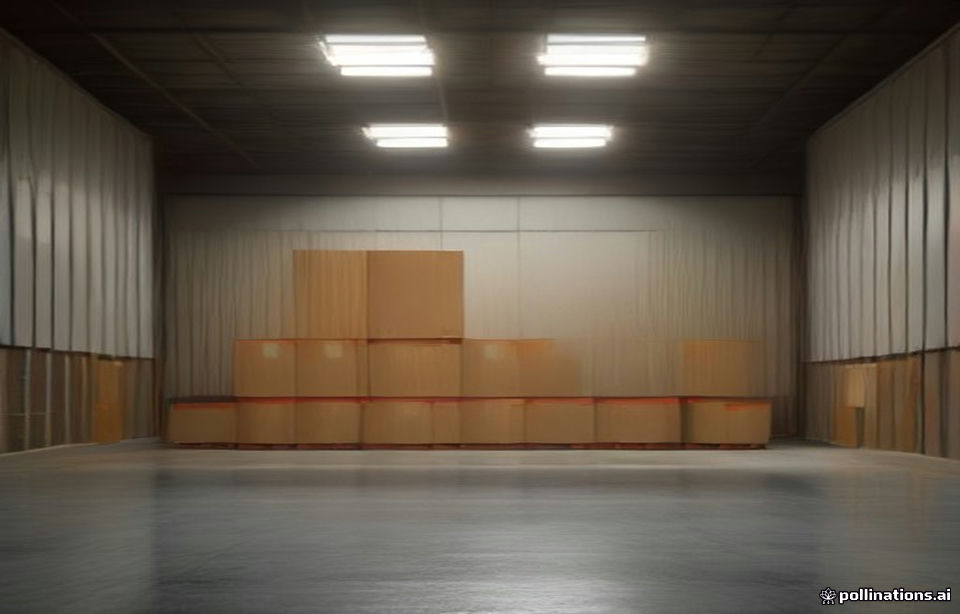
For winter holiday clearance programs, specify corrugated shipping boxes by ECT grade and flute construction — ECT-32 single-wall C-flute (4.0 mm caliper) for parcel shipments under 20 kg, ECT-44 BC double-wall (7.0 mm) for palletized, multi-tier stacked clearance freight — and verify compressive resistance per ASTM D642 before releasing POs. Booking production in the October-November pre-peak window with a locked MOQ avoids the January clearance-season capacity crunch and typically reduces landed unit cost by 15-30% in a hypothetical worked example at 10,000-unit volume.
What ECT Grade Do Holiday Clearance Shipping Boxes Actually Need?
The direct answer: most e-commerce clearance parcels perform reliably at ECT-32 in single-wall C-flute, while palletized clearance freight stacked three-plus tiers high demands ECT-44 or higher in BC double-wall construction. Edge Crush Test (ECT) values — measured per TAPPI T811 — correlate directly to box compression strength through the McKee formula (BCT ≈ 5.87 × ECT × √(perimeter × caliper)), which is why procurement directors should write ECT, not Mullen burst, into specifications for stacking-driven failure modes.
Q: If the McKee formula derives BCT from ECT, why do enterprise POs still mandate Mullen burst testing (TAPPI T810)?
A: Burst-resistant grades (e.g., 200# / 275 kPa) still appear in legacy retail vendor compliance manuals because rough parcel networks generate puncture and corner-loading events that ECT does not capture. Mechanically, burst measures the multi-directional tensile failure of the liner facings, whereas ECT measures column crushing of the flute structure. Practically, specify dual acceptance criteria — ECT for stacking safety factor and Mullen for puncture robustness — when your clearance freight mixes parcel and LTL networks; for pure DTC parcel, ECT-32 with a validated ISTA 3A sequence is sufficient.
How Much Cheaper Is Pre-Season Sourcing Versus January Rush Reorders?
The direct answer: in a hypothetical worked example at 10,000 units of a 400 × 300 × 250 mm RSC, pre-peak October production typically lands 15-30% below January rush pricing once expediting, air-freight top-ups, and slot premiums are counted. The mechanism is capacity, not material: Q4 box-plant die-cutting and corrugator slots sell out first, and clearance programs that miss the window pay for it in freight class upgrades and 3-5 week lead times.
| Cost Driver | Pre-Peak PO (Oct) | Rush PO (Jan) | Governing Standard / Test Protocol |
|---|---|---|---|
| Board grade (typical) | ECT-32 C-flute | Often up-specced to ECT-44 ‘to be safe’ | TAPPI T811 |
| Unit price index (hypothetical, 10k units) | 1.00 | 1.15–1.30 | — |
| Typical lead time | 2–3 weeks | 3–5 weeks + expedite fees | — |
| Compressive validation | ASTM D642 full test | Often skipped — risk of field failures | ASTM D642 / ISTA 3A |
Use TadaPack’s free calculators at tadapack.com/tools to model board-down basis weight, ECT-to-BCT derating, and dimensional-weight exposure before committing a clearance MOQ.
Which Flute Construction Survives Clearance-Season Transit Abuse?
The direct answer: C-flute (4.0 mm) is the workhorse for boxed parcels, B-flute (3.0 mm) suits die-cut mailers where dimensional weight matters, and BC double-wall (7.0 mm) is mandatory where clearance cartons face multi-tier warehouse stacking or 30-day ocean transit. Clearance freight is uniquely abusive: post-holiday networks run de-rated staffing, parcels sit longer on conveyor surge lines, and return-lane handling is rougher — a box that barely passes ISTA 3A in November can fail the same sequence in a January return surge.
Under ISTA 3A General Simulation Performance Testing, packaged products up to 68 kg face drop, compression, and random-vibration sequences that should be run on production-representative board — not white sample boxes. For palletized clearance volumes moving under ASTM D4169 Distribution Cycle 13, specify the appropriate assurance level and validate stacked compression with the seasonal warehouse humidity derate factored in.
Q: Can I down-gauge from ECT-44 double-wall to ECT-32 single-wall to hit a clearance cost target?
A: Yes, if — and only if — your stacked load derivation confirms it. Work the numbers: a 12 kg carton stacked 5 high with a 4.0 safety factor needs roughly a 240 kg minimum BCT per box; a well-made ECT-32 C-flute RSC at 400 × 300 × 250 mm commonly develops BCT in the 250–320 kg range (typical design values), so single-wall can carry it in dry ambient warehouses. In coastal-humidity distribution centers where stacking derating of 15–25% applies, the double-wall margin earns its cost back in avoided column crush claims.
How Do Moisture and Cold Derate Box Strength During Winter Freight?
The direct answer: humidity cycling and container sweat can reduce corrugated compression strength by 30-50% versus lab-conditioned values, which is why stacking calculations must apply environmental derating factors rather than ASTM D642 lab numbers alone. Boxes conditioned per ISO 186:2020 (23°C ± 1°C, 50% ± 2% RH) will not see those conditions in a January trailer at -10°C or a Port of Rotterdam container at 85% RH.
For transatlantic and transpacific clearance restock moves, container sweat during 30-day ocean transit softens flute glue lines and liner facings — watch Cobb 60 water absorption; linerboard exceeding roughly 35 g/m² signals delamination risk on long-haul ocean legs. At inland hubs — the California Inland Empire (FBA ONT8/LGB3 corridor), the Texas DFW triangle, and Rotterdam’s rail/road multimodal node — ambient conditions differ enough that a single national stacking spec will either over-engineer one region or under-protect another. Run regional derate scenarios with TadaPack’s compression and dimensional calculators at tadapack.com/tools.
How Do You Qualify a Clearance Box Supplier Before the PO — A 4-Step SOP?
The direct answer: qualify with a documented four-step verification protocol covering board certification, structural validation, dimensional audit, and regulatory compliance.
- Step 1 — Board certification audit: Require mill certs stating ECT, caliper (±0.15 mm tolerance typical), and basis weight, cross-checked against incoming samples measured with a digital micrometer per TAPPI T411.
- Step 2 — Compression validation: Run ASTM D642 on 10 production cartons; accept only if the mean BCT exceeds your derated stacking requirement by the full safety factor, per your ASTM D4169 distribution-cycle assumption.
- Step 3 — Die registration and dimensional audit: Verify slot depth, flap gap, and print-to-cut registration within ±0.15 mm on the die-cut tool; mis-registration over 0.5 mm on RSC flaps is a leading cause of flap pop-open under vibration.
- Step 4 — Compliance screening: Confirm recyclable mono-material board (no PFAS-based barrier coatings on non-essential liners) for EU PPWR (2024/1991) packaging waste mandates, and substantiate any recyclability claim per FTC Green Guides (16 CFR Part 260).
What Are the Most Common Clearance-Box Field Failures and Their Fixes?
The direct answer: the two dominant failure modes are column crush on bottom-tier cartons and flap pop-open during return-lane vibration — both traceable to specifiable root causes.
Failure 1: Bottom-tier column crush in humid warehouses. Root cause is usually ECT loss from moisture uptake, compounded by over-palletized tier counts. Corrective actions: up-spec liner sizing to control Cobb 60 absorption, apply a 15-25% humidity stacking derate in the BCT calculation, and switch bottom layers to BC double-wall where the derate pushes single-wall below its safety factor.
Failure 2: Flap pop-open and seam separation under vibration. Root cause is under-width corrugating glue application or die-slot mis-registration causing gap-induced flap lift under ASTM D4169 random vibration. Corrective actions: audit the glue-lap width (minimum 32 mm on standard RSC geometry), demand water-resistant adhesive for cold-chain lanes, and re-cut the die to ±0.15 mm registration. TadaPack’s short-run structural prototyping service lets you validate revised die geometry on production board before committing clearance-volume tooling.
Recommended Engineering Reading
[TOOLS] Featured Engineering & Calculation Tools
Explore 70+ Packaging Tools ➔CBM Volume & Freight Dim-Weight Calculator
Calculate cubic meters & dimensional weight to minimize freight costs and avoid FBA size tier penalties.Mailer Box Area & Dieline Size Calculator
Instant flat dieline dimensions, material consumption, and sheet nesting for custom D2C mailer boxes.
