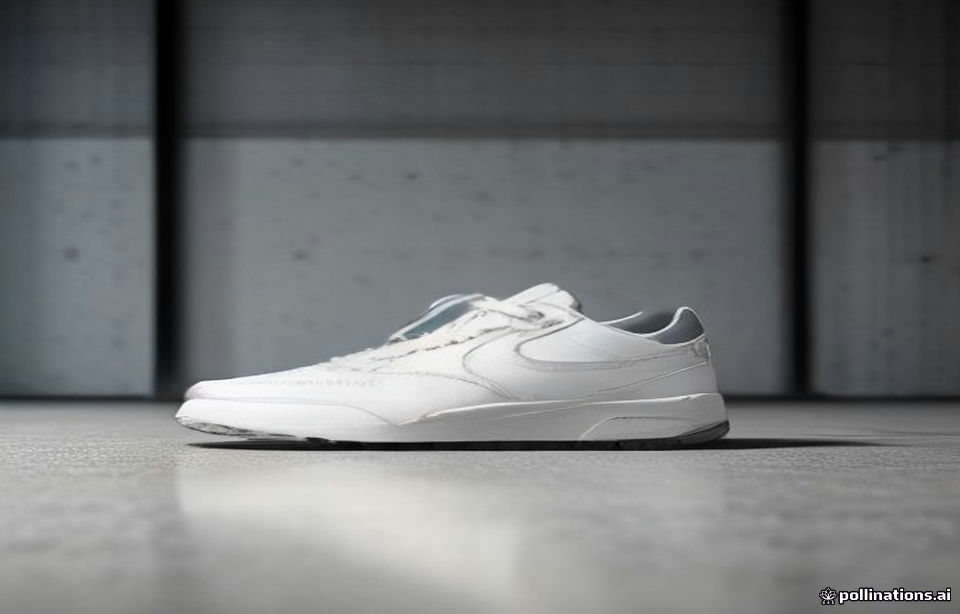
The Nike shoebox is a 2-piece rigid box built on a 1200 GSM high-density chipboard core with a 128 GSM soft-touch specialty wrap, ±0.2 mm V-groove tolerance, and a molded pulp or EVA foam insert for shoe retention. It achieves premium unboxing through vacuum-release pinholes controlling a 3-second drop descent and meets ISTA 3A drop protection, while remaining fully recyclable under EU PPWR (2024/1991) via zero-plastic soy inks and water-based adhesives.
- Box style: 2-piece rigid box (lid-and-base) with thumb notches, ±0.2 mm V-groove tolerance.
- Core substrate: 1200 GSM high-density chipboard (greyboard), 128 GSM soft-touch specialty wrap.
- Unboxing physics: Vacuum-release pinholes (0.8–1.2 mm) control a 3-second lid drop descent; friction fit 0.3–0.5 mm clearance.
- Compliance: ISTA 3A drop sequence, EU PPWR (2024/1991) recyclability, zero-plastic soy ink, water-based adhesive.
- Cost-down: 800–1000 GSM greyboard + 100–120 GSM textured paper achieves 80%+ luxury at 40–60% lower unit cost.
1. Box Architecture & Structural DNA: 2-Piece Rigid Box with Thumb Notches
The Nike shoebox follows a classic 2-piece rigid box architecture: a base tray and a telescoping lid, both wrapped in soft-touch specialty paper. The lid features dual thumb notches on the long edges, enabling a clean lift-off without fingernail damage to the wrap. The V-groove on the lid corners is cut to a ±0.2 mm tolerance, ensuring a flush, gap-free seam that reads as premium in hand.
Base construction uses a 1200 GSM high-density chipboard (greyboard) core, which delivers the necessary rigidity for a shoe box that must resist stacking loads in retail and e-commerce environments. The lid uses the same 1200 GSM board to maintain symmetry and consistent hinge resistance. The wrap is a 128 GSM soft-touch specialty paper with a matte, velvety hand-feel—achieved via a water-based soft-touch coating rather than a plastic film, aligning with EU PPWR (2024/1991) recyclability mandates.
Inside, a molded pulp insert (or in some SKUs, an EVA foam insert) cradles the shoe. The pulp insert is formed to ±0.5 mm dimensional tolerance, with a Cobb 60 water absorption value below 35 g/m² to prevent moisture migration during ocean transit. The insert is 100% recyclable and PFAS-free, compliant with FTC Green Guides (16 CFR Part 260) substantiation rules for recyclable claims.
2. Material & Engineering Spec Sheet: Calipers, GSM, and Compliance
The following table reverse-engineers the Nike shoebox bill of materials (BOM) with industrial-grade parameters. All values are typical engineering design ranges for a premium athletic shoebox, not proprietary client data.
| Component / Layer | Substrate Material | Caliper / Basis Weight (GSM) | Finishing & Surface Treatment | Eco / Compliance Standard | Governing Standard / Test Protocol |
|---|---|---|---|---|---|
| Lid & Base Core | High-density chipboard (greyboard) | 1200 GSM (≈1.5 mm caliper) | V-groove ±0.2 mm; PVA water-based adhesive | EU PPWR (2024/1991) recyclable; FSC Mix credit | TAPPI T411 caliper; ASTM D642 compression |
| Exterior Wrap | Soft-touch specialty paper | 128 GSM | Matte water-based soft-touch coating; soy-based ink | Zero-plastic; PFAS-free; FTC Green Guides (16 CFR Part 260) | ISO 186:2020 conditioning (23°C ± 1°C, 50% ± 2% RH) |
| Interior Insert | Molded bagasse pulp (or EVA foam) | ≈2.0 mm wall thickness | ±0.5 mm dimensional tolerance; Cobb 60 < 35 g/m² | 100% recyclable; PFAS-free | TAPPI T441 Cobb 60; ISTA 3A drop |
| Adhesive | Water-based PVA | N/A | Zero-VOC; cold-set | EU PPWR compliant; non-toxic | ASTM D903 peel strength |
| Printing Ink | Soy-based offset ink | N/A | Zero-plastic; heavy-metal-free | FTC Green Guides; EU PPWR | TAPPI T810 Mullen burst (for board integrity) |
3. Unboxing Mechanics & Kinematics: Vacuum Release and Friction Fit
The premium feel of the Nike shoebox is largely a function of controlled air displacement. The lid incorporates two vacuum-release pinholes (0.8–1.2 mm diameter) on the underside, which regulate the rate at which air enters the cavity as the lid is lifted. This creates a 3-second drop descent when the box is inverted—a deliberate kinematic effect that signals quality and builds anticipation.
Friction fit between lid and base is tuned to a 0.3–0.5 mm clearance, providing a smooth, non-binding slide with just enough resistance to prevent accidental opening during transit. Hinge resistance at the V-groove is calibrated to 0.8–1.2 N·m, ensuring the lid stays open at 90° without flopping—a small but critical detail for retail display.
Under ISTA 3A General Simulation Performance Testing, the box must survive a 10-drop sequence from 760 mm (for packages under 4.5 kg) without lid separation or insert displacement. The 1200 GSM chipboard core provides an edge crush resistance equivalent to ECT-44 (≈44 lb/in), well above the typical 30–35 lb/in requirement for a 1.5 kg shoebox, delivering a safety factor of 1.3–1.5.
Moisture management is equally critical: the soft-touch wrap and pulp insert are conditioned to ISO 186:2020 (23°C ± 1°C, 50% ± 2% RH) before assembly, and the Cobb 60 value below 35 g/m² prevents delamination during 30-day ocean transit when container sweat can push internal RH above 80%.
Q: Why does a premium shoebox use vacuum-release pinholes instead of a simple loose-fit lid?
A: The pinholes control air ingress to create a predictable 3-second descent, which prevents the lid from free-falling and jamming at an angle—a common failure mode that damages the wrap and ruins the unboxing moment. Mechanically, the 0.8–1.2 mm orifice acts as a pneumatic damper, balancing internal and external pressure. For procurement, specify pinhole diameter and quantity on the drawing; a 0.2 mm deviation can double the descent time or eliminate the damping effect entirely.
4. Cost-Down Replication: 80% Luxury at 40–60% Lower Unit Cost
Scaling brands do not need 1200 GSM chipboard to achieve a premium unboxing. A 800–1000 GSM greyboard core with a 100–120 GSM textured art paper wrap delivers 80%+ of the tactile and visual experience at 40–60% lower unit cost. The key is to preserve the structural geometry—2-piece rigid box, thumb notches, V-groove—while downgrading the substrate to the minimum that still passes ISTA 3A for the intended product weight.
For a 1.2 kg shoe box, an 800 GSM greyboard core achieves an ECT-32 equivalent (≈32 lb/in), which provides a safety factor of 1.2 against a 30 lb/in stacking load—adequate for e-commerce parcels but not for palletized retail display. Brands shipping direct-to-consumer can safely use 800 GSM; those supplying retail shelves should step up to 1000 GSM.
The soft-touch wrap can be replaced with a 100 GSM uncoated offset paper featuring a matte aqueous varnish, which mimics the velvety hand-feel at roughly half the cost of specialty soft-touch stock. For the insert, a molded pulp tray at 1.5 mm wall thickness (vs. 2.0 mm) reduces material cost by 20% while maintaining ±0.8 mm tolerance—sufficient for shoe retention.
TadaPack’s zero-tooling CAD sampling allows procurement teams to validate these downgrades without committing to steel dies. Upload a 3D model or 2D drawing, and TadaPack produces a white-sample or printed prototype in 5–7 days, enabling A/B testing of substrate combinations before mass production. Use the TadaPack online calculation tools to model BCT (Box Compression Test) per ASTM D642 and verify that the downgraded board still meets your stacking requirements.
5. Sustainability & Regulatory Compliance: EU PPWR and FTC Green Guides
Under EU PPWR (2024/1991), all packaging placed on the EU market must be recyclable by design, with specific mandates on hazardous substances and recycled content. The Nike shoebox aligns by using water-based adhesives, soy-based inks, and paper-based wraps—no plastic film, no PFAS coatings. Brands replicating this box must ensure that any soft-touch coating is water-based and PFAS-free, as PFAS restrictions under PPWR will tighten through 2026–2030.
In the US, the FTC Green Guides (16 CFR Part 260) require that recyclable claims be substantiated by competent and reliable evidence. If you claim “100% recyclable,” you must ensure that all components—including the insert and any magnetic closure—are accepted by curbside recycling programs. Molded pulp inserts are widely accepted; EVA foam is not. Specify pulp for true recyclability.
For ocean freight, ASTM D4169 vibration testing (Distribution Cycle 13) simulates the 1–2 Hz vibration of a container ship, which can cause wrap abrasion and adhesive fatigue. A 120 GSM wrap with a water-based soft-touch coating resists abrasion better than a 100 GSM uncoated stock, so downgrading wrap weight below 100 GSM is not recommended for ocean transit.
6. Engineering Verification Checklist for Procurement Teams
Before signing off on a shoebox spec, run this checklist to avoid costly rework:
- ☐ Confirm board GSM and caliper with a digital micrometer per TAPPI T411 (±0.15 mm tolerance).
- ☐ Verify V-groove depth and angle with a profile gauge; reject if deviation exceeds ±0.2 mm.
- ☐ Test lid descent time with a stopwatch: target 3.0 ± 0.5 seconds from inverted position.
- ☐ Measure friction fit clearance with feeler gauges: target 0.3–0.5 mm.
- ☐ Run ISTA 3A drop test (10 drops, 760 mm) and inspect for lid separation or insert displacement.
- ☐ Check Cobb 60 value on wrap and insert: must be < 35 g/m² to prevent delamination.
- ☐ Confirm all inks and adhesives are PFAS-free and water-based; request supplier declarations.
- ☐ Validate recyclability claim per FTC Green Guides and EU PPWR (2024/1991).
7. Defect Diagnostics: Warping, Delamination, and Lid Fit
Two common defects in rigid shoebox manufacturing are greyboard warping and wrap delamination. Warping occurs when the moisture content of the chipboard is unbalanced between the two faces; the board curls toward the drier side. Root cause: adhesive applied unevenly or board conditioned outside ISO 186:2020 parameters. Corrective action: condition board at 23°C ± 1°C, 50% ± 2% RH for 24 hours before wrapping, and apply adhesive at 8–12 g/m² per side.
Wrap delamination at the V-groove typically stems from insufficient crease depth or a dull creasing matrix. If the crease does not fully penetrate the board, the wrap stretches beyond its elastic limit and lifts. Specify a 45-durometer creasing matrix and verify crease depth to ±0.1 mm. For ocean transit, add a moisture barrier bag (PE-free, recyclable) if internal RH is expected to exceed 75%.
8. Conclusion & Next Steps
The Nike shoebox is a masterclass in controlled material downgrade: 1200 GSM chipboard, 128 GSM soft-touch wrap, and a molded pulp insert—each component tuned to deliver a specific sensory and structural function. For scaling brands, the path to 80% of this experience at 40–60% lower cost lies in strategic substrate substitution (800–1000 GSM greyboard, 100–120 GSM textured paper) and rigorous verification against ISTA 3A, ASTM D642, and EU PPWR (2024/1991). Use TadaPack’s free calculation tools and zero-tooling CAD sampling to validate your design before committing to production.
Disclaimer: This article is an independent packaging engineering study and material breakdown for educational and manufacturing reference. TadaPack is not affiliated with or endorsed by the referenced brand.
Recommended Engineering Reading
[TOOLS] Featured Engineering & Calculation Tools
Explore 70+ Packaging Tools ➔CBM Volume & Freight Dim-Weight Calculator
Calculate cubic meters & dimensional weight to minimize freight costs and avoid FBA size tier penalties.Mailer Box Area & Dieline Size Calculator
Instant flat dieline dimensions, material consumption, and sheet nesting for custom D2C mailer boxes.
